• TalkBass has been independent since 1998. Add your voice.
    Create a free account to reply to discussions, view embedded media, and browse with fewer display ads.
    Join freeLog in
    Want zero display ads or expanded classifieds tools? Compare plans.

What makes a bass sound punchy?

Technique. Roundwounds. The right pickup. A decent amp. You HAVE to talk about the amp,it is important.

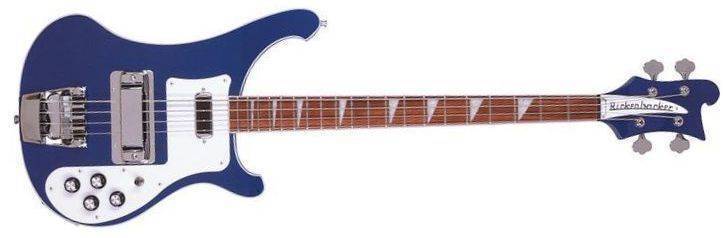
lg_4003%20mid.jpg
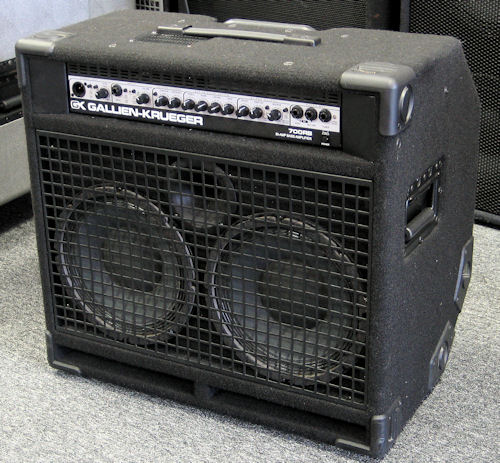
61575_gk700rb.jpg

I respectfully disagree.. If your looking for a super "punchy tone", you must focus on the instrument.. You can have a $6-8K double/triple stack and still not get the punch your after if you play the wrong instrument.. The tragedy is.. The instruments that you are after are not Cheap!! Trust me..
 
  • Like
Reactions: Honch
I agree @Ccarson26 . I find it peculiar that so many people in this thread namedrops their favorite players dime a dozen, and urge us to listen to this or that record, to hear their punchy sound, and at the same time tries to sell in that an amp is important for punch.

It is appropriate to remind you all, that most of the punchy bass sounds you hear on records are with the basses recorded direct in the studio. Without any amp. Not even lined out from their amp heads!

I e it's possible - very well - to create a punchy sound without any kind of amp whatsoever in the studio (and thus, live too), so one can wonder how much any amp/cab really comes into play. You may have to use EQ and Compressors and the like, or any DSP but ... still, not any amp or cab. Even the final mastering of a record can introduce punch that wasn't there from the start on. I am not sure that this thread was about getting punchy sound in live settings only. Either you get a punchy sound or you don't. But to say an amp/cab is of equal importance is kind of ...moot, futile, yada-yada.
 
I would still purport (as others already have said, it's nothing new, or something I got out of the blue):

1. Playing technique, fingers. Leaning in... or not. Along the string. The sweet spot, after the bridge.
2. Pole pieces of a single coil passive pickup aligned under strings perfectly*. That narrow aperture plays huge role. As well as how strong, weak the pickup is. Inductance, resistance and so on. I would even go as far to choose Alnico over Ceramic but that's a tad hairsplitting and AR.
3. EQ, as people have said before. Where in the mids it occurs. Low mids, high mids...whatever. Just sweep for the sweet spot.
4. Compressor maybe, but it would be cheating, and a sort of ... trying to get something that is easily done in the first place, anyway, if everything else is right.

If you have a (type EMG, Bart) active pickup that is double coil and rails plus ceramic (i e humbuckers) and still get better punch, please let me know. I would be interested. You may get it, but I think it's way harder to achieve. You have to walk that extra mile, or light year. I think in the numbering list I wrote above, that point 1 and 2 are even, they go at a split first place, it's a tie.

Amp/cab would come at the very last spot on my list. Period. Not even on there, perhaps. I think those SD Quarterpounders, and G&L pickups with pole pieces and "hot" designs sounds like they have some kind of compression built in, so you don't have to use outboard compression to get that punch. I've also found out that the point 1 above with playing technique, to get that punch, is a slight trade off, and compromising dynamics, and accents of the notes. If you want to have punch at all times, you have to play and finger (pluck or pick) in a certain way that can get the dynamics and accents in any groove sort of compromised. But it's so with any compressor kicked in anyway.


* both along the string, sweet spot after bridge, and the width of the string.
 
If Jamerson had to play in unison with a guitar with even mild distortion he'd vanish. His tone was all fundamental; just the note. When I think "punch" I think of something that can be heard either by its self or when other instruments are playing the same thing. Again this is all relative. The difference between "cut" and "punch" is a matter of preference, as to me, Jamerson sounds like getting hit with a one of those giant inflatable boxing gloves and Geezer's tone on the first two Sabbath albums is more like a bare knuckle bash in the jaw. Lee isn't maybe the best example, but I was trying to think of someone TB orthodoxy finds acceptable.

I would like to think that Jamerson was talented enough to alter his technique and tone to be able to ahem.. punch through just about any playing situation he encountered. To me a big part of playing bass is being able to adapt to different situations, different rooms, different players, styles etc. and get a good punchy tone that supports and enhances the music you are playing, a good start is using a Fender bass strung with flatwounds with an Ampeg tube amp. I don't think that Jamerson was the best example of punch though, how about Rocco Prestia? I'm not a huge fan of his I just think his bass playing is punchy sounding.
 
FWIW a last reminder: I get the most and apex punch out of any bass when sticking on my FUNK FINGERS, or playing with a drumstick on top of the strings. One didn't have a clue how much volume and loudness there's still left on the strings/pickups. People always think I am playin too loud, but I haven't screwed with the controls any... there's just soo much more output to give into any pickup and the fingers of any person, is just a sissy carress of the strings in comparison. You don't need to buy those funk fingers. Just borrow a drum stick from your drummer and try it out and see how much more you can whack the string.... no matter how hard calluses you've built up, there's even more to coax out of them... now we're talking punch....;)
 
If you should check out records made in the studio, I urge you to check out any Jamiroquai records from the beginning of his/their career up until today. They have punch bass from day one, to the latest. And a number of bassists with any number of different basses and techniques too. Stuart Zander (or was it Zender?) Fyffe, et al. Still punch to the bone. Thumpy too...give it a listen even if it's not your type of music.
 
Personally, for me, and I've already contributed, and I hesitate to give my secret, it's medium to high action.
If you dig in a little more relief goes with the territory...I hear Ya
 
  • Like
Reactions: bobyoung53
Remember the TC electronic rack unit for mastering in the 90s? The "finalizer" or "maximizer"?

Hence my stance, that mastering overall, can introduce punch that wasn't there before, here's their ad:

finalizer-96k-product-banner.jpg
 
I run my P (with Labella 54's) through a GB shuttle 6 into a Hartke 4x10. The result is a huge wide bottom and punch that hits right in the gut. Even the highs shoot through everything else. Came upon this combo quite by accident but I think I'm set for now.
 
After some experimenting and drawing my own conclusions I was wondering what the experienced people of TB think of the question: what makes a bass sound punchy? As in powerful and clear defined (not excluding deep) low notes and no whooly 'ooooom-y' sound.

BTW: talking about the bass, not the amplification.

Is it the type (P, J, P/J or others), active or passive, the brand of bass, the (brand / type of) strings, the (brand / type of) pickup(s), tuners, pots, caps, the setup, or whatever matters to you?
 
I personally have got a good punchy bass sound out of my Ibanez Mikro which doesn't have great, but still decent, pickups of the J/P configuration, with volume and tone all the way up on both of them, 40-95 gauge nickle wound strings (even if I am quite sure steel wound would have been even better), my EHX Black Finger compressor engaged, played fairly but not overly aggressive through an older Trace Elliot amp with 4 10".

I am not sure of how to isolate the sound to the bass, but my guess is, as some already mentioned, it would mean a mid heavy (EQ'ed) sound with some use of compression, although the pickups, the strings, the amp, the cap and how you play your bass will also play a part in that equation.

Edit: I obviously got the gauge of the strings I use wrong, so corrected from 45-90 to 40-95, although I doubt it will make that much of a difference.
 
Last edited: