Ugh.
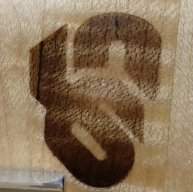
I had the old type of Schaller straplock. But the one on the horn got worn down to the point where it could unclip itself (pic attached). So I tried to replace it with the new ones. The new ones have the screw and button as one piece. I noticed that the new screw is wider but since this one is one piece, I mis-compared and didn't realize it's also longer.
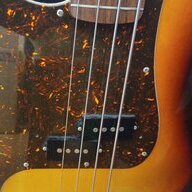
Problem is, my upper bout is pointy like this (pic attached). I was screwing it in and I heard a crack and found out the screw was about to come out the other side (on the left). It's just a crack in the finish so far but still. I took the screw back out. I don't want to eff it up more so...
Do I fill it with toothpicks and glue? Is that safe in this situation?
After I fill it, any ideas on what to do next? Some of my thoughts:
1. Use new old style Schallers. And wait for it to wear down again...
2. Use the new lock and move it 1/2"+ down the horn. Don't really want to leave a hole and possibly affect balance slightly.
3. Is there a way to install the screw pointing straight down? I can't see how to do this and get the button flush.
4. Ditch strap locks altogether. The angle of the bout and the angle I wear the bass make this a little risky.
5. Other brand of strap locks?
Dunno why Schaller insisted on making the screw bigger on these. The hex key thing is annoying as well. Like you can use the small handle and get no torque or you can use the big handle but it doesn't clear the neck each time around.
Are the old style supposed to wear down like that? It's been like 7 years but I thought these would be a "for life" type of deal. Anyways...
Thanks!


I had the old type of Schaller straplock. But the one on the horn got worn down to the point where it could unclip itself (pic attached). So I tried to replace it with the new ones. The new ones have the screw and button as one piece. I noticed that the new screw is wider but since this one is one piece, I mis-compared and didn't realize it's also longer.
Problem is, my upper bout is pointy like this (pic attached). I was screwing it in and I heard a crack and found out the screw was about to come out the other side (on the left). It's just a crack in the finish so far but still. I took the screw back out. I don't want to eff it up more so...
Do I fill it with toothpicks and glue? Is that safe in this situation?
After I fill it, any ideas on what to do next? Some of my thoughts:
1. Use new old style Schallers. And wait for it to wear down again...
2. Use the new lock and move it 1/2"+ down the horn. Don't really want to leave a hole and possibly affect balance slightly.
3. Is there a way to install the screw pointing straight down? I can't see how to do this and get the button flush.
4. Ditch strap locks altogether. The angle of the bout and the angle I wear the bass make this a little risky.
5. Other brand of strap locks?
Dunno why Schaller insisted on making the screw bigger on these. The hex key thing is annoying as well. Like you can use the small handle and get no torque or you can use the big handle but it doesn't clear the neck each time around.
Are the old style supposed to wear down like that? It's been like 7 years but I thought these would be a "for life" type of deal. Anyways...
Thanks!