I consider his heavy use of ghost notes during his frequent sixteenth notes runs as percussive, too.When think of percussive bass, I think slap. Jaco had a great feel for Latin and Caribbean music, but I hear his playing as capable of being really groovy or melodic, not percussive.

Enjoy the benefits of a premium membership!
Upgrade Account
-
TalkBass has been independent since 1998. Add your voice.
Create a free account to reply to discussions, view embedded media, and browse with fewer display ads.
Join free Log in
Want zero display ads or expanded classifieds tools? Compare plans.
You are using an out of date browser. It may not display this or other websites correctly.
You should upgrade or use an alternative browser.
You should upgrade or use an alternative browser.
What Really Made Jaco Revolutionary?
- Thread starter Dr. Cheese
- Start date
More options
Who Replied?

I was going to say that first part as well. I guess I was subbing "percusive" for "rhythmic" when I thought through initially. Melodic for sure.When think of percussive bass, I think slap. Jaco had a great feel for Latin and Caribbean music, but I hear his playing as capable of being really groovy or melodic, not percussive.
Last edited:
This is EXACTLY why I always IN THE PAST would refer to Jaco as the "Jimi Hendrix" of electric bass guitar. Some might take offense to that but I was a ignorant guitar player trying to help other guitar players make sense of him. I feel that in some ways that assessment isn't wrong necessarily, I just feel it doesn't encompass him as a player (or icon) enough. His tone was the last thing I thought appealing about him in that I didn't find it that appealing AT ALL most of the time. Sometimes it works well, especially on studio recordings. His playing/composition though....No one had ever approached the instrument like he had.
Simply, there was bass before Jaco, and bass after Jaco.


I agree with a lot of the comments on this thread. A lot of aspects contributed Jaco's technique.
For anyone looking to learn his style, concentrate on the coordination between your fretting hand and plucking hand. Jacko had an incredibly precise touch. He could effortlessly switch between fretted notes, ghost notes, harmonics, percussive effects, and muting.
For anyone looking to learn his style, concentrate on the coordination between your fretting hand and plucking hand. Jacko had an incredibly precise touch. He could effortlessly switch between fretted notes, ghost notes, harmonics, percussive effects, and muting.
Absolutely he was. No one played like him before. Listen to the electric players before. You get close with the rock guys - Entwhistle in particular but Bruce and even John Paul jones. But as great as monk Montgomery was, he didn’t play like Jaco. Stanley Clarke goes close. Bootsy and Larry graham too. Brilliant. Don’t get me wrong. . Jamerson, all of the sixties guys. Phil Lesh. Jaco took all of it like Hendrix, combined it. Wrapped it up and re presented it. Like HendrixJaco as the "Jimi Hendrix" of electric bass guitar.
Of course he didn’t slap and pop, but really he didn’t need to. I say this as one who does slap and pop.
This may be a very unpopular opinion, but we are all the sum of our parts. Jaco's parts included some dark and sinister components. He was a man of extremes and those extremes play a huge part.

I don’t think Jaco knew theory or harmony better than Stanley Clarke
Jaco learned all that stuff while riding on the band bus when he was with Wayne Cochran. Obviously he was a very quick study!
My guess is that he already had great ears and learning about how to take the sounds he was already hearing and putting them down on paper supercharged him.
As far as his rhythmic sene, lots of jazz players came up playing R&B (if only to pay the bills), but when Jaco was coming of age that meant James Brown, Motown and southern soul.

I'm not trying minimize Jaco's talent or outstanding fretless playing but it's not like he was playing his Jazz Bass without coloration.
Google search...............
Yes, Jaco Pastorius used effects pedals and rackmount gear, particularly an MXR Digital Delay, which he used for chorus-like modulation with short delay times, for sampling and creating rhythmic loops, and with longer delay times to build loops. While his distinctive tone was primarily a result of his technique and fretless bass, he also utilized this delay and sometimes the distortion from his Acoustic 360 amplifier to add texture and effects to his sound. He would run his effects through one cabinet and keep another dry, creating a "wet" and "dry" signal that together produced a lush, modulated, chorus-like sound.
How He Used Effects:
Google search...............
Yes, Jaco Pastorius used effects pedals and rackmount gear, particularly an MXR Digital Delay, which he used for chorus-like modulation with short delay times, for sampling and creating rhythmic loops, and with longer delay times to build loops. While his distinctive tone was primarily a result of his technique and fretless bass, he also utilized this delay and sometimes the distortion from his Acoustic 360 amplifier to add texture and effects to his sound. He would run his effects through one cabinet and keep another dry, creating a "wet" and "dry" signal that together produced a lush, modulated, chorus-like sound.
How He Used Effects:
- Chorus Effect:He used short delay times on the MXR Digital Delay, combined with a dry signal, to create a lush, modulating chorus effect.
- Looping and Sampling:With longer delay times and 100% feedback on the MXR delay, he could create rhythmic loops and solo over them, as heard on songs like "Slang".
- Distortion:He sometimes used the distortion inherent in his Acoustic 360 amplifier to enhance his solos.
- MXR Digital Delay (Rackmount):This was his most significant effects unit, a key component in achieving his signature sounds.
- Acoustic 360 Amps:He used two of these amplifiers on stage, with one running "dry" and the other "wet" with effects to create his layered sound.
Last edited:
Absolutely true, it is easy to listen to Jaco now and discount his brilliance but when he was at his best no one could do play like him, a true revolutionaryThere are several things that I would say weigh much heavier that his tone.
No one had ever approached the instrument like he had.
- Advanced knowledge of "theory" and mastery of the fingerboard.
- His lightning speed, precision and accuracy, all while having incredible phrasing and "feel" / groove.
- The ability to seamlessly combine styles.
- Incredible stamina.
- composition skills that are considered brilliant today
Simply, there was bass before Jaco, and bass after Jaco.
Those are the 1st things that quickly come to mind.
I lived in Miami from 75-80 and went to UM. I took a sngle "lesson" from him that was more like sitting in a practice room and watching him play through ideas and accompanying him on bass on a bossa and blues while he soloed. it was pretty cool!
couple of quick things...
someone mentioned Donna Lee. yes that's pretty amazing. but do understand that it was not an improvisation per se! he had been working on that solo for a long time. listen to his actual first album (Jaco - recorded in 1974) that he did at Criteria. he plays Donna Lee and the solo and arrangement is almost exactly the same. not to say that it's not amazing.
in the fall of 75 I moved to Miami, and around that time I heard Brand-X and Percy Jones. of course they were more fusion than latin-funk, but the sound bore some similarities to mid period Weather Report. and Percy had a very similar fretless sound. he was not as percussive, but IMO he was just as technical, tho he didn't have the bebop-related chops. I had heard of Jaco at around the same time, but didn't actually hear him live 'till his first album came out. then he was everywhere. having Herbie on the Jaco Pastorious album didn't hurt either! Plus his playing on Bright Size Life is inspiring, even to this day.
I guess what I'm saying is that Jaco didn't come out of nowhere. I would be surprised if he hadn't heard Brand X and Percy at some point. But he certainly took it to another level and his technique and skills absolutely cannot be denied.
couple of quick things...
someone mentioned Donna Lee. yes that's pretty amazing. but do understand that it was not an improvisation per se! he had been working on that solo for a long time. listen to his actual first album (Jaco - recorded in 1974) that he did at Criteria. he plays Donna Lee and the solo and arrangement is almost exactly the same. not to say that it's not amazing.
in the fall of 75 I moved to Miami, and around that time I heard Brand-X and Percy Jones. of course they were more fusion than latin-funk, but the sound bore some similarities to mid period Weather Report. and Percy had a very similar fretless sound. he was not as percussive, but IMO he was just as technical, tho he didn't have the bebop-related chops. I had heard of Jaco at around the same time, but didn't actually hear him live 'till his first album came out. then he was everywhere. having Herbie on the Jaco Pastorious album didn't hurt either! Plus his playing on Bright Size Life is inspiring, even to this day.
I guess what I'm saying is that Jaco didn't come out of nowhere. I would be surprised if he hadn't heard Brand X and Percy at some point. But he certainly took it to another level and his technique and skills absolutely cannot be denied.

I lived in Miami from 75-80 and went to UM. I took a sngle "lesson" from him that was more like sitting in a practice room and watching him play through ideas and accompanying him on bass on a bossa and blues while he soloed. it was pretty cool!
couple of quick things...
someone mentioned Donna Lee. yes that's pretty amazing. but do understand that it was not an improvisation per se! he had been working on that solo for a long time. listen to his actual first album (Jaco - recorded in 1974) that he did at Criteria. he plays Donna Lee and the solo and arrangement is almost exactly the same. not to say that it's not amazing.
in the fall of 75 I moved to Miami, and around that time I heard Brand-X and Percy Jones. of course they were more fusion than latin-funk, but the sound bore some similarities to mid period Weather Report. and Percy had a very similar fretless sound. he was not as percussive, but IMO he was just as technical, tho he didn't have the bebop-related chops. I had heard of Jaco at around the same time, but didn't actually hear him live 'till his first album came out. then he was everywhere. having Herbie on the Jaco Pastorious album didn't hurt either! Plus his playing on Bright Size Life is inspiring, even to this day.
I guess what I'm saying is that Jaco didn't come out of nowhere. I would be surprised if he hadn't heard Brand X and Percy at some point. But he certainly took it to another level and his technique and skills absolutely cannot be denied.
Oh yes, Brand X and their other bassist whose name escapes me were monster fretless players! That is why I say that people focus on Jaco’s fretless playing, but his sound and concept of music were unique. I also say we have to think about the impact of Jerry Jemmott and Tommy Cogbill on his playing. Those guys inspired his sixteenth note vibe.
I saw Jaco in I believe 1984 with the Brecker brothers, it was unreal and I believe that he played fretted most of the night. As much as I love his out front playing, his accompaniment is what I really love. Dry Cleaner from Des Moines.
I don’t see him as the Hendrix of bass, I see him as the Jeff Beck. And I know people are going to argue with me about that, but Beck’s genius was in his ability to play sure, but it was more in his ability to phrase things in a way nobody else was doing. A Day in the Life. But, what do I know.
I don’t see him as the Hendrix of bass, I see him as the Jeff Beck. And I know people are going to argue with me about that, but Beck’s genius was in his ability to play sure, but it was more in his ability to phrase things in a way nobody else was doing. A Day in the Life. But, what do I know.

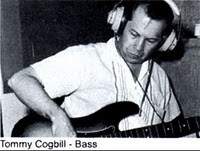
Oh yes, Brand X and their other bassist whose name escapes me were monster fretless players! That is why I say that people focus on Jaco’s fretless playing, but his sound and concept of music were unique. I also say we have to think about the impact of Jerry Jemmott and Tommy Cogbill on his playing. Those guys inspired his sixteenth note vibe.
Yup, he was a close listener to those guys, and I have to believe he was influenced by Rocco Prestia as well.

Agreed, he had his own voice and that it was a blessing and a curse because, IMO, he wasn't able to do anything else but Jaco no matter what playing situation he got into.Jaco found his own voice.
This is the most important thing and most difficult as well in arts in general.
I saw Jaco with WR and Stanley with RTF, both at their prime, and all I can say is I wouldn't compare the two. If not the best, definitely two of the best, and very different. Gods of bass. I would consider myself blessed to have even 1% of their talent.

Agreed, he had his own voice and that it was a blessing and a curse because, IMO, he wasn't able to do anything else but Jaco no matter what playing situation he got into.
The only curse I see is the countless imitators he's had over the years. It's practically impossible for anyone to play a fretless jazz bass without sounding like Jaco.
As for him, he was an unparalleled inventor in world music, and it's a shame he died the way he did. He seemed to have serious psychiatric problems and didn't treat them.
Same here. Well said.I saw Jaco with WR and Stanley with RTF, both at their prime, and all I can say is I wouldn't compare the two. If not the best, definitely two of the best, and very different. Gods of bass. I would consider myself blessed to have even 1% of their talent.
Two really different approaches to the instrument.

I’m reading a rather large amount of misinformation in this thread.
First, Jaco did NOT solely use the bridge pickup for his “tone.” He certainly did roll off the neck pickup for many of his solos. But, his backing rhythm section parts were more along the lines of a really loud upright bass. Listen more carefully to his Word of Mouth and Joni Mitchell backing work.
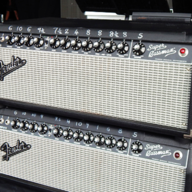
I would have said that his tone was pretty much what you get with a Jazz Bass with round wounds into an Acoustic 360.
Second, Jaco was FAR more than some hotshot bass player. His Jazz compositions are timeless. Three Views of a Secret all by itself is a masterpiece of Jazz composition.
Third, Jaco was simply a crazy talented musician. Listen to to his recording of Charlie Parker’s Dexterity on upright; which, for an essentially self taught player, is compelling for the intonation and feel. I just returned from a 52nd Reunion with my high school band. The keyboard player had an amazing personal run-in years back with Jaco on the piano.
Jaco was a complicated guy, who vastly elevated our craft, and was gone too soon.
First, Jaco did NOT solely use the bridge pickup for his “tone.” He certainly did roll off the neck pickup for many of his solos. But, his backing rhythm section parts were more along the lines of a really loud upright bass. Listen more carefully to his Word of Mouth and Joni Mitchell backing work.
I would have said that his tone was pretty much what you get with a Jazz Bass with round wounds into an Acoustic 360.
Second, Jaco was FAR more than some hotshot bass player. His Jazz compositions are timeless. Three Views of a Secret all by itself is a masterpiece of Jazz composition.
Third, Jaco was simply a crazy talented musician. Listen to to his recording of Charlie Parker’s Dexterity on upright; which, for an essentially self taught player, is compelling for the intonation and feel. I just returned from a 52nd Reunion with my high school band. The keyboard player had an amazing personal run-in years back with Jaco on the piano.
Jaco was a complicated guy, who vastly elevated our craft, and was gone too soon.

to isolate the musical product of someone like jaco down to the pickup setting is to miss the point entirely.
really great musicians are often defined by the handful of surface-level striking characteristics. but that stuff is just a small part. Jaco was a high level musician. He happened to play bass. he had an innovative, even wacky and downright crazy way of thinking. the same nutty part of this guy that made him rip the frets out of his fender bass on a whim, is the same part of him that made him so creative and clever when playing over changes, or a groove or whatever.
he was a master improviser, composer, band leader, orchestrator, arranger, everything. Think about playing donna lee with just ...bass...and..congas? it's clever and it works. that is jaco.
really great musicians are often defined by the handful of surface-level striking characteristics. but that stuff is just a small part. Jaco was a high level musician. He happened to play bass. he had an innovative, even wacky and downright crazy way of thinking. the same nutty part of this guy that made him rip the frets out of his fender bass on a whim, is the same part of him that made him so creative and clever when playing over changes, or a groove or whatever.
he was a master improviser, composer, band leader, orchestrator, arranger, everything. Think about playing donna lee with just ...bass...and..congas? it's clever and it works. that is jaco.


