I guess word gets out if you have a bass workshop, even one as modest as my own. A few repair/mod jobs have shown up to do. I'm not a pro, but I want to help folks out and build my skills, so I have taken on some of the work.
This fellow I know is super into '90's Hamer basses (I guess we all have our thing), and had a vision for making his Jazz clone into a reverse-double-P. He asked me if I'd be willing to convert his bass to a reverse-double-P for him. Here's how I went about it.
Step one - route out the J pickup cavities
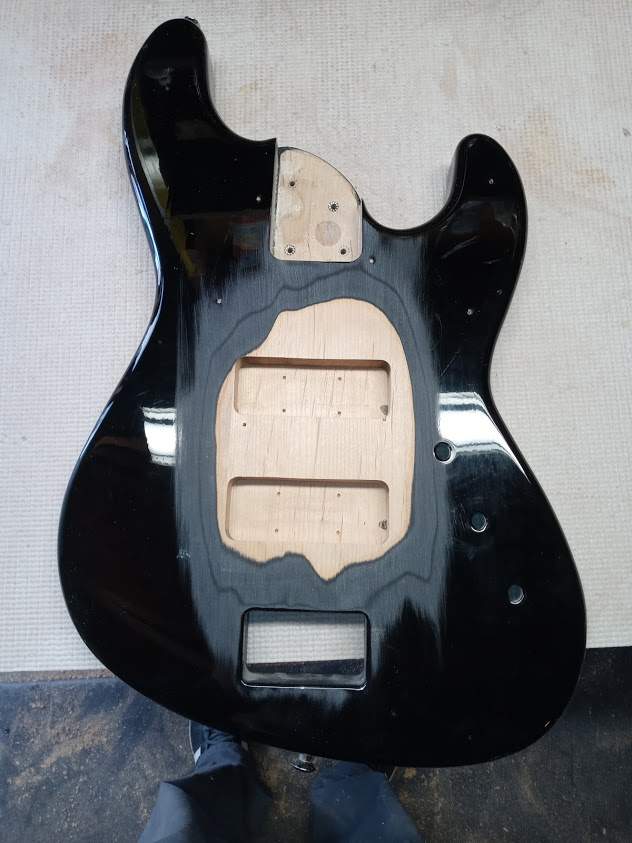
Step 2 - plug the cavities, epoxy in some wood. I used JB Marine-Weld.
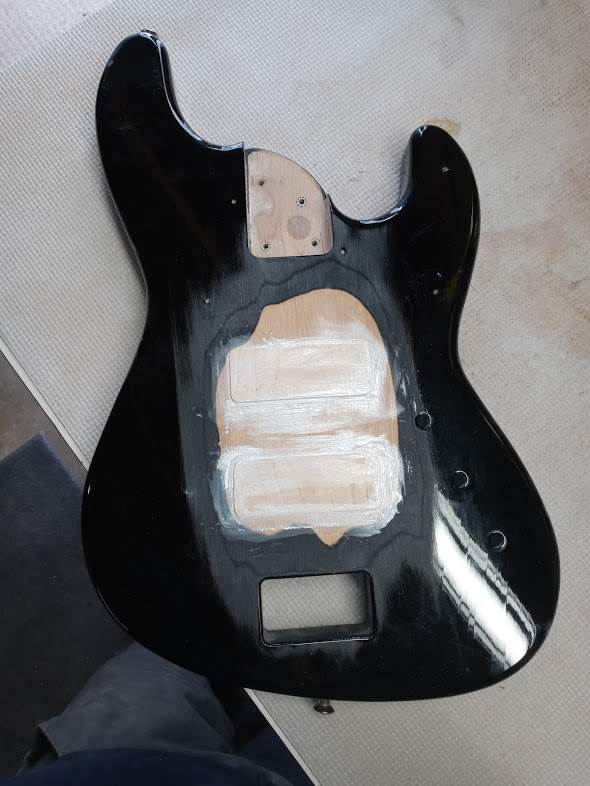
Step 3 - sand back to flat
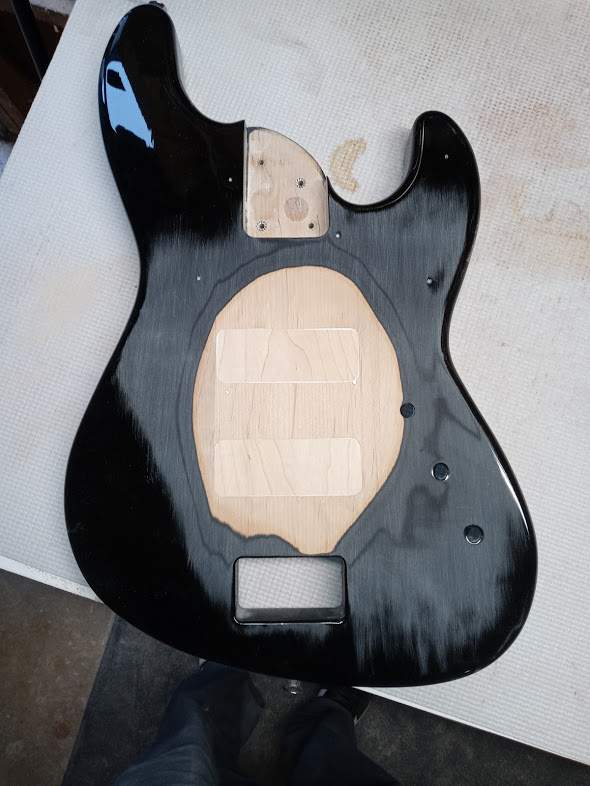
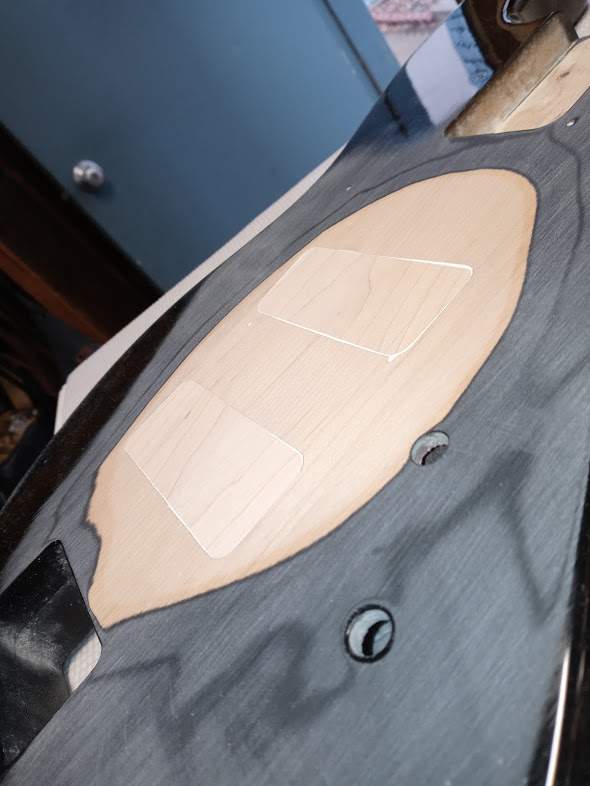
Step 4 - routing reverse P cavities
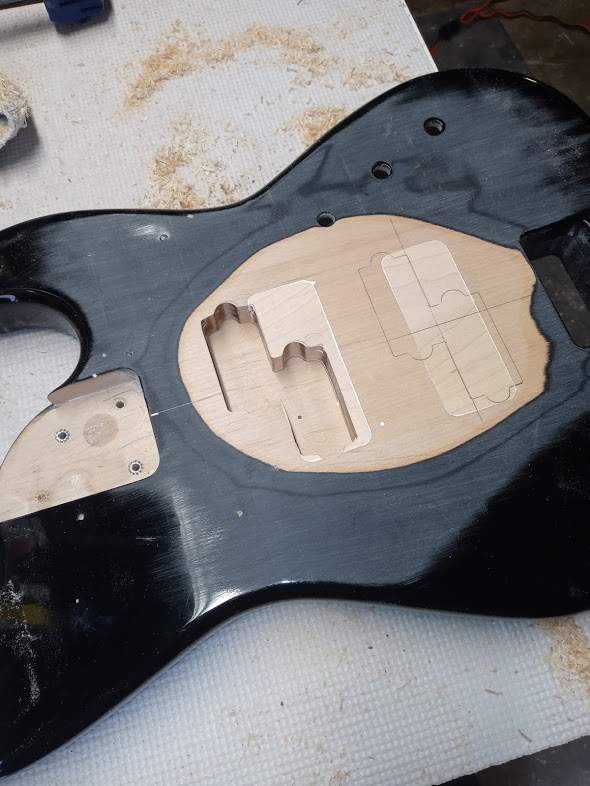
Step 5 - clean up corners with chisel, general cleanup and fitting of P covers, drill wire routes to control cavity
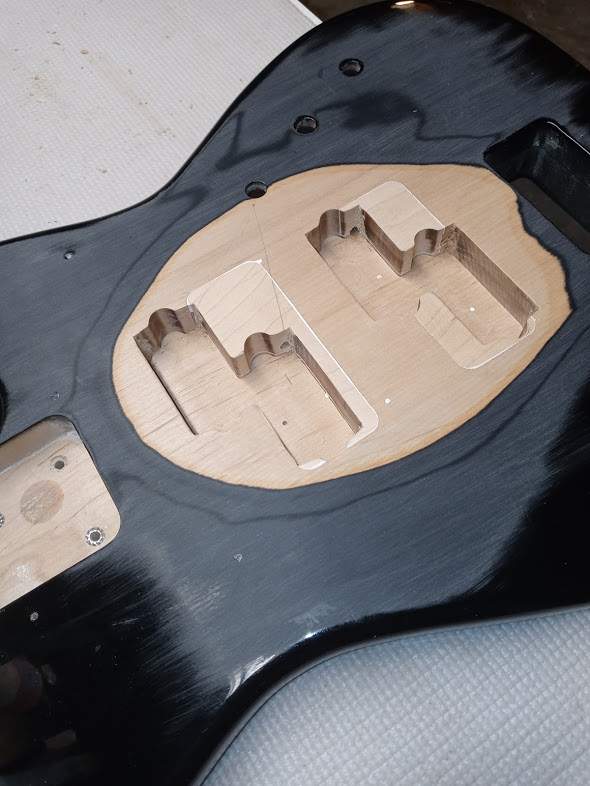
The client has a paint and finishing shop and much more finishing skill than I do. He'll be stripping and refinishing the bass himself.
All-in-all, a good experience, and a decent result. Now, I have another bass of his to convert to reverse-double-P, so I guess he's happy enough with the work.
This fellow I know is super into '90's Hamer basses (I guess we all have our thing), and had a vision for making his Jazz clone into a reverse-double-P. He asked me if I'd be willing to convert his bass to a reverse-double-P for him. Here's how I went about it.
Step one - route out the J pickup cavities
Step 2 - plug the cavities, epoxy in some wood. I used JB Marine-Weld.
Step 3 - sand back to flat
Step 4 - routing reverse P cavities
Step 5 - clean up corners with chisel, general cleanup and fitting of P covers, drill wire routes to control cavity
The client has a paint and finishing shop and much more finishing skill than I do. He'll be stripping and refinishing the bass himself.
All-in-all, a good experience, and a decent result. Now, I have another bass of his to convert to reverse-double-P, so I guess he's happy enough with the work.