@SlingBlader I've been curious of the open end models and that whole "flip it around" method. Does that really work? Don't you end up with an odd sanding "stripe" down the middle where they never fully come together at the same "height"?
FWIW, I'm looking at a local used unit, it's a Jet 1020, open end model. My budget says "How about a McDonald's burger", so that's not really the conversation.

In a nutshell, yes, the flip it around method does work. BUT, the key is to have a properly set up machine before you even attempt it.
The comments above very much reflect what I heard while researching this. Some people have good luck with them, others don't care for them at all. Let's start with this one simple truth; an open ended drum sander is a compromise right out of the gate. It is inherently less rigid than a two post unit (close ended), no argument about that. But the trade-off is the cost. The four post (or close-ended) units are generally 2x the cost of the open-ended units and tend to take up more floor space.
I think the other factor to keep in mind is the mentality of why I own one. No, it isn't a dedicated "thicknessing" machine in the traditional sense, nor is it great at finish sanding. What it IS great for is bringing
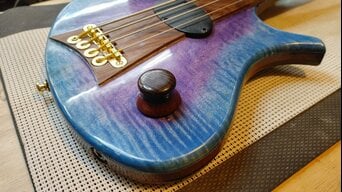
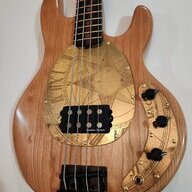
figured woods (I use it for non-figured woods as well) and glued-up panels to near final thickness. No, I'm not bringing 5/8" material down to 1/4" with this tool... That is not what it is for.
I carefully bring my materials down as close to my target thickness as I can while allowing for tear out... That can be with my lunch box planer, hand planes, band saw, etc. The drum sander is the tool to bring it to the final 3/32" to 1/16". That is usually enough to get rid of blade marks, tear-out and an uneven glue seam.
They are also great at getting the work piece very flat. Again, the machine must be set up properly and you have to let the workpiece "catch up" in between adjustments. I also flip pieces 180 degrees on every pass to minimize any irregularity in the machine setup. Is it accurate to .001 across a 16" wide panel? Probably not, but I build guitars out of wood, I'm not machining tool steel here.
No, it isn't fast, and no, you don't use them to hog off 1/4" of material; but for the price I don't know what other tool could do the job as accurately. Try to flatten a 1/8" thick bookmatched redwood burl guitar top (which is very soft) or a 1/4" bookmatched ziricote top (which is very hard) with no tear-out.
You have to put yourself in a different mindset... go to your Zen place, LOL. Take your time with a well adjusted machine and have realistic expectations... you will wonder how you got by without one.
Now, having said all of that, do you NEED one? To me, it's a bit of a luxury tool, and was purchased after I had nearly every other tool that I wanted. It's not quite a one-trick-pony, but it's close... still, it's a pretty dang good trick.