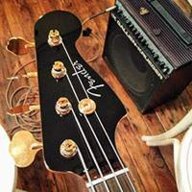

Enjoy the benefits of a premium membership!
Upgrade Account
-
TalkBass has been independent since 1998. Add your voice.
Create a free account to reply to discussions, view embedded media, and browse with fewer display ads.
Join free Log in
Want zero display ads or expanded classifieds tools? Compare plans.
You are using an out of date browser. It may not display this or other websites correctly.
You should upgrade or use an alternative browser.
You should upgrade or use an alternative browser.
what's that wire on the left? a ground?
- Thread starter macburner
- Start date
More options
Who Replied?


Yup, bridge ground so the strings are grounded. Don't break it or you'll buzz. 

JeezyMcNuggles
Inactive
- Feb 23, 2018
- 14,723
- 20,970
- Disclosures
- I suck, but nobody really notices
Yes. The the ground wire. It runs to the bridge. Then, adds you to the loop when you touch the strings, and removes the interference that you're causing by making you and your bass flow with the same current (grounded)totally green and kind of winging my first pickup upgrade on my pbass.
curious....what's that wire on the left? a ground?
View attachment 4130985
View attachment 4130985
thanks for the quick reply! one more question then (being lazy about reading up on it at the moment). Installing a Pure Vintage 63 pickup that only has one black and one white wire. The pickup that came with the bass (MIJ Traditional 60's Midnight Precision Bass) has two black and one white wire. Curious about the difference between the two pickup designs.
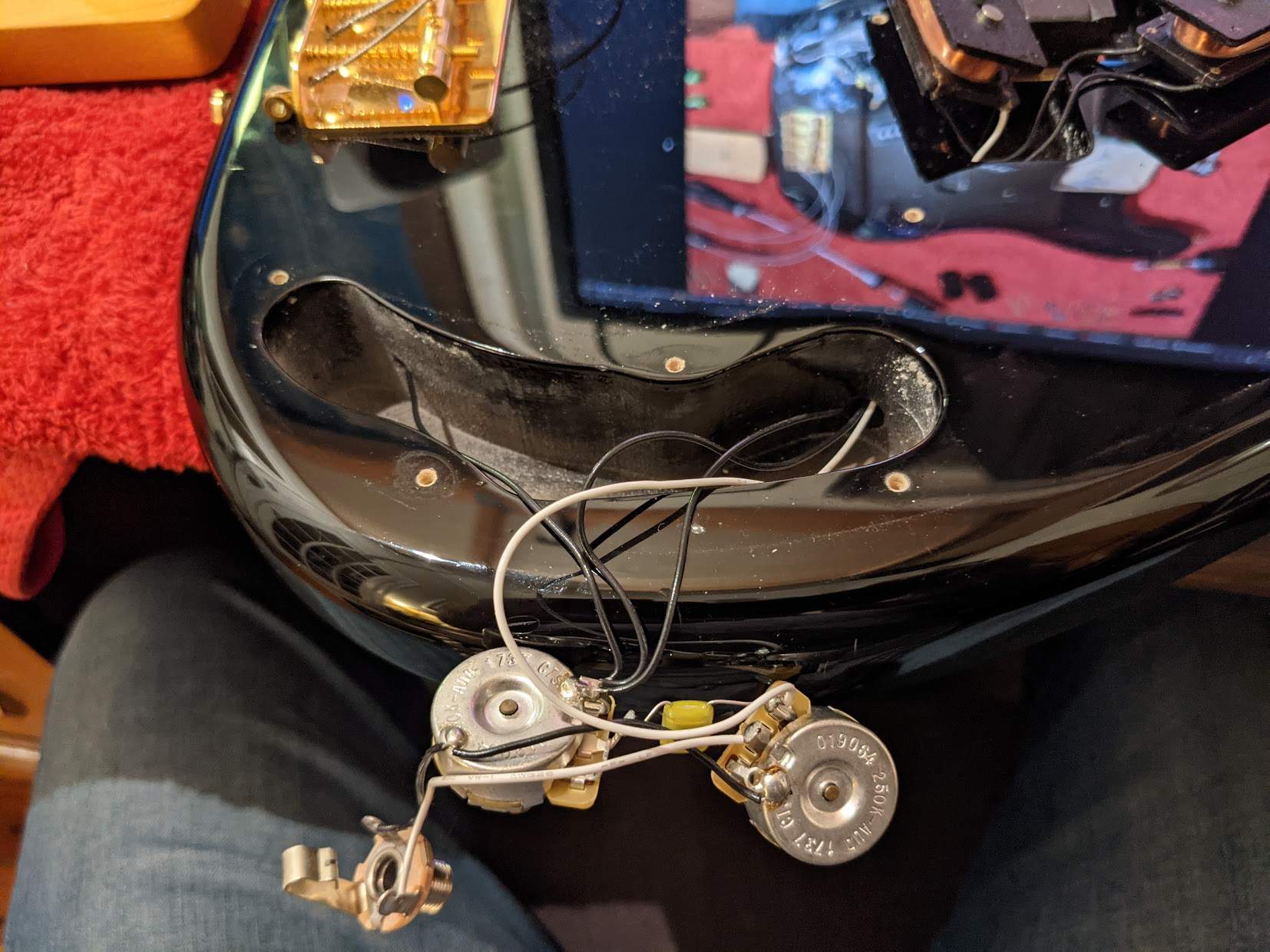
So on the pickup set on the right (the old set?), there's a white wire running between the two halves, putting them in series, electrically. Does the new pickup have a wire between the halves? Or do 2 wires come out from each half? That would just be for flexibility, so you can choose parallel or series between the halves (I'm guessing). I can't quite see how the wires run on the one on the left.

The plate under the pickup that you're removing has a dedicated ground running into the control cavity. The new pickup's plate appears to be grounded with the black pickup lead.

Clean & tin your iron tip. "Tinning is winning". A little dab of flux paste will let you work with already-soldered points (most solder has a flux core that burns off during initial soldering).gonna pause for a bit as the junky soldering iron given to me won't melt the solder

Installing a Pure Vintage 63 pickup that only has one black and one white wire. The pickup that came with the bass (MIJ Traditional 60's Midnight Precision Bass) has two black and one white wire. Curious about the difference between the two pickup designs.
Many modern pickups use 3 wires instead of 2 - the 3rd wire is often used to ground the pole pieces, which helps with hum and buzz. Leo didn't see that as necessary, but folks back then didn't have quite the number of interference sources we have today. The amps also has a fair amount of buzz (which helped mask this issue), something that good rigs of today don't have.
Making the pole piece ground connection a 3rd wire (not connecting it to the black wire) allows you to reverse the polarity of the pickup (flipping the connections of the other 2 wires) and/or put pickups in series (where one pickup's coil is not connected directly to ground), and still have the pole pieces grounded.
yeah, that's what I was trying to get at, but way more accurate and clear...Many modern pickups use 3 wires instead of 2 - the 3rd wire is often used to ground the pole pieces, which helps with hum and buzz. Leo didn't see that as necessary, but folks back then didn't have quite the number of interference sources we have today. The amps also has a fair amount of buzz (which helped mask this issue), something that good rigs of today don't have.
Making the pole piece ground connection a 3rd wire (not connecting it to the black wire) allows you to reverse the polarity of the pickup (flipping the connections of the other 2 wires) and/or put pickups in series (where one pickup's coil is not connected directly to ground), and still have the pole pieces grounded.
yeah, that's what I was trying to get at, but way more accurate and clear...
You're welcome!


This. And clean your tip before you make a joint.I use a damp cellulose sponge and wipe the tip before every joint. I was taught this trick by an old-school radio station engineer.Clean & tin your iron tip. "Tinning is winning". A little dab of flux paste will let you work with already-soldered points (most solder has a flux core that burns off during initial soldering).

It shouldn't take more than a second or two to melt solder. If you have the hold the iron on for a long time, you risk burning up your pots and other parts. I recommend at least a 35W iron.
I'm a fan of copper scrubbing pads myselfThis. And clean your tip before you make a joint.I use a damp cellulose sponge and wipe the tip before every joint. I was taught this trick by an old-school radio station engineer.

It shouldn't take more than a second or two to melt solder. If you have the hold the iron on for a long time, you risk burning up your pots and other parts. I recommend at least a 35W iron.
My soldering magically got better when I got a digitally controlled iron that I could use higher temps to solder and unsolder things quickly without letting heat spread out into pots and other parts. Caution though as somethings just can't take that high of heat.


