

Enjoy the benefits of a premium membership!
Upgrade Account
-
TalkBass has been independent since 1998. Add your voice.
Create a free account to reply to discussions, view embedded media, and browse with fewer display ads.
Join free Log in
Want zero display ads or expanded classifieds tools? Compare plans.
You are using an out of date browser. It may not display this or other websites correctly.
You should upgrade or use an alternative browser.
You should upgrade or use an alternative browser.
What's the problem with 24-fret basses?
- Thread starter Dexterzol
- Start date
-
- Tags
- 20 frets 24 frets bass necks frets
More options
Who Replied?

You may not be looking for it, but the 24th-fret access looks pretty comfy on those basses.Nothing for me
View attachment 3464924
It’s not 24 fret access that is what I’m looking for as a player...It’s that 15th-18th fret access that is so much easier on a 24.
Nice, nice, nice!!!
Reach to the first fret has nothing to do with the number of frets. That has to do with where there strap buttons are placed, as well as the scale length.
My Ibanez SR300EB at 52.6 inches long was indeed longer than my Fender P bass which was 49.8 inches, thus it had a longer reach to the first fret. Stand them up side by side and you can see the SR was longer, just by eyeballing it. Scale length is obviously the same but how a bass is designed effects length and things like reach. One of the reasons I sold it. Ive only played a couple 24 fret basses but they both have had a noticeably longer reach to the first fret than what Im used to with Fender/Squier.

I've actually photographed my fretted one, but look in the pictures and agree: it's like a 25-frets+a bit more guitar. so, technically it's a bit more than a 2-octave neck.
when you say that you have to change your hand position to access frets 23 and 24, well, you can have a 20-fret Fender P and have same troubles accessing the 20th fret. =)
I have no problem getting to 21 with normal technique on my StingRays. I don't have a problem with my 'solution' on the Wick, but I do have a problem with the need for a solution. Why make a 2-octave+ fingerboard then restrict access in this way?
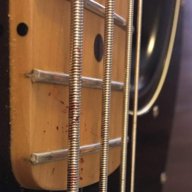
It's Talkbass; somebody is bound to take VERY SERIOUS OFFENSE to something as mundane as a 24 fret bass.
My Ibanez SR300EB at 52.6 inches long was indeed longer than my Fender P bass which was 49.8 inches, thus it had a longer reach to the first fret. Stand them up side by side and you can see the SR was longer, just by eyeballing it. Scale length is obviously the same but how a bass is designed effects length and things like reach. One of the reasons I sold it. Ive only played a couple 24 fret basses but they both have had a noticeably longer reach to the first fret than what Im used to with Fender/Squier.
Yes. How a bass is designed effects reach to the first fret. That doesn't mean that having more frets causes a longer reach. It's due to other elements of the design.
It's a pretty silly hyperbole that there is "no $ above the 5th fret". Listen to any notable bassist for an instant debunk of it.
Many amateur bassists won't use the highest notes, but I see no evidence that professionals don't use the whole fingerboard, as needed.
Many amateur bassists won't use the highest notes, but I see no evidence that professionals don't use the whole fingerboard, as needed.

The people who invented those technologies were/are exceptional. They would have been exceptional no matter what generation they were a part of. They weren't exceptional BECAUSE they were boomers or greatest generation. They just happened to be exceptional.
So who are the post boomer exceptional people then? As in civilization/history altering invention making exceptional people.

- Aug 21, 2003
- 11,619
- 18,701
- Disclosures
- A-Designs Mike Lull GK Tsunami Cables GHS Strings RMI Basswitch Nordstrand Pickups Darkglass
Thanks @diegomYou may not be looking for it, but the 24th-fret access looks pretty comfy on those basses.
Nice, nice, nice!!!
Mikes 24 fret basses are the perfect platform for me.
I still like to mentally masterbate in the upper register at times in my instrumental band and that access is very easy on these.
I was always under the impression that bass players were far more tolerant of extending range in any manner than guitar players.
I can give you a million reasons some guitar players think 2 octave boards are evil. Most center around the fact that w a 2 octave board, the neck pickup no longer sits where the good lord Leo Fender originally placed it meaning you can't get "dat toan"...
Poppycock
I can give you a million reasons some guitar players think 2 octave boards are evil. Most center around the fact that w a 2 octave board, the neck pickup no longer sits where the good lord Leo Fender originally placed it meaning you can't get "dat toan"...
Poppycock


In the past I have had people tell me that the necks on 24 fret bases are prone to twisting or warping due to the extra length.
I have never had that experience, and I prefer 24 fret basses.
Maybe that was an issue sometime in the past, but the modern truss rod seems to handle this.
I have never had that experience, and I prefer 24 fret basses.
Maybe that was an issue sometime in the past, but the modern truss rod seems to handle this.
So who are the post boomer exceptional people then? As in civilization/history altering invention making exceptional people.
The original internet was basic phone technology compared to what it is today. It's silly to give credit to any small group of people or to a particular generation.


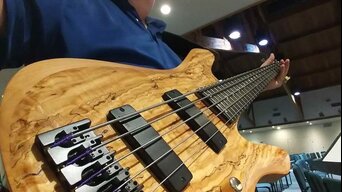
I don't have any issues with my 24-fret bass, but maybe it's because I never used them?
Re-thinking, I guess I do have an issue... I wasted money on those extra frets needlessly since I will never use them.
Re-thinking, I guess I do have an issue... I wasted money on those extra frets needlessly since I will never use them.

The Ibanez Volo has such a sweet high end, I can't resist it!Yea jazz and fusion gigs are the only ones that warrant those frets IMO and even then, when Im on those types of gigs my passive fenders w/20 frets work just fine
It's a pretty silly hyperbole that there is "no $ above the 5th fret". Listen to any notable bassist for an instant debunk of it.
Not really. It doesn't mean literally that anything above the 5th fret is useless. What it means is, the money for bassists in bands are guys who actually play BASS, not the guys who think they are guitarists and go noodling all over the place. Beatles, Zeppelin, U2, Pink Floyd, AC/DC....the guys who were most successful and made tens of millions did it by holding down the bottom end, not trying to solo and wow everyone like they are Jaco.
Show up to most auditions with a 6 string, 24 fret bass and start noodling away and stepping on the guitar frequencies and you'll likely be shown the door within minutes. So that phrase is basically saying know your role and hold down the bottom end, that's where the money is. If you want to be Jaco or Wooten, go solo or start your own jazz fusion group and make peanuts.
Last edited:


