
Enjoy the benefits of a premium membership!
Upgrade Account
-
TalkBass has been independent since 1998. Add your voice.
Create a free account to reply to discussions, view embedded media, and browse with fewer display ads.
Join free Log in
Want zero display ads or expanded classifieds tools? Compare plans.
You are using an out of date browser. It may not display this or other websites correctly.
You should upgrade or use an alternative browser.
You should upgrade or use an alternative browser.
What's the problem with 24-fret basses?
- Thread starter Dexterzol
- Start date
-
- Tags
- 20 frets 24 frets bass necks frets
More options
Who Replied?
Nothing wrong with 24 frets, but the neck will be set into the body more than a 20/21 fret neck and that along with the differences in where you can slap will give a different tonality.
That's why a lot of guitarists don't like 24 fret guitars. The extra frets mean the neck pickup is slightly closer to the bridge, which they think doesn't sound as good.


I like the symmetry of having 24-frets and two full octaves to work with. It's also nice that should I need/want to solo up high, I don't have to reach around a bulky neck joint to get the high E on the 21st fret of the G string.
But one issue I've had with SOME 24-fret basses with small bodies is that first position feels like a long reach. But that's no fault of the neck. Couple a 24-fret neck to a small body (e.g. a Warwick Thumb) and that's an ergonomic nightmare.
But one issue I've had with SOME 24-fret basses with small bodies is that first position feels like a long reach. But that's no fault of the neck. Couple a 24-fret neck to a small body (e.g. a Warwick Thumb) and that's an ergonomic nightmare.

Just about enough for a G# but certainly not A.
I've actually photographed my fretted one, but look in the pictures and agree: it's like a 25-frets+a bit more. so, technically it's a bit more than a 2-octave neck.
when you say that you have to change your hand position to access frets 23 and 24, well, you can have a 20-fret Fender P and have same troubles accessing the 20th fret. =)
Last edited:

FWIW, I've got a 24-fret bass, with a high C string, no less, and I'm up in that part of the neck fairly frequently, but only when it's called for -- playing a melody or a solo up where it can be heard more easily. In the jazz ensembles I'm in, it works fine. On pop and rock gigs, of course, it's as you say.Ive had 24 fret basses, I barely every used those frets, even during a solo. Then there is the old saying "theres no money above the 5th fret" which I've found to be true. Like I don't hate on an instrument with 24+ frets, ill also never seek one out
It's probably a mix of factors. Those who want access to the notes down the neck like that enjoy the 24 fret basses, while I'm sure there are others that live above the 12th and don't see the need in one.
Then the aforementioned ability to slap. In order to make room, one has to move the pickups back, and then you're getting a different sound. Think of the Jazz Bass bridge pickup move in the 60's/70's. Some people hate that more rearward pickup, all other things being the same.
You can get anything you want these days, but mass production usually relies on what's profitable. It's not shocking that an industry that still thrives on 60 year old designs isn't going to be in a big rush to shake things up. They already have a winning formula. Company may try this or that and if it works... Great... If not, they move on to the next possible profit move. Nobody wants to go broke satisfying small segments. They have a saying in hi-fi audio "if you want to make $1million in audio, start with $2million". I imagine that's what they want to avoid.
Then the aforementioned ability to slap. In order to make room, one has to move the pickups back, and then you're getting a different sound. Think of the Jazz Bass bridge pickup move in the 60's/70's. Some people hate that more rearward pickup, all other things being the same.
You can get anything you want these days, but mass production usually relies on what's profitable. It's not shocking that an industry that still thrives on 60 year old designs isn't going to be in a big rush to shake things up. They already have a winning formula. Company may try this or that and if it works... Great... If not, they move on to the next possible profit move. Nobody wants to go broke satisfying small segments. They have a saying in hi-fi audio "if you want to make $1million in audio, start with $2million". I imagine that's what they want to avoid.
In the jazz ensembles I'm in, it works fine.
Yea jazz and fusion gigs are the only ones that warrant those frets IMO and even then, when Im on those types of gigs my passive fenders w/20 frets work just fine


- Jul 7, 2010
- 3,383
- 2,311
- Disclosures
- Endorsing Artist for: Duncan Pickups; Line6, Hipshot, GHS Strings, Somnium Guitars

Baby boomers in particular tend to think there hasn't been a single good idea or quality product made since they were in high school. They'll go on the internet to piss and moan about.... the internet.
Funny. The boomers are the generation that designed and built your Internet. Along with the PC and related technologies. So I don’t know where you get that. Are you maybe confusing us with the WWII generation? They’re the ones who invented the rest of the technologies you take so much for granted.

(hint: “social media” is not the Internet.)
Last edited:
The guitarist I had played with dislikes Gibson because they have not yet modernized their models to 24-frets and Floyd Rose. For example, you can get a Floyd Rose if you go for a custom shop or Alex Lifeson Axcess Les Paul. If you're able to locate one, Buckethead had a signature Les Paul Studio with 24 frets (and it had an ebony fretboard and cool kill switch in the shape of an arcade video game button.). Unless there's a custom one-off somewhere, I've never seen one with both 24 frets and a Floyd Rose.That's why a lot of guitarists don't like 24 fret guitars. The extra frets mean the neck pickup is slightly closer to the bridge, which they think doesn't sound as good.
Saw Beefheart in the 80's and his bass player had a 12 fret electric bass.
I thought those extra frets were spares.
I thought those extra frets were spares.
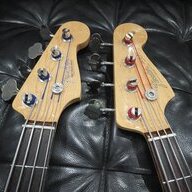
It's more a matter that some people don't "understand" why a bassist would "need" 24 frets, suggesting that bassists shouldn't be spending much (if any) time in the upper register anyway. Those basses therefore get flack in the same manner as basses with active electronics, exotic pickup configurations, additional strings, lightweight basses, and basically anything else that differs from a meat-and-potatoes Fender or equivalent classic passive 4-string.
I'm cool with all of that. Haha.
Don't post much, but I've noticed some level of disdain for 24-fret basses, not just on this forum. What's the problem here? Is it not objectively better to have more frets to work with, why the hate for 24-frets, you can objectively do less with 20 frets
For me, its having to reach out to mars to grab the first fret. I don't have a 7 foot wingspan. I stay at 20 or less frets and have been preferring short and medium length scale basses lately.
I've had a couple of 24 fret basses and frankly I think the necks are too long. Like they just stick out a couple extra inches, I find that the ones with fewer frets must have shorter necks by a couple of inches and they're more compact on stage.
Kidding.
Except about having owned a few 24-fret basses. The only thing I have found is that when slapping the point of impact IS closer to the bridge and the sound of the pops is a little different. But that wasn't necessarily a bad thing, it was just a difference. I certainly don't look down on 24 fret basses just because they have 24 frets.
Kidding.
Except about having owned a few 24-fret basses. The only thing I have found is that when slapping the point of impact IS closer to the bridge and the sound of the pops is a little different. But that wasn't necessarily a bad thing, it was just a difference. I certainly don't look down on 24 fret basses just because they have 24 frets.

- Aug 21, 2003
- 11,619
- 18,697
- Disclosures
- A-Designs Mike Lull GK Tsunami Cables GHS Strings RMI Basswitch Nordstrand Pickups Darkglass
Nothing for me
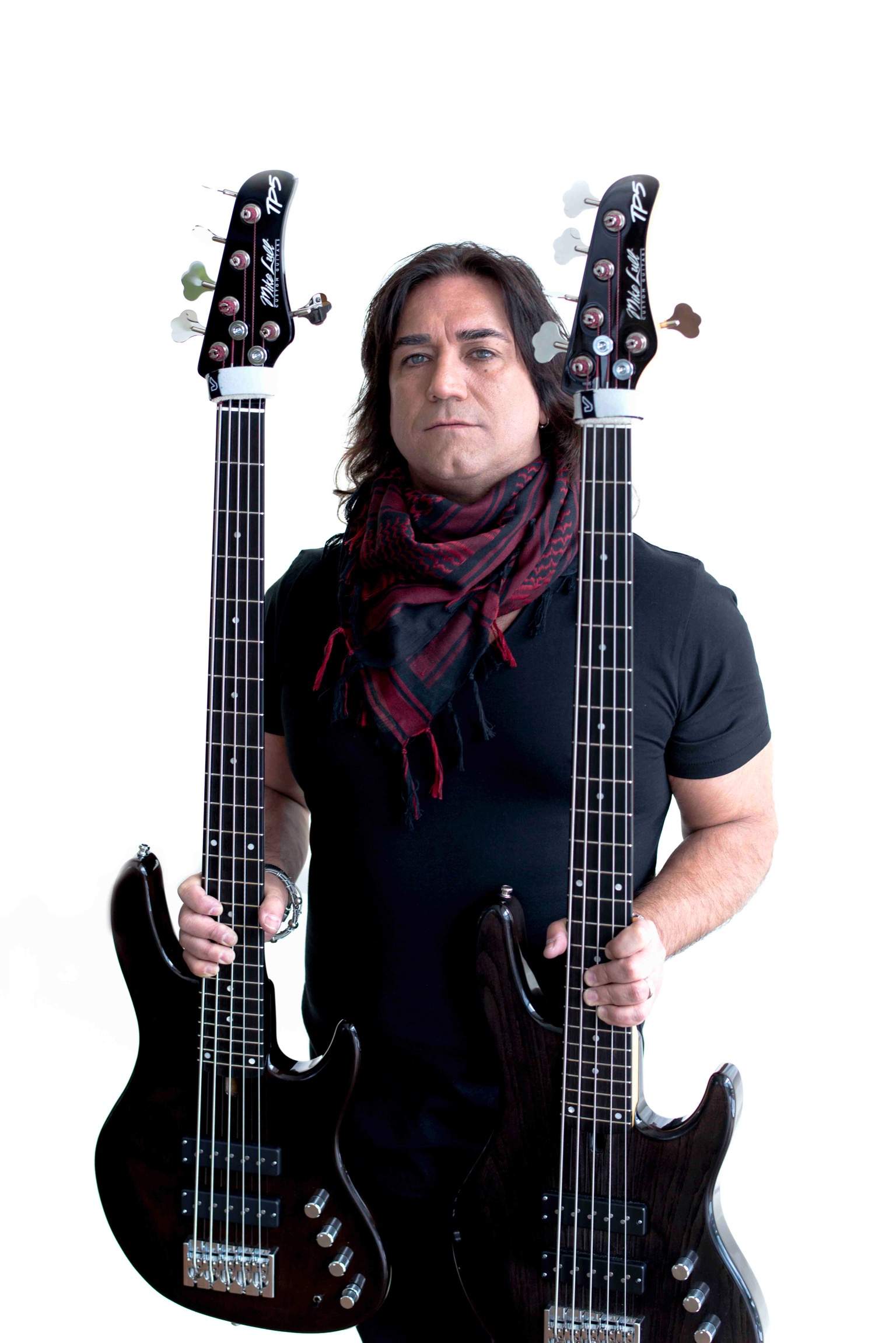
It’s not 24 fret access that is what I’m looking for as a player...It’s that 15th-18th fret access that is so much easier on a 24.
It’s not 24 fret access that is what I’m looking for as a player...It’s that 15th-18th fret access that is so much easier on a 24.

Funny. The boomers are the generation that designed and built your Internet. Along with the PC and related technologies. So I don’t know where you get that. Are you maybe confusing us with the WWII generation? They’re the ones who invented the rest of the technologies you take so much for granted.
(hint: “social media” is not the Internet.)
The people who invented those technologies were/are exceptional. They would have been exceptional no matter what generation they were a part of. They weren't exceptional BECAUSE they were boomers or greatest generation. They just happened to be exceptional.
Reach to the first fret has nothing to do with the number of frets. That has to do with where there strap buttons are placed, as well as the scale length.For me, its having to reach out to mars to grab the first fret. I don't have a 7 foot wingspan. I stay at 20 or less frets and have been preferring short and medium length scale basses lately.
I've never played, or even seen, a 24 fret bass to be able to complain about it...nor have I heard anyone say anything about them till now.
It's about 12 frets more than I've ever needed...and I can only imagine that the person who would design such a thing would also be a person who has a different sense of aesthetics and musical taste than I do (i.e. those of these basses that do exist are likely ugly looking to me, and probably get played to make music I don't care for)...but knock yourself out. Nobody's stopping you, and you shouldn't care or be bothered by what other people think about it.
It's about 12 frets more than I've ever needed...and I can only imagine that the person who would design such a thing would also be a person who has a different sense of aesthetics and musical taste than I do (i.e. those of these basses that do exist are likely ugly looking to me, and probably get played to make music I don't care for)...but knock yourself out. Nobody's stopping you, and you shouldn't care or be bothered by what other people think about it.
Last edited:

When I first started playing classical guitar, in my early teens, I was always bothered by NOT having 24 frets!
I guess my OCD side could not understand why you would not have 2 octaves per string. It just seems more "correct", if not entirely practical.
Give me 12 or 24, not "in-between"!!!
I guess my OCD side could not understand why you would not have 2 octaves per string. It just seems more "correct", if not entirely practical.
Give me 12 or 24, not "in-between"!!!


