• TalkBass has been independent since 1998. Add your voice.
    Create a free account to reply to discussions, view embedded media, and browse with fewer display ads.
    Join freeLog in
    Want zero display ads or expanded classifieds tools? Compare plans.

When (beginner, intermediate, advanced, ...) can one truly appreciate a high-end bass?

There is a law of diminishing returns at work. But a high-quality instrument really can inspire you to play better and, if it's set up properly, has good fretwork, etc. will be easier to play. Is a $10K instrument THAT much better than a $2K instrument? It is certainly better, but will it make a difference in moving from beginner stage to intermediate? Probably not, but a $2K instrument is probably significantly better than a $200 instrument and probably would make a difference. Paradoxically, once you're at those better stages you can probably get more out of those less expensive instruments than you could at first.
 
(1) Proper set-up is pretty much everything. I'd take an affordable (I hate the word "cheap") bass over an expensive one, if the affordable bass is setup properly and the expensive one isn't. A high-end bass set up properly is tough to beat, though.

(2) If you're spending what you believe is "real money" on an instrument, consider getting it insured through Clarion or another musical instrument insurance carrier/broker. If you can afford a $3,000+ bass guitar, you can afford a $150 per annum premium to repair or replace it, should the need ever arise.
 
  • Like
Reactions: Roger W and JPK_DK
I see it as reflecting the law of diminishing returns. For me (and I'm only speaking for myself) there comes a point where higher cost does not necessarily equate to higher satisfaction. I can afford a car that costs twice what mine cost, but it would not double my enjoyment or my driving experience. I can afford much more expensive watches than the ones I have (disclaimer: I'm a huge Seiko fan), but they would not give me anymore satisfaction. For me, the same is true for musical instruments. My drums and basses are not the most expensive gear, but they are of very good quality and I enjoy them very much.

Recently, I read an article in Bass Player magazine (February, 2007) about the world's most expensive bass guitar (made by Jens Ritter). In 2007 money, it was $100,000 US dollars and included a nut made from 10,000 year old Siberian mammoth ivory. That's pretty high-end, and is clearly targeted at a customer base that I don't belong to, but I can't imagine that the playing experience of that bass is 100 times better than a thousand dollar bass.
 
I’ve never owned “high end” basses - the most expensive I own is my ‘93 MM Sterling fretless.
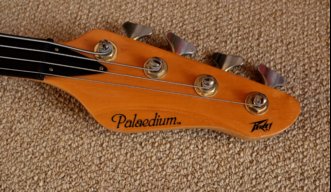
My favourite bass is my ‘91 Peavey Palaedium, although if I ever get round to doing a fretless conversion on another Palaedium then that could well end up being my all-time favourite.
I doubt any other bass would suit me better, and I have no interest in trying to find one (if it exists) either.
So, I’m just cheap and easily pleased, I suppose....
 
I would say if you're a new player, have someone check out whatever bass you want to buy to make sure it plays good and sounds good. When I first started the cheap basses were usually cheap pieces of crap and had high action etc but it's different nowadays but still make sure someone with experience goes with you when you're looking to buy. I've been playing for a long time and super expensive basses don't appeal to me at all, American Fender, Rics, Gibsons etc are the basses I like, they sound good and play good, now that being said I've never tried a bass that costs more than about $2500.00 so maybe I don't know what I'm missing?;)
 
  • Like
Reactions: JPK_DK and Haroldo
I guess we all know people who have bought super expensive gear (because they have the money), but can't really play (yet/ever), but think that they need the best possible gear to get better. And then there are others who can make an 80$ bass sound like a dream and play everything on it, because they can play on just about any instrument and make music.

So, when in our journey from bloody-nosed beginner to decent amateur or gigging pro can we REALLY begin to appreciate what a good instrument offers compared to a mediocre one, or what a top-notch luthier-made bass offers compared to a run-of-the-mill Squire?

In other words: would you start with a, say, Fodera if you had the means, or do you upgrade your instruments as you progress? What does it take to appreciate why an Alembic is "better" than a Gio?

Short answer: As you get better as a musician, you'll develop preferences and eccentricities in your style. Some basses will work better than others at fulfilling these - in some cases, this will mean going custom. In other cases, not. Everybody is different (in my case, I play a custom semi-hollow headless 8 string guitar because it suits my musical needs as a guitarist, and a 4 string Rickenbacker 4003 bass because it suits my musical needs as a bassist.)

There's no reason not to start with a Fodera, though if I was teaching such a person, I might worry that they financially over-committed to something they might not develop a love for in the long run. Of course, YM (mileage and means) MV.
 
Last edited:
After reading a bunch of cheap vs expensive instrument threads I've figured out something.

The people who buy cheap basses can justify it and are (sometimes) happy with what they have.

The people who buy expensive basses can justify it and are (sometimes) happy with what they have.
AFAICT, the key to the puzzle is that the happiest people are those who have what best fits what they want.

...learning what that is, is an exercise left for the student :grin:
 
Last edited:
... and while I understand his motivation, I always hate to think an instrument of that quality may end up in the closet because someone buys it but doesn't take to music.

Whenever my friends or co-workers ask me how much they should spend on an instrument - I always point them in the direction of a well made mid level Squier or Epiphone ($250 to $450cad range), usually closer to the lower end of that range.

When I was first starting out - I got an Ibanez TR50 as my first bass (still have and love it). My much more well off friend got a PRS guitar to start, I am not sure how much it exactly cost at the time but it was over a thousand. Guess who stuck with music?

Because - you either take to music or you don't, it requires work especially at the outset and that can put some people off. Buy an instrument that is going to feel good but not break the bank and see if you stick with it through the early stages.

So for the most part I don't really think a super high end or vintage instrument is a good idea to start with - even if you have the means, it saddens me to think of all the high end gear sitting in a closet not getting used because a potential hobby never developed into a passion.
... and while I understand his motivation, I always hate to think an instrument of that quality may end up in the closet because someone buys it but doesn't take to music.

Whenever my friends or co-workers ask me how much they should spend on an instrument - I always point them in the direction of a well made mid level Squier or Epiphone ($250 to $450cad range), usually closer to the lower end of that range.

When I was first starting out - I got an Ibanez TR50 as my first bass (still have and love it). My much more well off friend got a PRS guitar to start, I am not sure how much it exactly cost at the time but it was over a thousand. Guess who stuck with music?

Because - you either take to music or you don't, it requires work especially at the outset and that can put some people off. Buy an instrument that is going to feel good but not break the bank and see if you stick with it through the early stages.

So for the most part I don't really think a super high end or vintage instrument is a good idea to start with - even if you have the means, it saddens me to think of all the high end gear sitting in a closet not getting used because a potential hobby never developed into a passion.

I don't disagree with your assessment. It is potentially wasteful to have true beginners starting out with high-end instruments as they may not stick with it. I'm not entirely sure that there's a ton of evidence that someone who starts at the higher end is more likely to give up (e.g. my friend has become a very good guitar player, plays regularly at his church and has been at it for 10 years), but it could be true. I think that the extent to which someone stays with music (and has a commitment to it) could be in how much of their disposable income and time they invest in it. This is where it gets relative - more likely the percentage of disposable income vs. the absolute amount of spend.

Ultimately, even if someone starts at the high-end and quits, it may create a good used gear buying opportunity for someone else. I do think that your suggestion is related more how things should be done. My point was more related to how things actually happen. For example, some people's first car is a used beater that they saved a long time to buy, but other people's first car is a new BMW from mom and dad. It probably doesn't make sense for someone to start with a new BMW, and the commitment and investment is definitely greater in the former case. However, there are still a lot of people who start out with a pretty high-end car, and it probably doesn't bother the people who are paying as long as it's within their means.
 
What does "high end" even mean...

Ive seen "high end" basses with cult like followings who spend thousands on an unbalanced piece of wood with poopy string spacing...yet its revered and worshipped......

In the end, get what you want, what you can afford for whatever justification you tell yourself....who cares.
 
I don't disagree with your assessment. It is potentially wasteful to have true beginners starting out with high-end instruments as they may not stick with it. I'm not entirely sure that there's a ton of evidence that someone who starts at the higher end is more likely to give up (e.g. my friend has become a very good guitar player, plays regularly at his church and has been at it for 10 years), but it could be true. I think that the extent to which someone stays with music (and has a commitment to it) could be in how much of their disposable income and time they invest in it. This is where it gets relative - more likely the percentage of disposable income vs. the absolute amount of spend.

Ultimately, even if someone starts at the high-end and quits, it may create a good used gear buying opportunity for someone else. I do think that your suggestion is related more how things should be done. My point was more related to how things actually happen. For example, some people's first car is a used beater that they saved a long time to buy, but other people's first car is a new BMW from mom and dad. It probably doesn't make sense for someone to start with a new BMW, and the commitment and investment is definitely greater in the former case. However, there are still a lot of people who start out with a pretty high-end car, and it probably doesn't bother the people who are paying as long as it's within their means.


Totally - and yes hopefully it does create a used gear opportunity, mind I used to work with someone that had a vintage 12 string Martin that sat in it's case for 20 years or so before he sold it.

I mean - not that I'd ever buy something in that sort of price range, it's well out of my means. Just always kinda bugged me that it had 20 years of no playing on it, lol

I also don't think the value of the instrument really plays a part in whether someone sticks with it or not, which is why I feel it is better to not take the chance on dropping money like that.

As far as experience goes - generally I have found that the people I have met and worked with in my life that come from some variation of struggle in their life (people in the lower class to lower middle classes), tend to have a better understanding of the work it takes to afford something like a BMW. So while I don't think that there is a causal link that would say getting a BMW from your parents would make you a better/worse driver than someone who started with a beater - it may change the potential understanding of what it means to have earned something more than a beater... so when cross applying that type of experience over to a creative endeavour I do believe that people who have had struggle in their life have a certain advantage in terms of artistic expression.
 
Totally - and yes hopefully it does create a used gear opportunity, mind I used to work with someone that had a vintage 12 string Martin that sat in it's case for 20 years or so before he sold it.

I mean - not that I'd ever buy something in that sort of price range, it's well out of my means. Just always kinda bugged me that it had 20 years of no playing on it, lol

I also don't think the value of the instrument really plays a part in whether someone sticks with it or not, which is why I feel it is better to not take the chance on dropping money like that.

As far as experience goes - generally I have found that the people I have met and worked with in my life that come from some variation of struggle in their life (people in the lower class to lower middle classes), tend to have a better understanding of the work it takes to afford something like a BMW. So while I don't think that there is a causal link that would say getting a BMW from your parents would make you a better/worse driver than someone who started with a beater - it may change the potential understanding of what it means to have earned something more than a beater... so when cross applying that type of experience over to a creative endeavour I do believe that people who have had struggle in their life have a certain advantage in terms of artistic expression.


Definitely agree - I started with a beater car as well as a beater bass, and now that I'm better off, I really enjoy what I have.
 
I guess we all know people who have bought super expensive gear (because they have the money), but can't really play (yet/ever), but think that they need the best possible gear to get better. And then there are others who can make an 80$ bass sound like a dream and play everything on it, because they can play on just about any instrument and make music.

So, when in our journey from bloody-nosed beginner to decent amateur or gigging pro can we REALLY begin to appreciate what a good instrument offers compared to a mediocre one, or what a top-notch luthier-made bass offers compared to a run-of-the-mill Squire?

In other words: would you start with a, say, Fodera if you had the means, or do you upgrade your instruments as you progress? What does it take to appreciate why an Alembic is "better" than a Gio?
I would say wait until you get to an intermediate stage before you start looking at expensive basses. Before then, they probably won't make much difference in your sound because you haven't perfected the techniques to make the difference heard.

Of course, I'm a bit hypocritical with that statement. I bought a cheap Japanese piece of junk in 1965 and when I bought a Fender Bassman amplifier in 1966 I heard just how poor it sounded. Prior to buying my Bassman amp, I would hold the butt end of the bass against a closet door and use the closet as a sounding board...you do what you gotta do...

If you don't like the way it sounds and feels, you won't play it and that has stopped a lot of would be musicians from pursuing their dreams. My next bass, that I bought in 1966 was a 1965 Fender Jazz, which in my opinion was one of the best basses of all time. So I went from playing a crap bass to playing a great bass a few months later. Wish I still had that bass but it was stolen in 1976.

Good news is that now with instruments like the Squier by Fender, low-priced basses that sound good and play well are far more accessible than they were in 1965.
 
  • Like
Reactions: JPK_DK
In my experience, the cheaper, inexpensive basses tend to not sound as good:

1. At high SPLs
2. In the studio

I go to see bands whenever possible and I've seen people playing cheap basses through a huge PA system and YUK! sounds terrible. One guy is known to be a really great player and he was playing some amazing stuff, but the tone was just, unbearable. He later switched to Spectors. Sounded much much better.

When I get a call for session, I always bring the good stuff, the gear I KNOW sounds great.
 
So, when in our journey from bloody-nosed beginner to decent amateur or gigging pro can we REALLY begin to appreciate what a good instrument offers
If you saw what I started out playing on, the answer to that question is "from day one". Really, it was pretty much obvious to me back then that anything I picked up was better than the bass I owned.

That said, the subtleties of what actually made one bass better than another escaped me until I got a bit more experience. But that lack of understanding did not prevent me from appreciating the nicer basses.

Eventually, I've come to believe that how much a bass costs has nothing to do with whether or not it's a good instrument for you. Because along with my greater understanding and appreciation of expensive basses, I've also developed a greater understanding and appreciation of basses regardless of cost.

I have never in my life, not once, questioned whether I deserved a nice instrument. I've only ever questioned whether a given instrument was the best one for me.
 
  • Like
Reactions: JPK_DK

Latest posts