

Enjoy the benefits of a premium membership!
Upgrade Account
-
TalkBass has been independent since 1998. Add your voice.
Create a free account to reply to discussions, view embedded media, and browse with fewer display ads.
Join free Log in
Want zero display ads or expanded classifieds tools? Compare plans.
You are using an out of date browser. It may not display this or other websites correctly.
You should upgrade or use an alternative browser.
You should upgrade or use an alternative browser.
More options
Who Replied?
I'm disappointed TB, this thread is already on page 4 and it hasn't degenerated into a tonewood argument yet.


This is a huge oversimplification! One must always account for the thickness of the mojo, the weight of the Fairy dust, and the placement of the Unicorn poop.Mojo
Fairy dust
Unicorn poop

Better toned you maybe?It's you. Some basses will certainly sound different one to the next, amps, etc., but give me five minutes and any bass/amp combo you can come up with, and . . . . . . . I will sound like me. Their must be some primordially baked-in EQ curve in my DNA, it WILL happen. Granted, I sounded like a better me on the Alembics than the Squiers, but it's still me.
So pickups are a factor in tone?Unless Jaco was playing a PJ. I've got a TF signature fretless and it's so much more versatile than a J bass. Flip the blade switch and turn up the tone knob and you have Jaco. Flip it the other way and turn down the tone and you've got Jameson. Stick it in between and you have a completely unique sound.




Fingers first!  followed by strings...
Since amps (and sadly, carrots) are not in the equation, I will go with pickup type/location trumping all else on the list of worthy and honorable choices.
But really, where and how you pick or pluck has always been the determining factor.
followed by strings...Since amps (and sadly, carrots) are not in the equation, I will go with pickup type/location trumping all else on the list of worthy and honorable choices.
But really, where and how you pick or pluck has always been the determining factor.
Tone (or timbre) is certainly affected by the player but I'm putting the player in a 4th place behind Pickups / Controls / Strings.
It depends how you look at it. The controls are there to give you more options and they certainly affect tone, that's what they're for. But I looked at this differently, assuming you'd want to learn how to get as much tonal variation as possible before adjusting controls. As an example, I play in a band that does a couple of Neil Young songs. When I play My My Hey Hey or whatever it's called I move my fingers all the way behind the bridge pickup on the jazz and pick as hard as I can. Playing like this gets me that grungy distorted sound I need without even adding a pedal. I can't do that with tone controls. The most I can do with those is tweak EQ.
Last edited:

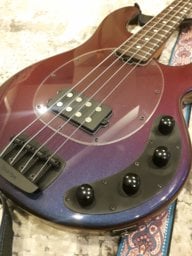
This is an interesting question that I had been thinking about a lot recently. A few weeks ago I would have said it was mostly the strings, pickups (& location), and the electronics (passive vs active). Playing my MM Stingray unplugged though kind of opened my eyes to the fact that there is certainly other factors that play a large role. I found that playing this bass unplugged, I could still hear that distinctive Stingray tone, even though the pickup wasn't being used at all. So it must have something to do with the bridge or more likely the body and neck construction. None of my other basses sound like it when played unplugged. In fact, they all do sound slightly different unplugged compared to each other.

When my brain tells my fingers: "Deploy the tone"
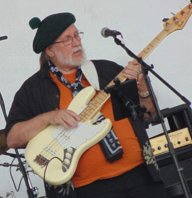


Not in my house it don't.....I think a lot of it has to do with the sound guy / engineer too....


I like to think it originates deep within the imagination of the player.
Everything else is a means to an end.
Everything else is a means to an end.

If a banjo accidentally falls down the stairs and no one is there, does it still play Yankee Doodle Dandy until it lands at the bottom?
If you forgot to unmute your amp and played for half the song before turning the mute off, would anybody notice.
If tone is in the fingers, can Vulcans finger meld and instantly become great players after melding with a pro?
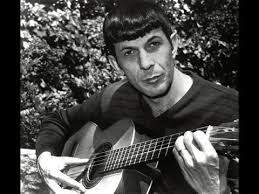
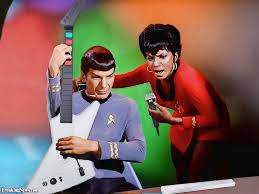
If you forgot to unmute your amp and played for half the song before turning the mute off, would anybody notice.
If tone is in the fingers, can Vulcans finger meld and instantly become great players after melding with a pro?


