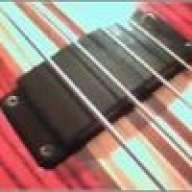
I second all the positives about Roscoe, I think he might have cracked the code for 6 and 7s that really bring useable tones finger style and thump wise for most amps I play it through. It's important what your amplification situation always but I have found even more so with ERBs.
Which brings me to my beef with ERBs and their tone-
The warmth of the "bass" factor usually suffers for their hi-range "clarity" in most examples I've tried. I don't know why exactly but the combo of the wood and electronics don't exactly cover all of it. I've tried so many permutations. I used to think weight was a pretty big factor, but my Roscoe 7 weighs 8.6 lbs and is lighter than my favorite Fender jazz 4, and has more balls (and bass) than a lot of my other basses. My Conklin 7 groove tools weighs 12.2 (crazy value tho on the used market and your best bet for dipping a toe into the seven string bass experience-I paid $500 for mine with upgraded Bartolinis and it's a beast!). My Acacia fret less weighs 13.6 lbs, sounds fantastic, but I bet you can guess which 7 is the one I play the most?
I really have a problem with crappy sounding sizzle -toneless highs on ERBs that sound like the bass of your youth- when you're driving out of the reception area on your radio (remember those) and it blends with the valve noise on your 72 air-cooled bug (remember those) and the valve noise has more tone than the bass !
He (Keith Roscoe) has been in the 6 and more game a long time before it became popular enough that industry giants came in and started offering them.
A big consideration for me after trying (6 to 7) 6-strings and (3) 7-strings trying to learn about ERBs is:
How useful are the tones that are in the meat and potato range of a 5? If I can't duplicate or exceed a good 5, I'm paying too high a premium for the extra perks of that higher range, clunkier fingerboard and neck, heavier weight AND an upper range that I should probably use less than I do-(let's be honest)...but... its SO fun!
Also, for me, the roscoe is a slap friendly ergonomic platform (for whatever reason I can swap between the Roscoe 7 string and a 4 string jazz and hit the fewest clams in the process when I try to slap coming out of the gate-(And fwiw , my Conklin, Acacia and Roscoe all have the same string spacing at the bridge and nut ).
I have what I'm told was his first ever 7 string and I hope I never have to part with it, because it's that smart of a useful bass tool and it was apparently his first try at that rodeo! Wanna hit the lotto and order a new roscoe with every bell and whistle someday...
So, yah! Roscoe for value and usefulness. Good luck be enjoy your journey!
Which brings me to my beef with ERBs and their tone-
The warmth of the "bass" factor usually suffers for their hi-range "clarity" in most examples I've tried. I don't know why exactly but the combo of the wood and electronics don't exactly cover all of it. I've tried so many permutations. I used to think weight was a pretty big factor, but my Roscoe 7 weighs 8.6 lbs and is lighter than my favorite Fender jazz 4, and has more balls (and bass) than a lot of my other basses. My Conklin 7 groove tools weighs 12.2 (crazy value tho on the used market and your best bet for dipping a toe into the seven string bass experience-I paid $500 for mine with upgraded Bartolinis and it's a beast!). My Acacia fret less weighs 13.6 lbs, sounds fantastic, but I bet you can guess which 7 is the one I play the most?
I really have a problem with crappy sounding sizzle -toneless highs on ERBs that sound like the bass of your youth- when you're driving out of the reception area on your radio (remember those) and it blends with the valve noise on your 72 air-cooled bug (remember those) and the valve noise has more tone than the bass !
He (Keith Roscoe) has been in the 6 and more game a long time before it became popular enough that industry giants came in and started offering them.
A big consideration for me after trying (6 to 7) 6-strings and (3) 7-strings trying to learn about ERBs is:
How useful are the tones that are in the meat and potato range of a 5? If I can't duplicate or exceed a good 5, I'm paying too high a premium for the extra perks of that higher range, clunkier fingerboard and neck, heavier weight AND an upper range that I should probably use less than I do-(let's be honest)...but... its SO fun!
Also, for me, the roscoe is a slap friendly ergonomic platform (for whatever reason I can swap between the Roscoe 7 string and a 4 string jazz and hit the fewest clams in the process when I try to slap coming out of the gate-(And fwiw , my Conklin, Acacia and Roscoe all have the same string spacing at the bridge and nut ).
I have what I'm told was his first ever 7 string and I hope I never have to part with it, because it's that smart of a useful bass tool and it was apparently his first try at that rodeo! Wanna hit the lotto and order a new roscoe with every bell and whistle someday...
So, yah! Roscoe for value and usefulness. Good luck be enjoy your journey!