

Enjoy the benefits of a premium membership!
Upgrade Account
-
TalkBass has been independent since 1998. Add your voice.
Create a free account to reply to discussions, view embedded media, and browse with fewer display ads.
Join free Log in
Want zero display ads or expanded classifieds tools? Compare plans.
You are using an out of date browser. It may not display this or other websites correctly.
You should upgrade or use an alternative browser.
You should upgrade or use an alternative browser.
More options
Who Replied?


I concur. Hot knives covered in butter.Any G&L bass with one or more MFD pickups will cut right through a dense band mix. My M-2500 and SB-2 sound different, but both have a strong presence in the mix, with the SB-2 sounding like a monstrous P-bass and the M-2500 providing a modern edge with a huge range of tones.

Mix of what, metal, country, jazz???
Any reasonably well put together bass with quality parts will ""cut through" any mix when properly eq-ed.
Any reasonably well put together bass with quality parts will ""cut through" any mix when properly eq-ed.


Cuts thru anything...except Chuck Norris
Last edited:

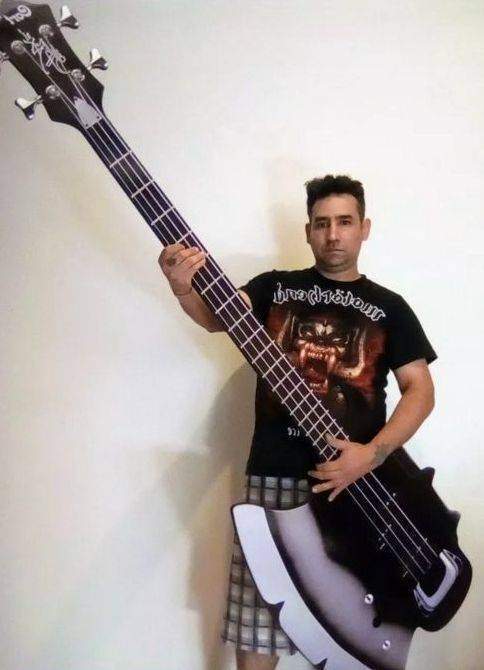
The Shark bass, undoubtedly...
It can slice through anything, very aggressive attack. Has a killer, biting tone, that doesn’t get lost in even an ocean of instruments. They say it has a voracious appetite for batteries tho

Alembic.I know that a p-bass is well known for how well it sits in a mix or how the stingrays and warwicks cut trough a mix like butter, but in your opinion which are some bass guitars that really cut trough a mix with ease? (Expecially without fiddling with the eq settings, pedals, etc.)
I don't pick a bass on how well it "sits in the mix" or "cuts through the mix". In a band, it's not my job to stand out from everybody else. I pick a bass that produces the signal best-suited to the sound engineer's goal of making the band sound as good as it can possibly sound. If that means I need to play a different bass, then so be it.
Let me illustrate. Let's say the band's sound is a hex-head bolt, and the closer I get it tightened to the correct torque, the better my band sounds. This type of job calls for a torque wrench. But my favorite tool is a pair of channel-lock pliers. And I think these channel-locks have worked really, really good for everything I've ever used it for. And I've always been a channel-locks guy. And it's got a really sweet paint job and a tort handlegrip. And I think it would make me look cool and impress so many people if they saw me using those channel-locks to turn that hex-head bolt. And I can get it close-enough with the channel-locks. So, in the interest of getting the job done efficiently, effectively, and just plain right, which tool should I use? My favorite, or the right tool?
You must be playing country, farmer style: channel-lock wrench for every hex-head bolt, tooth marks don't matter, and if it's stripped, grab a larger channel-lock.
Now if you said your favorite tool was the impact wrench, I'd say you're probably playing heavy metal.


You must be playing country, farmer style: channel-lock wrench for every hex-head bolt, tooth marks don't matter, and if it's stripped, grab a larger channel-lock.
Now if you said your favorite tool was the impact wrench, I'd say you're probably playing heavy metal.
Well played lolol
I know that a p-bass is well known for how well it sits in a mix or how the stingrays and warwicks cut trough a mix like butter, but in your opinion which are some bass guitars that really cut trough a mix with ease? (Expecially without fiddling with the eq settings, pedals, etc.)
I had a really nice German Warwick Corvette some years ago that came with stock passive pickups, but I had some Bartolinis (maybe 9J1's or 9J4's) and a preamp handy, so I dropped those in there to beef up the potential. Both before and after the electronics swap, that bass just didn't have much for mids and when I'd play it at a gig or a band practice, my sound would disappear. That bass has found a new home.
I've also had a few different Jazz basses that had individual personalities in terms of their sounds. The one I've had the longest doesn't cut through with a ton of aggression in its tone (it's inherently a little "scooped"), but I love playing it in terms of how it responds to me. I feel like I can play the groove that I want with that instrument to a healthy degree, but I also rely on the eq at my amp to help the tone to project a little better, too.
J-basses are tough to predict and I can't lump them all together. Some can be a little bright and thin, some can be more boomy than others... Try to avoid making assumptions about a particular one you might come across until you try it out.
When I picked up a custom P/J with active EMG's on board and used that at a gig, my guitar player actually asked me to turn down. Much more of an obnoxious personality in the tone of that bass that made it especially easy to be heard with the band, but not quite the warmth and smoothness that I love with my less "easily audible" Jazz. I switched to passive electronics in the P/J and that seems to be a little better for me overall - warmer and still plenty of clarity.
Also agree with nod to the Peavey Cirrus. Never owned one, but I've noodled on a couple different 4-strings and their sound was far from shy.

D
D
Thank you, finally someone who gets it. And by that I don't mean to discredit anyone who posted here.Did everyone miss where the OP said he didn't want to "fiddle with the EQ settings?"

Guys, I know that with a proper eq you can make any bass cut trough the mix but maybe I wasn't clear enough in my original post. I asked which bass guitars can cut trough a mix easily just by plugging them straight into the board/mixer.

It depends...I would say basses with a bridge pickup will have a more mid presences (think Stingray or Jazz or PJ) over a precision.
The question you have asked roughly translates to "what tool cuts through metal easiest?" The answer depends on what kind of metal you are trying to cut. I wouldn't try to cut tungsten with the same tool I would use on copper.Guys, I know that with a proper eq you can make any bass cut trough the mix but maybe I wasn't clear enough in my original post. I asked which bass guitars can cut trough a mix easily just by plugging them straight into the board/mixer.
D
Jeez, that thing looks like a beast, a nasty sounding one I bet

Another vote for the G&L L series, but I haven't tried every bass in a mix. Having said that, my experience is that a P sits "in" the mix like nothing else I've played. And I don't gig my L. But if you want or need a good sledge hammer or bulldozer, the L series would be hard to beat.
D
Have you ever played with metal guitarists?If the sound is so dense I have to "cut through," I'm in the wrong band.


