• TalkBass has been independent since 1998. Add your voice.
    Create a free account to reply to discussions, view embedded media, and browse with fewer display ads.
    Join freeLog in
    Want zero display ads or expanded classifieds tools? Compare plans.

while I think wood matters, sometimes you never know...

Well, being inquisitive is a good thing. But, in the field of investigation, the first thing folks tend to do is look for major vs minor effects just using simple tests to discard lesser factors. Sometimes the baby does get tossed with the bath water, which can be interesting; but, normally that's the approach.

Agreed, this is exactly the first step we take as a coatings company. That, and will going into an exhaustive DOE be cost effective.

While you might be correct, it's of no help if it's already agreed that while wood matters, it's effect is subtle. Here, it's the minor effect that is of interest

This is my opinion too, although I hear many (not in this thread) state that it has a large impact.


To throw another screw in here: I remember reading an opinion by some acoustic guitar luthier that the technique and build process has as much impact on the tone as the wood. I'll see if I can find the guy who said it. It was a very interesting read. He went on to state how one luthier braces a guitar could make it sound not unto its composition. I wonder how much of that carries over to basses, let alone solid body instruments?

Edit: last sentence is semi rhetorical. I'm sure some carries over, but I'm sure not as significant as acoustic instruments...That and it's a whole nother debate on the level of tonewood itself.
 
This is my opinion too, although I hear many (not in this thread) state that it has a large impact.

This is where I think the misunderstanding begins. Sound is a difficult thing to accurately apply words to. When the discussion centers on a small aspect, it might appear to be more important than it is to the people who are actually sharing their thoughts on the subject. If the focus is tight on a small object, the point of discussion is not the 'big picture'. That's for the 'big picture' discussion.
 
  • Like
Reactions: Novarocker
As far as wood in an instrument goes, about all anyone can say in general is it matters more to some than others. @nostatic was simply laying out an observation he had relative to his perception with a couple of instruments. His thread is probably not the right place to debate the broader question.

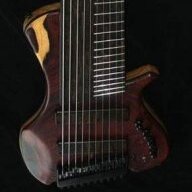
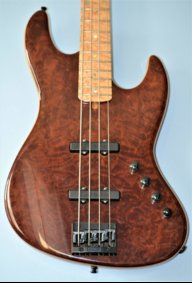
Yeah, I think people are reading far more into the original post than I intended. Simply that I had some expectations about two instruments that are very similar other than woods, and those wood differences didn't play out as expected.

But if someone does their doctoral thesis on it, I'll sit on their committee.
 
I would have expected #2 to be brighter and more mid scooped as well.

Bass #1 is mostly all mellower sounding tone woods, minus the maple board, which probably adds some definition.

Bass #2 is mostly all bright sounding tone woods, minus the rosewood board.
My personal preference is ash or alderbody with a Bolt on maple neck. Maple gives the neck a better feel and does add more punchy brighter sound. I just love the color of maple on a bass.
 
I know that a thumb bass (bubinga body - wenge/bubinga neck) vibrates differently compared to a p or j bass: Dense and compressed even before plugging in - - - But I don't know if it's the neck or the body (maybe both) that scoops out the mids like that - - - Just makes me wanna slap the sh*t out of it though