

Enjoy the benefits of a premium membership!
Upgrade Account
-
TalkBass has been independent since 1998. Add your voice.
Create a free account to reply to discussions, view embedded media, and browse with fewer display ads.
Join free Log in
Want zero display ads or expanded classifieds tools? Compare plans.
You are using an out of date browser. It may not display this or other websites correctly.
You should upgrade or use an alternative browser.
You should upgrade or use an alternative browser.
Who doesnt use compression?
- Thread starter eupharies
- Start date
- Status
- Not open for further replies.
More options
Who Replied?
I put much effort into finding perfectly balanced strings and adjusting the pickup height so I don't have to use compression live. I like to be able to play dynamically. But of course the studio is a completely different beast.

Same for me. I now never use a compressor live.
But in the studio ????

Don't really have a dog in this hunt. I've never felt the need for any sort of compression with my backline personally, but it can be an interesting effect, and if used expertly, can get a couple more db out of a 'too small rig' by reducing peaks, etc.
My only comment on the above is that recording studios (and to some extent) large front of house systems, use compression as an aid to the overall mix when balancing instruments with each other. That is quite different from someone using compression to 'even out their technique', which in some cases (like slapping), can also be useful. However, apples and oranges there to the discussion of a bassist using compression with his personal backline IMO.
compression is used to process instruments individually, not balance them with each other, sorry. a bus compressor is used for the whole mix or sub groups, that's not what we're discussing here.
compression is used to process instruments individually, not balance them with each other, sorry. a bus compressor is used for the whole mix or sub groups, that's not what we're discussing here.
Splitting hairs, IMO. Both methods are a way to shape the dynamics of the sound. Granted, where compression is applied will change the approach and result, but the goal is the same.

Speaking from having played bass for some 45 years, and as a recording and mastering engineer for 38 years -
One the bass side, I have never used compression live. In my experience, 95% of players are sheep. Sorry if that's harsh, but they only do things because they see others do it. That's why you see bassists with bigger pedal boards now than guitarists. It's gotten into people's heads that you can't possibly get a good sound without it. Well, let me tell you from a lot of experience, it's the old 'less is more' thing. I promise you that if you get a really good bass and plug it straight into a really good amp, you will find little need for anything other than maybe a distortion pedal if your amp can't do that.
There is no free ride in signal processing regardless of price - you may gain something, but you are also going to lose something. And in bass that something is clarity, definition and punch. I have worked for decades now on getting different tones straight from my bass by using different picking styles along with the tone controls on the bass itself - the meaty part of fingers back by the bridge, thumb right over the pickup, fingernails at the bridge, over the pickup or at the neck, a semi-slapping of strings against fretboard at the bottom of the neck with fingers, and (very little, thanks) outright funk-slapping. You can get an amazing array of tones and sounds without using any outboard eq or fx. As has been pointed out, a compressor can be used to smooth out a poor technique as well as a bad bass that can't produce a consistent volume up and down the neck. The technique you can work on yourself, but as for adding fx to try to make a bad bass sound good as we say in mastering, you can pour syrup all over cow ****, but that don't make it pancakes.
And yes yes yes, I realize that certain genres may require wah, filters, flange, phase or whatever. But for general straight-ahead bass playing, it's the bass and the amp that gets it. The pedal manufacturers don't want you to hear that, but it's the God's honest truth.
As for studio, compression is totally over-used now on individual tracks and on the two-mix, and it's strictly out of ignorance. The problem is, the recording industry has gone from being an industry of professionals to an industry of amateurs. There are very few real engineers any longer. What we have are 'recordists', which is someone who owns some recording gear and dabbles in it but has no knowledge of the science behind it. Recordists tend to use compressors like reverbs; if you can't hear it, it must not be working. In recording and mixing the proper use of compressors is well below where you can hear them working, unless you're trying to get a particular squashed effect. Same is true of most bassists trying to use compressors - they'll crank it until they can hear it clamping down, which is 4 to 5dB beyond where they should be set (if it's a good compressor).
If anyone cares, I use a very early G&L L-1000 (bass #58), mid-80's GK800RB and two Hartke 410XL's.
One the bass side, I have never used compression live. In my experience, 95% of players are sheep. Sorry if that's harsh, but they only do things because they see others do it. That's why you see bassists with bigger pedal boards now than guitarists. It's gotten into people's heads that you can't possibly get a good sound without it. Well, let me tell you from a lot of experience, it's the old 'less is more' thing. I promise you that if you get a really good bass and plug it straight into a really good amp, you will find little need for anything other than maybe a distortion pedal if your amp can't do that.
There is no free ride in signal processing regardless of price - you may gain something, but you are also going to lose something. And in bass that something is clarity, definition and punch. I have worked for decades now on getting different tones straight from my bass by using different picking styles along with the tone controls on the bass itself - the meaty part of fingers back by the bridge, thumb right over the pickup, fingernails at the bridge, over the pickup or at the neck, a semi-slapping of strings against fretboard at the bottom of the neck with fingers, and (very little, thanks) outright funk-slapping. You can get an amazing array of tones and sounds without using any outboard eq or fx. As has been pointed out, a compressor can be used to smooth out a poor technique as well as a bad bass that can't produce a consistent volume up and down the neck. The technique you can work on yourself, but as for adding fx to try to make a bad bass sound good as we say in mastering, you can pour syrup all over cow ****, but that don't make it pancakes.
And yes yes yes, I realize that certain genres may require wah, filters, flange, phase or whatever. But for general straight-ahead bass playing, it's the bass and the amp that gets it. The pedal manufacturers don't want you to hear that, but it's the God's honest truth.
As for studio, compression is totally over-used now on individual tracks and on the two-mix, and it's strictly out of ignorance. The problem is, the recording industry has gone from being an industry of professionals to an industry of amateurs. There are very few real engineers any longer. What we have are 'recordists', which is someone who owns some recording gear and dabbles in it but has no knowledge of the science behind it. Recordists tend to use compressors like reverbs; if you can't hear it, it must not be working. In recording and mixing the proper use of compressors is well below where you can hear them working, unless you're trying to get a particular squashed effect. Same is true of most bassists trying to use compressors - they'll crank it until they can hear it clamping down, which is 4 to 5dB beyond where they should be set (if it's a good compressor).
If anyone cares, I use a very early G&L L-1000 (bass #58), mid-80's GK800RB and two Hartke 410XL's.
compression is used to process instruments individually, not balance them with each other, sorry. a bus compressor is used for the whole mix or sub groups, that's not what we're discussing here.
Of course it is applied to individual instruments

Anyway, if you feel the need to use compression in live performance between your bass and amp, it surely is not against the law. I've always viewed (and heard it) as an effect, so chose not to use it. Luckily, I have very few 'peaks and valleys' in my playing other than the ones I decide are there for a reason.
Speaking from having played bass for some 45 years, and as a recording and mastering engineer for 38 years -
One the bass side, I have never used compression live. In my experience, 95% of players are sheep. Sorry if that's harsh, but they only do things because they see others do it. That's why you see bassists with bigger pedal boards now than guitarists. It's gotten into people's heads that you can't possibly get a good sound without it. Well, let me tell you from a lot of experience, it's the old 'less is more' thing. I promise you that if you get a really good bass and plug it straight into a really good amp, you will find little need for anything other than maybe a distortion pedal if your amp can't do that.
There is no free ride in signal processing regardless of price - you may gain something, but you are also going to lose something. And in bass that something is clarity, definition and punch. I have worked for decades now on getting different tones straight from my bass by using different picking styles along with the tone controls on the bass itself - the meaty part of fingers back by the bridge, thumb right over the pickup, fingernails at the bridge, over the pickup or at the neck, a semi-slapping of strings against fretboard at the bottom of the neck with fingers, and (very little, thanks) outright funk-slapping. You can get an amazing array of tones and sounds without using any outboard eq or fx. As has been pointed out, a compressor can be used to smooth out a poor technique as well as a bad bass that can't produce a consistent volume up and down the neck. The technique you can work on yourself, but as for adding fx to try to make a bad bass sound good as we say in mastering, you can pour syrup all over cow ****, but that don't make it pancakes.
And yes yes yes, I realize that certain genres may require wah, filters, flange, phase or whatever. But for general straight-ahead bass playing, it's the bass and the amp that gets it. The pedal manufacturers don't want you to hear that, but it's the God's honest truth.
As for studio, compression is totally over-used now on individual tracks and on the two-mix, and it's strictly out of ignorance. The problem is, the recording industry has gone from being an industry of professionals to an industry of amateurs. There are very few real engineers any longer. What we have are 'recordists', which is someone who owns some recording gear and dabbles in it but has no knowledge of the science behind it. Recordists tend to use compressors like reverbs; if you can't hear it, it must not be working. In recording and mixing the proper use of compressors is well below where you can hear them working, unless you're trying to get a particular squashed effect. Same is true of most bassists trying to use compressors - they'll crank it until they can hear it clamping down, which is 4 to 5dB beyond where they should be set (if it's a good compressor).
If anyone cares, I use a very early G&L L-1000 (bass #58), mid-80's GK800RB and two Hartke 410XL's.
"95% of players are sheep"
you must be a joy to work with

taurus1 said:"95% of players are sheep"
you must be a joy to work with
Just admit your inferiority and move along , you needy compressor-user with poor technique.


scotch
It's not rocket science!
- Nov 12, 2006
- 6,944
- 2,083
- 51
- Disclosures
- Please see Profile for Endorsement disclosures
Hmmm,... so the op asks:
There's a number of replies on either side of the issue.
Some of us reply that we don't & why we don't - all of the sudden we are being elitist & thus invoking all of the sarcastic hyperbole?
Come on folks, let's elevate the discussion a bit. It makes for a better thread. If you want to call out a specific statement, fine - but is the sarcasm really adding anything?
Im just curious as i currently dont but... wondered how many out there jsut rely on their amp / head for the tightness...
There's a number of replies on either side of the issue.
Some of us reply that we don't & why we don't - all of the sudden we are being elitist & thus invoking all of the sarcastic hyperbole?
Come on folks, let's elevate the discussion a bit. It makes for a better thread. If you want to call out a specific statement, fine - but is the sarcasm really adding anything?

Unrepresented
Something Borderline Offensive
I use compression because I haven't been able to master synth sounds using my fingers alone, thus requiring some limiting to keep things from getting too peaky when switching between tones.
scotch said:Hmmm,... so the op asks:
There's a number of replies on either side of the issue.
Some of us reply that we don't & why we don't - all of the sudden we are being elitist & thus invoking all of the sarcastic hyperbole?
Come on folks, let's elevate the discussion a bit. It makes for a better thread. If you want to call out a specific statement, fine - but is the sarcasm really adding anything?
If it was left to that, it wouldn't be a problem. The statements (that are being addressed with humorous intent) have been about 'sheep' using 'poor technique' and 'needing' compression. I'm other words, it has been about the shortcomings of folks who make certain choices.
The word 'prefer' instead of 'need' would make the same point without being personal. It's clear that folks are not really thinking through their choice of words when they are saying some of these things. No big deal.
Your 'sarcastic hyperbole' and another person's humor do not need to be incompatible. Inferring "elistist" into the comment is just that - an inference. It was not implied and I cannot for the life of me think of how it applies to the context of not using compression.

Speaking from having played bass for some 45 years, and as a recording and mastering engineer for 38 years -
One the bass side, I have never used compression live. In my experience, 95% of players are sheep. Sorry if that's harsh, but they only do things because they see others do it. That's why you see bassists with bigger pedal boards now than guitarists. It's gotten into people's heads that you can't possibly get a good sound without it. Well, let me tell you from a lot of experience, it's the old 'less is more' thing. I promise you that if you get a really good bass and plug it straight into a really good amp, you will find little need for anything other than maybe a distortion pedal if your amp can't do that.
There is no free ride in signal processing regardless of price - you may gain something, but you are also going to lose something. And in bass that something is clarity, definition and punch. I have worked for decades now on getting different tones straight from my bass by using different picking styles along with the tone controls on the bass itself - the meaty part of fingers back by the bridge, thumb right over the pickup, fingernails at the bridge, over the pickup or at the neck, a semi-slapping of strings against fretboard at the bottom of the neck with fingers, and (very little, thanks) outright funk-slapping. You can get an amazing array of tones and sounds without using any outboard eq or fx. As has been pointed out, a compressor can be used to smooth out a poor technique as well as a bad bass that can't produce a consistent volume up and down the neck. The technique you can work on yourself, but as for adding fx to try to make a bad bass sound good as we say in mastering, you can pour syrup all over cow ****, but that don't make it pancakes.
And yes yes yes, I realize that certain genres may require wah, filters, flange, phase or whatever. But for general straight-ahead bass playing, it's the bass and the amp that gets it. The pedal manufacturers don't want you to hear that, but it's the God's honest truth.
As for studio, compression is totally over-used now on individual tracks and on the two-mix, and it's strictly out of ignorance. The problem is, the recording industry has gone from being an industry of professionals to an industry of amateurs. There are very few real engineers any longer. What we have are 'recordists', which is someone who owns some recording gear and dabbles in it but has no knowledge of the science behind it. Recordists tend to use compressors like reverbs; if you can't hear it, it must not be working. In recording and mixing the proper use of compressors is well below where you can hear them working, unless you're trying to get a particular squashed effect. Same is true of most bassists trying to use compressors - they'll crank it until they can hear it clamping down, which is 4 to 5dB beyond where they should be set (if it's a good compressor).
If anyone cares, I use a very early G&L L-1000 (bass #58), mid-80's GK800RB and two Hartke 410XL's.
+1 ......Very well said
Just admit your inferiority and move along , you needy compressor-user with poor technique.
I studied classical guitar as a teenager before I picked up a bass, was graded on hand technique. but hey, I'm a sheep, baah baah
If it was left to that, it wouldn't be a problem. The statements (that are being addressed with humorous intent) have been about 'sheep' using 'poor technique' and 'needing' compression. I'm other words, it has been about the shortcomings of folks who make certain choices.
The word 'prefer' instead of 'need' would make the same point without being personal. It's clear that folks are not really thinking through their choice of words when they are saying some of these things. No big deal.
Your 'sarcastic hyperbole' and another person's levity do not need to be incompatible. Just call out equally whether you agree or disagree with a 'side'.
+1 very well said
but hey, I'm a sheep, baah baah
We can be friends on TB. Don't expect the same courtesy on an NHL board - smelly sheep!
Properly used compression can yield great results. Possibly all of the greatest recorded bass tones use some compression (or at least the ones that I consider great)...
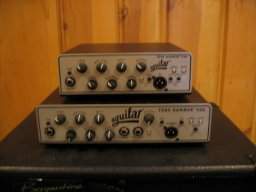
I'm far from a pro when it comes to compressors, but have an Aguilar TLC & sometimes use it...
Here are a few things I've found to be true:
A - Compression won't fix crappy tone (no matter the source of the crap - bass, amp or technique)
B - Adding proper compression to good tone can elevate the sound to greatness (adding improper compression will have a converse effect)
C - Compression doesn't always come from a compressor - some basses, amps, effects (like distortion) or even cabs/speakers have natural (or unnatural) compression
D - Most people need to learn more about compression - especially me!!!!
I'm far from a pro when it comes to compressors, but have an Aguilar TLC & sometimes use it...
Here are a few things I've found to be true:
A - Compression won't fix crappy tone (no matter the source of the crap - bass, amp or technique)
B - Adding proper compression to good tone can elevate the sound to greatness (adding improper compression will have a converse effect)
C - Compression doesn't always come from a compressor - some basses, amps, effects (like distortion) or even cabs/speakers have natural (or unnatural) compression
D - Most people need to learn more about compression - especially me!!!!
We can be friends on TB. Don't expect the same courtesy on an NHL board - smelly sheep!
are you from Boston or Chicago?
Properly used compression can yield great results. Possibly all of the greatest recorded bass tones use some compression (or at least the ones that I consider great)...
I'm far from a pro when it comes to compressors, but have an Aguilar TLC & sometimes use it...
Here are a few things I've found to be true:
A - Compression won't fix crappy tone (no matter the source of the crap - bass, amp or technique)
B - Adding proper compression to good tone can elevate the sound to greatness (adding improper compression will have a converse effect)
C - Compression doesn't always come from a compressor - some basses, amps, effects (like distortion) or even cabs/speakers have natural (or unnatural) compression
D - Most people need to learn more about compression - especially me!!!!
agreed, where does this misconception come from? a magic fairy dust box that fixes your technique.
it's like "game improvement" golf clubs, go ahead and buy them but guess what, you'll still suck.
- Status
- Not open for further replies.


