
Enjoy the benefits of a premium membership!
Upgrade Account
-
TalkBass has been independent since 1998. Add your voice.
Create a free account to reply to discussions, view embedded media, and browse with fewer display ads.
Join free Log in
Want zero display ads or expanded classifieds tools? Compare plans.
You are using an out of date browser. It may not display this or other websites correctly.
You should upgrade or use an alternative browser.
You should upgrade or use an alternative browser.
Who or what is Monoprice?
- Thread starter Michedelic
- Start date
More options
Who Replied?

I use Monoprice for all my AV cable needs. Great prices and I've never had a cable fail.
I have NEVER got a 1/4" to 1/4" speaker cable nor an instrument cable from them. I can find them cheaply enough from GC and the like. Also, I was not comfortable with the descriptions enough to make sure I was getting what I needed as was mentioned in an earlier post.
I did buy an XLR microphone cable, didn't use it and returned it but it looked solid. I bought two Speakon (or their knock-off) cables to use. And these worked great. Not as nice as the name brand, but two cables plus shipping were less than one name brand speakon cable.
I use Monoprice for all my HDMI, Component, Composite, 3.5mm and standard power cables. I go to Five Below for my iphone cables.
I have NEVER got a 1/4" to 1/4" speaker cable nor an instrument cable from them. I can find them cheaply enough from GC and the like. Also, I was not comfortable with the descriptions enough to make sure I was getting what I needed as was mentioned in an earlier post.
I did buy an XLR microphone cable, didn't use it and returned it but it looked solid. I bought two Speakon (or their knock-off) cables to use. And these worked great. Not as nice as the name brand, but two cables plus shipping were less than one name brand speakon cable.
I use Monoprice for all my HDMI, Component, Composite, 3.5mm and standard power cables. I go to Five Below for my iphone cables.

Bryan R. Tyler
TalkBass: Usurping My Practice Time Since 2002
Staff member
Administrator
Gold Supporting Member
Supporting Member
- May 3, 2002
- 28,948
- 20,936
- Disclosures
- Reviewer: Bass Player Magazine
I'd avoid their cloth covered ones- a friend ordered some 1/4" cloth ones and the rat hair texture made me hate touching them.

I own a bunch of their speaker cables, power cables, hdmi, and a bunch of other stuff including computer monitors. The monitor has some white bleed on the edges but it's awesome for the price and isn't noticeable unless I'm displaying a pure black screen.

This red P bass caught my eye. I have been looking for a cheap P and for about $150 I may have to give it a try. According to the product description it will make me sound like Steve Harris, John Deacon, Phil Lynott and Dee Dee Ramone!
Invalid Link Removed
Invalid Link Removed

Hey fellow Canadians: Monoprice stuff is now available on Amazon.ca, saving you the duty and shipping prices you deal with when you order directly off the monoprice site. It works out to a lot cheaper for us!
That is really cool!

This is handling noise, more accurately 'Triboelectric effect.' They may indeed be shielded to reject hum but when made cheaply they will exhibit handling noise. To avoid it requires manufacturing techniques/materials which, you guessed it, add cost.I got some nice-looking 1/4" guitar cables from them. They were so unbelievably microphonic I just threw them in the garbage. Unusable.
Maybe microphonic is the wrong word. If you touched the cable, or walked on the ground near where the cable sat, you heard it through the amp, nice and clear.

I was just looking over their website. They have a small bass amp for $56.72. It even gets decent reviews for a tiny practice amp. One guy left a bad review and they responded in a great way offering to replace it. On their homepage just click on Pro Audio Series. I'm glad I saw this thread. Cool Cheap stuff. I had only ordered from them off eBay.
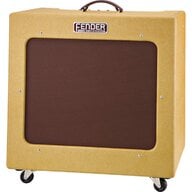
They have a small tube guitar amp coming soon. I might have to pick one up and try it.
They have a small tube guitar amp coming soon. I might have to pick one up and try it.

They shipped me what I ordered. I just thought it was instrument cable and it wasn't. I just did a chat with them and confirmed that. I can't check the cables as I bought them over a year ago and it's long been disposed of. For a while I kept them around but I kept accidentally using them and rediscovering the microphonics.Can you open the end and see if a shield exists? If not, the DCR of the tip to tip is higher than the DCR of the sleeve to sleeve in a shielded cable.
If the cable is unshielded (speaker cable), the DCR of the 2 conductors is close to equal. They might have shipped you the wrong part.
Unfortunately, I believe the only instrument cables they sell are cloth covered. The rubbery ones are "general purpose".I'd avoid their cloth covered ones- a friend ordered some 1/4" cloth ones and the rat hair texture made me hate touching them.

Since I'm an idiot and a glutton for punishment, I ordered some of the explicitly labeled "20AWG instrument cable" (cloth covered). It's not much money to risk, and for home/practice use, hopefully they will be fine.

I have bought handfuls of adapter cables from them in all kinds of bizzarre configurations, and my neighbor runs his commercial PA/DJ rig on their cables - no problems!
Because of the consistency in the cables, I tend to think that they owned/partnered/associated with a single large cable maker in China. Here in L.A. they deliver in their own trucks!
Because of the consistency in the cables, I tend to think that they owned/partnered/associated with a single large cable maker in China. Here in L.A. they deliver in their own trucks!
I was just looking over their website. They have a small bass amp for $56.72. It even gets decent reviews for a tiny practice amp. One guy left a bad review and they responded in a great way offering to replace it.
They also have a 15 watt tube guitar amp with a Celestion speaker for $227! Looks like they are out of stock on those for a while though.
Bryan R. Tyler
TalkBass: Usurping My Practice Time Since 2002
Staff member
Administrator
Gold Supporting Member
Supporting Member
- May 3, 2002
- 28,948
- 20,936
- Disclosures
- Reviewer: Bass Player Magazine
Unfortunately, I believe the only instrument cables they sell are cloth covered. The rubbery ones are "general purpose".
Since I'm an idiot and a glutton for punishment, I ordered some of the explicitly labeled "20AWG instrument cable" (cloth covered). It's not much money to risk, and for home/practice use, hopefully they will be fine.
They worked fine- they just felt nasty.


bongomania
Commercial User
Can you describe exactly in what way they are not equal? Are we talking about things like metal plugs or thicker vinyl, that improve longevity but not performance? Or are you actually saying that some cables transmit data "differently" than others? How does that happen?This is not my experience. I've tested (HDMI certification testing) dozens of HDMI cables and they are not all created equal.
Please pardon my challenging tone--it's just that the cable market in general is riddled with bogus claims and FALSE science, and the HDMI cable market is the easiest to debunk their marketing claims. But if you do certification testing for an independent lab, not affiliated with a company that sells cables, then I am genuinely and sincerely interesting in learning something new about it from you!



Alkali Ike
Gold Supporting Member
- Jan 1, 2011
- 2,855
- 15,666
- Disclosures
- I never actually learned to play very well
When the HDMI interface was still a novelty and I got a TV and a/v receiver with HDMI, the cables sold for like $80 and up. I bought a couple from monoprice for like $8. They worked great and looked high-quality, not cheap. In fact at the time I was baffled how those cables could not cost at least $5 in materials & labor to make.
Been buying from monoprice ever since and never been disappointed.
Been buying from monoprice ever since and never been disappointed.
On the basses, I like the look of the bridges, kind of a modern mini-hi-mass thing going there for a top loader.
They're nice and solid but only mounted with 3 screws. Also the saddles are designed to bottom out at about 1/2" so if you want to go any lower you'll need a new bridge. It could be a really nice bridge after a couple of small mods in a machine shop.
No offense taken.Can you describe exactly in what way they are not equal? Are we talking about things like metal plugs or thicker vinyl, that improve longevity but not performance? Or are you actually saying that some cables transmit data "differently" than others? How does that happen?
Please pardon my challenging tone--it's just that the cable market in general is riddled with bogus claims and FALSE science, and the HDMI cable market is the easiest to debunk their marketing claims. But if you do certification testing for an independent lab, not affiliated with a company that sells cables, then I am genuinely and sincerely interesting in learning something new about it from you!
I can't give the specifics as to why certain cables performed poorly as I'm not in the cable business. The business that I'm in is we produce products that have an HDMI output. The output must pass the HDMI certification testing as specified by the HDMI organization.
I can give you examples in which cables affected test results and field performance.
Part of the testing performed on our products is done at extremes of our product's temperature performance range. Sorry, I can't give out those numbers. The test equipment can not operate in the temperature chamber; therefore, we must use a cable to run out of the chamber to the equipment. We have had certification tests fail based on the cable used. The poor performing cables typically affect the rise/fall times and the eye diagrams. Here is a sample eye diagram from the internet of a poor performing cable. Most of the time we can't see the affect in live video. With some really poor performing cables we can see sparkling and/or macro blocking.
The other example is that we send our product to the customer who then repackages the product, including an HDMI cable, and distributes to the end user. The customer sources the cable. The customer was having a lot of field issues, sparkling, macro blocking, and complete loss of video. Original our product was thought to the the issue. However, the investigation revealed that the cables were the issue. I wasn't part of that investigation, but I'm guessing it was the same thing that I saw in my lab; poor rise/fall times. Again, I'm not sure what about the cable causes these issues. It could be poor shielding, poor copper, poor solder or a combination. EDIT: I forgot to mention cable capacitance; which affects rise/fall times.
Sorry, I can't be more specific. My company has strict policies about posting on forums and social media. I got into a lot of trouble at my last company, Sony, for posting in A/V forums even though I never revealed my employer or divulged company information. So I have to be careful.
I always thought TB was very fortunate to have members like AgedHorse from Genz and Bob from QSC and others.
Last edited:
No offense taken.
I can't give the specifics as to why certain cables performed poorly as I'm not in the cable business. The business that I'm in is we produce products that have an HDMI output. The output must pass the HDMI certification testing as specified by the HDMI organization.
I can give you examples in which cables affected test results and field performance.
Part of the testing performed on our products is done at extremes of our product's temperature performance range. Sorry, I can't give out those numbers. The test equipment can not operate in the temperature chamber; therefore, we must use a cable to run out of the chamber to the equipment. We have had certification tests fail based on the cable used. The poor performing cables typically affect the rise/fall times and the eye diagrams. Here is a sample eye diagram from the internet of a poor performing cable. Most of the time we can't see the affect in live video. With some really poor performing cables we can see sparkling and/or macro blocking.
The other example is that we send our product to the customer who then repackages the product, including an HDMI cable, and distributes to the end user. The customer sources the cable. The customer was having a lot of field issues, sparkling, macro blocking, and complete loss of video. Original our product was thought to the the issue. However, the investigation revealed that the cables were the issue. I wasn't part of that investigation, but I'm guessing it was the same thing that I saw in my lab; poor rise/fall times. Again, I'm not sure what about the cable causes these issues. It could be poor shielding, poor copper, poor solder or a combination.
Sorry, I can't be more specific. My company has strict policies about posting on forums and social media. I got into a lot of trouble at my last company, Sony, for posting in A/V forums even though I never revealed my employer or divulged company information. So I have to be careful.
I always thought TB was very fortunate to have members like AgedHorse from Genz and Bob from QSC and others.
But, that is loss of bandwidth and/or complete loss of signal. Most probably caused by bad connectors, damaged connector pins (happens all the time in crappy cables), badly assembled connector ends, messed up shielding at the connector, etc. Those are really mechanical issues rather than quality of the actual cable material. When you reach high bandwidth data signals, the material of the cable needs to support enough bandwidth to carry a given signal constellation. A lot of "cable quality" qualifiers in the cable industry have absolutely no effect on the quality of the signal. Whether is conductor is of a lesser quality of copper or pure platinum or whatever, it will not affect the signal at all, as long as it meets a minimum bandwidth/conductivity requirement. And, most of the times, that minimum is very low when all things are considered.
Again, most of the time, data cables get messed up at the connector ends.


