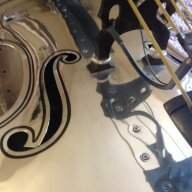
So who uses ashtray covers on their p/j ? I've been looking into this lately but haven't seen much of anything. I have a 1979 Precision Special that someone added a J p/u to it. Was wondering how a J bridge cover would look on a P bass?

TalkBass has been independent since 1998. Add your voice.
Create a free account to reply to discussions, view embedded media, and browse with fewer display ads.
Join free Log in
Want zero display ads or expanded classifieds tools? Compare plans.



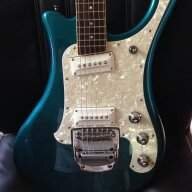

I'm new to basses, so I'm going to ask perhaps a dumb question. Why do people mount the thumb rest on the underside of the strings verses the top? Isn't it a thumb rest wouldn't it go on top?
I'm new to basses, so I'm going to ask perhaps a dumb question. Why do people mount the thumb rest on the underside of the strings verses the top? Isn't it a thumb rest wouldn't it go on top?

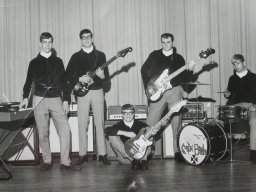
In earlier times, electric bass players used the thumb as the picking finger just like the way one would play a guitar (think of the way Wes Montgomery played guitar) and the thumb rest was called a "tug bar". Later on, the tug bar moved above the strings as the thumb became more of an anchor for the other fingers of the plucking hand to do the plucking. That's when people started calling it a thumb rest.
If you were 62 like me, you'd likely have learned to play bass with your thumb and used the bar to support your fingers. I have a '66 Precision that I bought new and have played for many years. It's finger rest has little groove impressions on it that perfectly fit my index, middle and ring fingers from all of the years playing it digging and tugging on that bar.
P.S. what are your recommendations for the position of a new player, above or below?
 hahaha. I stated my opinion earlier - use the different ashtray covers for the different pickup styles. It might look cool.

P.S. what are your recommendations for the position of a new player, above or below?


