• TalkBass has been independent since 1998. Add your voice.
    Create a free account to reply to discussions, view embedded media, and browse with fewer display ads.
    Join freeLog in
    Want zero display ads or expanded classifieds tools? Compare plans.

Why cant we all read?

Status
Not open for further replies.
I'm open to learning to read, and I can read the notes on the stave, but can't read the timing bits (don't know what to call them... like the quarters, semibreves etc). Just can't get my head round it.

One of these days I'll be able to afford a good teacher, and learn theory & reading properly
 
I'm open to learning to read, and I can read the notes on the stave, but can't read the timing bits (don't know what to call them... like the quarters, semibreves etc). Just can't get my head round it.

One of these days I'll be able to afford a good teacher, and learn theory & reading properly

Its easy. The Rhythm Bible (Book & CD) by Dan Fox. That book will help.
 
I'm glad I can read. Not once in my life did I feel it wasn't a real asset - and one that gave enjoyment, as well, in being able to look at a diversity of scores from piano clef to orchestral. I love the additional insight into other's compositional thoughts and practices.
 
I think a lot of folks here are going to see this thread as trolling. But I'll answer. Because for a lot of players, there is really no need to learn to read.
+1
I've got no reason to. I can play fine without it. Reading and playing are not the same thing. Strangely though, I can write music. Comes in handy when you want to save your music in some form.
 
my favorite part of these threads is when the "snobbery" comments start. only in america could someone who learns something and works hard to learn it be called a snob. there isn't a thing in the world stopping any of you from learning it except air and the willingness to devote a few minutes every day to it. the information's available on the internet FOR FREE!

yet i'm the snob. bite me.

so looking down on those who cant read and calling them lazy in not so few words isnt snobbery?

SNOB: a person who believes himself or herself an expert or connoisseur in a given field and is condescending toward or disdainful of those who hold other opinions or have different tastes regarding this field: a musical snob.
(lol at the example)

SNOBBERY: snobbish character, conduct, trait, or act.

I think I have my definitions right.
 
I'm kind of sad to see all those people who don't want to learn to read music ... like it is a demonic thing like we all should stay ignorant. Yes it is important to have a good ear, I learned to speak french/english by earring it but at some point you have to learn how to write and read to understand more complicated stuff, to be understand by other people, to have a mature conversation, to have a better vocabulary. It is the same thing in music. By learning theory and reading skill you will have a bettre vocabulary to use instead of banging low E for 5 minutes or only play roots.

Many rockstar don't read ... but they are one tricks pony players and to be honest I think they play very simple stuff. If you look in other musical style than pop/rock/punk many people read and are better musician. Brian Setzer read music during his show and I think he does a very nice show. Dream Theater write all their music, you have to remember all the stuff they play.

I think I'm starting to understand what is going on. Many people just want to be rockstar and don't give a s*** about music quality, they just want to entertain.
 
I didnt notice anyone say that they absolutely do not want to read. the problem you are seeing is many of those who cant read are being talked down to by many of those who can. as more of those who can read enter the thread they conveniently ignore that fact and only choose to see the non readers defending themselves and assume that they have no desire to read what so ever.

thats what i've been gathering anyway
 
I didnt notice anyone say that they absolutely do not want to read. the problem you are seeing is many of those who cant read are being talked down to by many of those who can.

Maybe. Maybe not. It seems like some people always get off into defensive side trips about this "what so and so said to me with their real big 'tude" crap, instead of just doing the thing - or not doing the thing.

So, do you really want to read? Or just argue that Jimmy is a bad bad man? I'm sure it doesn't hurt him any, one way or another.
 
I came from being classically trained on trumpet, so I was a fluent sightreader.

Seeing as how hardly any rock guys can read, I never got much chance to keep in practice. 30 years after taking up bass, still "see" treble clef, have to transpose bass clef to treble then go from there.

I felt more crippled when I started when I could read fluently and couldn't play by ear. I've worked hard on ear training, and feel that's more useful if you're going to be in a bar band.

Jazz gigs, studio work, if those are your goals, you'd better learn to read.

If you go by what you'll be doing most often, that'll tell you what skill you need to work on most/first. I learn more songs off the radio/mp3 than I have from sheet music over the years. Its really an invaluable skill in any musical situation.

Sheet music is definitely handy to be able to read in some contexts.

Randy
 
why would somebody not learn to read music?
I'm really not sure why most would, other than a lack of need.
I can read music, but I am not quite "fluent" at it, so to speak. In other words, if you give me a sheet of music, It'll take me a few minutes, but I'd be able to figure it out. I'm actually trying to train myself to read it better - it isn't an absolutely necessary skill, but it is one that is certainly good to have and use.

I did take music in my last couple years of high-school, in which the teacher would just give me the bassoon parts for every tune. I ended up figuring them out just enough to realize that every line sucked, and instead decided to play my own lines and just not tell the teacher, and she never noticed. Of course, she also didn't appreciate the fact that my exam piece was la villa strangiato.
 
It seems that this discussion has evolved into "a good ear is more important than being able to read" and such statements. It is not about which skill is better or even more necessary. IMO (there usually not an "H" in my opinions - sorry Brad), all tools are valuable, reading is just one, developing a good ear is another. Both are invaluable. I recently did a clinic in Calgary (the Canadian Rockies Bass Bash). Adam Nitti was also one of the clinicians. much of his clinic was devoted to ear training and singing.

My goal has always been to be the best that I could, to have my own voice and to make a living. I have, thankfully reached those goals. It gives me a bit of freedom, now, to expand even more. I value and am thankful for the teachers that made me read and for the one teacher, the late John Neves who said that the most important thing was to know how to read charts.

Mike

There's no H in mine either... sorry, Mike.
:confused:
 
Much like Steveksux on up there, I was classically trained when I learned brass, at a very young age, up until when I stopped playing brass, during my mid-teens. I regularly had to sight read and theres no way I could've played at the level I was playing at then without building up strong sight reading abilities.

Part of the reason I picked up bass, around my mid-teens, just after I stopped playing brass, is because I became frustrated at the all-too-structured nature of the way I was learning music. The idea of playing music that wasn't on a sheet was alien to me at the time, I wanted something new. It meant that for the first few years of playing bass, I totally neglected applying theory to it. During this time, I had fun and all, but it wasn't until I went back to my theory and applied it to bass, that I was able to fully express myself how I wanted to.

I still read music, I still think its a damn useful tool, but it hasn't impacted any potential opportunities for me, because my game doesn't lie down the studio/session musician path. I'd guess its pretty much essential for anyone who sees a career in this path. If you want to just play in a rock band and write some music, you probably won't ever need to read music. (This isn't a dig at guys playing in original rock bands....thats what I do now).
 
I'd just like to address one issue where I think there's a misconception about reading: "I don't need to read because I'm just an amateur." Indeed a lot of the discussion revolves around whether one can be a successful pro without knowing how to read. I don't have a dog in that fight, because I'm really just an amateur myself.

Nobody calls me for studio work, or to back up touring acts. I'm not that good, and I can't handle commitments such as daytime rehearsals. I don't practice 3 hours a day, and I spend more time playing at home than on the bandstand. But thanks to years of music lessons as a kid, and playing in groups like the school jazz band and community orchestra, I'm a fluent sight reader. This has provided me with some benefits that all relate to having more fun as an amateur bassist:

1. I can function in the freelance scene, even if I'm not at the top of the call lists for high profile gigs. This gets me out and playing, without having to get involved with rock bands that demand endless hours of deafening rehearsals, mountains of expensive gear, and Band Drama.

2. At home, I can explore genres (granted, on upright bass) that are musically interesting outside of a band context, thus my time spent playing at home is quite rewarding in its own right.

3. When my kids were tiny, I stayed active by doing primarily subbing work and late night club gigs. Since this work tends to be unrehearsed, with minimal setup, the time commitment was actually quite manageable. Many of my gigs occurred while everybody else in the house was asleep.

Now, I think the reason why most electric bassists don't read is simple: Because guitarists don't read. There's a wide swath of the guitar-oriented music scene where bassists primarily serve in a support role in cohesive bands that develop their repertoire through rehearsals. If you're surrounded by players who don't read, you might spend your entire career without seeing a chart. That makes it pretty difficult to maintain your reading chops.
 
Mike Dimin said:
It seems that this discussion has evolved into "a good ear is more important than being able to read" and such statements. It is not about which skill is better or even more necessary...

.reading is just one, developing a good ear is another. Both are invaluable.
But not equally invaluable, depending on the context, their relative importance can vary widely.

There's also another side to the story. How much time can you devote to learning.

You as a working professional may find both skills equally invaluable. You as a working pro have no excuse not to take the time to learn all aspects of your craft.

Take a weekend warrior in a bar band though, playing with a bunch of other guys that can't read, let alone write charts. Having no charts tends to diminish the invaluability of being able to read music, IMO. :D And weekend warriors available time to spend on music is more limited, its a sideline rather than a full time occupation, so it makes sense for them to focus their limited time on things that have the most effect on their employability, or enjoyability.

So there are certainly cases where the time spent learning to read can be better spent working on other things, which in their situation (but not yours) could indeed put reading skills further down the list of priorities. When you have limited resources, you should concentrate on what gives you the most bang for your limited bucks.

I was classically trained on trumpet, was a fluent sight reader, spent no time playing by ear, I was very deficient at that. So worked on that hard over the years, and now am quite good at it. I've only had a few situtations in 30 years since HS where reading was useful. So now I'm rusty at reading.

But that is entirely due to the circles I play in. If I want to get theater gigs, jazz gigs, recording sessions, I'd be brushing up on my reading again, no doubt.

Learning to read Chinese would be handy also... if you were going to China. Not everyone needs to go to China.

Randy
 
Many rockstar don't read ... but they are one tricks pony players and to be honest I think they play very simple stuff.

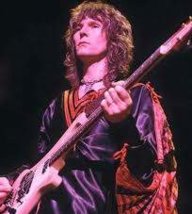
Very simple stuff, eh? Hmmm. Okay. Go learn every bass note on the Close to the Edge album, and also on the Relayer album (both by YES featuring Mr. Chris Squire on bass), and then let us TB'ers know if you still hold that same sentiment.

Good luck! (...you're gonna need it.....especially with The Gates of Delirium.) And if you can nail Sound Chaser note for note, I'll buy you a beer, my friend!
 
Status
Not open for further replies.