There isn't much five string market to begin with, IME – Fender or not. I can count on both hands the number of times I've seen one played live...and having spent some years as a sound man, or touring around the country, I've seen literally thousands of bands play.

Enjoy the benefits of a premium membership!
Upgrade Account
-
TalkBass has been independent since 1998. Add your voice.
Create a free account to reply to discussions, view embedded media, and browse with fewer display ads.
Join free Log in
Want zero display ads or expanded classifieds tools? Compare plans.
You are using an out of date browser. It may not display this or other websites correctly.
You should upgrade or use an alternative browser.
You should upgrade or use an alternative browser.
Why did Fender fail to capture the 5 String market?
- Thread starter SgtHulka
- Start date
More options
Who Replied?
Dang! You’ve never heard a BB5000.1. Why ?? They designed the perfect 4 string.
2. Passive 5 string P basses just don't sound good. Active humbucker 5 strings sound the best.


What I don’t understand is why did fender think to do a high c string BEFORE they thought of doing a low b?
I mean really?
The 5 string was to compete with keyboards that could lower than a 4 string bass. That didnt go on in 1965 music, so no need for it.
Amps in 65 wouldnt have handled it either.

Because I guess it was too guitar-like, high C to boot.
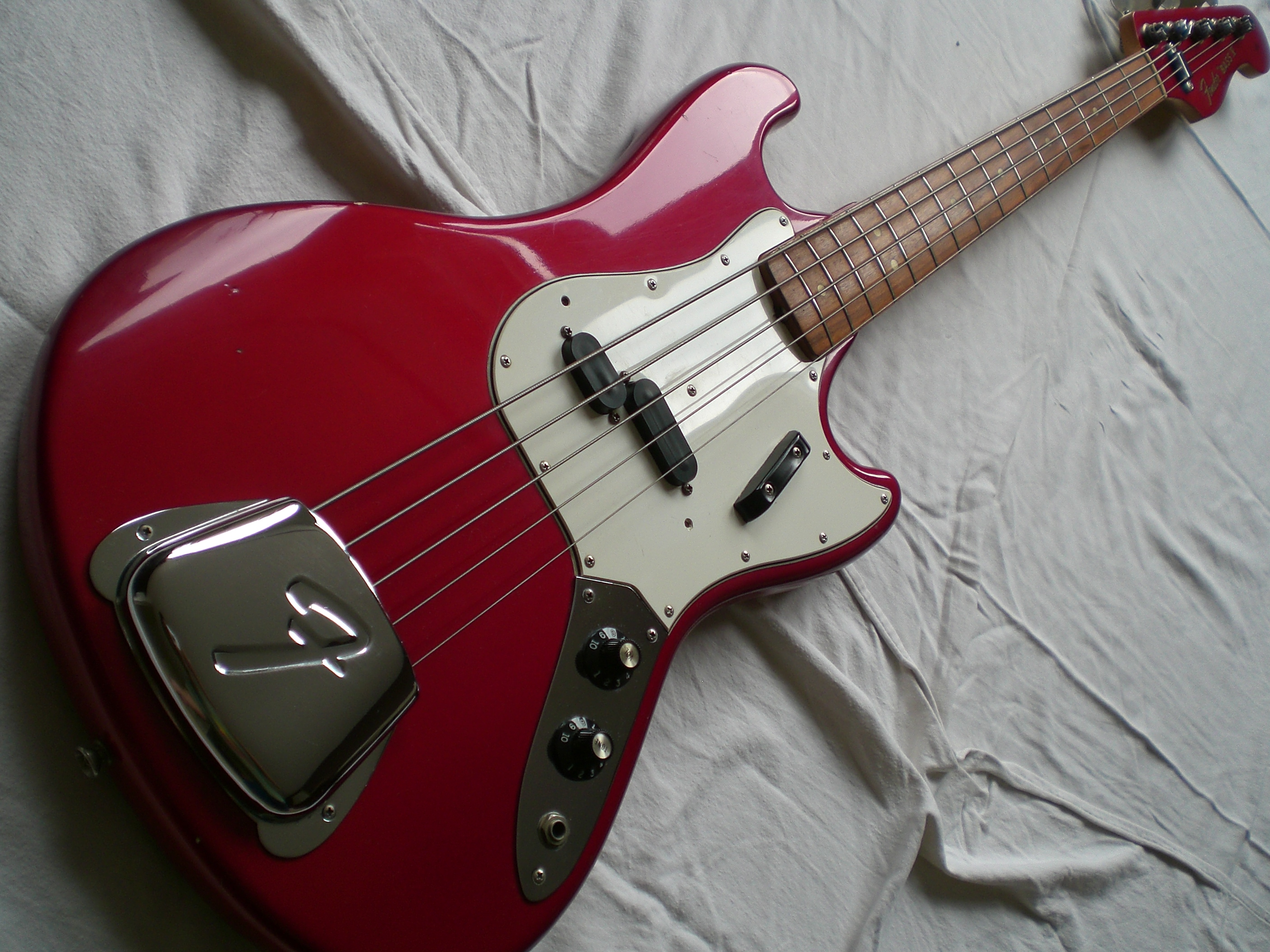
Fender Bass V - Wikipedia
Like that goofy 6 string.
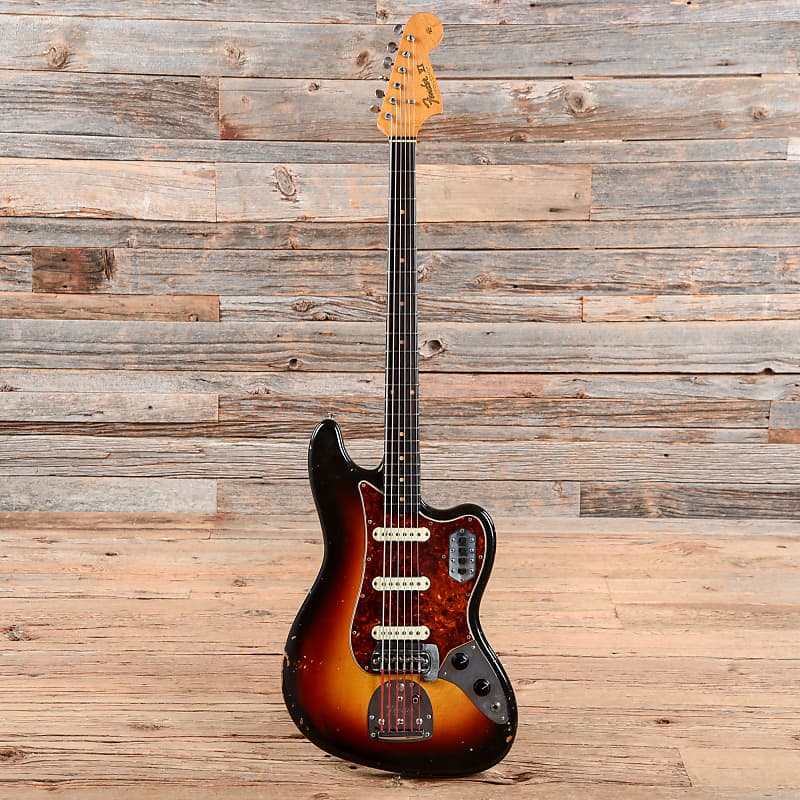
Fender Bass VI - Wikipedia
Fender Bass V - Wikipedia
Like that goofy 6 string.
Fender Bass VI - Wikipedia

Early 5s I saw were Wilkerson conversions of 4s, Alembics, Warwick's, Pedullas, Tobias, Yamahas, and SR5s.
I think there was a combination of 80s/90s neckthru over everything in what was considered premium. There was a perception that boltons were cheap, and 5+ strings weren't a good idea with cheap bolt on construction. Yes, you could go Warmoth but $1000 got you in the ballpark of the lower end offerings of the brands I listed back then.
Yamaha especially was killing it with their pricing.
Humbuckers were super in back then, active was a given. Just because we've had a recent renaissance towards traditional P and J doesn't mean those were market drivers at the time. Same with super big $ bolt on basses now would have been looked at as niche back when the $ point of your neckthru back then was how many plus your back was made out of.
Anyone else remember the onslaught of cheapie Korean neckthrus with the telltale 3ply neck?
Fender as we know it now was flipping out solid color back routed basses back then. They were easily a decade behind everyone else in just getting away from their traditional pickguard and top routs.
I think there was a combination of 80s/90s neckthru over everything in what was considered premium. There was a perception that boltons were cheap, and 5+ strings weren't a good idea with cheap bolt on construction. Yes, you could go Warmoth but $1000 got you in the ballpark of the lower end offerings of the brands I listed back then.
Yamaha especially was killing it with their pricing.
Humbuckers were super in back then, active was a given. Just because we've had a recent renaissance towards traditional P and J doesn't mean those were market drivers at the time. Same with super big $ bolt on basses now would have been looked at as niche back when the $ point of your neckthru back then was how many plus your back was made out of.
Anyone else remember the onslaught of cheapie Korean neckthrus with the telltale 3ply neck?
Fender as we know it now was flipping out solid color back routed basses back then. They were easily a decade behind everyone else in just getting away from their traditional pickguard and top routs.


I suppose aside the 5 string never really took off because a huge part of Fenders market are very conservative. Innovation and forward thinking is not what their customers want - this is a story that has repeated itself many times in the company's history.
This. Exactly this.

There isn't much five string market to begin with, IME – Fender or not. I can count on both hands the number of times I've seen one played live...and having spent some years as a sound man, or touring around the country, I've seen literally thousands of bands play.
I do not believe Fender is producing these basses year after year and no one is buying them. I have had several myself and only ever had one with a bad B string.

To be fair to Fender the 5 string market started so small that they were hardly going to notice it, let alone get into it in a big way. Their focus was to carry on dominating in the 4 string market. That's the way market leading companies work. I worked for an equivalent IT company which almost failed because they didn't just ignore the competition, they dismissed it as irrelevant. They thought they knew better than their customers, and caught a cold as a result. When complacency reaches that level, the entrepreneurs will succeed.
I tried some early 5 string Fenders and they just didn't feel or sound good. Sorry, that's as technical as I get! So my attitude was, if other bass manufacturers are getting it right, why bother with Fender. I started in the 90's with a Stingray 5 and in the early 2000's went to a Lakland 55-94. Fender took years to reach the quality of those basses, but even now I'm still ahead with a Lull and Sadowsky. Fender should have brought out the current designs in the 90's and then the history of 5 string basses would be very different.
I tried some early 5 string Fenders and they just didn't feel or sound good. Sorry, that's as technical as I get! So my attitude was, if other bass manufacturers are getting it right, why bother with Fender. I started in the 90's with a Stingray 5 and in the early 2000's went to a Lakland 55-94. Fender took years to reach the quality of those basses, but even now I'm still ahead with a Lull and Sadowsky. Fender should have brought out the current designs in the 90's and then the history of 5 string basses would be very different.

Kind of amazing what he got out of a bad bass.
IME with five string players, most I've come across want the bass to adapt to them. So when the results aren't optimal, must be the bass' fault. What screws that up is when someone else can play the same bass with better results. Which happens a lot.

Agreed ... I believe you can make this point with more than just 5 strings

Because most 5 string players don't like the voicing of the Fender pre-amp. That is why people try to continually swap the pre-amp. (John East, Sadowsky, etc. etc. etc)
Then, when the try the other manufactures, they find a "better neck profile" and a better feel.
As far as 4 string passive Jazz and Precision? You will hardly find one better.
Then, when the try the other manufactures, they find a "better neck profile" and a better feel.
As far as 4 string passive Jazz and Precision? You will hardly find one better.
Why is the in-line 5 headstock supposedly to blame for a floppy B?
There is only perhaps a 1/4” difference between the distance from the nut to the B string post between the in-line and 4+1.
In any case, I have read here on TB that anything outside the nut and bridge saddle doesn’t matter anyway...
I have an in-line 5 Warmoth neck, and the B is tremendous.
There is only perhaps a 1/4” difference between the distance from the nut to the B string post between the in-line and 4+1.
In any case, I have read here on TB that anything outside the nut and bridge saddle doesn’t matter anyway...
I have an in-line 5 Warmoth neck, and the B is tremendous.

Their biggest issue was the headplate, in sense of mercantile recognition they were forced to tinker a 5th peg onto, ugly in 4+1, a diver on 5 in a row, a short while they offered a new designed plate and a longer upper horn, but which was quite bad accepted. Meanwhile other brands & luthiers plenty had conquered the market and run out the Fenders.
Last edited:

I think it was price points. ... Fender has concentrated on being the Coke of basses, (I'm surprised they're not sold in corner stores). ... 5-strings didn't come into 'their thing' till the 80's and by then Fender was so into vintage, trying to reintroduce their past glory and making cheaper instruments over seas. ... I remember that $3,500 for the lowest I'd consider a 5-string purchase but now $2,000 will get you there. ... Which is where the Elite sit.

I guess that Fender simply is strong for traditionalists. They produce the instruments that the big acts used back in the day. The P bass is a studio standard.
4 string P and J basses sell well enough, have done so in the past and probably will go on for the time being.
On top of that, AFAIK it's hard to balance the split coil PU for the asymmetrical 3/2 setup.
They did try time and again to introduce new shapes and new models, most of which have been discontinued after a while. The Dimension bass comes to mind.
I've tried a few 5 string P basses when I was in the market for a new bass, because I liked the Idea of the simplicity, but I was used to a better feeling on the B string. Some of them sounded all right, but I mostly play with my right hand over the end of the fretboard. With Fender P basses I always had a floppy feel on the B string playing there. One reason is that they don't come with 24 frets, so in relation to a bass with 24 frets, my hand is further up the neck, but It always felt that the design itself does not lend itself to 5 strings.
4 string P and J basses sell well enough, have done so in the past and probably will go on for the time being.
On top of that, AFAIK it's hard to balance the split coil PU for the asymmetrical 3/2 setup.
They did try time and again to introduce new shapes and new models, most of which have been discontinued after a while. The Dimension bass comes to mind.
I've tried a few 5 string P basses when I was in the market for a new bass, because I liked the Idea of the simplicity, but I was used to a better feeling on the B string. Some of them sounded all right, but I mostly play with my right hand over the end of the fretboard. With Fender P basses I always had a floppy feel on the B string playing there. One reason is that they don't come with 24 frets, so in relation to a bass with 24 frets, my hand is further up the neck, but It always felt that the design itself does not lend itself to 5 strings.

Fender five strings probably don’t sell because people who want Fender don’t want five string and people who want five string don’t want Fender.

And we also know some players who can make a crappy bass with a terrible setup sound great.
Not quite as common IME.
Fender five strings probably don’t sell because people who want Fender don’t want five string and people who want five string don’t want Fender.
When did this happen?


Bingo to the recent posts that discuss the conservatism of the Fender customer base. I'm fairly certain that they would have risked alienating this base with products that differed too much from their bread-and-butter core product.
See also: Harley-Davidson
See also: Harley-Davidson

To be fair to Fender the 5 string market started so small that they were hardly going to notice it, let alone get into it in a big way. Their focus was to carry on dominating in the 4 string market. That's the way market leading companies work. I worked for an equivalent IT company which almost failed because they didn't just ignore the competition, they dismissed it as irrelevant. They thought they knew better than their customers, and caught a cold as a result. When complacency reaches that level, the entrepreneurs will succeed.
I tried some early 5 string Fenders and they just didn't feel or sound good. Sorry, that's as technical as I get! So my attitude was, if other bass manufacturers are getting it right, why bother with Fender. I started in the 90's with a Stingray 5 and in the early 2000's went to a Lakland 55-94. Fender took years to reach the quality of those basses, but even now I'm still ahead with a Lull and Sadowsky. Fender should have brought out the current designs in the 90's and then the history of 5 string basses would be very different.
Great post!
I’m with you with supporting the smaller shop and boutique builders for sure!
Less overhead = more value to the customer, could be the big reasons 5 strings were more successful outside of Fender’s walls.


