
Enjoy the benefits of a premium membership!
Upgrade Account
-
TalkBass has been independent since 1998. Add your voice.
Create a free account to reply to discussions, view embedded media, and browse with fewer display ads.
Join free Log in
Want zero display ads or expanded classifieds tools? Compare plans.
You are using an out of date browser. It may not display this or other websites correctly.
You should upgrade or use an alternative browser.
You should upgrade or use an alternative browser.
Why did prog rock never have mass popularity?
- Thread starter MidnightRunner
- Start date
More options
Who Replied?

Honestly, I think we're all over thinking this. It's simply generational.
People who were adults, or teens, in the 70s were itching for anything that wasn't bubblegum pop or disco. In walks stadium rock. Stadium rock branched into more mainstream (Journey, Boston, Foreigner), and more prog (ELP, Tull, etc.)
Where it gets murky is that all of the more prog bands had some crossover hits. Then throw in the fact that virtually all of them went very radio friendly in the late 70s and into the 80s. Yes, Rush, Styx, etc. had much more radio friendly songs after their first couple/few albums.
A decade is actually a very short time period. And a lot happened in music from about 1976 to 1986.
Now, TODAY, most kids are into simple pop
I'm not knocking those artists like many of you do for fun. I have 10 and 13 year old daughters. I listen to their music in the car. Some of it is actually quite good, and well written. But it's just not guitar centric like "our music" was. They're into something different. Guess what. When prog came along, it was something different from THEIR parents' music.
So, why aren't we asking why isn't doowap more popular? Or why isn't Vaudeville more popular? Or why isn't ragtime more popular?
Music tastes move along from what was cool in our childhood and young adulthood. It would be incredibly egocentric to assume the ONLY time any good music was made was during your prime.
So music simply "moved past" prog.... just like it moved past every other style that came along before it.... and several since.
I was a teenager in the 80s. I actually LOVE 80s music..... including Rush and Yes from that era. It was that last fun decade we ever saw. I fear we all take ourselves WAY to seriously for that kind of fun to ever come back.
But it would be silly for me to assume others "should" share my passion for that kind of music.... especially if they are from the generations before or since.
People who were adults, or teens, in the 70s were itching for anything that wasn't bubblegum pop or disco. In walks stadium rock. Stadium rock branched into more mainstream (Journey, Boston, Foreigner), and more prog (ELP, Tull, etc.)
Where it gets murky is that all of the more prog bands had some crossover hits. Then throw in the fact that virtually all of them went very radio friendly in the late 70s and into the 80s. Yes, Rush, Styx, etc. had much more radio friendly songs after their first couple/few albums.
A decade is actually a very short time period. And a lot happened in music from about 1976 to 1986.
Now, TODAY, most kids are into simple pop
I'm not knocking those artists like many of you do for fun. I have 10 and 13 year old daughters. I listen to their music in the car. Some of it is actually quite good, and well written. But it's just not guitar centric like "our music" was. They're into something different. Guess what. When prog came along, it was something different from THEIR parents' music.
So, why aren't we asking why isn't doowap more popular? Or why isn't Vaudeville more popular? Or why isn't ragtime more popular?
Music tastes move along from what was cool in our childhood and young adulthood. It would be incredibly egocentric to assume the ONLY time any good music was made was during your prime.
So music simply "moved past" prog.... just like it moved past every other style that came along before it.... and several since.
I was a teenager in the 80s. I actually LOVE 80s music..... including Rush and Yes from that era. It was that last fun decade we ever saw. I fear we all take ourselves WAY to seriously for that kind of fun to ever come back.
But it would be silly for me to assume others "should" share my passion for that kind of music.... especially if they are from the generations before or since.
Last edited:

I fear we all take ourselves WAY to seriously for that kind of fun to ever come back.


Not radio friendly and you have to want to like it to like it. I like Rush now, but the first time I heard them I remember thinking that my friends were punking me. It’s an acquired taste. I saw the earlier Fripp pics in this thread. I don’t think I’ve ever heard a Fripp song or epic musical experience like most Prog songs tend to be.

Popularity of a musical form depends on the listener connecting with it and, progressive Rock like progressive Jazz or abstract classical music is not as accessible to as many listeners as other forms of Rock, Jazz or, Classical Music.

Rolling up some characters for a new D&D campaign on a Friday night, with a stack of Yes, Rush, Genesis, and Jethro Tull LPs. I was that kid in the now often described stereotypical scene. Not cool, back when not being cool was… well, not cool.
I feel it is mostly a generational thing. The 80s were a musical phenomenon itself, and prog just really didn’t seem to fit into the mainstream of that era. I was introduced to bands like Supertramp, Yes, etc. from my older cousins - whose rooms always “smelled funny. “
I feel it is mostly a generational thing. The 80s were a musical phenomenon itself, and prog just really didn’t seem to fit into the mainstream of that era. I was introduced to bands like Supertramp, Yes, etc. from my older cousins - whose rooms always “smelled funny. “
I think Prog Rock DID have mass popularity, and was successful, but that popularity was of shorter duration than “mainstream” (pop) Rock.Your thoughts?
Why was prog rock less successful than other styles/subgenres of rock music?
So, if we list styles / sub genres of rock music, what is the MOST successful? What’s #2, #3, #4, & #5? Where is Prog Rock on the scale, or is it even in the top 5? What time period do we consider; 1955 to present or something else?
My thoughts are that the question itself states a less-than-100% clear premise. I do agree it’s somewhat correct that Prog Rock was less successful than some styles / sub genres of rock and more successful than others, but the time period considered probably changes the order of popularity. I doubt there’s even an 80% consensus on the bands / artists that fit the definition of Prog Rock and maybe even less consensus on the definition itself.

It was a thing in its day. I saw ELP touring behind BRAIN SALAD SURGERY in Houston in IIRC '73 or '74. Sold Out, a real deal in redneck Houston in those days, in the wake of ZZ's Worldwide Texas Tour. Quad PA, Palmer's revolving drum stand, Emerson going end-over-end on a prop Steinway 30' over the stage, and oh by the way, they played their asses off. God Rest Keith and Greg, but I'm telling you, Carl Palmer at his age could play with Alex and Geddy right now. Palmer's one of the greatest overlooked in some circles drummer.
The greatest album cover ever. On tour for this, Palmer wanted Premier Drum in England make him a stainless steel kit with copper accents. When told they didn't have any stainless shells, they went to a steel supplier, bought 1/2" (too thick) then 1/4" 320 stainless plate, cut it in strips and rolled and welded it to make the shells. This resulted in a few places where once set up, it cracked the floor beneath the drum riser from the weight !
It was just interesting stuff in those days. The serious playing, odd time signatures, not the usual 3-chord ooh baby baby songs, it just found a niche. And suddenly after years of flannel and bluesy stuff, you hear THIS come out of the radio, and we all said WTH IZZAT?
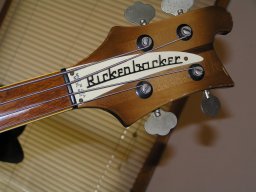
I shudder to think how many sets of RotoSounds and Rickenbackers Chris Squire sold once we all heard that crazy grinding tone, playing some serious parts under this tune. Completely unique form to the song, and Wakeman's Hammond solo around the 6:50 mark is still a big favorite of mine. This was something entirely new in those days.
My favorite story about 'Roundabout': I was working retail and we had a great local cat who could slap/pop like nobody's business when it was still a very new thing. He walks in one day and we had 'Roundabout' playing thru the PA stack. It caught his ear big time, wanted to know who IS that? We showed him the record jacket and I could tell he was really listening.
He came back in a few weeks later and said, 'hey, ya still got that Yes record?' We put on 'Roundabout' and he plugged into an amp and slapped it PERFECTLY, not funked, but letter perfect, and it sounded like 2 million bucks. One more chapter in the 'Good Musicians listen to Everything' book. Our minds were blown !
The greatest album cover ever. On tour for this, Palmer wanted Premier Drum in England make him a stainless steel kit with copper accents. When told they didn't have any stainless shells, they went to a steel supplier, bought 1/2" (too thick) then 1/4" 320 stainless plate, cut it in strips and rolled and welded it to make the shells. This resulted in a few places where once set up, it cracked the floor beneath the drum riser from the weight !
It was just interesting stuff in those days. The serious playing, odd time signatures, not the usual 3-chord ooh baby baby songs, it just found a niche. And suddenly after years of flannel and bluesy stuff, you hear THIS come out of the radio, and we all said WTH IZZAT?
I shudder to think how many sets of RotoSounds and Rickenbackers Chris Squire sold once we all heard that crazy grinding tone, playing some serious parts under this tune. Completely unique form to the song, and Wakeman's Hammond solo around the 6:50 mark is still a big favorite of mine. This was something entirely new in those days.
My favorite story about 'Roundabout': I was working retail and we had a great local cat who could slap/pop like nobody's business when it was still a very new thing. He walks in one day and we had 'Roundabout' playing thru the PA stack. It caught his ear big time, wanted to know who IS that? We showed him the record jacket and I could tell he was really listening.
He came back in a few weeks later and said, 'hey, ya still got that Yes record?' We put on 'Roundabout' and he plugged into an amp and slapped it PERFECTLY, not funked, but letter perfect, and it sounded like 2 million bucks. One more chapter in the 'Good Musicians listen to Everything' book. Our minds were blown !
Last edited:

Freekmagnet
Commercial User
I can’t decide which is my personal favorite prog song. It’s either Stonehenge by Spiñal Tap or Hocus Pocus by Focus.
Not me. I got into it immediately.Because you have to listen to it more than once to get into it.
Got into what? Rush, Yes, Tool, Pink Floyd, Apex Theory, Polyphia?Not me. I got into it immediately.

Firstly, the "prog rock" label is SUPER broad. Pink Floyd, Genesis, Yes, Rush, Dream Theater, Queensryche, Roxy Music, King Crimson, Jethro Tull, King's X, Muse, Opeth, Enchant, Frank Zappa...it's an insanely broad label.
Secondly, a lot of "prog rock" was incredibly successful, including many of the above bands.
That said, the more you drift away from dance-able rhythms, the more people you lose. People like 4/4 in a very biological, visceral way. People who like the technicality of progressive rock like the complexity, but when it comes to just catching people in your music, rhythm and groove does it.
"Turn It On Again" by Genesis, which is kind of a bad example because it was super popular, is still an example... about it Phil Collins said "You can't dance to it. You see people trying to dance to it every now and again. They get on the off beat but they don't know why" and Tony Banks added "You can't dance or clap along to it because of that time signature. When we play it live, you can always see the audience getting caught out."
And yet, Genesis filled arenas and stadiums. So it did have mass popularity, just not mainstream popularity.
Secondly, a lot of "prog rock" was incredibly successful, including many of the above bands.
That said, the more you drift away from dance-able rhythms, the more people you lose. People like 4/4 in a very biological, visceral way. People who like the technicality of progressive rock like the complexity, but when it comes to just catching people in your music, rhythm and groove does it.
"Turn It On Again" by Genesis, which is kind of a bad example because it was super popular, is still an example... about it Phil Collins said "You can't dance to it. You see people trying to dance to it every now and again. They get on the off beat but they don't know why" and Tony Banks added "You can't dance or clap along to it because of that time signature. When we play it live, you can always see the audience getting caught out."
And yet, Genesis filled arenas and stadiums. So it did have mass popularity, just not mainstream popularity.
Too intelligent, too deep, too complex and too artsy for laypeople. Basically the same reason why Schopenhauer or Wittgenstein is less popular than JK Rowling.

I don't have any idea what "prog rock" even means... is "prog" short for "progressive?"
Prog is in the Czech Republic.

Most people I know do like Prog rock, but they just don't know that it's called that because it has always been lumped together with all the other classic rock songs. I think most people refer to Prog rock as 70s classic rock. I know I did for a long time before I learned the Prog rock song formula.
Your thoughts?
Why was prog rock less successful than other styles/subgenres of rock music?
Because most of the people listening to it secretly hoped that their band/s wouldn't make it popular. Negative Karma.
D
Most people I know do like Prog rock, but they just don't know that it's called that because it has always been lumped together with all the other classic rock songs. I think most people refer to Prog rock as 70s classic rock. I know I did for a long time before I learned the Prog rock song formula.
Exactly! Lots of massively popular bands from the 70s and onwards have strong elements of prog in their music: Pink Floyd, Radiohead, Muse... I don't think most Radiohead fan will call themselves prog fans but a lot of Radiohead's music is definitely prog. It's just more fashionable to call it "art rock" these days.
Sure, these bands may not be 100% "classic" prog like Gentle Giant, early Genesis, King Crimson or Yes but even Yes had a huge number one hit single. Prog doesn't have to be 17 minute organ/flute/Moog solos played by bearded guys in capes and pointy hats. It's far more than that.
Latest posts
-

-

-

-
De-fretting - How much fretboard chipping/removal is expected on a Jatoba neck?
- Latest: bass player 53
-
