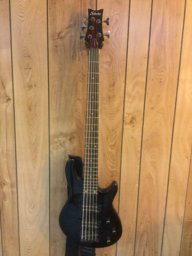
Which is one of the reasons 23 out of my 24 basses don't wear rounds...
I have no doubt that flats last a lot longer for you. Strings die because of hours of use, not strict calendar time. You have 23 (!!!) basses with flats on them - your time spent playing flats is spread among 23 basses. When you play rounds, it's always the same bass. If you played half your time on rounds (you probably don't, but let's play along), and rounds and flats lasted the same number of playing hours (they don't but again, play along), you'd expect to get 23 times the calendar time on a set of flats in your case. Depending on the portion of time you play rounds, etc, the math will change, but I think if you kept track of hours of use, you'd find the math isn't quite as lop sided as you think. I get a year (or more) out of set of rounds most of the time, and I play a lot, but with a few basses....the playing time gets spread around.
There are folks that do get many years out of a set of rounds - that's actually pretty typical amongst a big proportion of bass owners. Regular bass players change their strings, but folks that play bass now and then (including the guitarists that have a bass for a track here and there) tend not to - there are a lot of those folks around. I do get a few years out of a set of rounds on one bass - my fretless. As those strings are not banging on frets, they don't age nearly as fast, even though I play that bass a fair amount. The point is that, although people get a lot of years out of a set of flats, there are other things that skew sales numbers of rounds vs flats in the other direction.



 ), and in the beginning, they didn't all wear flats. And some of my first basses - with rounds - got played a lot more than the one or two that wore flats. Even now, every bass I own gets rotated out, 2 at a time, and gets played for at least an hour every day for a month. And, yes, I do keep track of their string's actual playing time. As I said; round wounds - when there were basses that wore them - tended to last 12-14 months. The basses with flats? Their strings - with the one exception - haven't needed replacing - yet. The little EA-260's strings were more than 7 years old when I got it. I know the original owner very well; it was his only bass, and I know that he played the snot out of it. It was one of 3 basses that weren't rotated when I had it (my friend talked me out of it last year); it was out all the time. I didn't play it quite as much as he did, but I played it a lot. So, 13 years is pretty close to those string's actual playing time. I'm sure there are some people who can make rounds last a long, long time; just as I'm sure there are people who can play flats to death in very short order. But, I only know for sure how long different strings last - for me. When people say their rounds only last a month? I believe them. If they say that their flats last 15 years? I believe them, too. And, although flats are definitely easier on my wallet than rounds have been; and although flats are what I learned to play bass on, more years ago than I want to think about; those aren't the only reasons I prefer them. As I get older, the nerve damage from frostbite and constant vibration is getting worse; which means that trying to play rounds makes my fingers hurt like hell after a minute or so. That's the main reason I have so many basses with flats...