• TalkBass has been independent since 1998. Add your voice.
    Create a free account to reply to discussions, view embedded media, and browse with fewer display ads.
    Join freeLog in
    Want zero display ads or expanded classifieds tools? Compare plans.

Why do powered cabs mostly have XLR inputs?

MultiScaleMale

Gold Supporting Member
Jun 19, 2003
27,228
39,033
Maryland
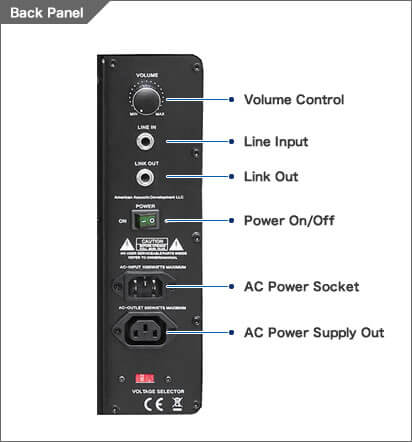
Looking at the Accugroove Wedgie and a few others, but it seems like the powered cabs mostly have an XLR input. Wouldn't you normally run the XLR to FOH and a 1/4" to whatever is on stage? I run a Noble with both 1/4" and XLR outs, the 1/4" designed to go to you on stage monitor/amp and the volume on the Noble controls the 1/4" out, not the XLR so your signal is consistent to FOH. A QSC K12.2 has XLR and 1/4" inputs and it's designed for full range. Maybe they're mostly using a power module designed for other uses than as a bass monitor and it doesn't have a 1/4" input.
 
1/4" connections on amps are usually unbalanced. XLR connections are almost always balanced. Balanced is far superior at rejecting noise.

Quality professional power amps generally use line-level balanced XLR input. Not sure if it's still common, but some older entry-level gear used line-level balanced 1/4" (TRS). For example I have some old Crown PowerBase amps and various rack gear with 1/4" inputs. I actually considered it a hassle to have to use 1/4" TRS. You can use 1/4" TS but it knocks the signal level down and there is more hum.
 
I get why XLR can be preferable.
But the option for 1/4" is a very significant courtesy IME. It lets me use my QSC K10s as monitors with the 1/4" sends from my mixer, with the guitar cables I already own. It lets me plug a bass straight in in a pinch. Or use the 1/4" output from my rack preamp & save the XLR DI for the FOH.
Correct or not, there's actually a lot of scenarios where built-in 1/4" capability can be very handy, so it's definitely a consideration when I'm shopping for a powered speaker.
I guess I could buy adapters & cables (& spares) to accommodate the right powered speaker. But I really am quite partial to those combo jacks.
 
I get why XLR can be preferable.
But the option for 1/4" is a very significant courtesy IME. It lets me use my QSC K10s as monitors with the 1/4" sends from my mixer, with the guitar cables I already own. It lets me plug a bass straight in in a pinch. Or use the 1/4" output from my rack preamp & save the XLR DI for the FOH.
Correct or not, there's actually a lot of scenarios where built-in 1/4" capability can be very handy, so it's definitely a consideration when I'm shopping for a powered speaker.
I guess I could buy adapters & cables (& spares) to accommodate the right powered speaker. But I really am quite partial to those combo jacks.
Yes, but with 1/4" unbalanced signal, there is no way to mitigate ground loops. Since the powered cabinets are geared more for pro audio, where robustness and noise floor are much more important, the industry has gravitated to balanced line level.

This is why the Subway Bass Pre-DI's have balanced line level preamp outputs in addition to unbalanced preamp outs and balanced DI outs.
 
Interesting. My Phil Jones PB-300 powered cabinet only offers a 1/4" line input jack. No XLR. Like the original poster, I use a Noble tube preamp's 1/4" out to the powered speaker, and reserve the XLR to either FOH or Focusrite interface. The powered cab would otherwise be unusable - by me. I consider its audio and build quality to be A+.

speaker_cabinet05.jpg
 
Interesting. My Phil Jones PB-300 powered cabinet only offers a 1/4" line input jack. No XLR. Like the original poster, I use a Noble tube preamp's 1/4" out to the powered speaker, and reserve the XLR to either FOH or Focusrite interface. The powered cab would otherwise be unusable - by me. I consider its audio and build quality to be A+.

speaker_cabinet05.jpg

Interesting. I saw one in the store and it had XLR inputs only. Maybe a revision?
 
1) Ground loop troubleshooting
2) A balanced XLR cable can run up to 200 feet. A 1/4" unbalanced cable cannot run this distance without tremendous loss. On stage, typically you have significantly longer cable runs. Even on small stages we are running powered subs and in order to make sure people aren't stepping over cables, we run longer cables around the back of the stage and we need that length.
 
It's a question of where they are intended to get their signal from; if it's a longer cable run (from FOH) then it should almost certainly be a balanced line, which typically have 3-pin XLR connectors.
 
I get why XLR can be preferable.
But the option for 1/4" is a very significant courtesy IME. It lets me use my QSC K10s as monitors with the 1/4" sends from my mixer, with the guitar cables I already own. It lets me plug a bass straight in in a pinch. Or use the 1/4" output from my rack preamp & save the XLR DI for the FOH.
Correct or not, there's actually a lot of scenarios where built-in 1/4" capability can be very handy, so it's definitely a consideration when I'm shopping for a powered speaker.
I guess I could buy adapters & cables (& spares) to accommodate the right powered speaker. But I really am quite partial to those combo jacks.
Get a DI box. That will let you run an XLR active speaker from your jack out.
 
Get a DI box. That will let you run an XLR active speaker from your jack out.
Maybe not, if the input to the powered speaker is line level, a DI will not work because they are typically mic level devices (they step down the voltage as part of the high to low impedance conversion)
 
  • Like
Reactions: Wasnex
Looking at the Accugroove Wedgie and a few others, but it seems like the powered cabs mostly have an XLR input. Wouldn't you normally run the XLR to FOH and a 1/4" to whatever is on stage? I run a Noble with both 1/4" and XLR outs, the 1/4" designed to go to you on stage monitor/amp and the volume on the Noble controls the 1/4" out, not the XLR so your signal is consistent to FOH. A QSC K12.2 has XLR and 1/4" inputs and it's designed for full range. Maybe they're mostly using a power module designed for other uses than as a bass monitor and it doesn't have a 1/4" input.

I'm in almost this exact setup, but running a powered Tri-112+ from Accugroove. I ended up buying a 1/4" to XLR cable to solve the problem. The cable runs from the 1/4" output from my Noble to the XLR input of the AG. The XLR out from the Noble goes FOH. It's a great setup, btw. Highly recommend the Accugroove.
 
  • Like
Reactions: RichSnyder
I'm in almost this exact setup, but running a powered Tri-112+ from Accugroove. I ended up buying a 1/4" to XLR cable to solve the problem. The cable runs from the 1/4" output from my Noble to the XLR input of the AG. The XLR out from the Noble goes FOH. It's a great setup, btw. Highly recommend the Accugroove.

Good to know. You understand the dilemma well. My guess is that the plate mounted amp AccuGroove and others are using was designed for use as a powered monitor or a powered cab, so they have an XLR input and wouldn't need a 1/4".
 
Good to know. You understand the dilemma well. My guess is that the plate mounted amp AccuGroove and others are using was designed for use as a powered monitor or a powered cab, so they have an XLR input and wouldn't need a 1/4".

Yes, indeed. I've also thought about using the XLR out on the Tri-112+, but I need to check the cab manual first. The nice thing about using the 1/4" to XLR cable is that I can control the volume to the cab through the Noble. If I just sent the XLR out from the Noble to the cab, then I'd have to be reaching around and adjusting the volume on the back of the cab.
 
  • Like
Reactions: RichSnyder