• TalkBass has been independent since 1998. Add your voice.
    Create a free account to reply to discussions, view embedded media, and browse with fewer display ads.
    Join freeLog in
    Want zero display ads or expanded classifieds tools? Compare plans.

Why do we still deal with 60 cycle hum?

I have used the suggested EHX Hum Debugger in the past. While it does as advertised, reduce the 60-cycle hum, it also made me think my bass had issues. When trying it initially, the Bb sounded great, and the C sounded great, but the B was almost non-existent. As the B is close to 60Hz, the Debugger did what it was supposed to do and reduced that frequency. I took it out of the signal path and just turned the volume down when I wasn't playing - problem solved more or less.

B
 
I use multieffect Headrush MX5 for my covers top hits band, and it's got gate and noise remove filter that can be used on input. That noise filter works great in live setting. It's really hard to hear a difference in tone, and it kills the hum.

Here is short info on it:
- Targeted hum suppression: It continuously identifies the steady 50/60 Hz cycle hum and its harmonics, then attenuates them before they reach the amp and effects models.
- Adaptive filtering: Instead of a fixed notch, it adjusts in real time to the noise profile, so it feels transparent even while you’re playing.
- Preserves musical detail: Because it’s not a gate, it doesn’t chop off notes or sustain — fades remain smooth and natural.
- Pre‑processing advantage: By cleaning the signal at the input stage, it prevents hum from being amplified or distorted downstream, making all patches quieter without extra tweaking.
In short, it’s a smart, adaptive filter system that reduces hum continuously, unlike a gate which only mutes silence. This makes it especially effective for guitar and bass rigs where 60‑cycle hum is a constant issue.
I'm just not a multi-effects kind of guy, especially with bass, but as a guitar player and STILL not being a multi-effects kind of guy, I could see how those enumerated features alone, would make this device useful... if... I knew beforehand that some room or environment had an especially difficult issue with 60-cycle hum (and not just poor wiring) and if I was using single coil instruments that were not noise-cancelling or "noiseless". Still, a very cool device. Thanks!
 
  • Like
Reactions: RattleSnack
EXACTLY. I WILL NOT put us with hum, especially on-stage. That is why I use humbucker pickups, and even more so, EMG actives that have a >-100dB noise floor when wired correctly. Unless you are in a tribute band or otherwise need the cosmetics of a vintage single-coil pickup, there is absolutely NO REASON to play with anything but proper hum and noise reducing pickups and shielding.
 
Why do we still deal with 60-cycle hum?

It is no doubt a thing, particularly for Fender and Fender-influenced instruments that have single coils. But...

I think a lot of the extraneous noise we may believe is 60-cycle hum may not be 60-cycle hum although maybe it is, and you as the instrument owner/player cannot control, cannot control completely, or cannot control easily the cleanliness of your signal and power in some rooms.

Playing at home is one thing. I know the 60-cycle hum out of my non-noiseless Strat IS 60-cycle hum, but when I get to the gig and even using "noiseless" Strats, Les Pauls, Stingrays, etc... there are noises I cannot control, and will never hear but on the gig, and there is tons of gear (most of which I don't own) connected into shared circuits and via shared gear signal chain, all tied to a building's wiring, location and uh... maladies.

As a guitar player, if I'm playing a room I haven't played before, I'm always inclined to bring a "noiseless" single coil instrument or a humbucker-equipped instrument to at least address that possibility. If the room, power and sound is clean in future gigs I'll be more open to certain guitar choices. If not, I'll know not to bring typical non-noiseless single coil traditional instruments.

If the posed question is about why choosing typical single coil instruments/pickups over "noiseless" versions, that's a related but different conversation more about the instrument(s) and players and their preferences, rather than the sometimes-unpredictable interconnectivity and interactivity between gear in a gigging musical life which is the way I'm interpreting the question.
 
60hz stops the heart. 50hz does not
I very much doubt there are any scientific studies that will back this up. It's dangerous misinformation.

Famous Accidental Electrocutions in Europe
  • Zyed Benna and Bouna Traoré (2005): Two teenagers electrocuted while hiding in a power substation in Clichy-sous-Bois, France, which sparked widespread riots.
  • Barbara Weldens (2017): A rising French singer who died on stage during a concert in Gourdon, France, following an apparent electrical fault.
  • Prof. Roland Levinsky (2007): A prominent medical researcher at the University of Plymouth, UK, who died after walking into an 11,000-volt power line.
  • Teenage Migrant (2021): A 17-year-old Bangladesh migrant was electrocuted on top of a train near the Italy-France border.
  • Vake Park Fountain Incident (2022): A 13-year-old girl was killed by electrocution in a Tbilisi, Georgia, park fountain.
    BBC
    BBC +4
 
  • Like
Reactions: IanStephenson
Unless you are in a tribute band or otherwise need the cosmetics of a vintage single-coil pickup, there is absolutely NO REASON to play with anything but proper hum and noise reducing pickups and shielding.
Well, speaking as someone who has basses with single coil and hum-cancelling--for example two nearly identical Jazz basses except for the pickups---single coil does have a different sound quality, and a "thing" - call it whatever--responsiveness, etc--that is very desirable for some people. So, we deal with it. My single coil basses are all professionally shielded out the wazoo (well, actually all my basses are...) and it's never a deal breaker, even in first rate studios(look at all the top session cats who use single coil pickups in Jazz basses--their pickups are arguably "proper";)). And with my Jazzes live, if there's too much noise I can simply dime the pu's or pop on my series mod and boom--no noise(but honestly live it's also never really an issue either, but I do have two different-sounding ways to eliminate any hum just with the controls on the bass if I want). Enough options to work with them if I want that sound.

 
Last edited:
  • Like
Reactions: Dynacord
We tolerate it because (1) we (particularly me) like the sound of single-coil pickups, and (2) in the mix of a band, you can't hear it at all.
In the gigs I do, it can be very audible. You wanna keep getting the gig, you show up with an instrument that doesn’t hum. In a few instances where someone had a noisy guitar, we wasted valuable time trying to minimize the issue.
 
In the gigs I do, it can be very audible. You wanna keep getting the gig, you show up with an instrument that doesn’t hum. In a few instances where someone had a noisy guitar, we wasted valuable time trying to minimize the issue.
I suppose if you had something like a sc Precision, just that one pickup, then yeah, you're kinda stuck. The only sc basses I use all have at least one setting that doesn't hum. As I say for example, my Jazzes I can either dime the pu's or run series, both of which are dead quiet. Same with my Jerry Jones. And I've never been in a live setting where the slight tonal differences of switching from say, the J front pu to series would be a sonic deal-breaker (in fact no one would notice!). As for bad (or non-existent) shielding--that's amateur hour I agree. My basses are all shielded by a pro tech.
 
Well, speaking as someone who has basses with single coil and hum-cancelling--for example two nearly identical Jazz basses except for the pickups---single coil does have a different sound quality, and a "thing" - call it whatever--responsiveness, etc--that is very desirable for some people. So, we deal with it. My single coil basses are all professionally shielded out the wazoo (well, actually all my basses are...) and it's never a deal breaker, even in first rate studios(look at all the top session cats who use single coil pickups in Jazz basses--their pickups are arguably "proper";)). And with my Jazzes live, if there's too much noise I can simply dime the pu's or pop on my series mod and boom--no noise(but honestly live it's also never really an issue either, but I do have two different-sounding ways to eliminate any hum just with the controls on the bass if I want). Enough options to work with them if I want that sound.

Same. And I "keep getting the gig" often using Jazz Basses with single coils (even stock vintage without added shielding) and I've done some big gigs (I don't buy the implication that sometimes choosing to use single coils is somehow less than professional).

1715100131990.jpg


344745670_1627770794361616_235002587905663054_n.jpg


Doing it again next week.
 
Same. And I "keep getting the gig" often using Jazz Basses with single coils (even stock vintage without added shielding) and I've done some big gigs (I don't buy the implication that sometimes choosing to use single coils is somehow less than professional).

View attachment 7480740

View attachment 7480743

Doing it again next week.
100%. People have been using sc Jazz basses since day one live and in the studio and if you know your sh#^t, it's not a problem.
 
Team CD *and* vinyl here. In the case of both mediums, it's how it's mastered for the format and the quality of equipment on which you're playing it. CDs are the best overall compromise in terms of audio quality and longevity, absolutely agreed.... if the audio is prepared properly for the format. Vinyl is inherently lossy each time you play it, but if you are maintaining your equipment (and replacing needles before they become worn) then the 'damage' to the vinyl is minimal. Most of the warranted ire directed at newer vinyl adherents is because they're listening to vinyl on absolute crap, bottom of the barrel turntables (Crosley, etc) with subpar needles and tonearms which can cause damage to the vinyl or give a really poor playback. Garbage in, garbage out. Proper turntables won't do that. I own the same recordings on CD and vinyl and in some cases, there's a definite difference to the depth of sound and warmth of vinyl.... but not always.
Same here, and I approve this message ^

For a parallel example, when trying to destroy the Monsanto plastic "home of the future" in Disneyland, the wrecking ball just bounced off the house when they tried to destroy it. Contrast that with the general connotation of plastic being "cheap and fragile" to the average consumer.

Vinyl, Cassettes, and CDs were all mastered differently (around limitations or lack thereof) and typically played back on equipment of varying degrees of quality. The actual CD Audio standard, specifically the discs, is capable of perfectly recording/storing any audible frequency that humans can perceive. As JazznFunk said though..."Garbage in, garbage out". If the album is mixed/mastered terribly, then an original cut of Abbey Road on vinyl will sound better than a garage band full of 13 year olds mastering FLACs on a Mac Pro.

I'll readily admit it's nostalgia that keeps the records and old hifi gear in my possession, just the same as some folks are happy with an old P-bass, Rick, or Gibson EB while EMGs and Lightwave pickups exist. I like having both :thumbsup:
 
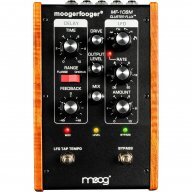
After reading some reviews, it seems your tone may be affected by this pedal.
I hope you don't mind my saying I'm a little amused that you ask for a pedal to kill the hum, and when told it exists, you might not want it. :D

I use a Hum Debugger. I'm not much for cork-sniffing, so I for one have never noticed any difference in tone. Even if there was any sort of difference, it'd be lost in the mix.

Hum-canceling pickups are more convenient, but more expensive, especially if you have multiple instruments with buzzy pickups. AFAIK there are a few hum-canceling pickups that sound nearly the same as single coils (e.g. Norstrand NJs).

I for one think that basses should come with hum-canceling pickups by default, and anyone who really wants single-coil can cough up the cash for it. Unfortunately, I think I'm in the minority. :confused:
 
  • Like
Reactions: DJ Bebop and fig
I hope you don't mind my saying I'm a little amused that you ask for a pedal to kill the hum, and when told it exists, you might not want it. :D

I use a Hum Debugger. I'm not much for cork-sniffing, so I for one have never noticed any difference in tone. Even if there was any sort of difference, it'd be lost in the mix.

Hum-canceling pickups are more convenient, but more expensive, especially if you have multiple instruments with buzzy pickups. AFAIK there are a few hum-canceling pickups that sound nearly the same as single coils (e.g. Norstrand NJs).

I for one think that basses should come with hum-canceling pickups by default, and anyone who really wants single-coil can cough up the cash for it. Unfortunately, I think I'm in the minority. :confused:
I'm guessing you quoted the wrong person.

I'm not looking for a pedal to kill the hum, just trying to help the OP.
 
  • Like
Reactions: Dynacord
I have one and agree, it works. Not entirely artifact free but, as a tradeoff, certainly less of an issue in a situation where hum is a problem and wouldn't really be noticeable in a band context. Worth knowing that it takes a dedicated power supply that is part of how it works, to analyze the power, so far as I understand; it can't be used with an alternative power supply.
At the low setting, tone isn’t that much affected. I have to make the compromise for my Rick and my single coil basses…
 
  • Like
Reactions: Dynacord
I dare you to come over here, and try it...

Don't worry about the cost - you can put a one way ticket on your credit card. You won't need a return flight and you won't be around to make the payment.

As a few posts have said, UK/EU electrics are safer because they have to be. UK/EU voltages are higher and more dangerous, so we don't mess around with it the way you Americans do with your low powered, third world system (no offence to those of you in the US who have upgraded to modern electrics with earthed sockets, and RCB's. Those of you who have kit with the chassis wired to neutral, and non-polarised sockets are just crazy people).

But if you ever come into contact with 240v/50Hz, I it can very definitely
Well, that went well... never said 50 wouldn't kill you.But 60 can cause you to not let go....

Confusion often arises from electric shock hazards, where direct contact with sufficient 60 Hz current (e.g., from faulty wiring) can cause tetanic muscle contraction—making muscles "lock up" because 50–60 Hz matches the natural firing rate of human motor nerves (around 40–80 Hz for sustained contraction). But this requires milliamp-level current through your body, not ambient fields.
 

Latest posts