
Enjoy the benefits of a premium membership!
Upgrade Account
-
TalkBass has been independent since 1998. Add your voice.
Create a free account to reply to discussions, view embedded media, and browse with fewer display ads.
Join free Log in
Want zero display ads or expanded classifieds tools? Compare plans.
You are using an out of date browser. It may not display this or other websites correctly.
You should upgrade or use an alternative browser.
You should upgrade or use an alternative browser.
Why does my Squier sound better...
- Thread starter dmq89
- Start date
More options
Who Replied?wow, I can't believe no one got the answer.
It's not electronics, strings, pick- ups, bridge density, nitrile finish, etc.,etc.,etc.
IT'S THE WOOD!!!!!!!
There you go. You got lucky with a great sounding hunk of wood; I've played tons of high $$ basses that sounded pretty bad, even the 6- 7k ones. The worst by far are the expensive hard wood 'pieces of furniture'. They sound thin and lifeless.
I've been offered free instruments countless times and turned nearly all of them down. That's an objective assessment if there ever was one, as I don't have anything invested.
I have been in the Fender custom shop and played 'identical' basses; 10- 12 at a sitting and they all sound incredibly different.
I also have played some great sounding cheapies; the wood is the biggest factor in the sound of a bass or guitar; all the electronics in the world won't/ can't change the basic tone of the wood in any meaningful way. Getting a great pre- amp and huge stack of speakers will only make the crap louder, not better sounding.
It's all in the wood.
It's not electronics, strings, pick- ups, bridge density, nitrile finish, etc.,etc.,etc.
IT'S THE WOOD!!!!!!!
There you go. You got lucky with a great sounding hunk of wood; I've played tons of high $$ basses that sounded pretty bad, even the 6- 7k ones. The worst by far are the expensive hard wood 'pieces of furniture'. They sound thin and lifeless.
I've been offered free instruments countless times and turned nearly all of them down. That's an objective assessment if there ever was one, as I don't have anything invested.
I have been in the Fender custom shop and played 'identical' basses; 10- 12 at a sitting and they all sound incredibly different.
I also have played some great sounding cheapies; the wood is the biggest factor in the sound of a bass or guitar; all the electronics in the world won't/ can't change the basic tone of the wood in any meaningful way. Getting a great pre- amp and huge stack of speakers will only make the crap louder, not better sounding.
It's all in the wood.
the wood is the biggest factor in the sound of a bass or guitar; all the electronics in the world won't/ can't change the basic tone of the wood in any meaningful way.
I don't see how people can believe that with an electric bass.

I'm going to have to also subscribe to the single coil theory for you. I've had a lot of fun pitting my Lakland against my Squier in various threads. Not to hijack, but more for FYI:
Squier vs. Lakland discussion
Squier vs. Lakland soundclips
Squier with Nordys vs. Lakland soundclips
Various single coil soundclips
Squier vs. Lakland discussion
Squier vs. Lakland soundclips
Squier with Nordys vs. Lakland soundclips
Various single coil soundclips

Yep, single-coils can really make a bass shine. Laklands are great basses, but the Mk I humbucking pickups may not be doing the bass any justice compared to a set of good-quality single-coils.
In a more apples to apples comparison, I have both Squier and Lakland jazzes and the Lakland sounds far better even after installing Bartolini USA pickups in the Squier.
In a more apples to apples comparison, I have both Squier and Lakland jazzes and the Lakland sounds far better even after installing Bartolini USA pickups in the Squier.

I have been very well pleased by my previous Squier Jazz bass, and then a VM P bass. They both sounded great! Plus, the fit and finish were very nice. Not "perfect", but far more playable than many other more expensive basses. So, don't sell them short. But you should be able to get very nice sound out of the Lakland as well.
I traded in a $900 Ibanez with active p'ups for the Squier. I did not like the sound of that Ibanez. So....ya gotta go for what sounds good to you.
I traded in a $900 Ibanez with active p'ups for the Squier. I did not like the sound of that Ibanez. So....ya gotta go for what sounds good to you.
I like my peavey Millenium BXP 4 so much, it's my main bass now. The only changes I made to were replacing the tuners with Hipshot ultralites, and putting Thomastik jazz flats on, with a little piece of foam under the strings at the bridge. I considered a pickup swap, but you know what? I actually like the stock ones! The input jack and volume, and tone pots seem to be real quality, and the string thru bridge is nice too.
Oh yeah, I replaced the knobs with Fender vintage jazz knobs. That was so I could see how I had my pickups blended at a glance, without having to guess.
Good sound, good construction, and really light weight-I'm completely happy with it, and thats all that really matters.
Oh yeah, I replaced the knobs with Fender vintage jazz knobs. That was so I could see how I had my pickups blended at a glance, without having to guess.
Good sound, good construction, and really light weight-I'm completely happy with it, and thats all that really matters.
I don't see how people can believe that with an electric bass.
The best way to choose a new instrument is to play them acoustically first. It's ALL in the wood; the rest is window dressing.
I've experimented with oh, maybe a couple hundred custom pick- up applications; sometimes a dozen in the same bass, for example. Bartolini has created pick- ups specifically for me and all that.
By sharing my expertise, I'm only trying to help people avoid 'chasing their tail', by thinking that electronics can 'fix' inherent problems in the the primary sound element of any instrument; the wood.
If it starts out good, you can shape the tone nicely with different electronic elements; if the sound is muddy, thin or harsh (etc.,etc.) acoustically, that's what you'll have no matter what you do with the electronics.
I don't see how people can believe that with an electric bass.
Or you could simply experiment in this way.
Rig up a bridge and tuner/ nut on a slab of inch thick steel ( concrete would be good also)
String it up , place a pick- up under the string and play away. You'll get a great lesson in the importance of the body/ neck material. I've actually done this, so I speak from experience.
There's nearly no sound at all; where does it come from? Not the pick- up......it's the wood, what a shock.
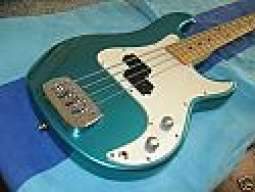
I just got rid of my Lakland 44-01. Had the same issue, not cutting through. I believe it was the stock Bart pickups and pre.
Love the neck so I was going to replace the pups with Norstrand Big Singles but decided to buy another G&L. Huge difference. So, the Lakland is gone.
Love the neck so I was going to replace the pups with Norstrand Big Singles but decided to buy another G&L. Huge difference. So, the Lakland is gone.

I believe the issue is that the active electronics in the lakland add compression. I do not find those pickups and preamp to sound very present, aggressive or sound particularly good, IMO of course.
Time tested passive single coil fender type pickups cut through a mix and sit in the right place making the rhythm section sound full and punchy.
Not to pick on Lakland because many other modern HiFi sounding axes sound great when you play them solo, but melt away into non-descript tones when the band kicks in.
Fender(squire too) basses may not sound super impressive soloed, they sound great in the mix.
Time tested passive single coil fender type pickups cut through a mix and sit in the right place making the rhythm section sound full and punchy.
Not to pick on Lakland because many other modern HiFi sounding axes sound great when you play them solo, but melt away into non-descript tones when the band kicks in.
Fender(squire too) basses may not sound super impressive soloed, they sound great in the mix.
Or you could simply experiment in this way.
Rig up a bridge and tuner/ nut on a slab of inch thick steel ( concrete would be good also)
String it up , place a pick- up under the string and play away. You'll get a great lesson in the importance of the body/ neck material. I've actually done this, so I speak from experience.
There's nearly no sound at all; where does it come from? Not the pick- up......it's the wood, what a shock.
Yet changing from one pickup to another, or changing from a humbucker to a single coil in the same instrument also makes a difference.
So does using a different type of string.
So does the wood (but that's hardly the only influence)
There are plenty of things that influence the sound of an electric bass guitar.
Humbuckers have a characteristic sound. So do pickups like Barts. They have a "signature" type sound, so if you don't like 'bukcers or Barts (a matter of personal prefferance) all the best woods in the world aren't going to make it work well for you.
The best way to choose a new instrument is to play them acoustically first. It's ALL in the wood; the rest is window dressing.
I've experimented with oh, maybe a couple hundred custom pick- up applications; sometimes a dozen in the same bass, for example. Bartolini has created pick- ups specifically for me and all that.
By sharing my expertise, I'm only trying to help people avoid 'chasing their tail', by thinking that electronics can 'fix' inherent problems in the the primary sound element of any instrument; the wood.
If it starts out good, you can shape the tone nicely with different electronic elements; if the sound is muddy, thin or harsh (etc.,etc.) acoustically, that's what you'll have no matter what you do with the electronics.
Everybody has his own theory on the stuff. Here's what happened with me a few weeks ago.
I'd given up on split P pickups after trying about ten. Then someone posted about getting one custom rewound like one he had which was the best out of thousands he'd tried. He was nice enough to give the DCR and I rewound one very close to what his was, 12.24K vs 12.28K. Then I put it in a bass which has TI JF344s and a huge route I use for testing different types of pickups. It was one of the best bass sounds I've gotten. Then I put it in my #1 P bass which had LaBella DT 760FM's, it sounded so-so, nothing special at all. Then I swapped strings on the two basses and the pickup sounded great again.
At this point the test bass had the LaBellas and the P had the TI's.
I dug out a JB pickup I'd rewound and stuck it in the test bass, sounded like crap. That pickup was wound a little hot so I removed some wire from the coil two or three times and restested, sounded better but still crappy.
Then I reswapped the strings again, TI's back on the test bass, LaBellas back on the P. The crappy sounding JB pickup sounded fine. The strings made all the difference in the world.
Oh...the test bass's body is made from Indonesian plywood.
There was nothing magical about the plywood or the P body. In this instance swapping the strings made so-so and crappy sounding pickups sound very good no matter which body they were in.
I believe about 90% (air number) of the sound on an electric bass comes from the strings and pickups.
The wood might make a little difference, but to say "It's ALL in the wood..." is highly inaccurate. IMO, YMMV, etc., etc., etc.
__________________
Not hard to believe. I have had several Lakland USA 4-94's and then when I switched over to my Fenders or Sadowskys I always had to lower the volume back. And I have owned bothe the newer Lakland pus and pre amd barts. Not knocking Lakland I just think other basses such as passive J's cut through a lot better

...than my Lakland?
(I'll keep this in point form as my usual posts are WAY too long).
- I have a Squier DJAV (totally stock except for a BAII) and a Lakland 5501 (again, stock)
- 5501 went into the shop; had to use the Squier. No effects, as my board was disassembled - straight into the amp.
- Both bands commented on the tone of the Squier and its ability to cut through. I must admit, I liked the tone better myself. More low end, growlier mids, better overall tone. Feels great to play (but not as good as the Lakland, of course).
- WHY DOES MY CHEAP INDONESIAN SQUIER SOUND BETTER THAN MY 5501?!?!?!?
I always bring both to a gig (with the Squier as a backup) - what kind of statement would it make if I played the Squier and had a LAKLAND as a backup?!?!?I would feel pretty stupid leaving the Lakie on the wall while I played the cheaper bass...
Just wanted ya'll's opinions...
Thanx!!!
Same reason my ATK sounds better than any Musicman I've played, it disappoints me, I really don't know.

I believe the issue is that the active electronics in the lakland add compression. I do not find those pickups and preamp to sound very present, aggressive or sound particularly good, IMO of course.
Time tested passive single coil fender type pickups cut through a mix and sit in the right place making the rhythm section sound full and punchy.
Not to pick on Lakland because many other modern HiFi sounding axes sound great when you play them solo, but melt away into non-descript tones when the band kicks in.
Fender(squire too) basses may not sound super impressive soloed, they sound great in the mix.
+1
I couldn't agree more with DBassmon. Sort of like the "bedroom tone" or "flat response" bass cabinets. What sounds pretty & pristine & great by itself more often than not becomes buried & blahzay (without EQ'ing the snot out of it with onboard or outboard EQ) in a full band context. Humbuckers for the most part don't help this scenario. I haven't met a humbucker yet that can cop the same level of aggressive cut in a mix as single coils do - unless you coil-tap them but at that point your essentially switching them to single-coil mode. IME, aggressive, non-polite single coils are at home like a fish in water in a mix. Maybe you're just discovering that the single coil sound is "your sound" - it's definitely my sound as well & has worked for countless legendary musicians throughout music history. Took me a long time & a lot of $$$ basses to realize it, but single-coil, passive basses with no effects, no electronics rock my world these days. That's not a dig at $$$ basses with humbuckers & electronics & hi-fi tones - they sound great in more solo-centric types of music - depends on the style of music you're doing, but typically, I find that they have a more difficult time getting through a more dense rock-type mix. In a nutshell, I guess what I'm trying to say is that it may have less to do with the Squier in general and more to do with the Squier having a lot more of the time-test basic elements mentioned above to getting you closer to "your sound" of what a bass should sound like in a mix. If that's the case, you may find within the Lakland line that a JO or DJ model may suite your needs better at this point. Now all you got to do is ditch the electronics & go completely passive & you'd be set.

All this is just my theory/$.02, YMMV.

wow, I can't believe no one got the answer.
It's not electronics, strings, pick- ups, bridge density, nitrile finish, etc.,etc.,etc.
IT'S THE WOOD!!!!!!!
There you go. You got lucky with a great sounding hunk of wood; I've played tons of high $$ basses that sounded pretty bad, even the 6- 7k ones. The worst by far are the expensive hard wood 'pieces of furniture'. They sound thin and lifeless.
I've been offered free instruments countless times and turned nearly all of them down. That's an objective assessment if there ever was one, as I don't have anything invested.
I have been in the Fender custom shop and played 'identical' basses; 10- 12 at a sitting and they all sound incredibly different.
I also have played some great sounding cheapies; the wood is the biggest factor in the sound of a bass or guitar; all the electronics in the world won't/ can't change the basic tone of the wood in any meaningful way. Getting a great pre- amp and huge stack of speakers will only make the crap louder, not better sounding.
It's all in the wood.
Vail, you really hit the nail on the head. It may not be ALL in the wood, but after almost 40 years of playing, I know how important an individual chunk of wood is.
~In 2003, when I was shopping for a Fender Jazz Bass, I tried LOTS of different ones, always playing them acoustically first, and the most resonant specimen happened to be a MIM. In that aspect, it outclassed every American made one that I had tried.
~I used to own a 1983 Fender Precision Elite II. The neck on this thing was fantastic, but the sound was always a bit lacking, for me. I tried about six different brands of pickups and even ended up taking out the preamp, but it just never sounded all the way there. I hated to sell it, but there was nothing I could do to make it sound the way I wanted.
~I also owned a G&L L2000, which happened to be mahogany. Again, the neck was fantastic, but the bass always sounded to me like the hunk of wood was dead and the pickups and preamp were sort of dragging it along. In this case, it might be that I just don't like mahogany... but I still maintain that the electronics were secondary to the wood.

Hi! Lads,
Having had a Rick for decades, the only other bass that i have is a fretless Mahogany & Ebony bass that I made myself using Scaller PB type p.u.s and Grover machine-heads.
I have considered a Squier cheapo in case one of the guitarists were to play bass as well as a Danelectro.
my cheapo Fender Squier Strat is exceptionally better than I thought that would be. £70 played one gig and less than a month old when i bought it on Invalid Link Removed
In fact, the LP Custom has hardly had any of my attention since. On account of this oriental proffering by Squier, I am hoping to pin down a Squier PB one day.
Obviously the music is the prime motivator, but if you are going through FX units eithe rinstrument will sound as good as you have made the settings with regards to using headphones from desk or FX unit or amp phoes output. Time will tell and your accumulation of experience.
Hope you sort it and can make your choice.
Having had a Rick for decades, the only other bass that i have is a fretless Mahogany & Ebony bass that I made myself using Scaller PB type p.u.s and Grover machine-heads.
I have considered a Squier cheapo in case one of the guitarists were to play bass as well as a Danelectro.
my cheapo Fender Squier Strat is exceptionally better than I thought that would be. £70 played one gig and less than a month old when i bought it on Invalid Link Removed
In fact, the LP Custom has hardly had any of my attention since. On account of this oriental proffering by Squier, I am hoping to pin down a Squier PB one day.
Obviously the music is the prime motivator, but if you are going through FX units eithe rinstrument will sound as good as you have made the settings with regards to using headphones from desk or FX unit or amp phoes output. Time will tell and your accumulation of experience.
Hope you sort it and can make your choice.


