
I’m no boss, matter of fack, I ain’t even a walkin boss. I am however a pretty snappy hander and holder; but I leaves the big decides to them who find some measure of satisfaction in such lofty exercises of the imagination. Or something like that…?Hey, quit giving me orders, you're not the boss of me!
Oh, wait...

Enjoy the benefits of a premium membership!
Upgrade Account
-
TalkBass has been independent since 1998. Add your voice.
Create a free account to reply to discussions, view embedded media, and browse with fewer display ads.
Join free Log in
Want zero display ads or expanded classifieds tools? Compare plans.
You are using an out of date browser. It may not display this or other websites correctly.
You should upgrade or use an alternative browser.
You should upgrade or use an alternative browser.
Why does TalkBass love the P Bass so much?
- Thread starter GwennyT
- Start date
More options
Who Replied?
I’m not sure when the change happened, but for a really long time I always thought of Talkbass as a Jazz bass site.



For me it’s the pickup position on a P that works. I’ve built a couple with different pickups but placed where the P pickup would be. They sound great. The bass below has a Nordstrand MM5.2 with series/parallel wiring. In parallel it is a monster P.I don't overly love the P bass. There is a pattern, though... I have a Fender American Standard, a cheap copy, an Orange O-Bass which is sort of a P bass and a Guild Starfire I, with the split pickup (so kind of a semiacoustic Mustang?). Right now, I dunno why, maybe it's the strings (Rotosound rounds), maybe it's the pickup (EMG GZR), but my favourite of these is the cheap copy. Followed by the Guild, especially with flats. The Orange doesn't really sound like a P (dunno why, maybe it's the okoumè body or the slightly different pickup position). My American P isn't quite there, although it is certainly the best of the four construction-wise. Right now, with DR Fat Beams and the stock pickup, it sounds too bright, and I actually have to cut the high mids quite a lot to get it in the whereabouts of where I want it.
The truth is that the split pickup in the middle happens to be one of my favourite pickups. I have tried Jazz basses, countless times. I like the way they sound when other people are playing it. I hate it when it's me playing it. It sounds thin, wimpy, and I hate the bridge pickup soloed. The neck pickup is OK but still not a split pickup. On the other hand, I quite like PJs, provided that the two pickups sound balanced together. I feel that the bass that best pulled off a PJ was the older Yamaha BB line (not the current models).
And anyway the bass that I most like playing is not over of the aforementioned. It's my cheap Chinese Höfner Club with a minihumbucker blade pickup at the neck, soloed, and with none of that tone filtering bollocks (I made it into a regular Volume - Tone affair).
Attachments


I’ve already calculated it and it’s meaningless to anyone except physicists. Makes not a lick of difference tonally.A PJ can come close but the primary thing getting in the way of being identical is the magnetic pull on the strings from the secondary jazz pickup. A second pickup will attenuate the sustain but I won't pretend to claim that it will affect the tone. Maybe, maybe not, I don't know. However, the magnetic pull reducing sustain is simple physics but please don't ask me to provide the calculation.
I love P’s for no other reason than they work on pretty much everything. But my main basses are PJ’s because even though I use the P by itself mostly, sometimes for the whole night, it’s cool to get that J bass vibe on certain songs. Is it exact? Don’t care.
I've entertained the idea of a single T-Bird pickup in the P position for an upcoming project.For me it’s the pickup position on a P that works. I’ve built a couple with different pickups but placed where the P pickup would be. They sound great. The bass below has a Nordstrand Mm5.2 with series/parallel wiring. In parallel it is a monster P.
View attachment 5486894
That bass looks like a beast!

Do it! The T-bird pickups sound great. You won’t be disappointed.I've entertained the idea of a single T-Bird pickup in the P position for an upcoming project.
That bass looks like a beast!
Thanks for the nice comment. It is a beast.

Groupthink - Wikipedia
Groupthink requires individuals to avoid raising controversial issues or alternative solutions, and there is loss of individual creativity, uniqueness and independent thinking. The dysfunctional group dynamics of the "ingroup" produces an "illusion of invulnerability" (an inflated certainty that the right decision has been made). Thus the "ingroup" significantly overrates its own abilities in decision-making and significantly underrates the abilities of its opponents (the "outgroup").
Groupthink requires individuals to avoid raising controversial issues or alternative solutions, and there is loss of individual creativity, uniqueness and independent thinking. The dysfunctional group dynamics of the "ingroup" produces an "illusion of invulnerability" (an inflated certainty that the right decision has been made). Thus the "ingroup" significantly overrates its own abilities in decision-making and significantly underrates the abilities of its opponents (the "outgroup").


Groupthink - Wikipedia
Groupthink requires individuals to avoid raising controversial issues or alternative solutions, and there is loss of individual creativity, uniqueness and independent thinking. The dysfunctional group dynamics of the "ingroup" produces an "illusion of invulnerability" (an inflated certainty that the right decision has been made). Thus the "ingroup" significantly overrates its own abilities in decision-making and significantly underrates the abilities of its opponents (the "outgroup").
Q: Standard Fender P pickup position or Reversed?
There's a meaty point of contention for debate!
Please don't discuss...we all know the answer ..

P basses also eventually lead to highbrow discussions of science and the humanities.


Well...Don't get me wrong, I love it too-- but a Jazz bass can mimic the P tone quite well. Why not something more versatile, like a PJ?
First of all, I'm not going to wade through all the answers you've stirred up. For one, I don't want to. For another; I don't think I have to. I've been here on TB long enough, that I can imagine most of them. And, finally? I probably agree with at least 75% of them, anyway. So... here's my answer, for what it's worth;
- Can a Jazz Bass mimic the P tone? Which P-tone are you talking about? I'd bet a dollar to a donut that it can't mimic my P-Bass. Which is an "A-spec" necked '78, with a foam mute in the bridge cover; the pickup cover; and strung with GHS 3025 Precision Flats - the clones of the original Squier-made Fender Flats that it shipped from the factory with. That I've owned for 36 years, now. The tone? Pretty much the same tone that most of the '50s-'60s Rock; Rockabilly; R&B; and Blues was recorded with - or performed with, on stage. Sorry, but that's a tone you just cannot get from a Jazz Bass...
Why not something more versatile...? In my case, because I don't need my P-Bass to be versatile. I have 26 other basses; There's no need for my P-Bass to be versatile. Or any of my other basses, TBH - although some of them most certainly are...

Last edited:
Like that's the worst I've done in this thread?
Well, to be honest, I have not read the entire thread. Once I saw the title and read through the first few posts, I knew it was going to be just a lot of P-dinkle.

I think it is a reflection of bassists loving the P-Bass in general.
Which is because it is a simple elegant powerful bass with a ton of practical application, utility, and recognition.
Which is because it is a simple elegant powerful bass with a ton of practical application, utility, and recognition.
Maybe we all had to get this old before a J bass could feel new-fangledI’m not sure when the change happened, but for a really long time I always thought of Talkbass as a Jazz bass site.

Like that's the worst I've done in this thread?
Go on…
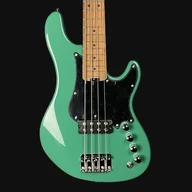
Late to the discussion but I’ll throw this in.
The sound of the P-bass pretty much coincides with a huge chunk of recorded music history that happened to coincide with (don’t @ me, just speaking demographically), the Baby Boom generation and to sone degree Generation X.
The Boom generation’s taste in pop music dominated radio for a long time, and that included the P-Bass sound on thousands of hit records.
Growing up in the 80s, our local rock station wouldn’t play anything later than maybe 1978, except for a once-weekly “new music” alternative show, and whatever new music was being promoted / had to be played for CanCon reasons. So the Boomers cast a very long shadow. (Gen X had a bit of the 80s and 90s but we are too few in number to matter except in a sort of stealth way to later generations rediscovering “our” music and reinterpreting it as synthwave, etc)
Yeah, the P-bass has the sound you’ve heard on lots of your favorite records. It is not the only bass sound, but it’s the easiest way to get that sound. It does raise the question, when will its influence wane?
This week I was seriously considering a Squier 40th Anniversary P or one of the Paranormal 54 Js. The allure is hard to resist.
The sound of the P-bass pretty much coincides with a huge chunk of recorded music history that happened to coincide with (don’t @ me, just speaking demographically), the Baby Boom generation and to sone degree Generation X.
The Boom generation’s taste in pop music dominated radio for a long time, and that included the P-Bass sound on thousands of hit records.
Growing up in the 80s, our local rock station wouldn’t play anything later than maybe 1978, except for a once-weekly “new music” alternative show, and whatever new music was being promoted / had to be played for CanCon reasons. So the Boomers cast a very long shadow. (Gen X had a bit of the 80s and 90s but we are too few in number to matter except in a sort of stealth way to later generations rediscovering “our” music and reinterpreting it as synthwave, etc)
Yeah, the P-bass has the sound you’ve heard on lots of your favorite records. It is not the only bass sound, but it’s the easiest way to get that sound. It does raise the question, when will its influence wane?
This week I was seriously considering a Squier 40th Anniversary P or one of the Paranormal 54 Js. The allure is hard to resist.

Because " That " P vibe able well mix in any genre, from quite acoustic band to loud metal band.
Versatile J , PJ or active bass, just for full fill the market need and prove that brand/company able create something more complex than simple P bass.....
......i am P guy...
Versatile J , PJ or active bass, just for full fill the market need and prove that brand/company able create something more complex than simple P bass.....
......i am P guy...
Last edited:
The P bass is the Dodge Dart of basses, discuss...
Fair enough.


