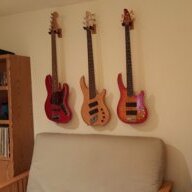
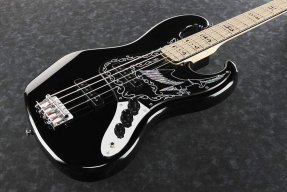
The fanned frets aren't the feature. They are a required byproduct of having the extended string length of the lower pitched strings. If the benefit of the string length isn't there, the fanning itself is fairly meaningless.
The new Ibanez basses don't extend the lowest string, but instead shorten the higher strings. They have the same visible fanning with none if the claimed benefit of extending the scale length. Hence, it's a gimmick on them, only meant for visual appeal instead of serving a functional purpose.
The real question should be if the extended low string creates a benefit worthy of dealing with the fanned frets. Fanning does make some regions of the board easier to play, other regions are nearly unaffected, and others become harder to play (depending on what you are trying to accomplish). From a manufacturing perspective, there is overhead to begin production of a new style of fretboard if you're already a builder of "standard" fret/string-length instruments. From a player perspective, as long as it is a well executed design, you are looking at fine tuning something that works pretty well as-is. There are plenty of existing basses that have great tone and playability. The Dingwall is a fine instrument, but it isn't so much better that it's worth a change in the industry to adopt this "new" format for mass distribution.
Was the Wankle Rotary Engine a good idea? Sure. Did it have lovers and haters? Sure. Did it become a significant and commonly accepted design? Nope.