• TalkBass has been independent since 1998. Add your voice.
    Create a free account to reply to discussions, view embedded media, and browse with fewer display ads.
    Join freeLog in
    Want zero display ads or expanded classifieds tools? Compare plans.

Why have a nice rig just to be run direct?

Status
Not open for further replies.
Yes, most of what I listed is pricey, and most who use the Axefx or Kemper are using them as full, digitally modeled replacements for their live rigs: their stomps, rack fx, and preamps - not just solely for the cabinet emulation. However the 2 Notes C.A.B. is priced comparable to a high end mic or tube direct box....certainly not prohibitive for someone with a real need.

Current state of affairs of practical use of *specifically*IR technology is expensive and scarce. I've mentioned that a couple times in my posts. It's not ideal, and it's not for everyone. It is, IMO, an option that professionals or those with very specific needs can take advantage of. I personally like the idea of carrying around the tone of an SVT head and well mic'd SVT 8x10 cabinet in one trip from my sub compact vehicle. That has value for me. If you don't have the need, the money, or desire to explore IR technology, then don't. It's just another option that is starting to gain steam, and price vs functionality and quality will only get more attractive as time goes on.

I do realize that digital emulation is not always favorably viewed amongst guitarists and bassists. I get that. I'm not a "one or the other" type of musican. There is room for all of the technology, whether it be old school or cutting edge. Each has its benefits and downsides, and I'm a fan of ALL of it. And isn't that what this thread is about, really? How does one get their really expensive bass rig's tone to translate to FOH better/more easily/without resistance from the sound tech? Well, I'm providing an option, and an option that is being exploited by professionals every day of the week. Take a look if you're interested. If you're not....don't. ;-)

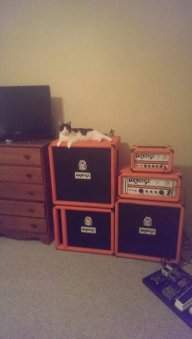
Yeah, the other issue with this system is full band practice, meaning we would have to get a full pa with monitors and subs just for practice to hear the bass correctly. By the time you buy the modeling system, powered speaker, and all the extra PA stuff that is a huge price tag. AND you also have to assume that every venue you play will have a good PA with subs and monitors, which in our case is most, but not all of the time. I could have 3 Orange 810's and heads for that dough haha. Though I do see how this system could be great for touring bands.
 
Well I like that list and try to respect it, but I'm going to write an article called "9 Things Every Soundman Needs To Know About The Bands."

1. Unless you got a really raw deal or a sweetheart deal where you just have to move a few mics and plug in a few cords at the beginning and end of the night, you are likely making more money than anyone in the band(s), often times way more than them. You deserve it, but sometimes those bands you're running sound for work for free or a pathetic little token payment.

2. When the band is done, you move to the next one and forget about them, but to them, their performance is everything. It's an indicator of whether they will get more gigs and more fans or not. Poor sound caused by a lackluster effort or stonewalling their needs will affect their future, and possibly yours if they ever need to hire a soundman directly.

3. One vision does not fit all. Some guitarists want to be run direct and some bassists want a mic, for example. Some vocalists like to use effects and bring their own. I'm not saying you should be prepared to run 5 lines for every instrument, but within reason, if they have special needs, there is likely a good reason for it, and the best thing you can do is roll with it.

4. If a band is too loud for the venue and you can't do anything about it, warn them once, take them out of the PA if you have to, and then let them hang. Ultimately they will be the ones who pay for it and you will still have your soundman gig.

5. I've been in situations where the soundman wanted dead silence from the stage. Not all bands want that. Invariably, some of the worst gigs I've had soundwise came from soundmen who think the bands should be so quiet that they can't even hear themselves onstage. A little bit of bleed never hurt anyone. A lot of bleed can, but a little bit won't.

6. Some bands act like pros, some act like divas. Know which is which. A bass player coming in demanding 5 or 6 lines on a multi-act show in a small club with a 16-ch board is a diva. A bass player who wants a mic on his cab and no DI and politely discusses it with you isn't.

7. Some bands are admittedly clueless, especially newbie bands. However, for some, what the soundman interprets as "cluelessness" is a carefully crafted sound that is a little different than usual but works very well in their context. It's OK to school the bands who play way too loud and have a sound you can't do anything with, but sometimes you have to take a leap of faith and believe in what they're trying to do, especially if they seem semi-professional otherwise. If it works out, both you and they look awesome. If it doesn't, refer to #4.

8. Many of the bands that will cross your path will be putting together their own shows in their own venues eventually, and they may end up needing a soundman from time to time. The absolute worst advertising you can do is to show them disrespect. You don't like being disrespected? Neither do they. If you disrespect them, they will never hire you for anything and they will tell all their friends about you. They may even go to your boss and tell them. If you show them that you're on their side and are willing to work with their needs within reason, you will be their hero and you will get calls from them in the future. Running sound is very much a word-of-mouth venture, and that is your best advertising.

9. There is no number 9.
 
  • Like
Reactions: ebob
IMO, you're talking about stuff here that costs more than a really nice bass rig, just to give a feed to a soundguy so he has a slightly less chance of screwing up, though he could still screw it up royally...might just mean twisting 2 knobs instead of one. ;)

Doesn't matter how great of stuff you have or don't have, the guy on the other end can still make it sound glorious, or more like a steaming pile, in a moments notice. :)

This may've come off a little harsh. ^

Was trying to point out that still, at some point, it's out of our hands.

@jimfist -- Some of that stuff you mention is indeed way higher quality than what some of us are used to hearing as "modeling". I certainly can see it being accepted by more "purists", especially as quality keeps improving and price comes down. Truthfully, I've no problem now getting good recorded tones with no amp, just using modeling, plug-ins, etc., but for some reason, most of that stuff still falls flat in a live setting....to me anyway.
 
9. Friendliness goes a long way. Remember the band may have traveled a good distance, they've worked hard for their music and their set. Showing up to find a surly uncommunicative soundman before you've even unloaded kills it for everyone. Don't talk s*** at the board. It will get back to the band. Keep your drama to yourself.
 
Yeah, the other issue with this system is full band practice, meaning we would have to get a full pa with monitors and subs just for practice to hear the bass correctly. By the time you buy the modeling system, powered speaker, and all the extra PA stuff that is a huge price tag. AND you also have to assume that every venue you play will have a good PA with subs and monitors, which in our case is most, but not all of the time. I could have 3 Orange 810's and heads for that dough haha. Though I do see how this system could be great for touring bands.

First, I'm not assuming that you would replace your ORange rig with modelers...just saying that I personally have gone that route and benefit by it. Certainly, if you only use the AxeFx or KPA ONLY for mic'd cabinet modeling, then sure, it doesn't make sense. But the 2 Notes C.A.B. is certainly within the realm, focusing on only cabinet emulation in the $500 ballpark. So with no need to go the full amp/stomp/fx modeler route, you need not really concern yourself with the high end units, other than that they do cabinet modeling and accept custom captures, and that in the used market these units become more financially attractive.

As for IR capture, if you have studio isolated tracks, or could isolate your bass tracks as processed for the final mix - assuming that you used your Orange amps, mic'd for the recording - then these could be used as the basis for creating the custom IRs if you wanted to re-capture the tone of your bass from an album project. All of the auditioning of cabinets and tones from any IR can easily be done in any half-decent home studio, though IMO the real test is in the live application.

the argument for going the all-in-one modeler route is a completely different discussion. Many touring acts are virtually amp-less on stage, and rely on provided stage monitoring and in-ear systems to hear themselves. Some musicians love the predictability, simplicity, ease of set up, quickness of setup, and ability to travel very light, all of which is afforded by going this route. Others think it is the worst idea ever. That discussion is a whole other thread altogether and not really the point of this thread. For me, personally, going all-in with modeling and full range cabinets to replace a pedal board, rack processing, amp, cab, etc...this was financially at least a lateral move, and one which I did for practical reasons. But if it sucked to use in real world application, I'd have tossed the idea out a long time ago. It could be just as easily argued that the audience, stage, sound tech et al feel my tone is better , as well as much more manageable.
 
This may've come off a little harsh. ^

Was trying to point out that still, at some point, it's out of our hands.

@jimfist -- Some of that stuff you mention is indeed way higher quality than what some of us are used to hearing as "modeling". I certainly can see it being accepted by more "purists", especially as quality keeps improving and price comes down. Truthfully, I've no problem now getting good recorded tones with no amp, just using modeling, plug-ins, etc., but for some reason, most of that stuff still falls flat in a live setting....to me anyway.

Well, the way of the world is that there are some things which we cannot control, and at that point we have to roll with the punches...or lose our minds.

without question, using modelers with full range speakers or IEM is a quantum shift for performers, takes time and getting used to, and it isn't for everyone. I know that I've written a lot on this, but I'm not trying to jam this idea down anyone's throat, but provide enough good information on a lesser known/understood type of DI technology that is being used more widely these days....as an option perhaps for those looking for what might be considered a better way of going about things.

I would also suggest for those who have had bad experiences with modeling technology in the live realm (not uncommon), to find someone who you respect as a musician who IS HAPPY and successfully implements this type of technology, in order to better understand the how and why of it all. You may find that in the hands of someone who has licked the problem, you could be made to be quite happy.
 
I use an iOS rig live, and it sounds pretty amazing, actually. But then, my sound guys work with me to achieve what I want from my rig, and actually have to do very little with it to get it to sound good. Festivals/bars/rehearsals/small gigs/huge gigs. Works every place and is a heckuva lot easier to carry.
 
I love technology and the modeling this IS really cool, but in many ways for the kind of stuff that many of us do it seems like going the long way around to get the same result?

You're going to get to maybe 90 or 95% of the way to your desired tonal goal by sending from a mic or from a decent DI either pre or post preamp depending on what you want with your rig of choice. Usually for a fraction of the cost and/or setup effort (going in and sampling and that whole process). And in the end I always end up feeling that the end tone and feel of modeled stuff is 90-95% of the sound/feel you want anyway.


Its the same when I was looking for a small/cheap board with at least 16XLR ins for smaller self-PA'ed gigs and some recording and someone pointed to a digital board. Really cool and sweet things that you can do with it, but sometimes I don't want to get 3 clicks into a menu to adjust an EQ frequency when we're on a quick setup, even if its a limited 4 band or a 3 band with semi-parametric, I'd rather twist a couple knobs. and also have an outboard 31 band EQ for the room.
 
Status
Not open for further replies.