If your tuner is not first on the floor in your line of effects, I'm interested in hearing why you would place it elsewhere.
All my time spent reading on TB for the past 24hrs has been searching and reading older threads regarding tuner placement.
I understand why you'd put it last if you're switching between two instruments that each have their own line of effects that would somehow connect before the tuner, but I'm still not fully grasping why players using one instrument would place it at the end of a pedal chain that's hitting the front of their amp.
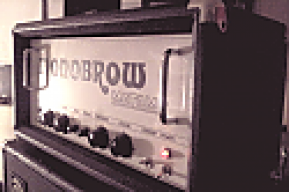
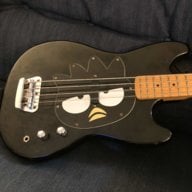
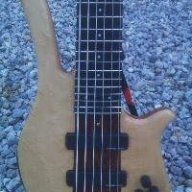
I've got 3 different tuners - a Boss TU3, a TC Polytune, and a Korg Pitchblack. In between my active Spector bass and my GenzBenz amp, either of the three would be placed up front of any number of pedals (between 2-20) because it makes sense to me to send it the cleanest signal from the instrument (though I did read that plenty of tuners will tune just fine at the end of many pedals that are on.)
I can't notice any audible change whether they're affecting my signal in any way, and if I need to mute my signal for some reason it indeed does mute the entire chain from the front.
^ This is where my confusion is coming in. I read a lot of posts from folks keeping it near the end so they can have the entire area awash in distorted feedback and click it all off with a stomp on the tuner, or a delay after the tuner so it's the only thing still going, but when I step on my tuner up front it kills everything as if I pressed the mute button on my preamp.
I've also read about other noisy pedals being placed before it but doesn't that only kill the noise while you have the mute engaged? Yesterday I read that certain fuzz pedals don't like a buffered signal before them. Today I read a post that mention certain fuzzes prefer a buffered signal! So I realize there is no one-size-fits-all, experiment with what order works best, etc etc but I really just want to understand how others signal chains work that might be different from my own.
Another case I read for putting it last was in case there's a problem with a pedal upstream, the person could dismantle everything one by one before the tuner without hearing clicks and pops. I guess if I was in that situation I'd just reach up for the amp mute/standby or power switch.
So if your stomp tuner is anywhere but first after your bass, I'm very interested to hear the why. Thanks
All my time spent reading on TB for the past 24hrs has been searching and reading older threads regarding tuner placement.
I understand why you'd put it last if you're switching between two instruments that each have their own line of effects that would somehow connect before the tuner, but I'm still not fully grasping why players using one instrument would place it at the end of a pedal chain that's hitting the front of their amp.
I've got 3 different tuners - a Boss TU3, a TC Polytune, and a Korg Pitchblack. In between my active Spector bass and my GenzBenz amp, either of the three would be placed up front of any number of pedals (between 2-20) because it makes sense to me to send it the cleanest signal from the instrument (though I did read that plenty of tuners will tune just fine at the end of many pedals that are on.)
I can't notice any audible change whether they're affecting my signal in any way, and if I need to mute my signal for some reason it indeed does mute the entire chain from the front.
^ This is where my confusion is coming in. I read a lot of posts from folks keeping it near the end so they can have the entire area awash in distorted feedback and click it all off with a stomp on the tuner, or a delay after the tuner so it's the only thing still going, but when I step on my tuner up front it kills everything as if I pressed the mute button on my preamp.
I've also read about other noisy pedals being placed before it but doesn't that only kill the noise while you have the mute engaged? Yesterday I read that certain fuzz pedals don't like a buffered signal before them. Today I read a post that mention certain fuzzes prefer a buffered signal! So I realize there is no one-size-fits-all, experiment with what order works best, etc etc but I really just want to understand how others signal chains work that might be different from my own.
Another case I read for putting it last was in case there's a problem with a pedal upstream, the person could dismantle everything one by one before the tuner without hearing clicks and pops. I guess if I was in that situation I'd just reach up for the amp mute/standby or power switch.
So if your stomp tuner is anywhere but first after your bass, I'm very interested to hear the why. Thanks