
• TalkBass has been independent since 1998. Add your voice.
    Create a free account to reply to discussions, view embedded media, and browse with fewer display ads.
    Join freeLog in
    Want zero display ads or expanded classifieds tools? Compare plans.

Double Bass Why not make Upright Bass Necks Bolt ons?

And, yes, I would definitely think it's worthwhile to design something for repairability.
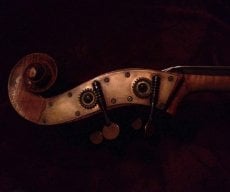
Yes!
OT - Chevrolet made a car in the late 70's - the Chevrolet Monza. (My sister had one.) There was a small V-8 version. In order to change the 8th sparkplug, the engine had to be "lifted", to gain access to that plug.
(My father, a professional aircraft mechanic, could not believe this "design" feature, as specified in the Chevy Shop Manual.)
Fortunately, mid-70's GM vehicles were so s**tty that there was no need for "preventive maintenance" on the part of the owner, as ongoing life-support repairs kept everyone occupied.
Thanks.
 
Last edited:
  • Like
Reactions: Jeshua
I think the real problem with the Manza was that the design engineers were so far removed from someone that actually worked on cars that they had no clue. That was the same problem I encountered in engineering school; people more concerned about job security than understanding how the product actually worked.

Almost every bass luthier I know drives a 20 year old Toyota or similar except for a couple who spent two or three decades saving so they can have a $20k used sportscar from the '90s; nobody is getting rich on it. Personally I go out of my way to remind folks that I have a $3k car and a $6k mountain bike and the bike logs more miles than the old Toyota. Folks that spend all of their time on the keyboard could use an intervention into what it takes to produce a bass. Several thousand dollars in materials, a decade or two of experience, and a minimum of 600 hours of handwork. Building basses is a labor of love that takes a ton of work, more than most can imagine. With 7 billion hungry people on the planet, if carefree cheap basses were a sustainable business model, someone would be doing it already.

j.
www.kaybassrepair.com
www.condino.com
 
Last edited:
Not to be too much of a "conspiracy" nut,
"That horse has left the barn."

but I think most are still in the business of price gouging touring bassists while they can.
While that is a laughable busine$$ model, I also find it a particularly offensive characterization of a small group of highly-skilled, dedicated, (and vanishing), craftsmen & women.
Just my $0.03
IMFO.
 
No offense to anyone. But IMO I see it as part of the historically high end status of playing an upright to begin with. It's like first comes a bolt on neck, then before you know it there goes the neighborhood. But change will happen eventually, for easier manufacturing and service. Most guitars and basses are bolt on and there is still plenty of luthier work. With a bolt on upright neck, it will just make the luthier's job easier, while likely charging the same procedure (neck replacement, fingerboard replacement, setup, etc.

I don't know a lot about boats, but I heard a story once about my company's owner going in for some engine work to be done to his yacht.
He about came unglued when they started cutting the hull to access the engine. They can keep the process that way because of the high end status of most of those with yachts. But I'm sure most mechanics would rather have easier access for the same procedure. Eventually it will change, if it hasn't already. Don't know how long ago the story happened.
 
No offense to anyone. But IMO I see it as part of the historically high end status of playing an upright to begin with. It's like first comes a bolt on neck, then before you know it there goes the neighborhood. But change will happen eventually, for easier manufacturing and service.

In my experience, most bassists and luthiers are pretty proletarian about our instruments, if I may use that word as a compliment. Of course we love the beauty and craftsmanship of good basses. But most of us only own one bass, and our instruments get banged around a lot because of their size and our interest in just getting out and playing. And a lot of the "owners" of basses are parents of students who are walking a tightrope trying to support their kids' interest in music on a working class budget.

When I visit my luthier, he shows me what he's working on. A lot of his stories end with: "But of course the customer doesn't have any money." Solving repair problems in economical ways that are repairable in the future is a matter of ongoing interest.

I think the traditionalism comes from knowing that the techniques of making and repairing basses have stood the test of time. You can take a bass to any luthier in the world, and they know how to fix it. Some modern designs, such as removable necks, may prove to be winners in the long run. That wouldn't shock me. On the other hand, some innovations have proven to be more contentious, such as the use of modern glue, and the Kay neck joint.
 
"That horse has left the barn."


While that is a laughable busine$$ model, I also find it a particularly offensive characterization of a small group of highly-skilled, dedicated, (and vanishing), craftsmen & women.
Just my $0.03
IMFO.

Possibly true. However, I have seen enough double priced half basses and double priced half cases to make me feel this way. Obviously, this would be a great thing to be wrong about.
 
  • Like
Reactions: Don Kasper
I don't know a lot about boats, but I heard a story once about my company's owner going in for some engine work to be done to his yacht.
He about came unglued when they started cutting the hull to access the engine. They can keep the process that way because of the high end status of most of those with yachts. But I'm sure most mechanics would rather have easier access for the same procedure. Eventually it will change, if it hasn't already. Don't know how long ago the story happened.

The bigger the ship, the better the "cut the hull to do major repairs to the engine" design is. Think about.
If owners want easy access to the engines, they should stick to boats, not yachts.
 
I would think that most luthiers, trained in woodworking, just buy the metal parts pre-made ie. geared tuners, aluminum bridge adjusters, endpin system when they build their instruments. The people who make those parts, don't make full instruments, they just make parts to sell to people who make full instruments. Similarly, if some of the posters here are all enthusiastic about making the RN upright a standard rather than a special order, and they have the manufacturing and business skills to back it up, I think a good approach is to design a system, with input from luthiers, and manufacture the basic pieces needed to make it work and then sell those pieces to the people who build full basses. Make the design, pick the materials, test it out, then pop out the best number of parts for a first run. If the luthiers can install your parts very efficiently into their builds, and it all works as it is supposed to, and the price is right, then buyers will appear and purchase. As the runs continue, improvements can be made, and prices can be dropped. 20 years later, this could be a big thing within this small business ecosystem.
 
how often do these repairs actually come in that need a bass to have bolts, trap doors and hinges to remove the top?

I bought both of my basses used and both had cracks in the heel. One bass barely survived a car crash (not my fault!!!) that separated the neck from the body. I assume these to be pretty common problems, maybe not?
 
  • Like
Reactions: james condino
i've been mostly playing the devil's advocate on this issue. i am a science teacher by day and encourage new ideas and innovation like you are describing. but this, to me, seems where i draw the line.

the double bass is a work of art made by fine craftsmen - i don't see them changing their long standing tradition and the legacy of bass making for a concept that may or may not work in the long run.
how much money in R & D would a bass manufacturer have to put into this when there is no demand for the product or known cost-cutting benefits to them?

this, to me, is a "if it ain't broke..." situation.
 
i've been mostly playing the devil's advocate on this issue. i am a science teacher by day and encourage new ideas and innovation like you are describing. but this, to me, seems where i draw the line.

the double bass is a work of art made by fine craftsmen - i don't see them changing their long standing tradition and the legacy of bass making for a concept that may or may not work in the long run.
how much money in R & D would a bass manufacturer have to put into this when there is no demand for the product or known cost-cutting benefits to them?

this, to me, is a "if it ain't broke..." situation.
There is a demand with all bassists who travel. It is very common thing now. Slightly different than what the OP imagines, but it is very much "a thing". Like I said, the prices seem to be higher than parts & labor still, and the removable neck cases are double what the old coffins were.
 
Last edited:
  • Like
Reactions: ColdEye
There is a demand with all bassists who travel. It is very common thing now. Slightly different than what the OP imagines, but it is very music "a thing". Like I said, the prices seem to be higher than parts & labor still, and the removable neck cases are double what the old coffins were.

i am fully aware of the travel need.

i was corrected for that earlier in the thread and have focused my post on the non-travel need for a bolt on neck.

or lack there of.... ;)

 
i am fully aware of the travel need.

i was corrected for that earlier in the thread and have focused my post on the non-travel need for a bolt on neck.

or lack there of.... ;)

I've paid the high cost and waited through a neck repair. It is one of our weakest points, takes forever to repair and is very, very expensive. Since the travel option seems to be working more than fine, it seems to make sense for it to become commonplace for simpler repairs and even, Mr. PC pointed out, at least one of the versions is adjustable. The neck plates have less of an impact on acoustic sound than bridge adjusters. You can use a full bridge and still adjust your action.
 
Yes!
OT - Chevrolet made a car in the late 70's - the Chevrolet Monza. (My sister had one.) There was a small V-8 version.

a h/s friend had one, a 4-speed as i recall. he would street race and beat z28s & trans ams with it. that car would haul butt. on the flip side, the 90s sebring convertible required left front tire removal to change the battery. i apologize for the derail. carry on...

how much of the issue with a double-bass bolt-on neck is related to string tensioning and/or bridge positioning and/or sound post issues? all simple to overcome, but the cumulative effects add up.