To me, all instruments can be graded by 3 basic qualities. They are rhythm, tone, and notation/poly-phonics(notes/applied music theory). While any intrument can play complex rhythms, certain intruments have a greater influence on rhythm based on its ability to play rhytm with the right feel and greater complexity. Tone is simply how pleasing the intrument sounds. Notation is the ability to either play many notes at once or in succession, or have a large range of notes available and the chordal possibilities.
.............Tone
Rhythm..............Notation
Let's rate things on a scale of 1 to 5, 1 being weak, and 5 being strong.
Drums are obviously a 5 in rhythm. They are also a 1 in phonics, and a 3 in tone (remember, only IMO though).
The guitar is essentially a 4 in notation, a 2 in rhythm, and if the right effects are used, a 4 in tone.
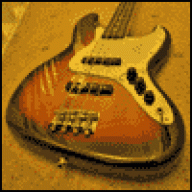
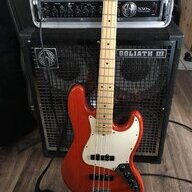
The bass on the other hand, is a 4 in rhythm, a 3 in notation (remember, this is based on the capabilities of the intrument, not the basic parts written for it. A bass in the hands of someone who knows what to do is real threat the guitar's 4 in notation.), and well, I can't possibly give you an answer for tone for this category because of personal and community bias.
For kicks...
The chapman stick or NS stick is a 5 in notation, a 4 in rhythm, and a 4 in tone.
www.stick.com
But still, nothing can replace the bass.
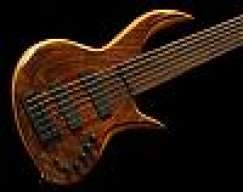
All in all, the bass is VERY versitile. I have gotten sudden reactions from fellow musicians when I emulate a guitar sound when playing chords on my 6 string bass saying that "It sounds just like a guitar." Listen to samples of Victor Wooten's soul circus on amazon or another place, he demonstrates what a bass can do very well.







 .
.

 . bass is easy to learn, but challenges are awaiting you.



 , i wanted to start bass was because it had only 4 strings, meaning it was easier for me as there wouldnt be as many combinations as a normal guitar and making it easier for me as i have pretty small hands and can barely stretch across 4 frets (yes its sad).