• TalkBass has been independent since 1998. Add your voice.
    Create a free account to reply to discussions, view embedded media, and browse with fewer display ads.
    Join freeLog in
    Want zero display ads or expanded classifieds tools? Compare plans.

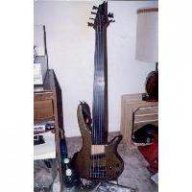
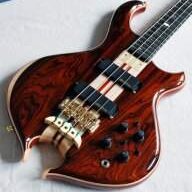
Will learning to play on a 6 string make me worse at 4?

You may like the 6 for all the new possibilities it opens for you

^Likely, it will be this. There are a lot of things that are just much better on 6 (or tenor 4 or 5), specifically chordal stuff. It's a whole new world when you first realize what you've been missing.

Also, you might consider a tenor 5-string (EADGC) if you don't much care for the low B or don't want the wide neck of a 6-string.
 
Played 4s exclusively for years. Discovered 5s and found a certain comfort zone there. Got a 6 just to see what it was like, and after a few months realized it wasn't for me. So now, I'm back to 4s and 5s, and at no point did my 4-string chops suffer.
 
^Likely, it will be this. There are a lot of things that are just much better on 6 (or tenor 4 or 5), specifically chordal stuff. It's a whole new world when you first realize what you've been missing.

Also, you might consider a tenor 5-string (EADGC) if you don't much care for the low B or don't want the wide neck of a 6-string.

I tried that before I went full into 6 strings and never turned back, it pretty much confirmed what I thought about the 6.
 
I have 4's 5's and 6's One of the 6ers is a Bass VI with guitar string spacing and tuning.

The only issue I have as the adjusting to the different string spacing when practicing on a narrow spacing 5 and then gigging on my Jazz 5 with wide spacing.

The 6 strings or the different tunings (BEADGC vs EADGBE) does not both me, I adjust pretty quick to that, it's the string spacing that gets me every time.
 
  • Like
Reactions: comatosedragon
I found that 4 string is forgiving of a lot of potential flaws of both left and right hand technique. The wider neck means your fretting hand has to be ergonomic or you'll suffer and you'll need to make sure you can mute the unplayed strings. On the other hand, good 6 string technique should work just fine on a 4.
 
No, not at all. It's a completely different instrument. I mean, yeah it's still a bass, but maximizing a 6's potential requires a different approach than a 4, and a different way of looking at the instrument.

I've gone back to 4 strings exclusively now, but do not regret the 6's I've owned in the slightest. In some ways, it's made me a better 4-string player, or perhaps even a better player all around. (And truth be told, I'll probably own a 6 again someday. One thing I've learned on Talkbass is "never say never".)
 
I've developed some solid chops on my trusty 4 over the years. Will spending a few months on a 6 diminish my 4 string chops?
I can't speak for everyone but if you're anything like me it will actually improve your 4 string playing because once you get used to a additional strings and a wider neck you not only have a mental edge at playing less strings but it also feels physically easier.
 
I suck just as bad on my 6 strings as I do on the 4's.

In all seriousness learning how to play a 6 won't hurt anything. I jumped from 4 to 6 and it didn't take too long to adjust. I would say the only thing that works better for me on the 4 is slap, but that's because it's very sloppy and can't hit in between strings too good.
 
Just practice on each one in the same way you intend to play it. If you are learning a new song that requires the 6, learn and practice it on the 6. If not, learn and practice it on the 4.

I know several stringed instrument players who play many instuments, bass, guitar, mandolin, banjo (and very well I might add), and these all have different tunings as well.

-