

Sticking to the plan, I focused today's work on the fingerboard. I planed off the small hump at the heel then started to coat it with CA. And at this place I want to thank @Jisch for the great description of his method here, it worked like a glove. I probably did around 9 or 10 coats, I really stopped counting after the first 6 or so, as then you can focus on getting a nice levelled surface. I also have to say, I share the opinion about radiused boards - it would be great to have something better to spread the glue than the finger. Anyone who figures out sprayed CA glue should get a Nobel prize.
The results are really great and I like how CA preserves the wood colour. I tried to capture the fingerboard reflecting light, just to show you how smooth it can get, but it is hard to do:
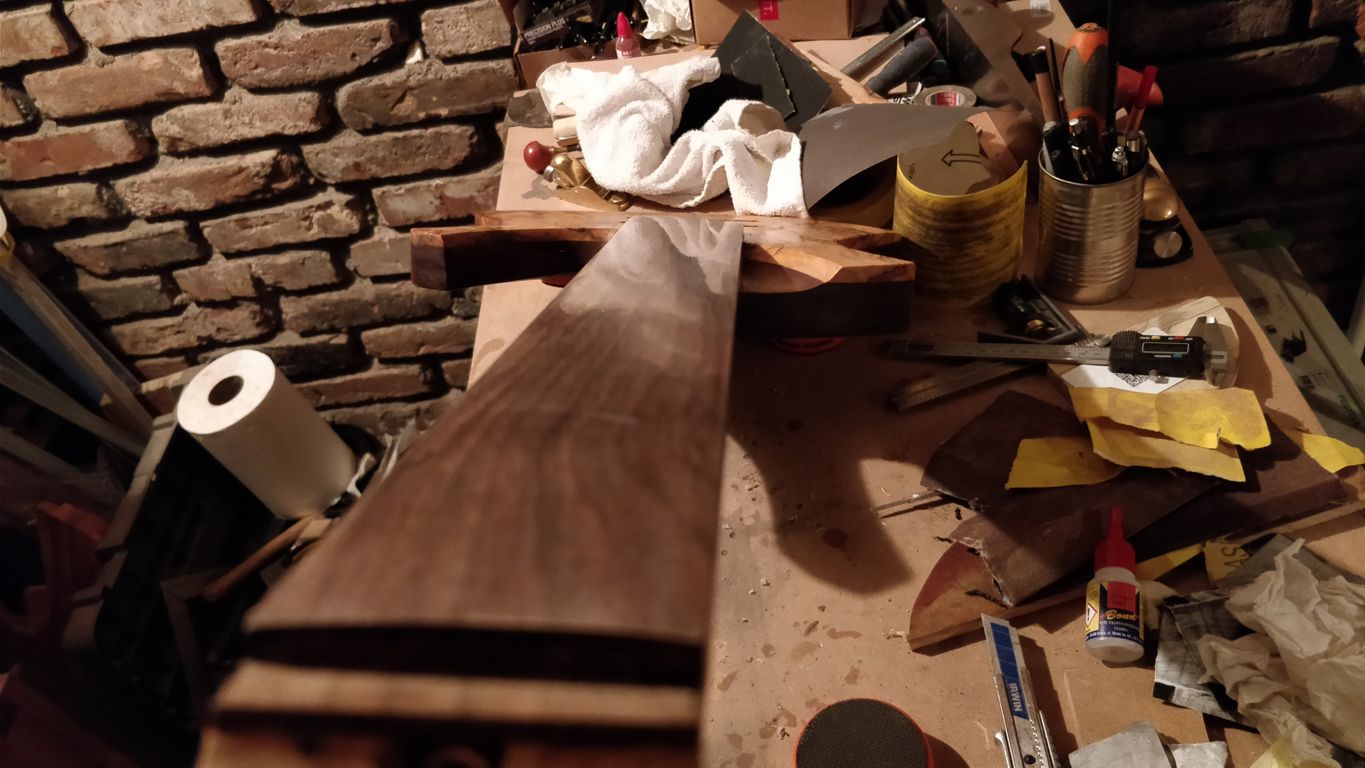
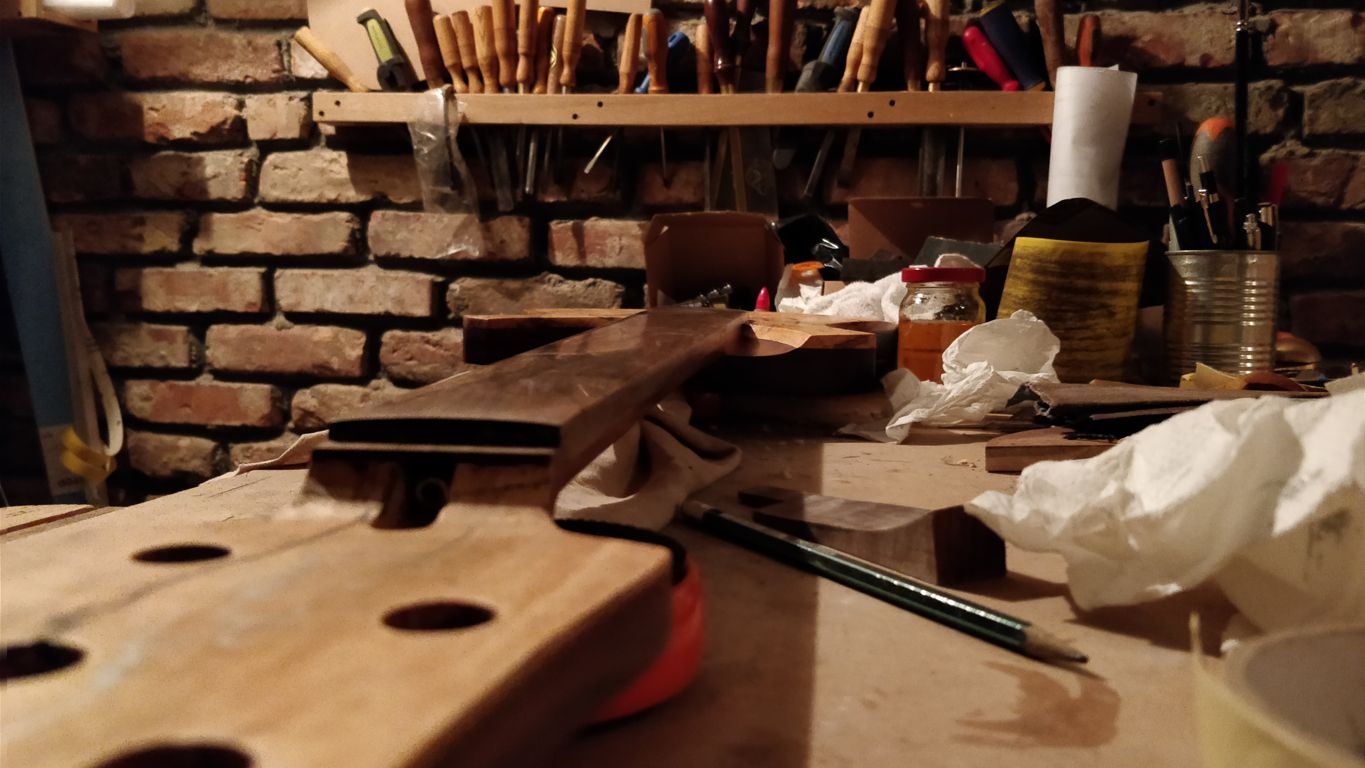
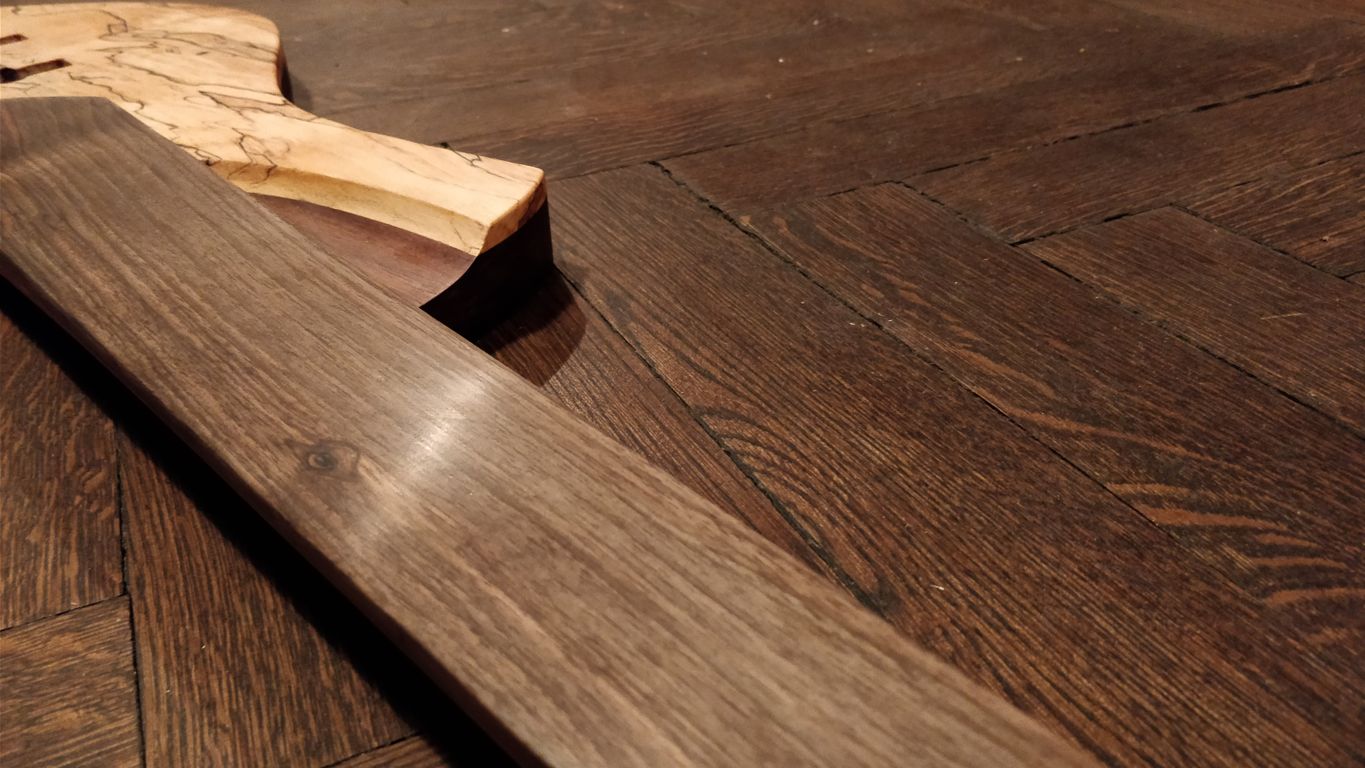
One thing I tried a little different is, that I tried wet sanding with 320 at the end. It works better than dry sanding, but there is a risk, that you can get water under the glue if you are not careful enough. Therefore I switched back after to dry sanding having figured that out. The other observation is, you can really hear the difference sanding rough CA and smooth CA and it was funny to notice that. The process generates a lot of white powder and having that additional sound indicator helped me somehow. The fretboard is sanded finally to 880.
Small things, I worked also on the truss rod channel entrance and last but not least, decided it is high time to mark the bass with a date, number and makers sign. A small thing, but makes me proud somehow and I just want to share the joy here with you
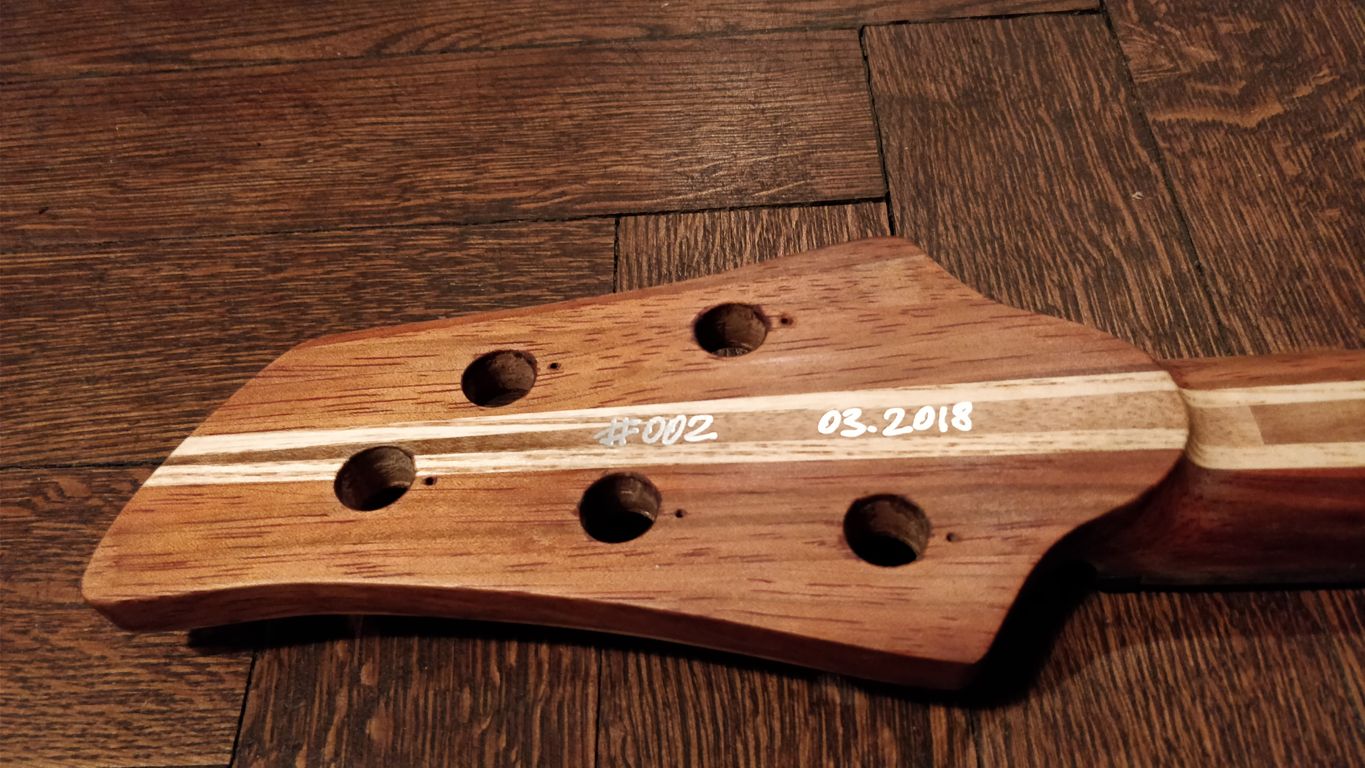
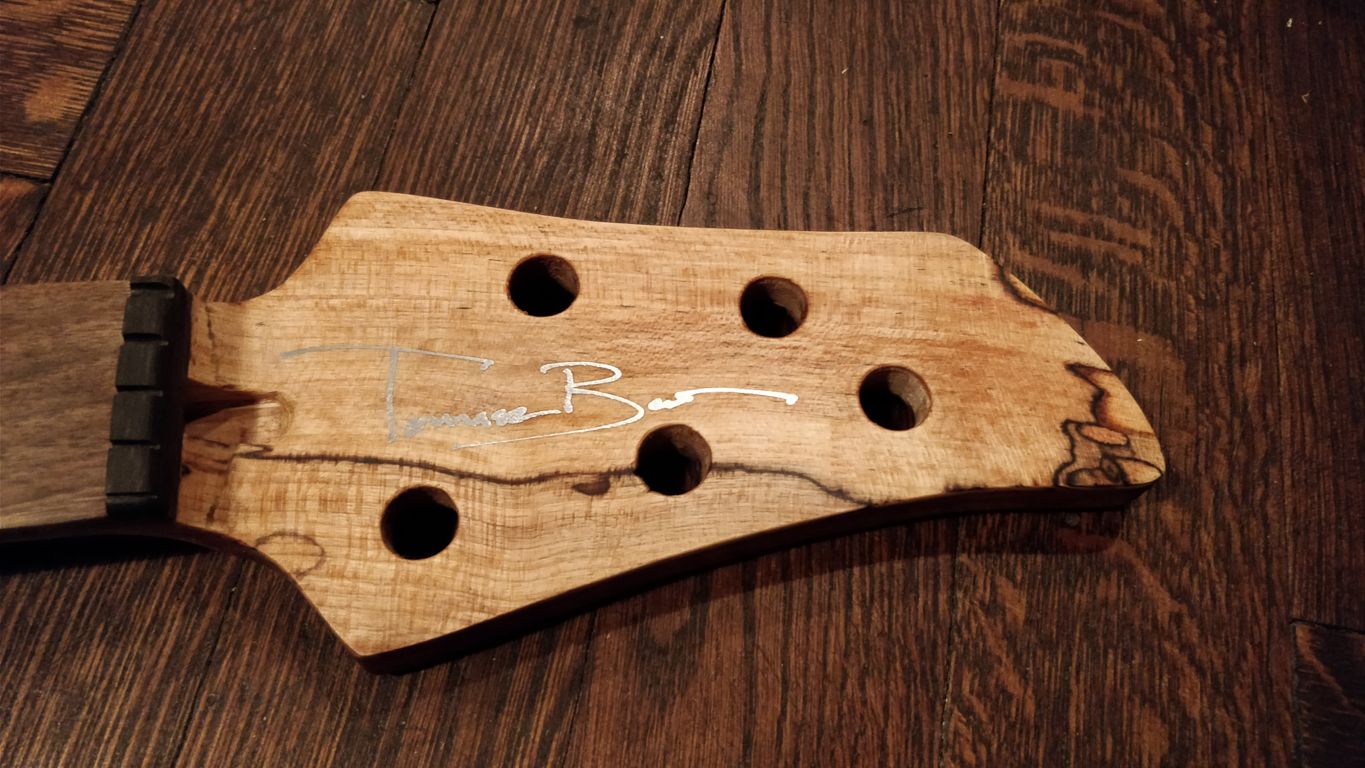
I used an oil-based silver marker, coated lightly with shellac for protection. Tomorrow I start with finishing
The results are really great and I like how CA preserves the wood colour. I tried to capture the fingerboard reflecting light, just to show you how smooth it can get, but it is hard to do:
One thing I tried a little different is, that I tried wet sanding with 320 at the end. It works better than dry sanding, but there is a risk, that you can get water under the glue if you are not careful enough. Therefore I switched back after to dry sanding having figured that out. The other observation is, you can really hear the difference sanding rough CA and smooth CA and it was funny to notice that. The process generates a lot of white powder and having that additional sound indicator helped me somehow. The fretboard is sanded finally to 880.
Small things, I worked also on the truss rod channel entrance and last but not least, decided it is high time to mark the bass with a date, number and makers sign. A small thing, but makes me proud somehow and I just want to share the joy here with you
I used an oil-based silver marker, coated lightly with shellac for protection. Tomorrow I start with finishing







 ...
...


