
Enjoy the benefits of a premium membership!
Upgrade Account
-
TalkBass has been independent since 1998. Add your voice.
Create a free account to reply to discussions, view embedded media, and browse with fewer display ads.
Join free Log in
Want zero display ads or expanded classifieds tools? Compare plans.
You are using an out of date browser. It may not display this or other websites correctly.
You should upgrade or use an alternative browser.
You should upgrade or use an alternative browser.
More options
Who Replied?


- Apr 18, 2008
- 16,016
- 1
- 31,730
- Disclosures
- I'm highly opinionated and extremely self-assured
The wood knobs are pretty. Knobs are easy to change later, so don’t get hung up on them. And yes, I suspect there’s some optical psychology at work here. After the bridge and pickups are mounted they won’t seem so out of place.

Matching wood knobs. Maybe reduce the diameter a little, if you’re up for it.
Round off the tops also, if you can.
My opinion, however they look pretty good as is.
Round off the tops also, if you can.
My opinion, however they look pretty good as is.
I have to say, I'm not very impressed with my knob making skills.
Have you ever noticed how someone else's cooking often tastes better than your own? I think that's what's going on here. Those knobs look fantastic to me...

While I agree that you are suffering some excess self-criticism, you may also be at the mercy of your process - I'm guessing that like most TB knob-makers, you don't have a lathe and may never have used a lathe, which process tends towards the "basic cylinder" shape. More interesting shapes are easier to achieve with the right tools. It is, however, also easy to overdo something as small as a knob with decorative turning frills, so that needs to be kept in check for most tasteful results, unless your tastes run to Baroque over-embellishment.

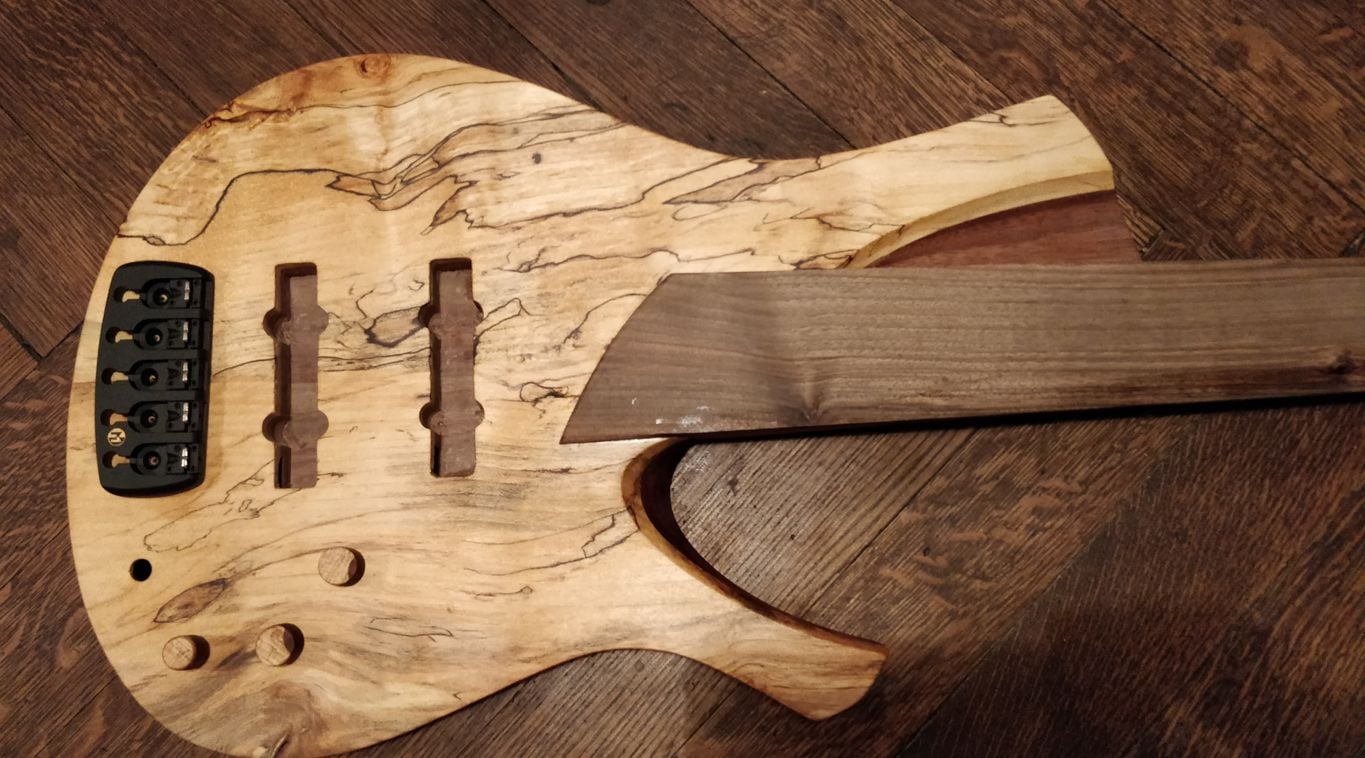
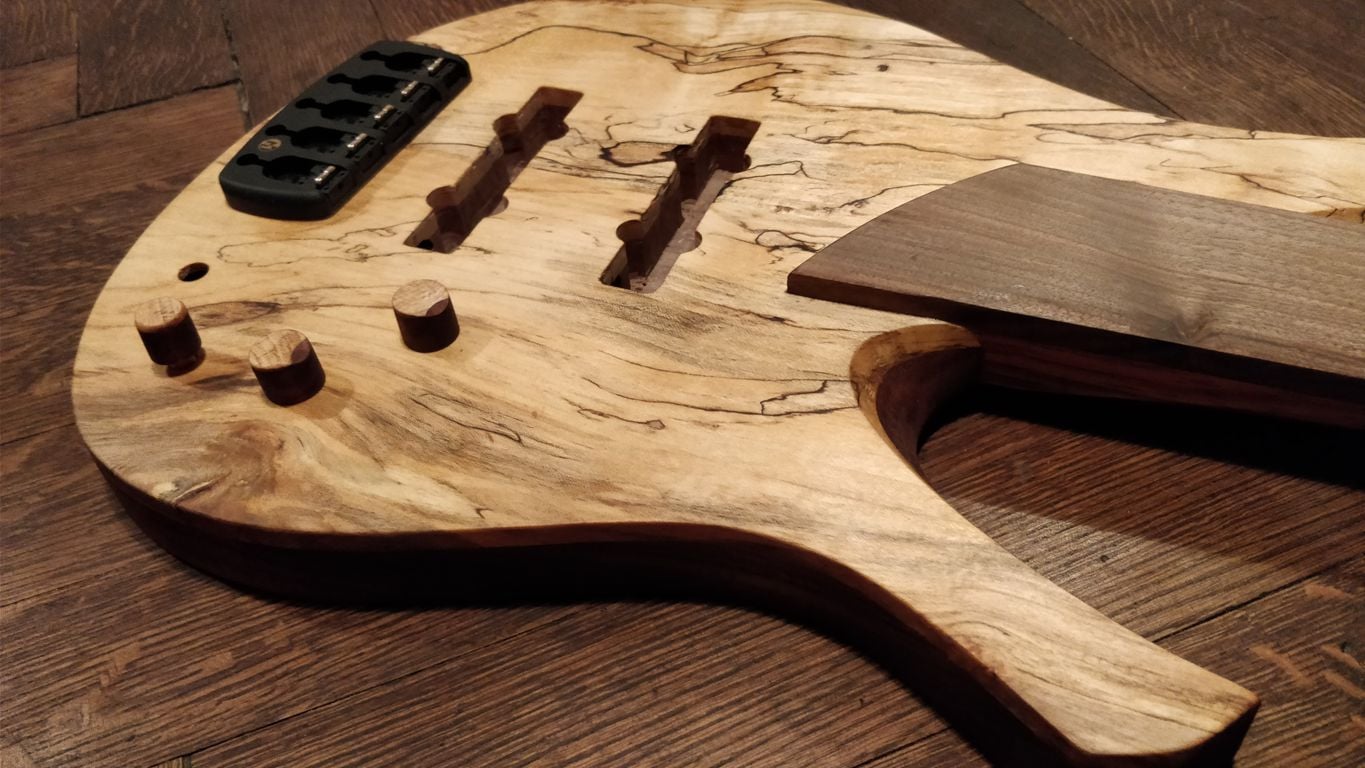
I have to admit, I was already giving up on the knobs, yet you made me try to solve this issue. Thank you for that. I spend the whole afternoon trying to sand them smaller and shorter. I drilled the wholes for the pots and sanded the hell out of them. Was it worth it? Oh yes  so this is a big Thank You for everybody here! now they are smaller and neater than regular knobs. Those two with a notch are volume knobs, the third and slimmest one will be the tone knob.
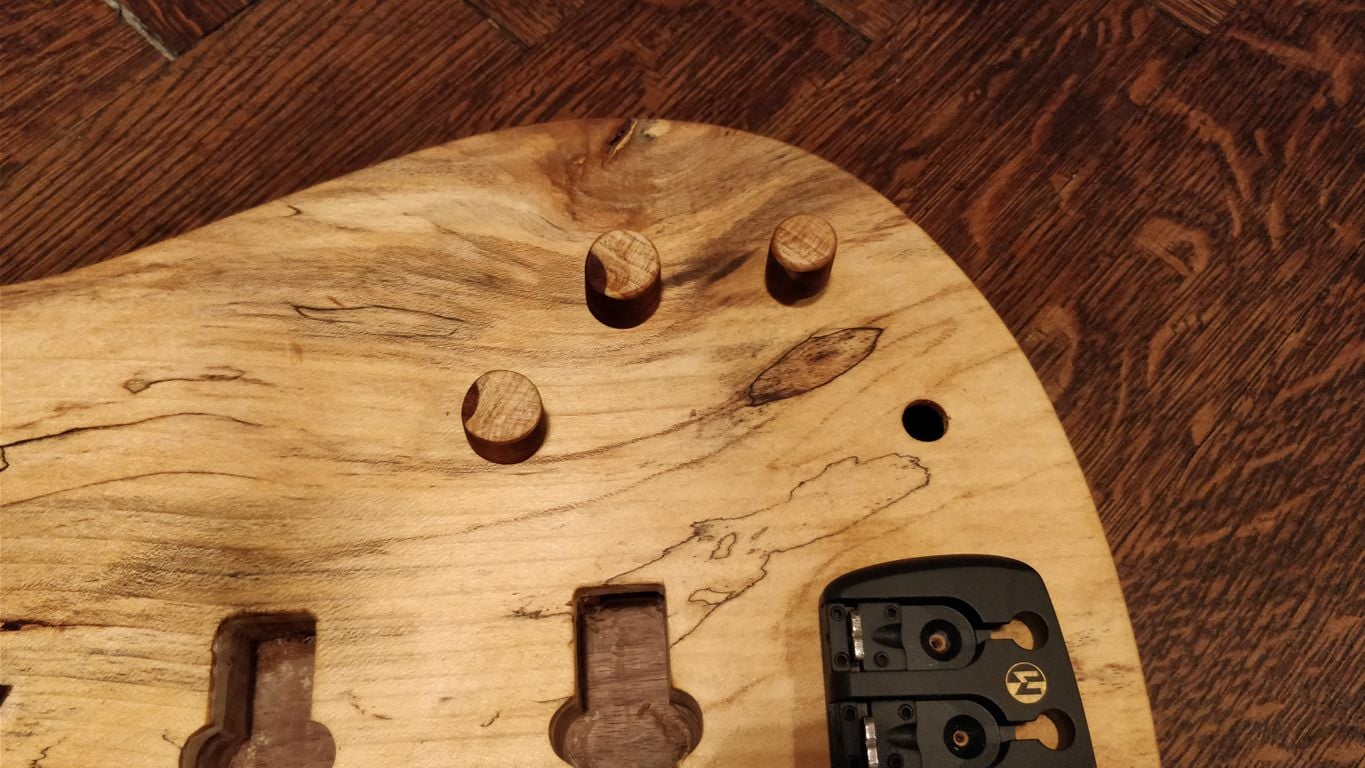
They stay!
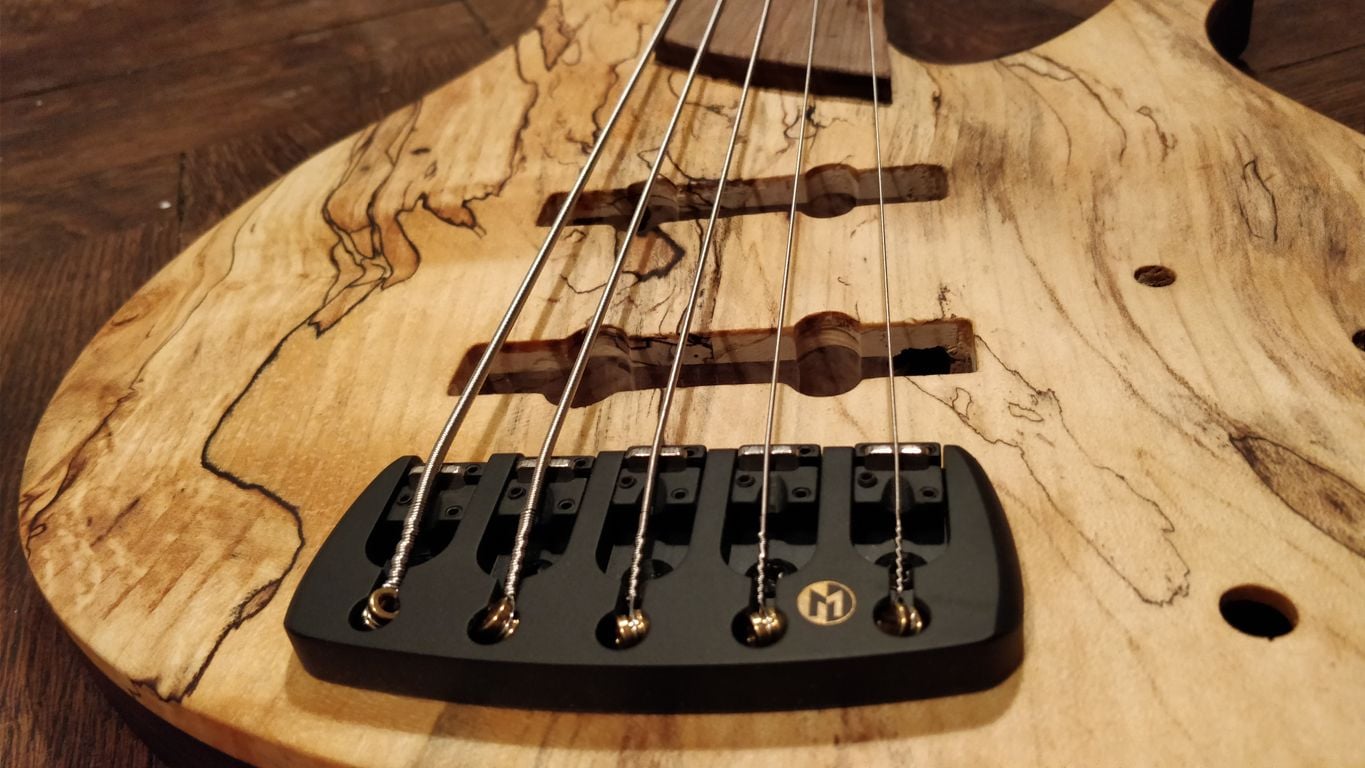
Next I attached the bridge and tuners and strung her up to see what is to be done around the fretboard. The position of tuners is right, the bridge has a spacing matching the fingerboard. It leaves just the right amount of space to the edge. It should be all a good starting point
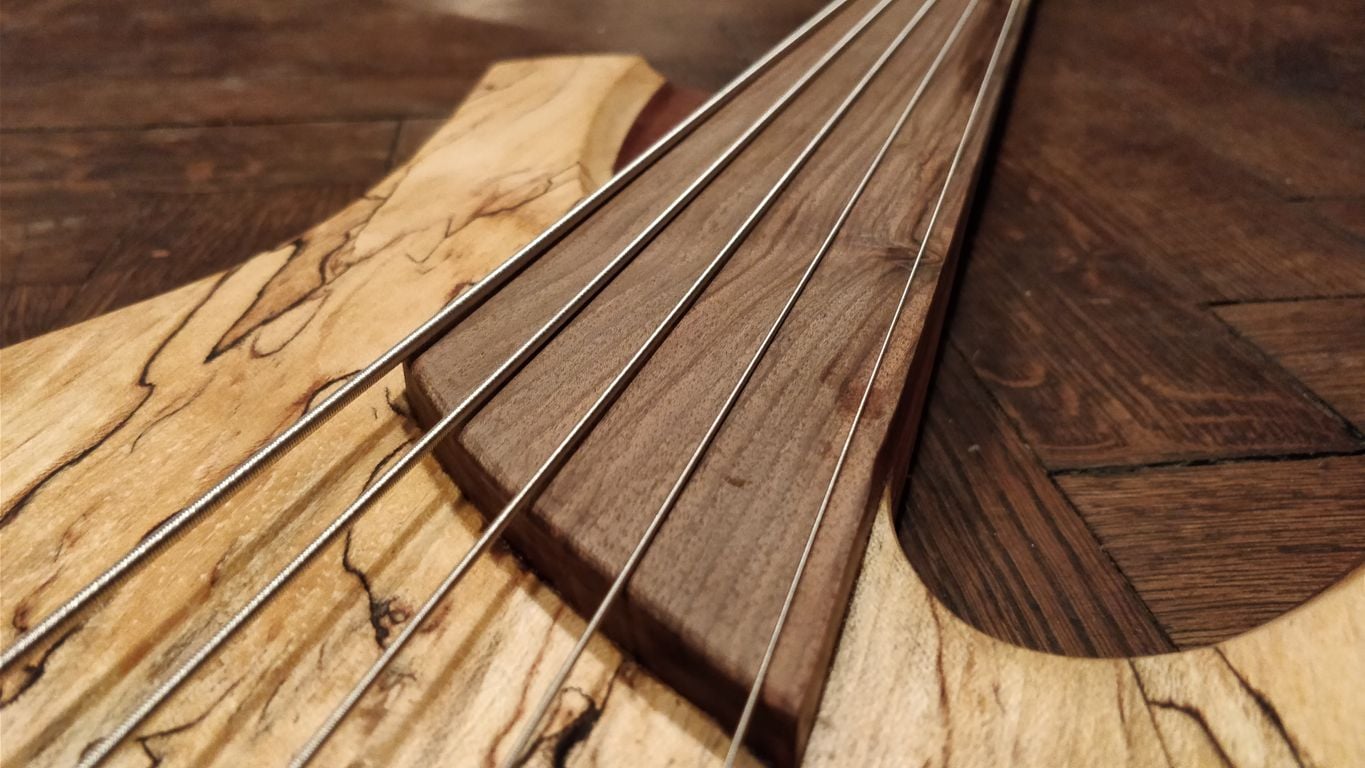
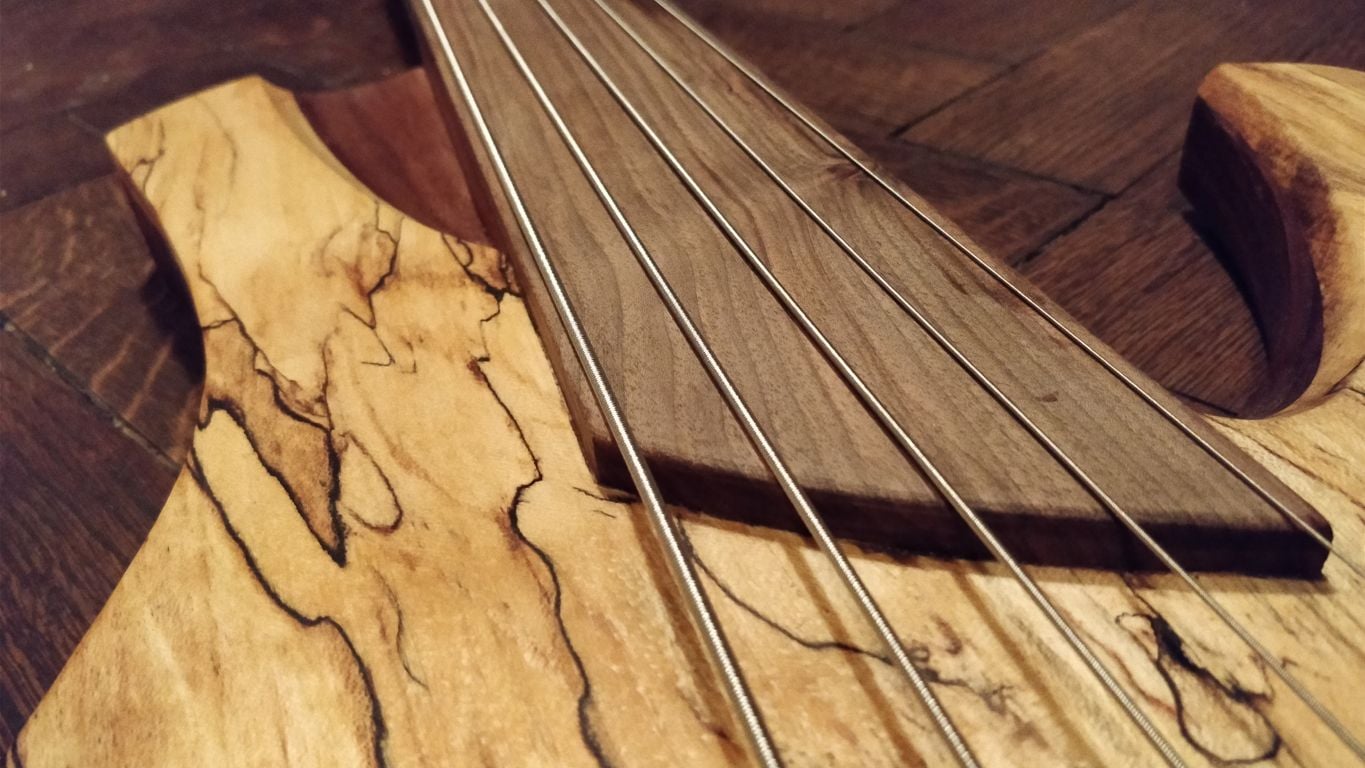
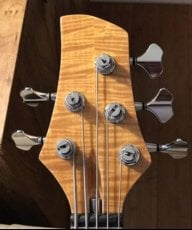
Looking at the headstock, you see I used a temporary bone blank, I will shape a ebony fret after leveling the board to it's final shape. The string spacing at the nut seems to be ok for now and looking from the side, the break angle should be sufficient without a string tree
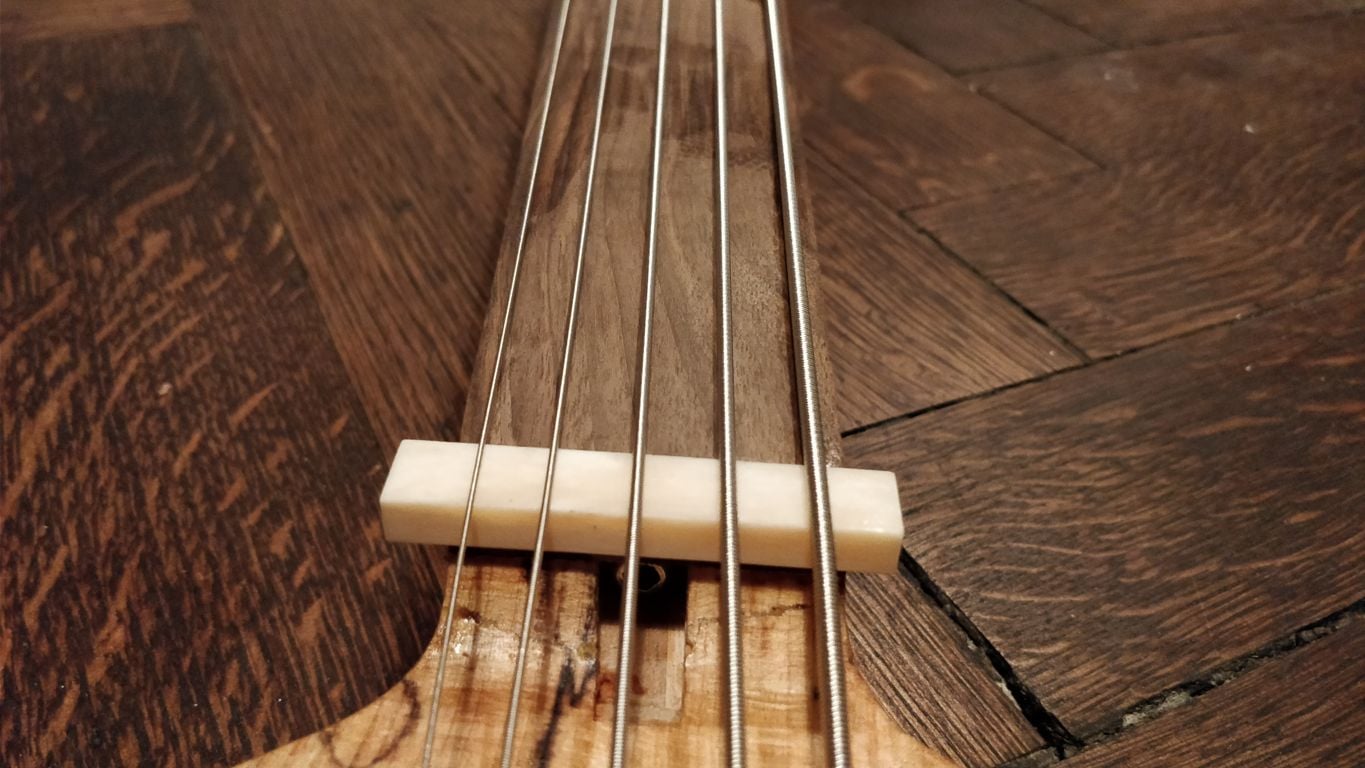
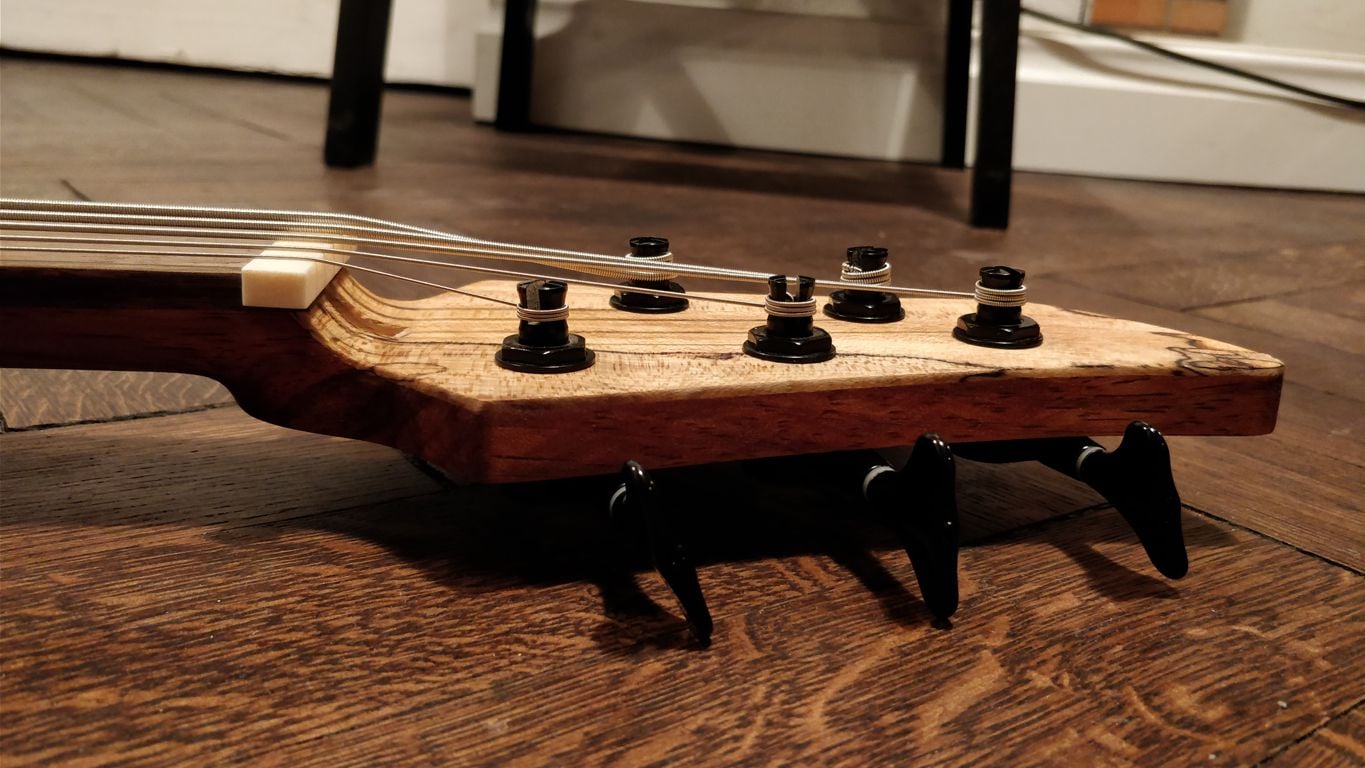
The neck feels pretty thick though currently, due to the fingerboard height. This will be the next action. Anyway, I couldn't help myself taking a full size pic
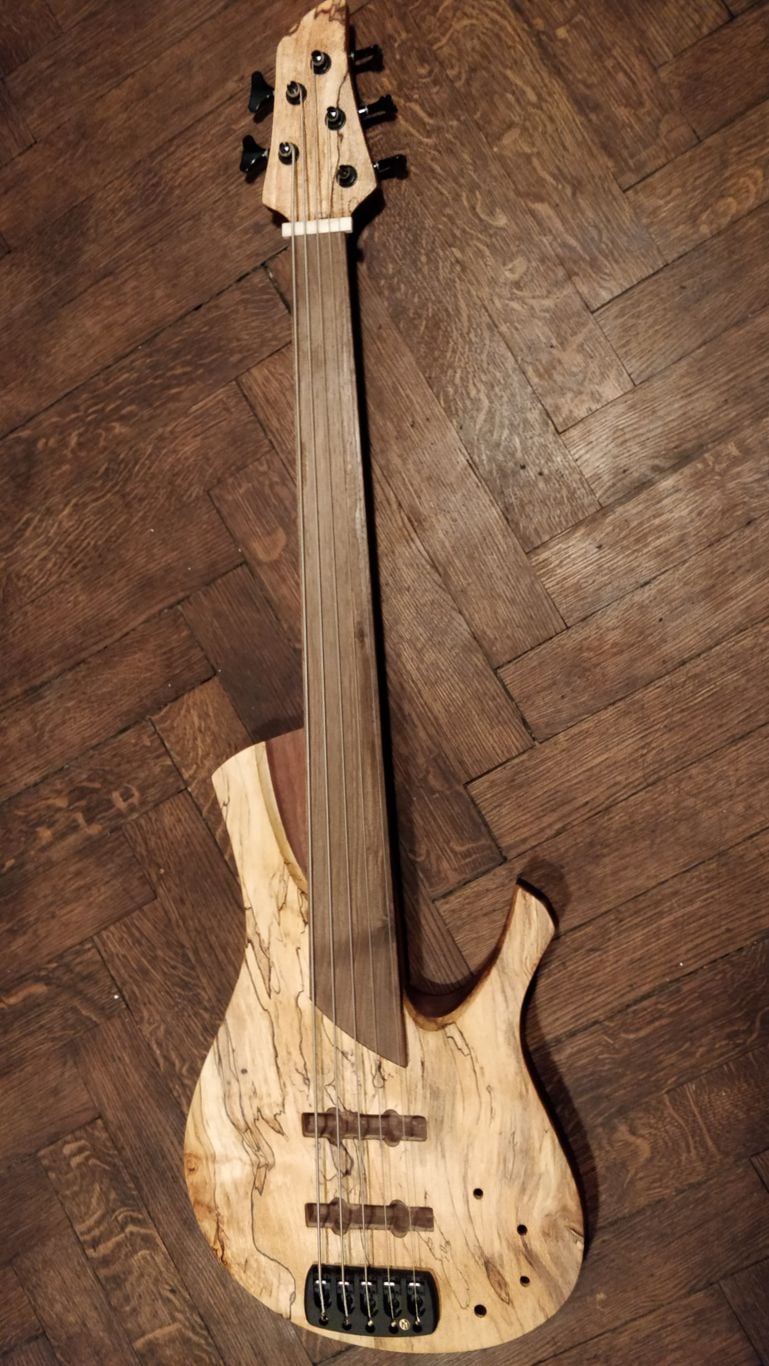
It was so great to have her strung up for the first time!
so this is a big Thank You for everybody here! now they are smaller and neater than regular knobs. Those two with a notch are volume knobs, the third and slimmest one will be the tone knob.They stay!
Next I attached the bridge and tuners and strung her up to see what is to be done around the fretboard. The position of tuners is right, the bridge has a spacing matching the fingerboard. It leaves just the right amount of space to the edge. It should be all a good starting point
Looking at the headstock, you see I used a temporary bone blank, I will shape a ebony fret after leveling the board to it's final shape. The string spacing at the nut seems to be ok for now and looking from the side, the break angle should be sufficient without a string tree
The neck feels pretty thick though currently, due to the fingerboard height. This will be the next action. Anyway, I couldn't help myself taking a full size pic
It was so great to have her strung up for the first time!



5-string, fretless, and single cut are typically things I don't prefer in a bass. This bass has all three, and I would play it in a heartbeat. Terrific job so far!
Two things were on the task list today. The first one was reshaping the fingerboard, as the first test with the strings showed, that the radius was too wide and that the neck had a light back now.
I sharpened my planes and moved on with shaping the fingerboard. Why planes? Because I am able to remove the material in long consistent strokes and have better control of them than with sandpaper. I am also not skilled enough with the router and all those jigs needed, so I chose a method I can do best.
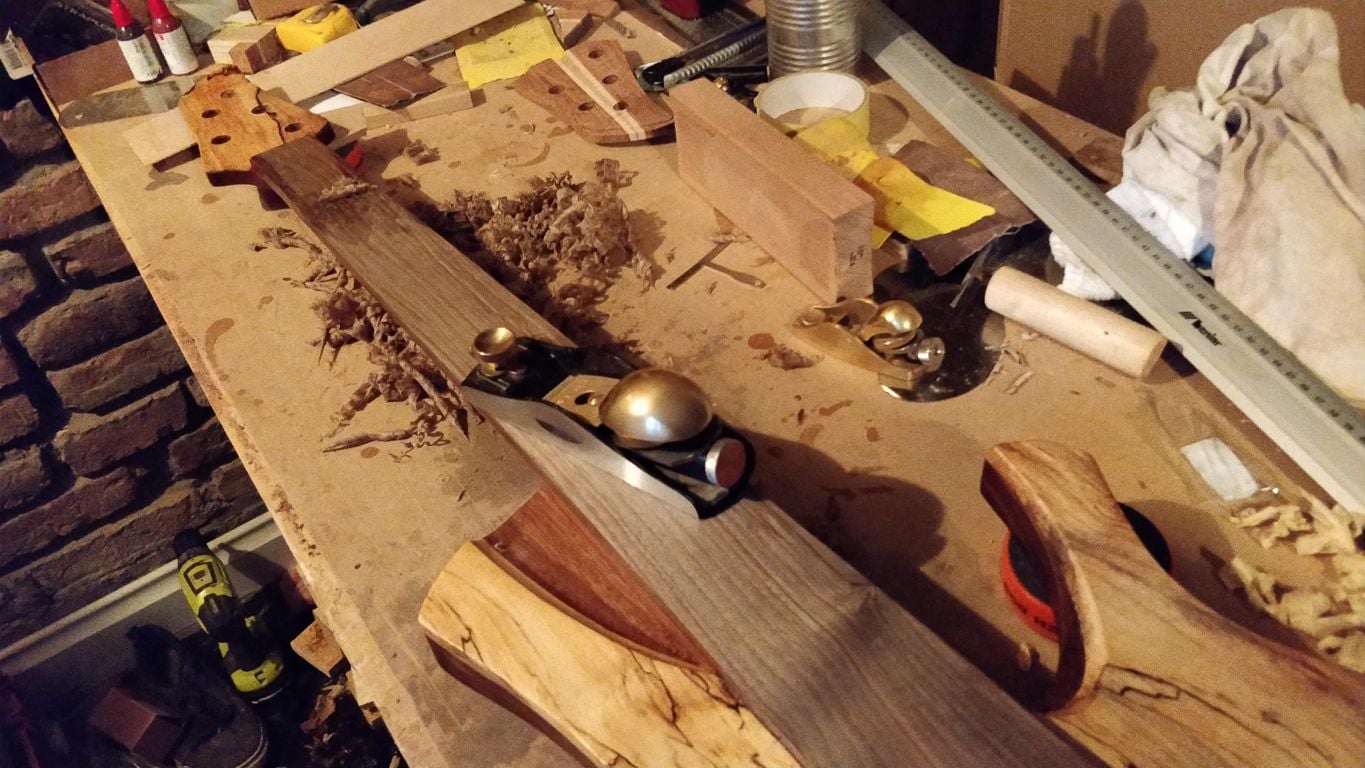
I got a good consistent surface with a radius of 16" to 20" at the end. Then I found the piece of ebony I had lying around for ages and cut out a nut blank, strung up the bass, put it in the right place and marked the slots for the strings. For each string I use a different file according to their diameter. For the E I used a regular round file and switched to guitar fret files for the remaining strings
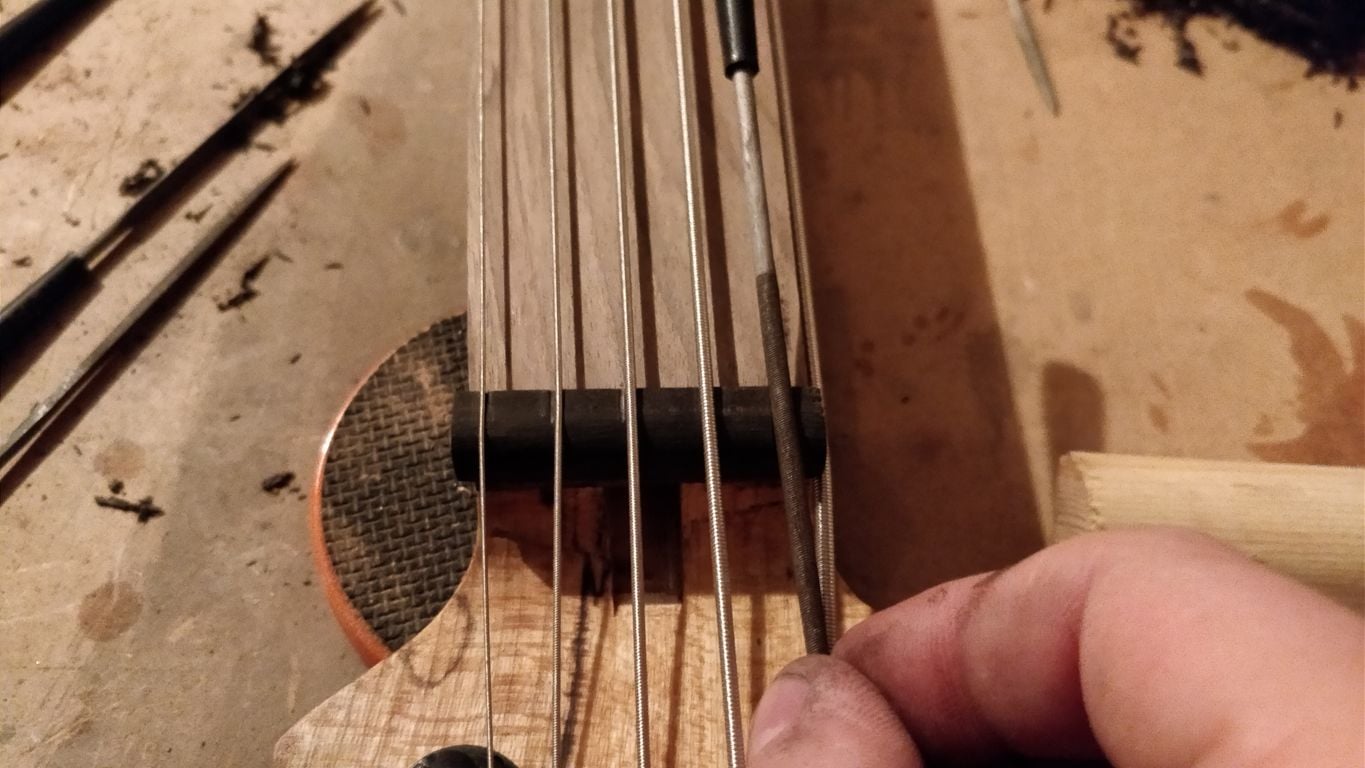
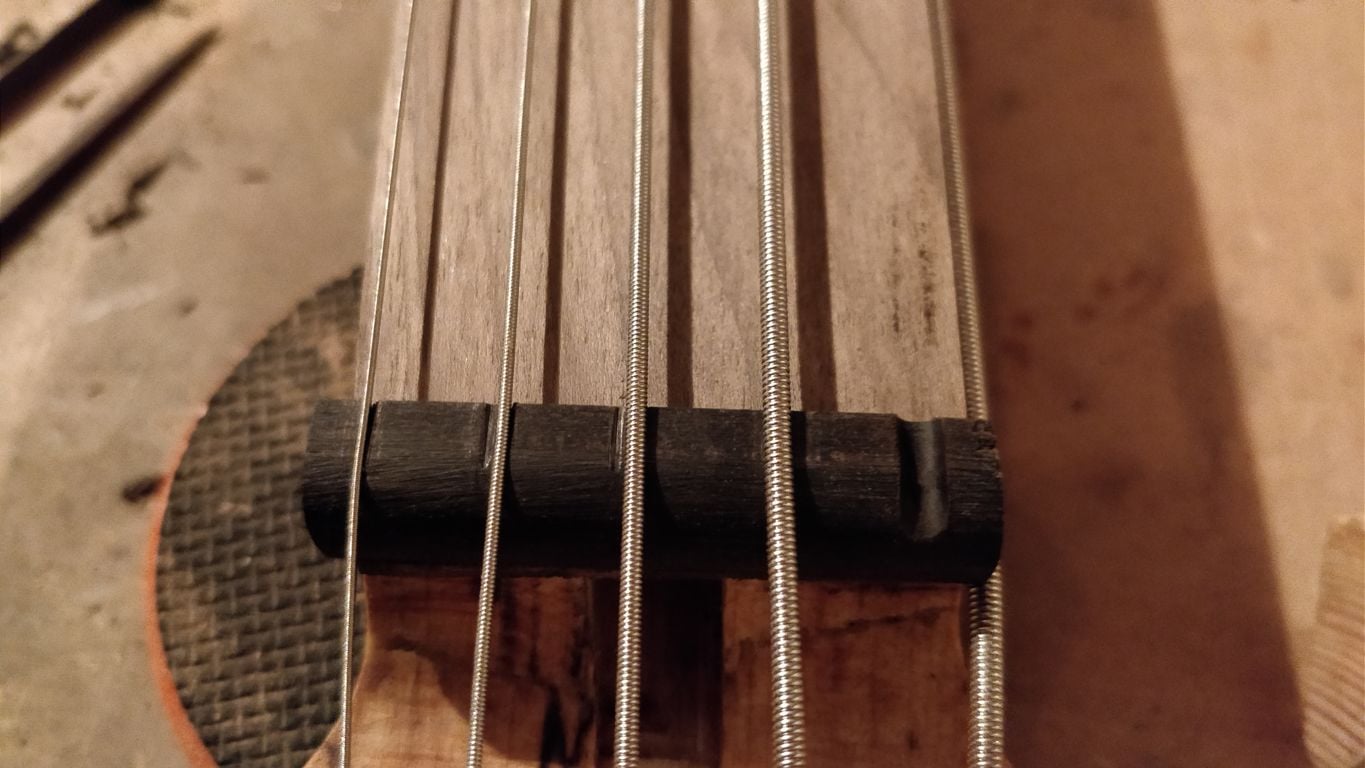
Cutting of he nut is not my favourite part for sure. I just feel it takes ages to do it proper and I thought I'll never finish that high C after cutting the slots to depth (I used a spacer of 0.71mm, which is 0.028" - probably still too high for a fretless) I shaped the nut carefully to size
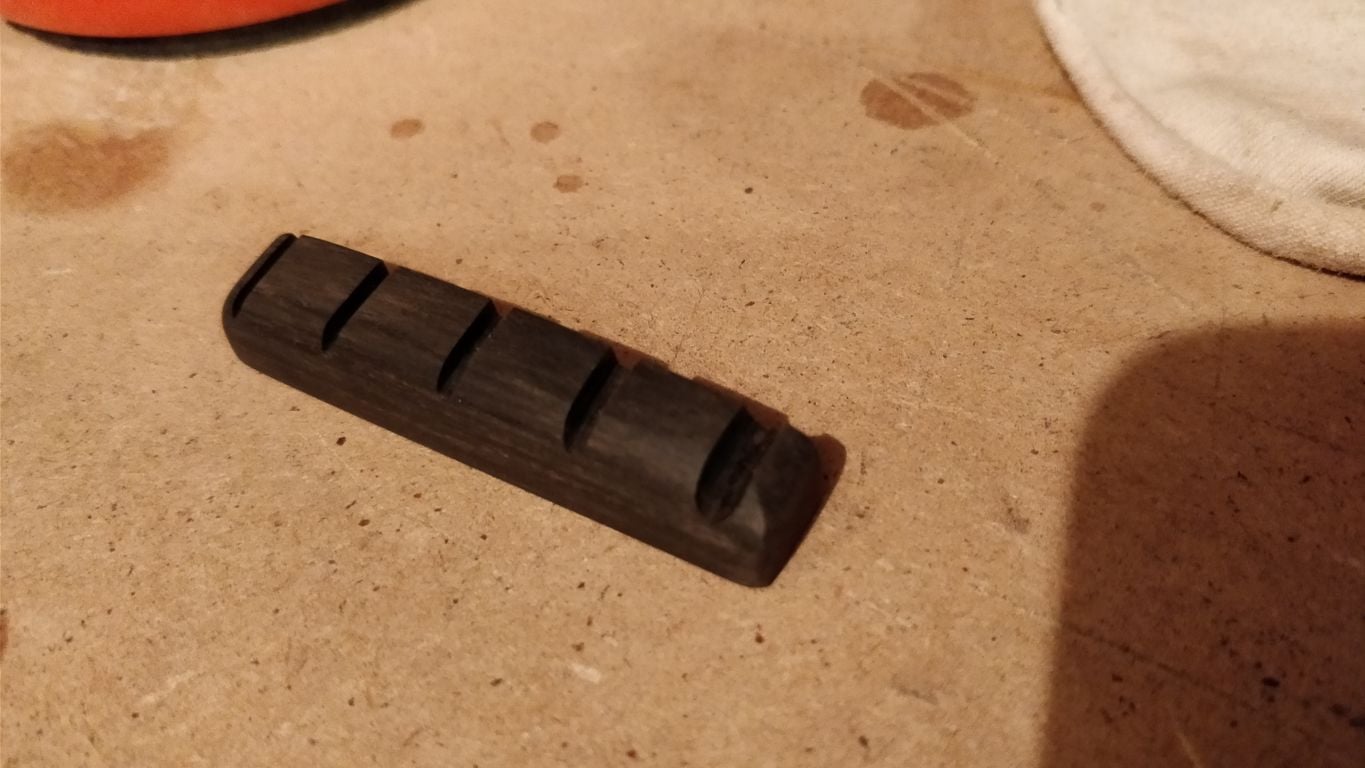
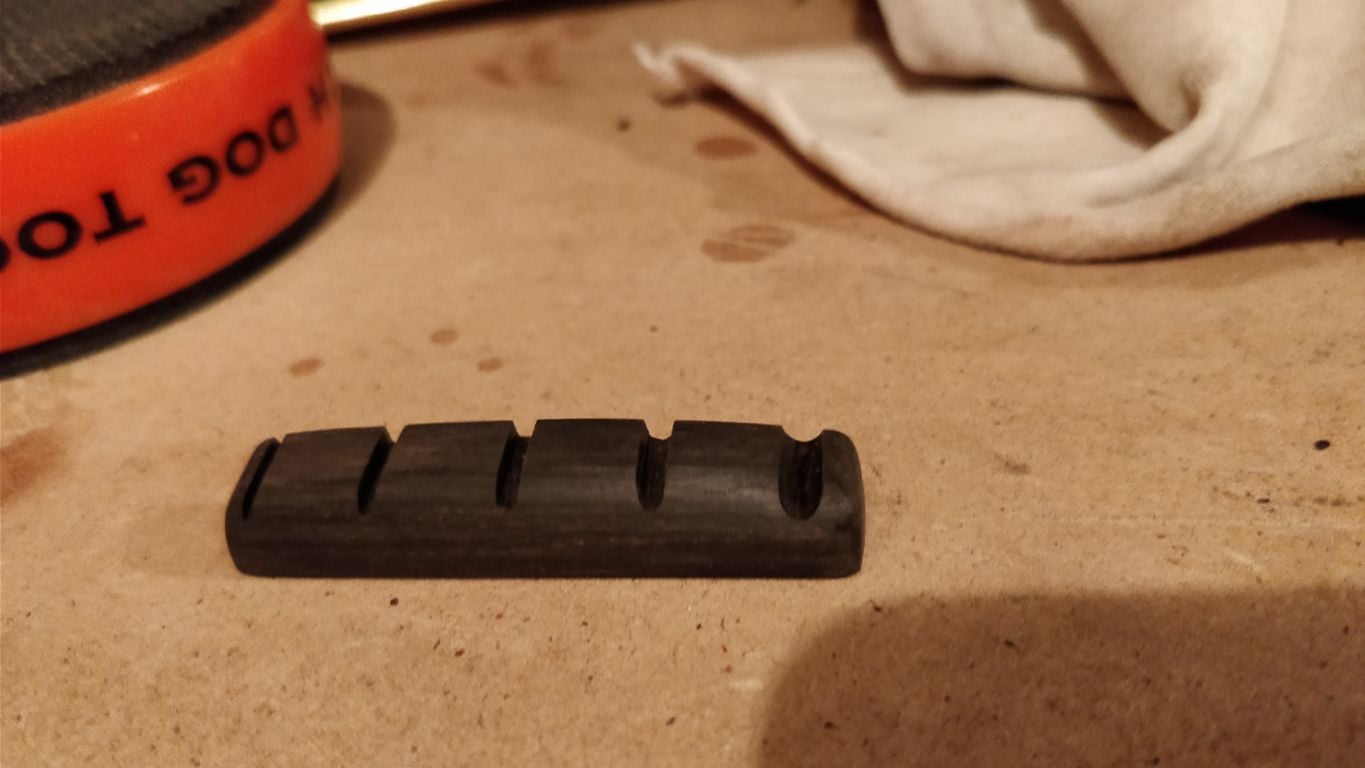
Placing it on the bass, you can see it's still not ideal. Some of the strings can still go a little deeper, but I'll leave that for fine tuning later. I don't want to over do it at this stage.
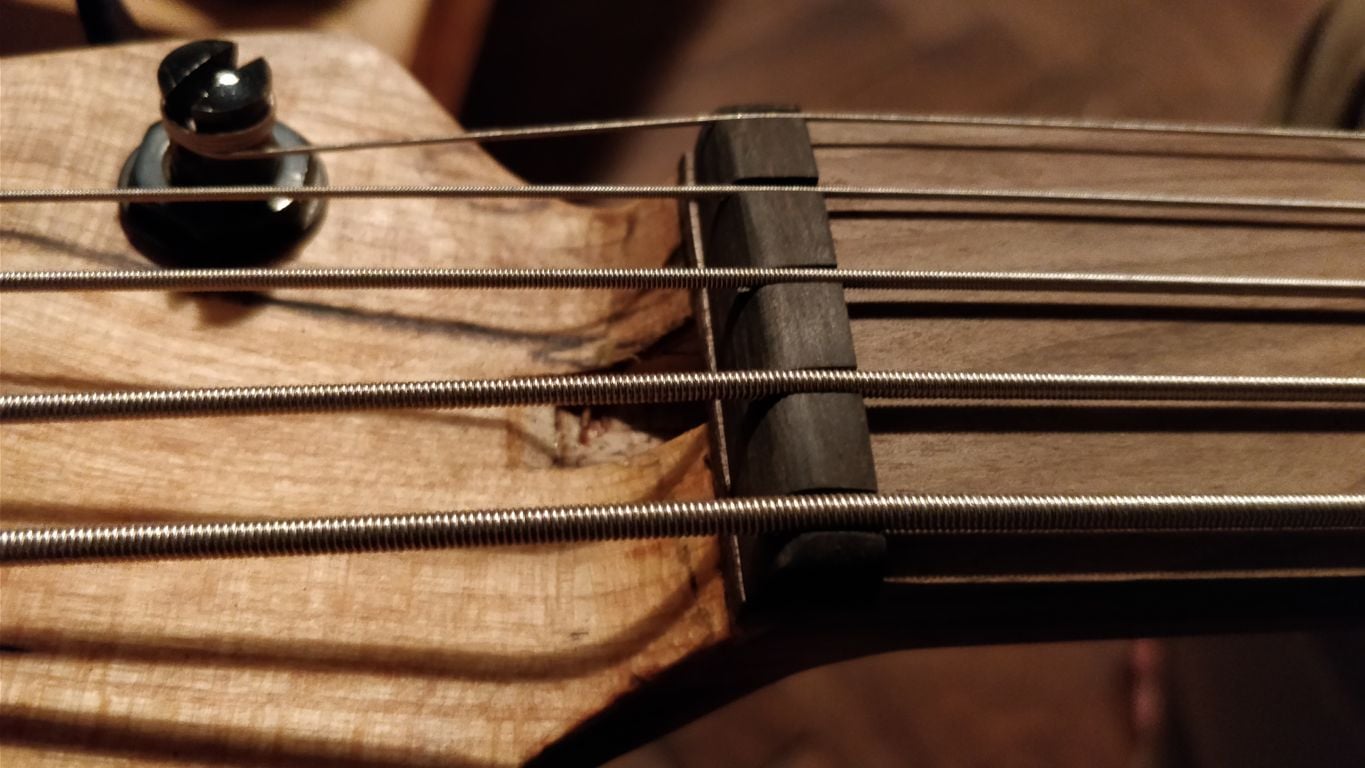
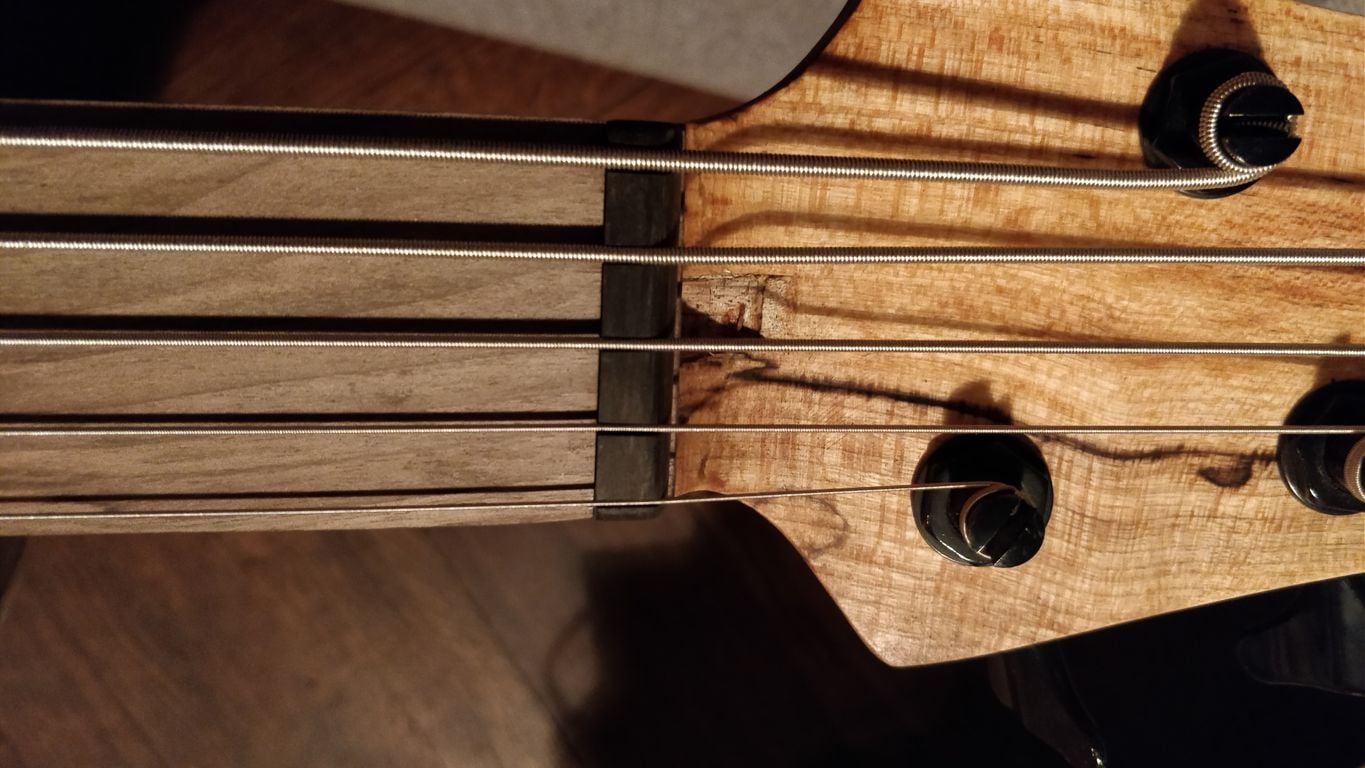
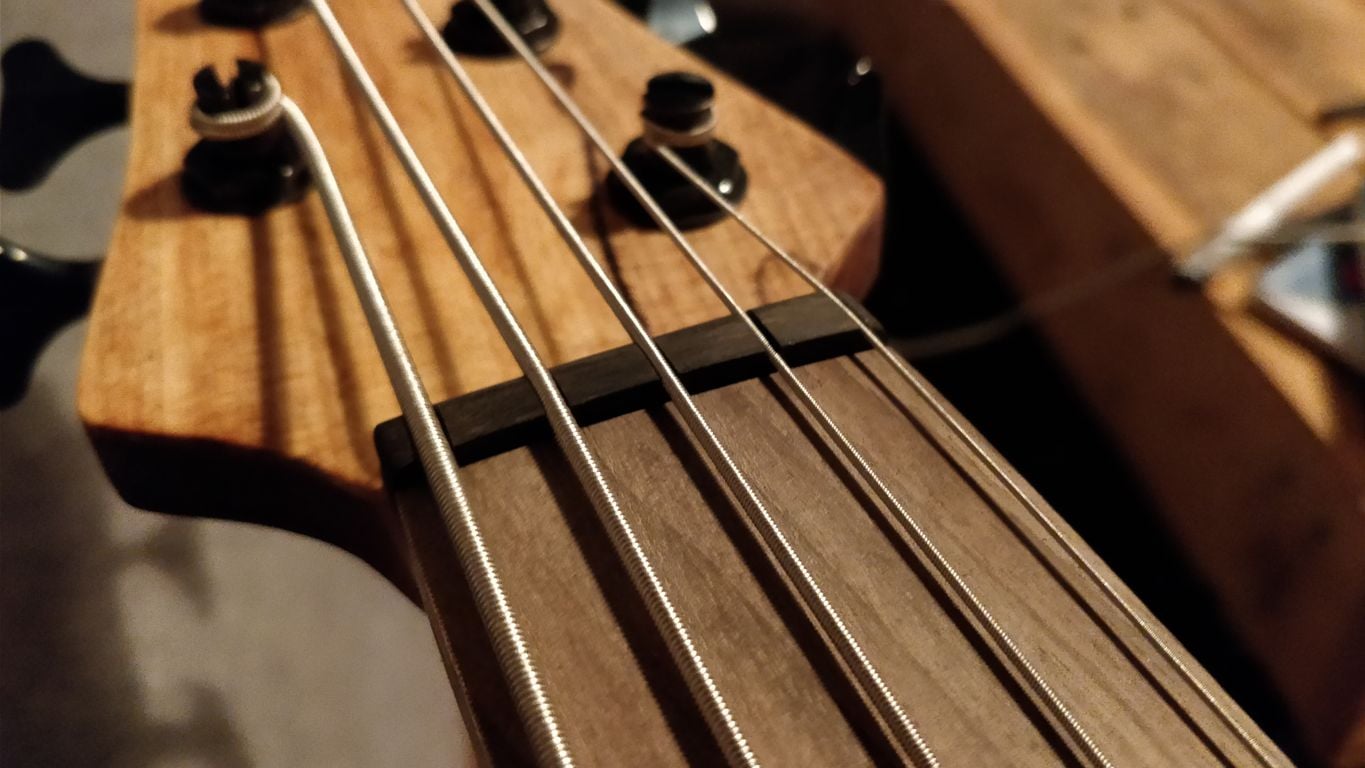
After checking everything I still have to go back to the fingerboard. Seems like the end of the board, or positions 14-20 could use a little fall of to loose some of the "mwah". Otherwise it's alive and really playable. Here is the string vs fingerboard situation
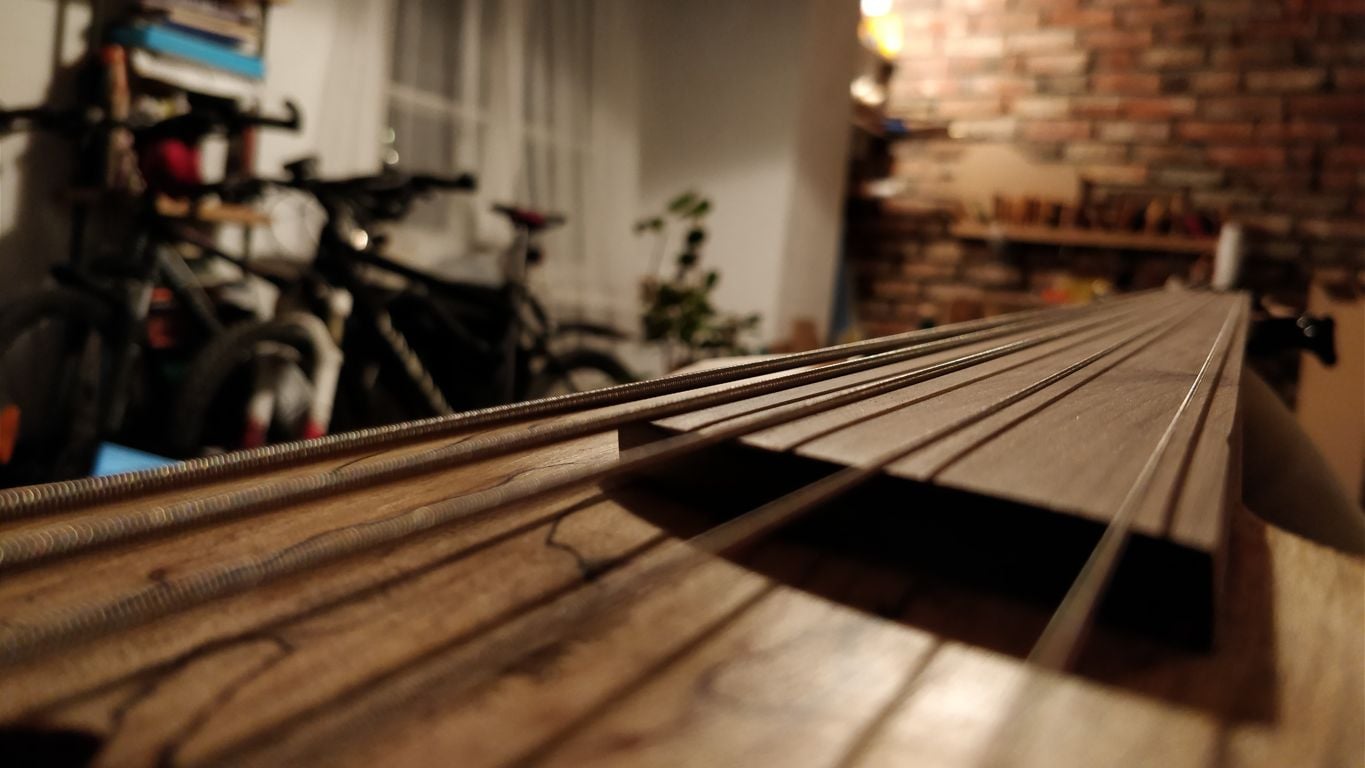
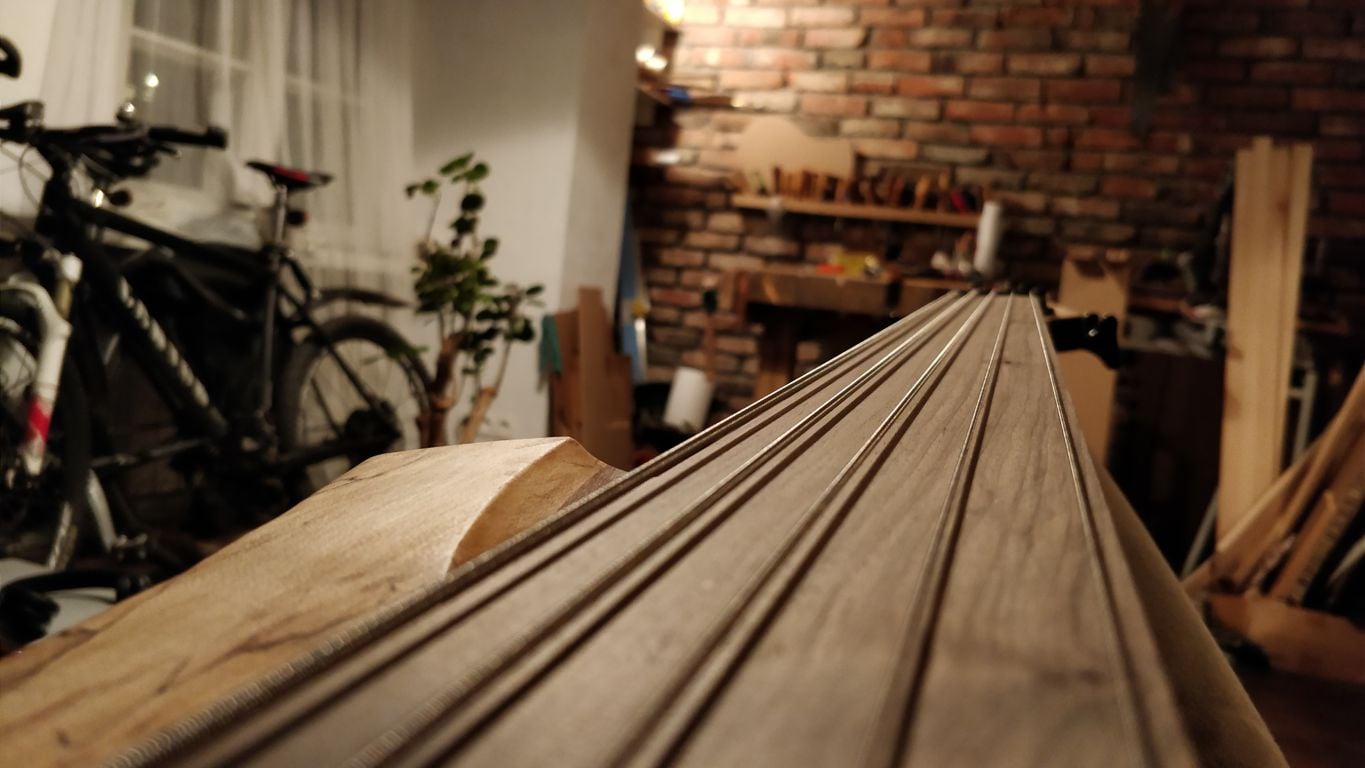
You can clearly see that the end needs to be taken care of. I'm considering not to finish the fingerboard for the moment to see how she sounds, what do you think, will it wear too quickly? I kinda like the dry sound a lot.
Next is back to the fretboard, taking care of that truss rod opening, taking care of the nut area and finishing. So many days left, yaaay!
I sharpened my planes and moved on with shaping the fingerboard. Why planes? Because I am able to remove the material in long consistent strokes and have better control of them than with sandpaper. I am also not skilled enough with the router and all those jigs needed, so I chose a method I can do best.
I got a good consistent surface with a radius of 16" to 20" at the end. Then I found the piece of ebony I had lying around for ages and cut out a nut blank, strung up the bass, put it in the right place and marked the slots for the strings. For each string I use a different file according to their diameter. For the E I used a regular round file and switched to guitar fret files for the remaining strings
Cutting of he nut is not my favourite part for sure. I just feel it takes ages to do it proper and I thought I'll never finish that high C
after cutting the slots to depth (I used a spacer of 0.71mm, which is 0.028" - probably still too high for a fretless) I shaped the nut carefully to sizePlacing it on the bass, you can see it's still not ideal. Some of the strings can still go a little deeper, but I'll leave that for fine tuning later. I don't want to over do it at this stage.
After checking everything I still have to go back to the fingerboard. Seems like the end of the board, or positions 14-20 could use a little fall of to loose some of the "mwah". Otherwise it's alive and really playable. Here is the string vs fingerboard situation
You can clearly see that the end needs to be taken care of. I'm considering not to finish the fingerboard for the moment to see how she sounds, what do you think, will it wear too quickly? I kinda like the dry sound a lot.
Next is back to the fretboard, taking care of that truss rod opening, taking care of the nut area and finishing. So many days left, yaaay!
I would not leave the fingerboard uncoated for long with roundwounds. I tried it with a ziricote fingerboard (very hard wood) after having problems with the CA coating. I ran it for two weeks and took the strings off, the damage wasn't huge, but the round wounds very definitely caused damage on the board. I slap a bit and do a lot of string bending, so YMMV depending on how you play. Even with CA on that one I can see small lines in the coating after months of playing, but nothing you can feel.
Thanks @Jisch. I plan to use flatwounds in the end but they still have a long way to arrive. I'm also not familiar with fretless so much yet, so it's a bit of experiment and learning curve for me. So far I have to say fretless is challenging to build, the precision has to be actually fractions of millimeters. I really started to admire your fretless builds more and more
well I admire everyone's patience installing, leveling and forming frets, that's a long, tedious job.
- Apr 18, 2008
- 16,016
- 1
- 31,730
- Disclosures
- I'm highly opinionated and extremely self-assured
Fretless technique can vary, but when I play I never bend strings. Instead I use “violin” vibrato. Even so, I’ve experienced visual wear from roundwounds that @Jisch describes - visual, but not feelable.

On my fretless, the strings are only a hair above the fingerboard at the nut. That way open strings sound similar to 'fretted' ones.
I agree with ctmullins, I've used roundwounds on fretless without issues. That was not a very special nor expensive bass though, and on my own build I use cobalt flats. These strings are great when they are new, but I find them even more appropriate for fretless when they wear out (and they do pretty quickly). First I tried the LaBella tapewounds that made my de-fretted jazz bass sound (and play) like a much better instrument, but they weren't as nice on my own build.
Fretless technique can vary, but when I play I never bend strings. Instead I use “violin” vibrato. Even so, I’ve experienced visual wear from roundwounds that @Jisch describes - visual, but not feelable.
I agree with ctmullins, I've used roundwounds on fretless without issues. That was not a very special nor expensive bass though, and on my own build I use cobalt flats. These strings are great when they are new, but I find them even more appropriate for fretless when they wear out (and they do pretty quickly). First I tried the LaBella tapewounds that made my de-fretted jazz bass sound (and play) like a much better instrument, but they weren't as nice on my own build.
Thank you very much for the replies, I'm taking all the insights into considerations. I'm using roundwounds for the moment as I'm still waiting for the set of LaBella Flatwounds in medium scale to arrive. They will be the defaults for this instrument.
As for the string height, I will go down at the nut for sure, but this will have to wait for the final setup. Coating the fingerboard as well as gluing in the nut will affect the string height probably, so I want to leave it for the last thing to check If I'm missing something in a fretless setup, please let me know, it's a totally new category for me
As for the string height, I will go down at the nut for sure, but this will have to wait for the final setup. Coating the fingerboard as well as gluing in the nut will affect the string height probably, so I want to leave it for the last thing to check
If I'm missing something in a fretless setup, please let me know, it's a totally new category for me
I don't glue nuts in, I don't think it's necessary and I like to keep some options there (easy adjustment later on, maybe swapping and experimenting a bit). If I'd have to, I'd use one tiny drop of superglue so the nut can be tapped loose quite easily.
Latest posts
-

-
-

-
 Curious what the percentage of bass players use rounds vs flats is.
- Latest: UntitledProject
-
