
Enjoy the benefits of a premium membership!
Upgrade Account
-
TalkBass has been independent since 1998. Add your voice.
Create a free account to reply to discussions, view embedded media, and browse with fewer display ads.
Join free Log in
Want zero display ads or expanded classifieds tools? Compare plans.
You are using an out of date browser. It may not display this or other websites correctly.
You should upgrade or use an alternative browser.
You should upgrade or use an alternative browser.
Winter Build Off 2025 Tele
- Thread starter mapleglo
- Start date
More options
Who Replied?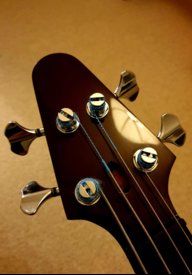

I use either a cheap brush or cloth wipe, and brush or wipe it on. Then I take an old credit card or other plastic card and scrape it smooth. That helps prevent drips and runs, keeps the coat thickness to a reasonable depth, and pushes the epoxy into the grain and/or divots.I'm thinking of using epoxy to grain fill on my current build, what's your method of applying it?

The body was ever so slightly still tacky this morning, so I'll let that cure until tomorrow. It was chilly last night. I worked a little more on the headstock. I think I'll leave it at this point.


I'm thinking of using epoxy to grain fill on my current build, what's your method of applying it?
I use Wool Daubers:
I like them better than brushes or cloth. They soak in the epoxy, but not so much that it flows out everywhere. They will push the epoxy down into the grain, but only leave a thin coat on the surface. Not as much mess. I use them for applying epoxy on surfaces of laminations and for filling grain.
When filling grain, I don't usually squeegee off the excess on the surface. As the epoxy cures it will sink down a little deeper into the grain. If you squeegee it, it will usually end up sunken in the grain, and you'll have to do another coat. So, I use the dauber to leave a thin coat on the surface, and let it cure like that. It's a little more sanding, but I can usually completely fill the grain in one epoxy coat.
As an Amazon Associate, TalkBass may receive commissions from qualifying purchases made via links on this site.
I tried using those wool daubers a couple of times. They didn't seem to work for me. I seem to remember the epoxy "bubbled up" for lack of a better description. And cured in its "bubbled up" form. I had to sand it off almost entirely. I tried it more than once. I'm not sure what I was doing wrong.I use Wool Daubers:
I like them better than brushes or cloth. They soak in the epoxy, but not so much that it flows out everywhere. They will push the epoxy down into the grain, but only leave a thin coat on the surface. Not as much mess. I use them for applying epoxy on surfaces of laminations and for filling grain.
When filling grain, I don't usually squeegee off the excess on the surface. As the epoxy cures it will sink down a little deeper into the grain. If you squeegee it, it will usually end up sunken in the grain, and you'll have to do another coat. So, I use the dauber to leave a thin coat on the surface, and let it cure like that. It's a little more sanding, but I can usually completely fill the grain in one epoxy coat.
As an Amazon Associate, TalkBass may receive commissions from qualifying purchases made via links on this site.

I did a bit more sanding and applied a final (hopefully) coat of epoxy. I'll need to stop by HD at some point to buy a couple of spray cans of the Varathane Poly. I'll put a few coats on the body and neck, and likely leave a satin finish.
I tried using those wool daubers a couple of times. They didn't seem to work for me. I seem to remember the epoxy "bubbled up" for lack of a better description. And cured in its "bubbled up" form. I had to sand it off almost entirely. I tried it more than once. I'm not sure what I was doing wrong.
Hmm....You were probably squishing down too hard on the dauber. I use the daubers with a light touch, gently sliding them over the surface. I don't try to smash the epoxy down into the grain. Just brush the dauber over it and let the epoxy settle in. The dauber leaves a thin coating on the surface.
View attachment 7139843
I did a bit more sanding and applied a final (hopefully) coat of epoxy. I'll need to stop by HD at some point to buy a couple of spray cans of the Varathane Poly. I'll put a few coats on the body and neck, and likely leave a satin finish.
You also could leave the epoxy as the final finish. Level sand it and scrub it as if it were poly, to whatever level of sheen you want. If you like the color and appearance, you don't really need to put poly over top of it.
No work on the build today. We went to the Renaissance Festival instead!


Went to HD this morning and picked up a can of Varathane.

Sprayed a couple of coats on the neck this afternoon. I'll sand the body a little before I decide if it needs any poly.

Sprayed a couple of coats on the neck this afternoon. I'll sand the body a little before I decide if it needs any poly.

I love these Varathane products. Easy to work with, time proven, tough and remains shiny after many years.Went to HD this morning and picked up a can of Varathane.
View attachment 7141725
Sprayed a couple of coats on the neck this afternoon. I'll sand the body a little before I decide if it needs any poly.
View attachment 7141726
Did I mention they are very wear resistant ?

Life got in the way for a few days - we're getting a new garage door opener today, and other stuff. But I managed to sand both body and neck this morning. Now I'm just waiting for it to warm up a bit before I spray a few more coats of clear.
This will almost look like a neck through bass at the end !?View attachment 7143720
Life got in the way for a few days - we're getting a new garage door opener today, and other stuff. But I managed to sand both body and neck this morning. Now I'm just waiting for it to warm up a bit before I spray a few more coats of clear.


Hey, that would be a perfect sign for my blues bar !

Hope the local bird population didn't discover this...


It's amazing how well I can see all the imperfections in my finish...
.
.
.
.
only when I get to this point in the process. I'm even seeing some deep scratches in the wood, from when I was initially leveling it. So, do I sand it smooth now, and refinish, or just do the best with what I have, assemble it and play it by this weekend? Stay tuned for the stunning conclusion of this episode of mapleglo's 2025 build-off tele build...


From past experience, I’d think it was fine as is, assemble the bass, torture myself for 6 months to a year over the flaws, disassemble the bass and refinish it.


