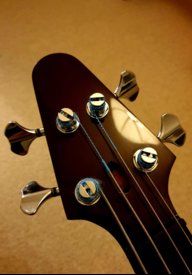
Body is looking pretty good with two coats of sealer. My fresh epoxy arrived so I'll try and get a coat rollered on today.


Enjoy the benefits of a premium membership!
Upgrade Account
-
TalkBass has been independent since 1998. Add your voice.
Create a free account to reply to discussions, view embedded media, and browse with fewer display ads.
Join free Log in
Want zero display ads or expanded classifieds tools? Compare plans.
You are using an out of date browser. It may not display this or other websites correctly.
You should upgrade or use an alternative browser.
You should upgrade or use an alternative browser.
Winter build off 2026 - Primal Screamray
- Thread starter Flying B
- Start date
More options
Who Replied?
Managed to salvage the middle bit for the pickup cover. I glued it to another scrap.

Should just about get away with it!

Should just about get away with it!
Not much to report today but I did do a little machining of the neck blank just to true it up. It's a lovely bit of wood!

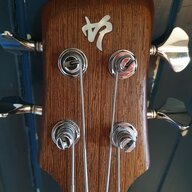
That's some pretty maple. In my experience flame is strongest on quarter or rift sawn surfaces. So I vote for the first one. I also believe it could be a hair more stable since the wood always moves most along the growth rings.
But a multi laminate would be my choice. Bruce Johnson has written on this forum a lot on the benefits of multi laminates and grain orientation in general.
That's not meant as an encouragement. One piece necks can work great and indeed have for decades. Make the right choice for yourself.
But a multi laminate would be my choice. Bruce Johnson has written on this forum a lot on the benefits of multi laminates and grain orientation in general.
That's not meant as an encouragement. One piece necks can work great and indeed have for decades. Make the right choice for yourself.
Yeah all the necks I've made so far have been multi laminated, and I'm fully behind the idea, but this thing is so good looking it seems criminal to chop it up!That's some pretty maple. In my experience flame is strongest on quarter or rift sawn surfaces. So I vote for the first one. I also believe it could be a hair more stable since the wood always moves most along the growth rings.
But a multi laminate would be my choice. Bruce Johnson has written on this forum a lot on the benefits of multi laminates and grain orientation in general.
That's not meant as an encouragement. One piece necks can work great and indeed have for decades. Make the right choice for yourself.
I will be trying to stiffen it up somewhat with some carbon fibre.
I've been trying to get chat gpt to help me with a wiring diagram.

At first glance it looks ok, when you start looking closer it gets pretty weird!
At first glance it looks ok, when you start looking closer it gets pretty weird!

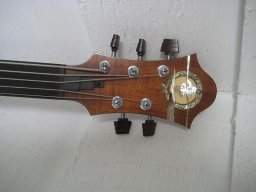
The top one, I think.Here's a question, which way up should I orient the neck blank for maximum figure?
View attachment 7415889
I've not made any progress with this, but it's my birthday and I got a couple of very nice presents, a fret bender and a lovely Japanese style file.

Got as far as cutting a slot for the carbon fibre tow today.

I think I'm going to have to order a different truss rod. This one would require a slot over 12mm deep which would put it only about 2mm from the back of the neck once it's carved, and leave no room for the carbon fibre. Not sure what these rods are designed for really unless very thick necks.

I think I'm going to have to order a different truss rod. This one would require a slot over 12mm deep which would put it only about 2mm from the back of the neck once it's carved, and leave no room for the carbon fibre. Not sure what these rods are designed for really unless very thick necks.
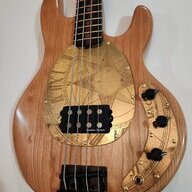
Slow progress here but I have been doing a little bit of work on the body. It's had two epoxy fills and been sanded back in this photo after which I added a third coat which should be enough I think. I also spent a bit of time with a X-Acto knife tidying up the cavities.

I got the carbon fibre ribbons glued into the neck with some epoxy and a strip of maple glued in.


My new truss rod arrived too which requires a much shallower slot than the other one

I assume the rod goes in with the flat side up, although that puts the spoke wheel lower which doesn't seem right?

My new truss rod arrived too which requires a much shallower slot than the other one
I assume the rod goes in with the flat side up, although that puts the spoke wheel lower which doesn't seem right?

Probably flat side up but tighten the nut up a little and see which way it bends.
Yes I'm pretty sure it's 6k. I used 6 strands in the last neck I made with decent results so going with that again.Is that 6 strands of 6k TOW? Just curious.
That wheel is quite large. Even if the center is about 6-7 mm or 1/4 below the neck shaft surface, the top of the wheel will be close to the top of the fingerboard.
Edit: the new truss rod should be somewhat weaker than the red hot rod model there. You can test the difference by taping them together. And I'm not saying that the new one is too weak or anything. Just that this is a good opportunity to get a feel for the differences.
Edit: the new truss rod should be somewhat weaker than the red hot rod model there. You can test the difference by taping them together. And I'm not saying that the new one is too weak or anything. Just that this is a good opportunity to get a feel for the differences.
Last edited:
Interesting, how would taping them together compare which one is stronger?That wheel is quite large. Even if the center is about 6-7 mm or 1/4 below the neck shaft surface, the top of the wheel will be close to the top of the fingerboard.
Edit: the new truss rod should be somewhat weaker than the red hot rod model there. You can test the difference by taping them together. And I'm not saying that the new one is too weak or anything. Just that this is a good opportunity to get a feel for the differences.
Having one pull in one direction, the other at the opposite? I'm not sure how that would work but it wouldn't hurt to try. I might also adjust them the same amount by rotating the rod and compare the force needed to flex them on a flat surface. Just to get a feel.Interesting, how would taping them together compare which one is stronger?
If the threads are not identical it's hard to do draw any accurate conclusions on the differences. But I might try comparing them, so that in a future build I could use the information to decide what to use in given circumstances.


