Ok, I guess I'll join the fray.  This is a distinctly unfinished business entry as it's my incomplete bass from the SBO24. A handful of specs lifted from my old thread:
Specs:
Neck: Three piece hard maple, tapered centre stringer, aluminum stiffening rods, 7 degree tiltback headstock with maple veneers
Truss Rod: Double acting double rod, headstock access
Stiffeners: aluminum 1/8" x 12mm bars
Fretboard: Flamed big leaf maple
Fingerboard Radius: 15"
Scale Length: 33"
Frets: 25 nickel silver (zero fret design)
String Spacer (Nut): fretboard material, 45mm zero fret neck width
Tuners: Chrome Gotoh GB350
Strings: undetermined
Neck/Body Join: bolt on with underboard inserts and furniture bolts
Body: Radiused, chambered poplar back/core with alder top
Pickups: Jazz blades
Pickguards: Cream, translucent white
Electronics: passive
Controls: Volume, Tone, on/off pickup switches, front jack
Knobs: White Davies 1470 style
Bridge: 5 String Aluminum 2 piece with brass saddles at 17mm spacing, bolted to body-embedded aluminum block
Body Finish: cream chalk paint with UV resin clearcoat, matte finish
Neck Finish: Osmo Polyx
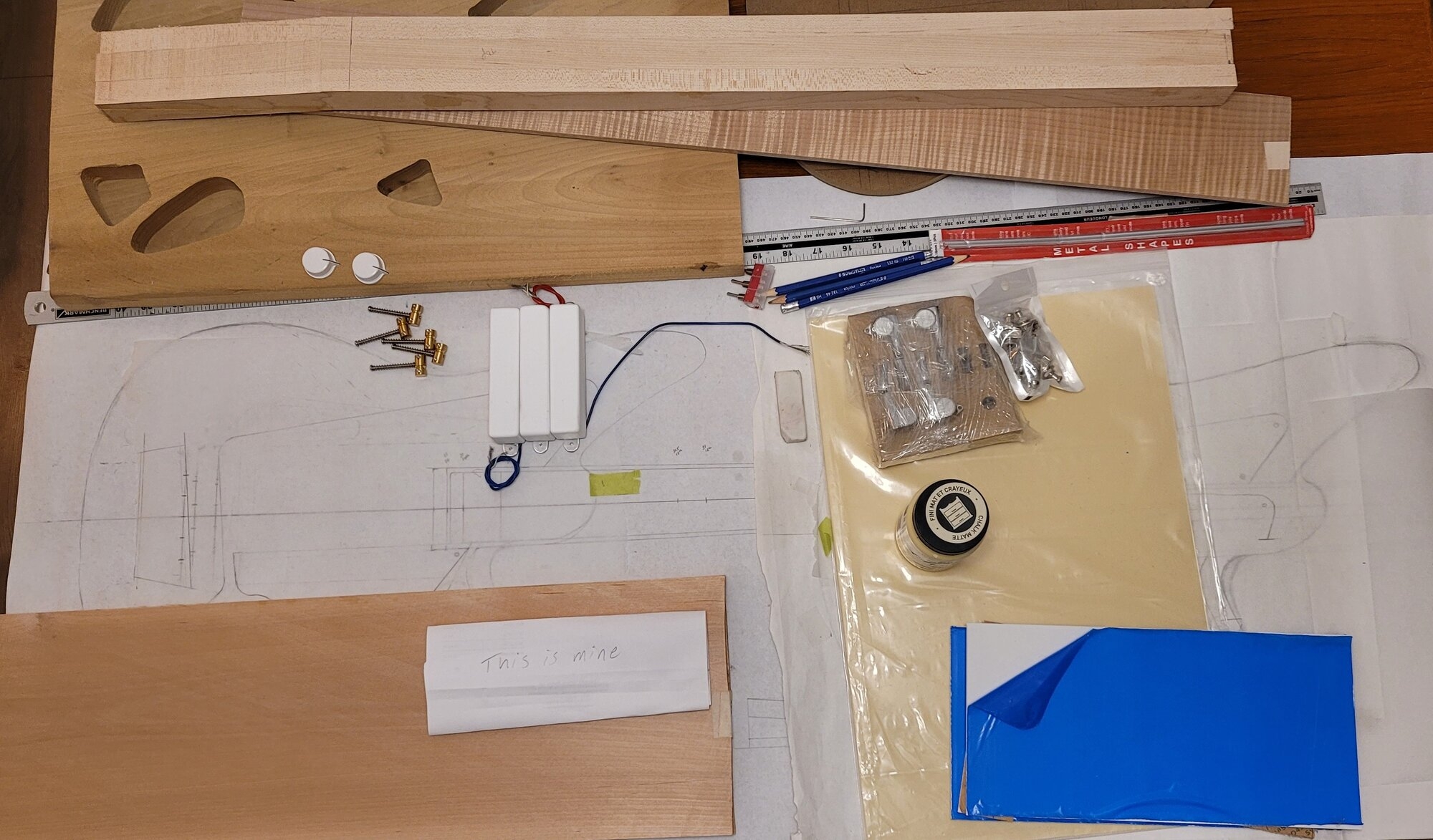
Savvy observers will note that this originally had a torrefied/roasted sitka spruce body, but in the ensuing months, it cupped slightly on the edges. I went digging around in my shed for an alternative body wood, and found the poplar core that was destined for another bass.
I had a stack of templates from the SBO for this bass, (including pickguards, neck pocket, bridge block, headstock, etc), but they got wet and are unusable as-is. I may be able to salvage a couple to rout some new ones, but I have a few to whip up going forward.
The cupping of the spruce both surprises me and doesn't, as spruce can cup for sure, especially flatsawn, but IME, the roasting process usually prevents this. It either was not roasted enough, or there was enough moisture transfer from the air to make it cup anyway, which would not bode well for seasonal stability. I may need to chamber a bit more to make the poplar body lighter, but we'll see.
This is a distinctly unfinished business entry as it's my incomplete bass from the SBO24. A handful of specs lifted from my old thread:Specs:
Neck: Three piece hard maple, tapered centre stringer, aluminum stiffening rods, 7 degree tiltback headstock with maple veneers
Truss Rod: Double acting double rod, headstock access
Stiffeners: aluminum 1/8" x 12mm bars
Fretboard: Flamed big leaf maple
Fingerboard Radius: 15"
Scale Length: 33"
Frets: 25 nickel silver (zero fret design)
String Spacer (Nut): fretboard material, 45mm zero fret neck width
Tuners: Chrome Gotoh GB350
Strings: undetermined
Neck/Body Join: bolt on with underboard inserts and furniture bolts
Body: Radiused, chambered poplar back/core with alder top
Pickups: Jazz blades
Pickguards: Cream, translucent white
Electronics: passive
Controls: Volume, Tone, on/off pickup switches, front jack
Knobs: White Davies 1470 style
Bridge: 5 String Aluminum 2 piece with brass saddles at 17mm spacing, bolted to body-embedded aluminum block
Body Finish: cream chalk paint with UV resin clearcoat, matte finish
Neck Finish: Osmo Polyx
Savvy observers will note that this originally had a torrefied/roasted sitka spruce body, but in the ensuing months, it cupped slightly on the edges. I went digging around in my shed for an alternative body wood, and found the poplar core that was destined for another bass.
I had a stack of templates from the SBO for this bass, (including pickguards, neck pocket, bridge block, headstock, etc), but they got wet and are unusable as-is. I may be able to salvage a couple to rout some new ones, but I have a few to whip up going forward.
The cupping of the spruce both surprises me and doesn't, as spruce can cup for sure, especially flatsawn, but IME, the roasting process usually prevents this. It either was not roasted enough, or there was enough moisture transfer from the air to make it cup anyway, which would not bode well for seasonal stability. I may need to chamber a bit more to make the poplar body lighter, but we'll see.