After reading some of his posts.... I really think @Bruce Johnson could add to this conversation.
Last edited:

TalkBass has been independent since 1998. Add your voice.
Create a free account to reply to discussions, view embedded media, and browse with fewer display ads.
Join free Log in
Want zero display ads or expanded classifieds tools? Compare plans.

He’s a Busy Dude! I occasionally shoot off a proverbial flare in his general direction, hoping he’ll weigh in, but he Does this as a profession, bigger fish to fry, so to speak.
Here's one... a stick dipped in it. The effect is shallow, but you can get it a little deeper with longer soak, and oiling helps.Do you have any pictures of staining it with iron acetate?
I read that pecan was lumped into the hickory family, but not really hickory.
You mentioned wanting to work with butternut, which I believe is a hickory. You may have the same experience with that.
Here's one... a stick dipped in it. The effect is shallow, but you can get it a little deeper with longer soak, and oiling helps.
View attachment 4568001
I have worked with Butternut a little. Not a hickory; it's Walnut's lighter and softer brother. Density and hardness is in the neighborhood of Alder, Basswood and Poplar, but I think the grain is more attractive.
color wise, it looks like it could be a good candidate for ebony replacement after being dipped. Now my overactive mind is wondering if you could break it down to fibers, then form it into a synthetic type board similar to rocklite etc.
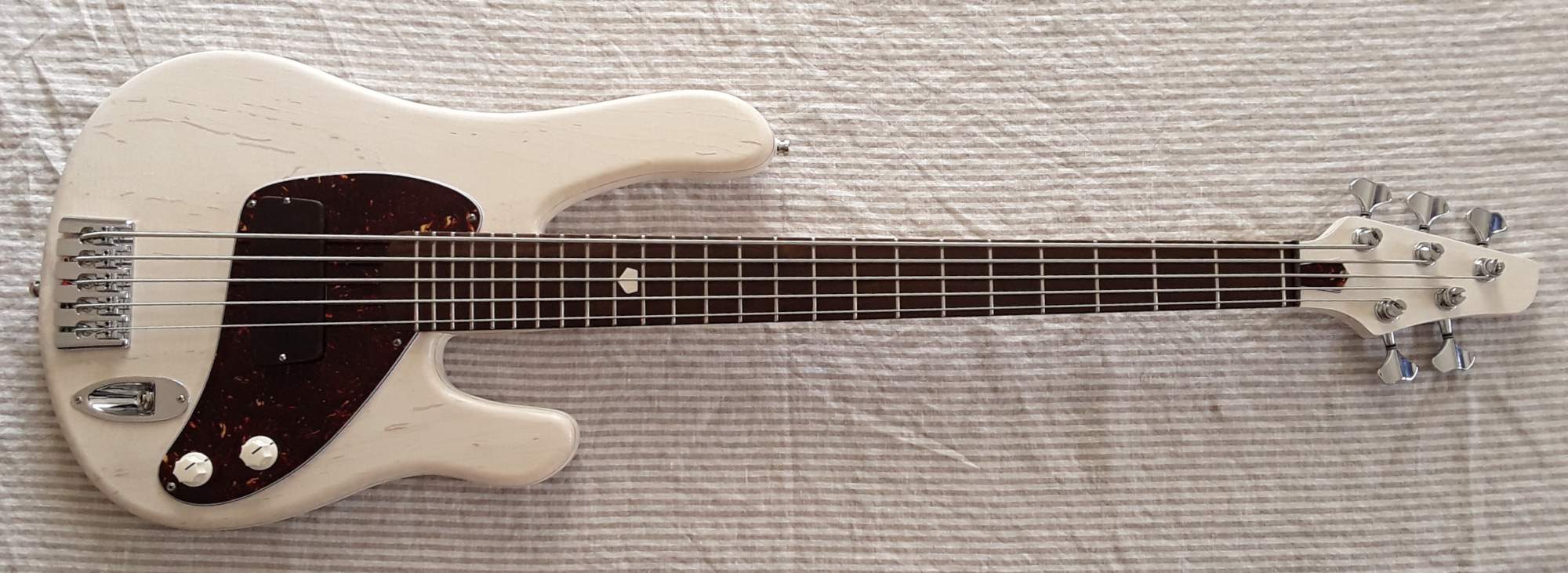
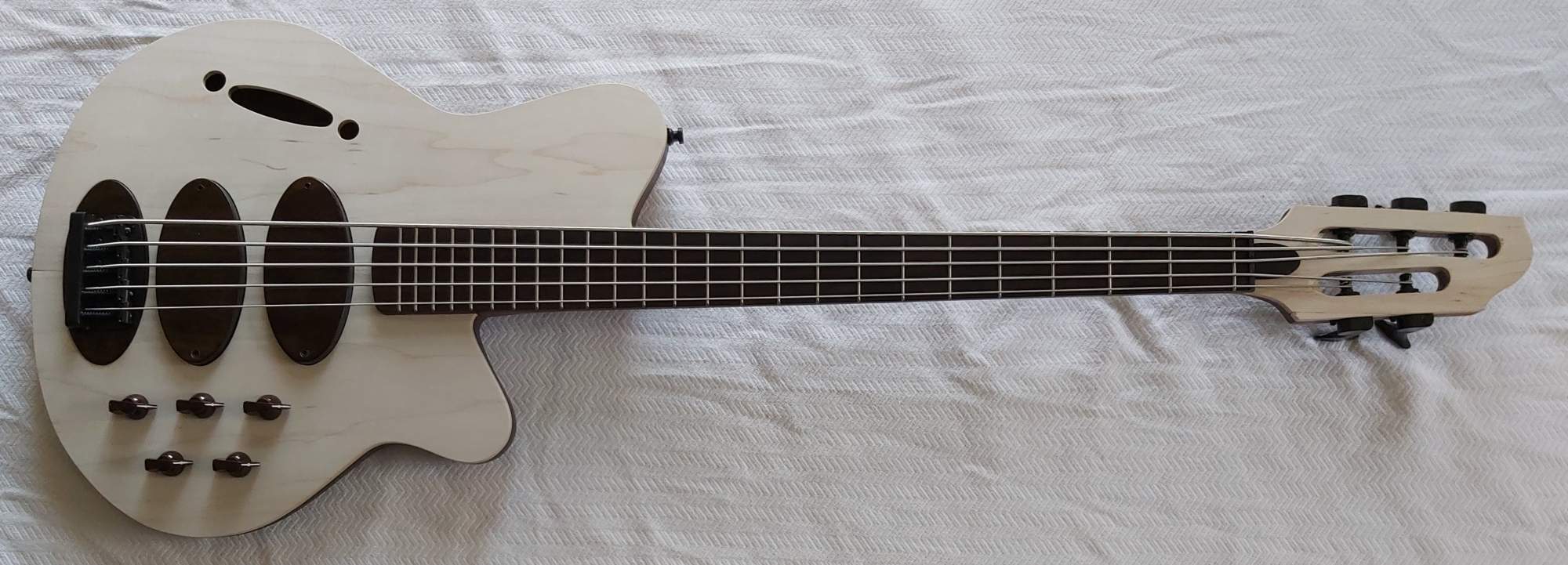

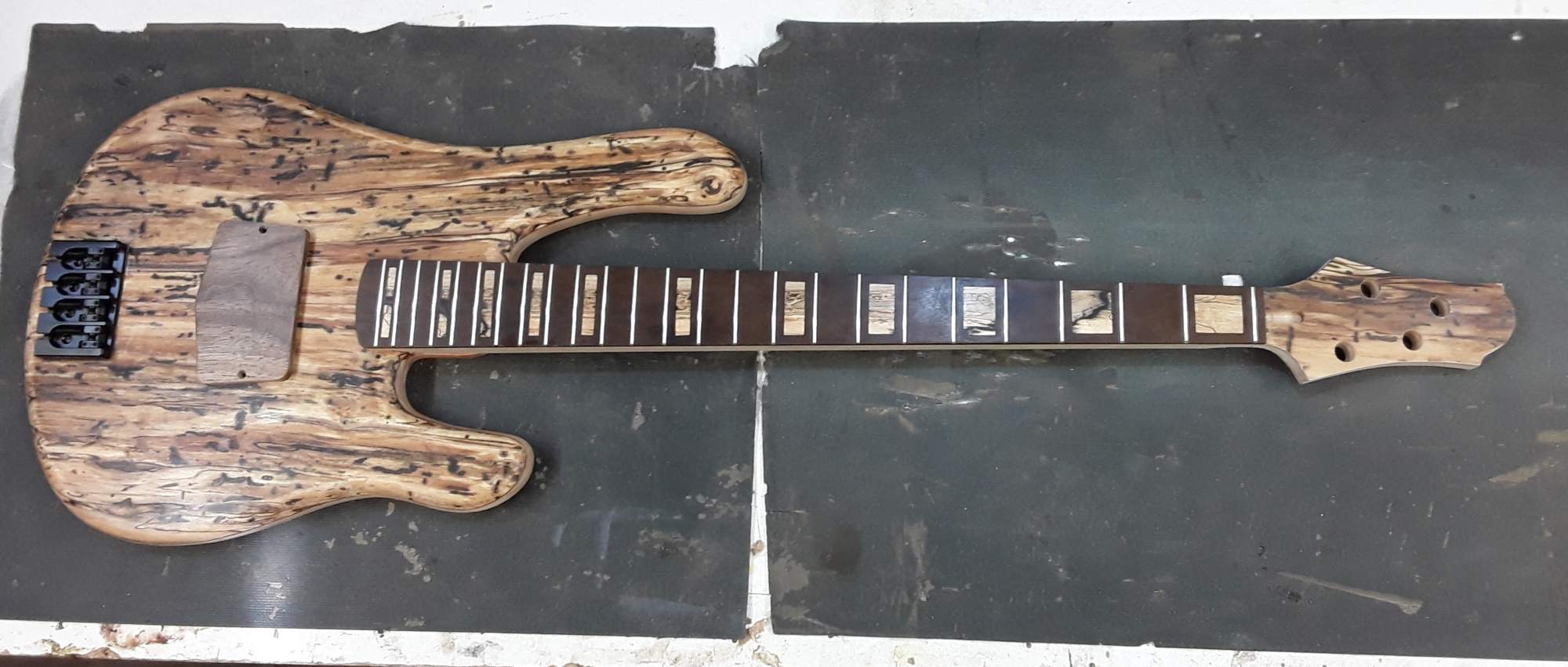
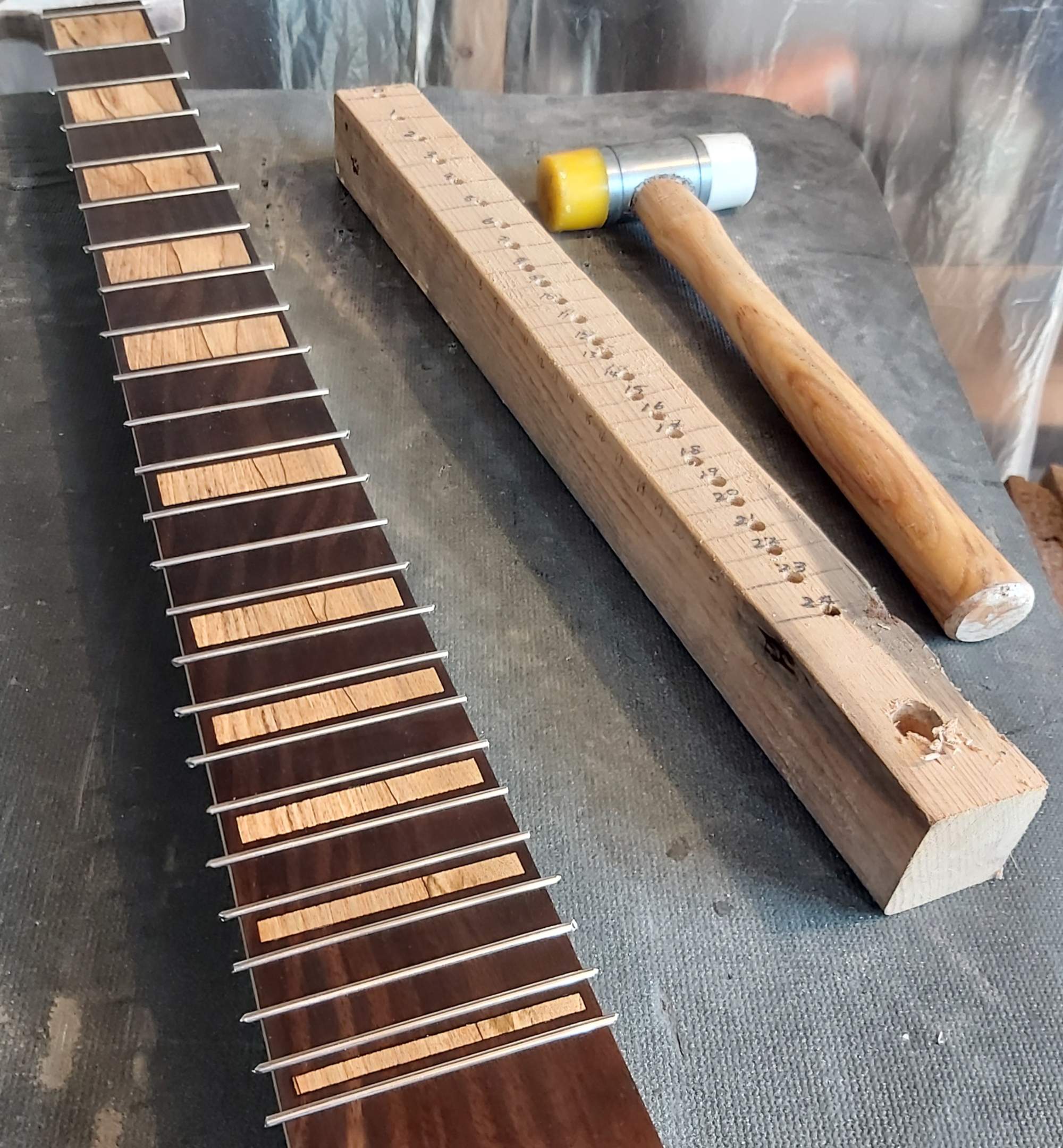
They look a lot like rosewood in person. Or like a chocolate brown ebony. They are much more brittle than usual walnut and so they work more like something like say pau ferro. It works well with lots of species - I have some sapele test pieces that look good too. I've mostly used walnut and roasted cherry in builds because I try to use domestic (to me) species and also found or repurposed woods. The home roasting process is a good way to get something exotic looking from cheap timbers.
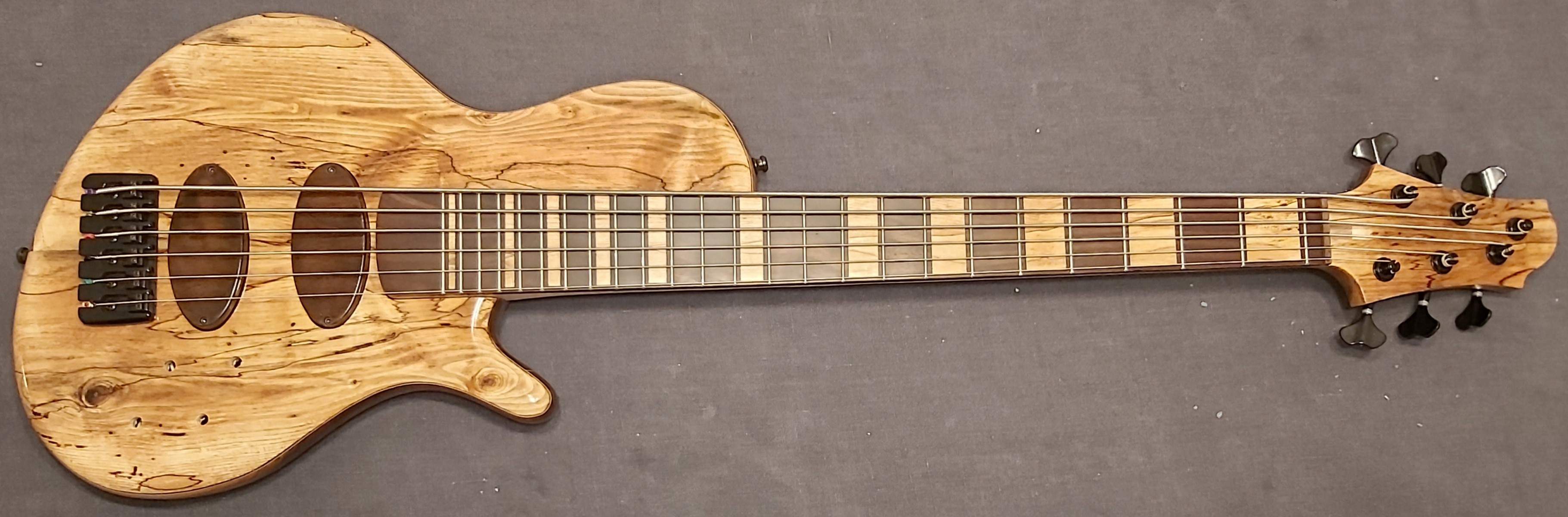
Thanks, I'm pleased with it too.I really like the headstock on the last one. How's it's tuning stability and tone? Sorry if I've asked before....
Tone, I can't tell. There are too many factors for me to be able to isolate how it might impact the tone. The strings aren't really at any more of a breakover angle than my usual 6 degreeish headstocks, so I'm not sure if it would be remarkably different if I could tell.  For tuning stability, it's pretty good, but I'd chalk that up to the tuner quality more than anything. This one has a combination of real Gotoh GB707s and cheap knockoffs. The Gotohs are really stable and the knockoffs not so much.
 I'd say there's a bit more than usual air drying processes, but it's hard to know for sure. There's a lot of cupping, warping and twisting, but it happens all in one day rather than over years as things dry out. Whether it's more than air dried stuff, I don't really know. They definitely shrink a bit in all dimensions. Enough that I can only get two fretboards out of a 4/4 block rather than three like normal. I usually roast 3/4 stuff and can always get two boards out of that.@Beej have you found that your home roasting process creates more twisting/cupping of the wood than normal drying processes?
Any idea how much additional waste is created by using this method?
Also, which smells better when roasting, maple or walnut?

I'd say there's a bit more than usual air drying processes, but it's hard to know for sure. There's a lot of cupping, warping and twisting, but it happens all in one day rather than over years as things dry out. Whether it's more than air dried stuff, I don't really know. They definitely shrink a bit in all dimensions. Enough that I can only get two fretboards out of a 4/4 block rather than three like normal. I usually roast 3/4 stuff and can always get two boards out of that.
One nice thing is that they become really dimensionally stable after roasting and once you've milled the final shape, it doesn't change. You know how you can cut a piece of wood and it can curve in the process as tensions in the grain equalize? That never happens with the roasted stuff, it's completely stable. This has been the case with every species I've tried, so I'm chalking it up to the process. Very nice for building and reducing surprises.
Smell? They all smell the same... like a fire in your house. No two ways about it.

After reading some of his posts.... I really think @Bruce Johnson could add to this conversation.
I'm sorry that people want to argue the topic. I wish the conversation was more like it is on the classical guitar forums. Basically, "Thank you for your opinion and contribution." I honestly don't think your opponents understand that you do more than just pick maple for the neck and make it out of the first piece of maple you come across.I'm sorry to say it, but I'm simply tired of writing about the subject of how wooden bass frames affect the sound of an electric bass. I've written countless pages about it over the years here on TalkBass. But there's an endless stream of threads asking if and how the wood makes any difference in the sound. And every thread brings out waves of people who want to argue endlessly about it. They deeply believe that the sound of an electric bass is all strings and pickups. No amount of rational discussion of engineering and testing will change their minds. I've tried my best, and I'm outnumbered and tired of arguing.
The sad reality is that, to the majority of bass players/owners, the sound of their instruments is all in turning knobs on their electronic gear. They don't listen to or care about the sound of the bass itself. Builders like myself, who concentrate on making our basses have a beautiful inherent sound through a clean amp, are a small niche part of the bass market. We have our little crowd of customers who appreciate our basses. I'm happy with that, and I'm tired of trying to change the minds of the masses.
Yes, seems so. But my favorite way to play my bass is unplugged, with my chin resting on the upper horn. Unfortunately, I've never found an amplified sound to equal that, but that's what I shoot for.The sad reality is that, to the majority of bass players/owners, the sound of their instruments is all in turning knobs on their electronic gear. They don't listen to or care about the sound of the bass itself.

I think it's the specific "how" that people are confused and argue about. It seems like a difficult and complicated subject to explain and most people just want to be in one camp or the other. It either makes a difference or it doesn't but it's not one or the other and it's not that simple.how wooden bass frames affect the sound of an electric bass.

I'm sorry to say it, but I'm simply tired of writing about the subject of how wooden bass frames affect the sound of an electric bass. I've written countless pages about it over the years here on TalkBass. But there's an endless stream of threads asking if and how the wood makes any difference in the sound. And every thread brings out waves of people who want to argue endlessly about it. They deeply believe that the sound of an electric bass is all strings and pickups. No amount of rational discussion of engineering and testing will change their minds. I've tried my best, and I'm outnumbered and tired of arguing.
The sad reality is that, to the majority of bass players/owners, the sound of their instruments is all in turning knobs on their electronic gear. They don't listen to or care about the sound of the bass itself. Builders like myself, who concentrate on making our basses have a beautiful inherent sound through a clean amp, are a small niche part of the bass market. We have our little crowd of customers who appreciate our basses. I'm happy with that, and I'm tired of trying to change the minds of the masses.

After participating in a few, I think this will also be my strategy from now on.I stay out of the “tonewood” threads
Is that a thing? Can you pick certain words to be alerted on if they come up?