• TalkBass has been independent since 1998. Add your voice.
    Create a free account to reply to discussions, view embedded media, and browse with fewer display ads.
    Join freeLog in
    Want zero display ads or expanded classifieds tools? Compare plans.

Double Bass Worth Fixing?

Mike Gilge

Guest
Feb 11, 2017
15
2
Hi guys, ive been off an on the site over the years, but have never posted. I have owned this since the third grade (im 34
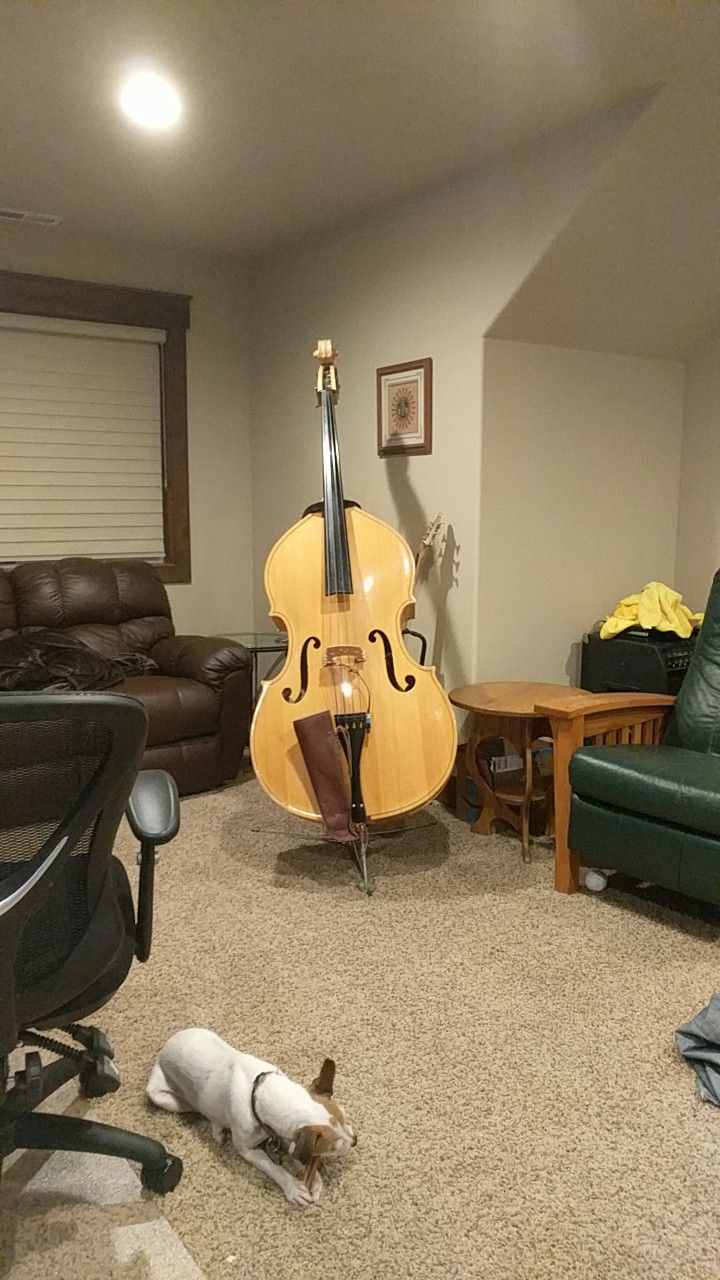
upload_2017-2-11_21-53-9.png


And in around 2002 the first round of college resulted in this.....
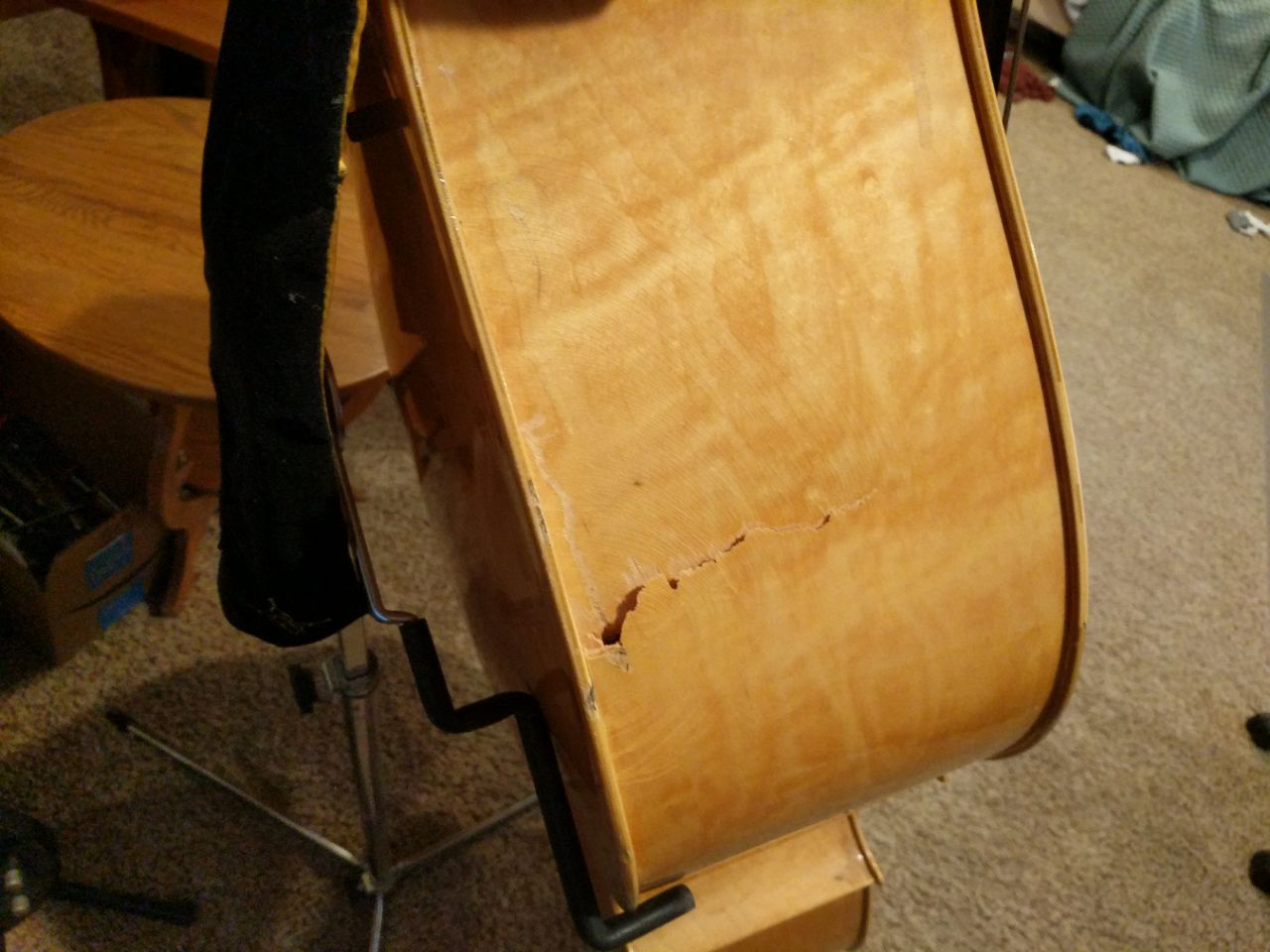
upload_2017-2-11_21-53-44.png


And as a result I literally have not played since then.... I really would like to get back into this, but I am unsure whether this is worth fixing or not, and what the cost would be to repair this. The bass in the picture is an Englehardt ES9 for those who may not recognize it.

Thanks guys!
 
I should probably also add this.... I also have this as a bow....and there is a long story to the mismatch of what im about to post vs the bass in the previous picture. Lets just say I was supposed to have gotten a new instrument and it just never happened......
upload_2017-2-11_22-9-36.png

upload_2017-2-11_22-9-49.png


At this point.....there is no way my ability could ever use something like that as its been 15 years since ive touched an upright bass....And at this point classical music is not something that is likely to happen soon, and that was all I was doing at the time. I believe that this bow may be worth a few dollars, and am more then willing to sell it to get into an instrument if thats what it takes, and if thats what makes sense to do at this point.
 
Mike, welcome to talkbass. You might try one of the double bass forums for your question. For what it's worth, even though I haven't had an actual upright for a while ( just an electric upright) I've always thought the blond Englehardt's are beautiful.
 
I think it is probably worth fixing. The bass has lasted a long time, even though not used, so it is likely functional. I know they can repair problems like this. Your best bet is to call a luthier or send a picture, or take the bass there to get an estimate. But definitely think this is probably worth fixing, based on the information given.
 
  • Like
Reactions: james condino
Hi Mike,

The short answer is yes it can be fixed. It's possible to repair it without removing the top, although it might be something of a compromise/temporary fix until the top really needs to come off. The more thorough repair would be to remove at least part of the top to have proper access to the inside of the ribs. That adds cost. Either way, you should end up with a decent enough repair. There are good options for luthiers in Seattle, but I'm not sure about closer to you...

I'd definitely get it fixed.

Cheers,

Paul
 
I think there is a competent luthier in Spokane, actually...see whether Jeremiah Senner is still in the area. Some luthiers won't work on basses, though...he could be in that camp. On the other hand, he may have contacts on the 'dark side". :-) Good luck with it.
 
Call up my buddy mandolin builder Lawrence Smart over in the Hailey, Idaho area. He'll know the go to guy for bass work in that region.

A. Lawrence Smart, Luthier - Mandolins

If there is no sound issue or rattle sort of thing, spend your effort playing the bass and less energy obsessing about fixing damage on the side of the bass you won't even see. Plywood basses are functional, durable tools for working musicians, not objects of art or investment pieces. That bass will take about a dozen more impacts like that and still work on the job. You could spend the value of the bass to get it repaired with no noticeable difference in the voice or structure. I could take that same bass, slap on some duct tape and make five times the value of it between now and October playing gigs and living a fun life; maybe even so much fun that I got arrested while on the job.... Which do you want to be????

j.
www.kaybassrepair.com
 
Last edited:
It may come to that, but I would at least like to know what it going to take to fix it. To make a long backstory short, I first had a school Kay, that being a second grader, I took very bad care of, literally knocked chunks out of the edges on the bottom. When my instructor helped me get that Engle in third grade....she made me promise to take care of it....and I did all the way from 3rd grade through my first year in college I hardly put one scratch in it, the only damage it has is that smash.
 
There is a method where a luthier could drill a pinhole through the puncture, finagle a guitar string through the hole, use the ball end of the string to pull a caul into place on the back side of the rib, apply glue to the microcracks and allow the glue to set under tension, and then touch up the finish.

Or you could have a nice night out on the town.
 
I think that neodymium magnets can be used these days to provide the force to pull things up from the outside, without having to drill a little hole. On the other hand, a small hole, properly filled afterward, would be a small price to pay to avoid pulling the top off and also to get the broken place fixed. I guess the hardest thing is to get all the plies lined up more or less as they should be after having been splintered.

Of course, one of the basic reasons why plywood exists is to prevent propagation of a crack under exactly the circumstances of the picture you showed.