• TalkBass has been independent since 1998. Add your voice.
    Create a free account to reply to discussions, view embedded media, and browse with fewer display ads.
    Join freeLog in
    Want zero display ads or expanded classifieds tools? Compare plans.

Wouldn't you want the most ball string ballcontact?

Apr 18, 2015
3,139
3,498
65
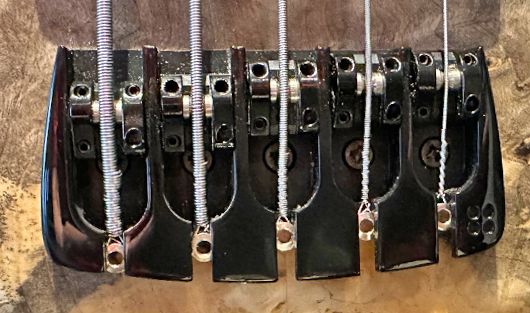
Below find two images of Sandberg bridges. The first one (blue body) has the string ball ends seated randomly throughout the bride. Below is another Sandberg bridge, this time with the ball ends placed so that there is maximum contact with the sides of the slots.

On one hand one would think that maximum contact might add to some sustain. But OTOH, keeping the balls uniform is a PITA. And FWIW, while Sandberg makes a bridge that is fast and easy to get old strings off, it's those slots are a pain because the strings have to be wound short enough for them to get into the slots and stay there.

How do you feel about the orderly uniform ball ends compared to the random ball ends? Is there any sonic merit to the 2nd image?
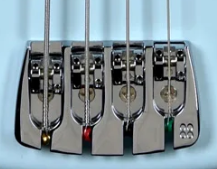
upload_2023-9-25_14-6-58.png
upload_2023-9-25_14-10-27.png
 
The thing is that most other bridges or even a string-thru, the ball butts up against the bridge or ferrule and really doesn't matter. But here, there is a lot of open area between the slots. As I think about it, when we consider how ball ends are seated with acoustic guitars, couldn't it matter some? Yeah, I know we're talking about sound that is primarily heard through an amplifier. But sustain?
 
From a mechanical engineering standpoint, how the ball end is seated in the bridge will not affect the sustain or tone of the bass. As long as you have metal-to-metal contact between the ball end and the bridge, the metal parts are strong enough and hard enough that they aren't going to flex at all under the tension load of the strings. And the amount of surface area contact between them doesn't matter. Even with point-to-surface contact, 40 pounds of string tension isn't going to come close to squashing the metal.

If the metal parts on the bridge aren't squashing under load, you aren't going to have any effect on the sustain or the tone.

As a fun experiment, try slipping a rubber faucet washer over the string, placing it between the ball end and the bridge. The rubber will definitely squash with every string cycle. And your strings will sound like they are made of rubber out through the amp. It kills the sustain and most of the top end and bottom end. A fun thing to play around with if you want to play Boing Boing Bass.
 
Even with my chronic OCD, I must confess that this particular question has never worried me. And I highly doubt that there is a sonic difference. However, for those to whom it matters, the Fender string-through High Mass bridge found on USA models lock the ball ends in a fixed position when strung through the bridge.
 

Latest posts