• TalkBass has been independent since 1998. Add your voice.
    Create a free account to reply to discussions, view embedded media, and browse with fewer display ads.
    Join freeLog in
    Want zero display ads or expanded classifieds tools? Compare plans.

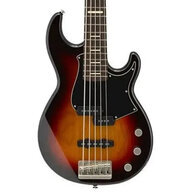
Yamaha BBP35 vs BB435 - opinions?

Thanks for all the feedback everyone.

As much as I would love to buy the BBP35, and have the means to buy it, I am still not sure I’m a 5 string player.

I was originally looking for a Craigslist deal, then the Yamahas hit me.

Then I stepped up from the 235 to the 435.

I think that either way with the Pro or the 435 I’ll be ok.
Check out these photos:

My 435 will be here earlier than expected.

Full report this weekend, but for now, some eye candy.
 

Attachments

Check out these photos:

My 435 will be here earlier than expected.

Full report this weekend, but for now, some eye candy.
Hey not sure what happened with this post so I’ll try again.
Check out these photos:

My 435 will be here earlier than expected.

Full report this weekend, but for now, some eye candy.

This Fed-Ex is playing games.

Delayed delivery by one day.

The suspense is killing me!
 
The BBP35 blows a Sadowsky away, ime. Yep, I totally said that.

I can believe that.

I just bought a Yamaha BBPH (Peter Hook signature) yesterday, on a quick trip to the local music shop to pick up a pedal.

I just couldn't leave without it. Fantastic.

I own or have owned USA AVRI Fender, MIJ Fender, German Masterbuilt Warwick, Serek, Maruszczyk, Sandberg.

This Yamaha BBPH (made in Indonesia) is as well (or better) built than all the others. It's not inferior in any way. Custom shop details.

All I'm saying is, you'll get top quality with Yamaha.

I'm sure you'll get much more than you paid for a bb and I imagine the top multi thousand euros/dollars quality on the bbp.

It's about the fine details, and attention to every detail.

If you'd like to see detailed pictures of the BBPH:
Is there a Yamaha BB club? There is now!
 
  • Like
Reactions: Deep
the pickups are different and the bbp35 body is an alder maple alder sandwich that is I.R.A treated. the bbp bridge has brass saddles.
View attachment 4248618

I.R.A. (INITIAL RESPONSE ACCELERATION)
Any guitar benefits from being "played in," a process in which the instrument matures and opens up as the stresses between the wood and finish, neck and fingerboard, and body and hardware are released, resulting in better sound and playability.

Yamaha’s exclusive Initial Response Acceleration (IRA) technology releases those stresses by applying specific vibrations to the completed instruments as part of the crafting process and gives a "played in" guitar from day one.


View attachment 4248622

Yamaha - United States

Ya gotta love pseudo-science marketing plots and figures. The left-side y-axis has no definition and all of the marked values are the same (25m, 25m, 25m...). And no explanation is provided for what it means. So, for example, at around 12kHz (of what? we don't know), "Without" IRA treatment something (who knows what) has a value of around 30 "Time" (red/pink) for all values of 25m??? But "With", this "improves" to around 42 "Time" (yellow). Yay??

wha.png
 
  • Like
Reactions: hypercarrots
Personally I think the
“IRA” is a lot of bunk. Still love Yamaha.
I can see how some of us may be skeptical about IRA treatments. But Sandberg makes some wonderful basses and even in their Reserve level instruments they use a similar vibration technology which is basically the same as IRA. Some swear by it! And on their Masterpiece basses they use that technology as well as a heat treating technology with is almost like Yamaha A.R.E. treatments.....which was also used on the BB 2024/25 series.
I just know that my BBP34 is VERY resonant.
Yamaha uses their best woods for the Pro series also.
 
Last edited:
  • Like
Reactions: stingray69
Ya gotta love pseudo-science marketing plots and figures. The left-side y-axis has no definition and all of the marked values are the same (25m, 25m, 25m...). And no explanation is provided for what it means. So, for example, at around 12kHz (of what? we don't know), "Without" IRA treatment something (who knows what) has a value of around 30 "Time" (red/pink) for all values of 25m??? But "With", this "improves" to around 42 "Time" (yellow). Yay??

View attachment 4259567
i don’t understand their chart but apparently they find it meaningful. what makes their data meaningful? here’s what they say :bookworm::help::

EXPERIENCE MAKES THE DATA MEANINGFUL
Since initial testing on individual components such as woods, finishes, or adhesives only reveals the characteristics of the materials themselves, a great deal of experience is required to be able to predict how those components will affect the overall performance of an instrument. Yamaha’s extensive history is the critical “secret ingredient” that throws light on the results, enabling engineers and craftsmen to apply them in meaningful ways.
 
i don’t understand their chart but apparently they find it meaningful. what makes their data meaningful? here’s what they say :bookworm::help::


EXPERIENCE MAKES THE DATA MEANINGFUL
Since initial testing on individual components such as woods, finishes, or adhesives only reveals the characteristics of the materials themselves, a great deal of experience is required to be able to predict how those components will affect the overall performance of an instrument. Yamaha’s extensive history is the critical “secret ingredient” that throws light on the results, enabling engineers and craftsmen to apply them in meaningful ways.
:)
Lmao! Yup!
 
Whether or not someone believes the techniques Yamaha employs to obtain a highly resonant end product is up to them. I own 5 Yamaha BB's and the ones that have gone through those techniques resonate extremely well throughout the body & feel very "alive", more-so than just about any instrument I can recall owning. Additionally, they also have incredible sustain. They resonate & sustain in a very tangible way. Way more than my BB's that haven't received the treatment. So make of that what you will (or won't).

Is the extra resonance & sustain simply the by-product of using the most select cuts of dried & seasoned woods they have on hand, or is it only via their IRA treatment (or both)?

My thoughts on the matter are simply, if Yamaha attributes this level of resonance & sustain to their IRA & ARE treatments, then I say - keep on doing what you're doing, cause you're doing it right. :thumbsup:
 
i don’t understand their chart but apparently they find it meaningful. what makes their data meaningful? here’s what they say :bookworm::help::

EXPERIENCE MAKES THE DATA MEANINGFUL
Since initial testing on individual components such as woods, finishes, or adhesives only reveals the characteristics of the materials themselves, a great deal of experience is required to be able to predict how those components will affect the overall performance of an instrument. Yamaha’s extensive history is the critical “secret ingredient” that throws light on the results, enabling engineers and craftsmen to apply them in meaningful ways.

I'm not doubting necessarily that the IRA process provides meaningful differences in instrument performance. In fact, I'm sure they have developed a solid process that produces results similar to what they describe. Yamaha has really solid engineering and true artisans in their music division. But I am criticizing the data they present to support it. My guess is some marketing yo-yo asked the engineering group to provide something scientific looking to put on the website (or more likely, just pulled from a report or file he found on a server somewhere and threw it out there without the proper context). And we end up with a chart that is absolutely meaningless as presented.

But hey, it's all in good fun to me. You can't expect a marketing site to provide hard engineering rationale and data.
 
Since the Yamaha music division makes violins, violas, cellos, woodwinds, brass, drums, classical guitars etc etc, they ultimately know sound.
I have an inexpensive student model Yamaha classical guitar that sounds incredible! Such a great and knowledgeable company!:bassist:
 
  • Like
Reactions: stingray69
So I received my 435 on Sunday and so far so good.

I love the tone and the build quality is spot on.

There is a spot on the back of the neck around the 3rd fret that was missed in the sanding process, and you can feel it’s roughness.

Going to play it for a while and see if I can forget it.

If not, I’ll hit it with some Scotchbrite and work it out.

Getting used to the string spacing, as it’s tighter than my Jazzes.

Looks like a keeper for sure.

9F2A6AEA-8D5E-4956-8CA3-6C2600C17AC7.jpeg
BA05941A-8277-4A83-9499-F4094BA788CC.jpeg
8ED82B30-7508-4BFA-A553-4B24E38D3384.jpeg
 
Ya gotta love pseudo-science marketing plots and figures. The left-side y-axis has no definition and all of the marked values are the same (25m, 25m, 25m...). And no explanation is provided for what it means. So, for example, at around 12kHz (of what? we don't know), "Without" IRA treatment something (who knows what) has a value of around 30 "Time" (red/pink) for all values of 25m??? But "With", this "improves" to around 42 "Time" (yellow). Yay??

Yeah, seeing that chart for the first time made me chuckle. That being said, my BBP35 sounds wonderful unplugged, so maybe there's something that can be quantified.

On an unrelated note, pulled the trigger on another BBP35 while there's still stock, and before Yamaha decides to discontinue the model for whatever reason (TRB-5PII -.-).
 
  • Like
Reactions: stingray69 and Deep
I'm not doubting necessarily that the IRA process provides meaningful differences in instrument performance. In fact, I'm sure they have developed a solid process that produces results similar to what they describe. Yamaha has really solid engineering and true artisans in their music division. But I am criticizing the data they present to support it. My guess is some marketing yo-yo asked the engineering group to provide something scientific looking to put on the website (or more likely, just pulled from a report or file he found on a server somewhere and threw it out there without the proper context). And we end up with a chart that is absolutely meaningless as presented.

But hey, it's all in good fun to me. You can't expect a marketing site to provide hard engineering rationale and data.

yes me too.

i'm glad you pointed out the meaningless in that chart because i didn't really understand it for the reasons you stated. in an effort to understand, i went to the site i quoted for answers and was met with more marketing mumbo jumbo, which i cut, pasted and shared above.

i've criticised the credibility of yamaha's marketing department before. they're shiny and nice to look at, but despite the claim of meaningful data, the charts are ironically meaningless (as presented by marketing). perhaps hard working engineers are slapping their foreheads somewhere.

i have nothing against yamaha and their instruments. you know, i have way too many yamahas. i'm critical of their marketing department.
 
Last edited:
  • Like
Reactions: Deep and skycruiser
Just a quick note about the ARE/IRA treatment that Yamaha uses. I was just perusing YouTube videos and was watching a Rig Rundown of Billy Sheehan. In it, he is talking first about what's new on the Version 3 of his Yamaha signature bass.

He makes mention about how Yamaha spent "literally millions of dollars" on the equipment they need to run their select woods through this treatment.

I found it interesting - seems like Yamaha is definitely convinced of the end result to sink millions into the equipment.

Explaining the process clearly in their graphs & sales material is another matter. :D

I've jumped started the video to the point where he mentions the process...

 
Just a quick note about the ARE/IRA treatment that Yamaha uses. I was just perusing YouTube videos and was watching a Rig Rundown of Billy Sheehan. In it, he is talking first about what's new on the Version 3 of his Yamaha signature bass.

He makes mention about how Yamaha spent "literally millions of dollars" on the equipment they need to run their select woods through this treatment.

I found it interesting - seems like Yamaha is definitely convinced of the end result to sink millions into the equipment.

Explaining the process clearly in their graphs & sales material is another matter. :D

I've jumped started the video to the point where he mentions the process...


Seems to be a controlled baking treatment. They probably spent big bucks on the development but the equipment is probably a pretty basic temp/humidity/pressure controlled chamber. It would be interesting to see a real publication that explains the process and how effective it is with different wood species. It may be similar to the roasting process.
 
  • Like
Reactions: stingray69 and Deep
So I received my 435 on Sunday and so far so good.

I love the tone and the build quality is spot on.

There is a spot on the back of the neck around the 3rd fret that was missed in the sanding process, and you can feel it’s roughness.

Going to play it for a while and see if I can forget it.

If not, I’ll hit it with some Scotchbrite and work it out.

Getting used to the string spacing, as it’s tighter than my Jazzes.

Looks like a keeper for sure.

View attachment 4259761 View attachment 4259762 View attachment 4259764
Unfortunately I had to return the BB.

I absolutely loved everything about it, but the tighter string spacing just threw me off.

Man the bass was near perfect, but the nut was smaller than one of my 4 strings.

Back to the 5 string drawing board.
 
  • Like
Reactions: Deep
Seems to be a controlled baking treatment. They probably spent big bucks on the development but the equipment is probably a pretty basic temp/humidity/pressure controlled chamber. It would be interesting to see a real publication that explains the process and how effective it is with different wood species. It may be similar to the roasting process.

Given that Yamaha makes pro-quality pianos, drums, etc., in addition to guitars, they're probably employing the treatment on quite a large quantity of woods for all sorts of applications. I can see where they would need to invest some serious money to suit the needs of a large-scale operation such as theirs.

Yeah, it's kind of a shame about the lack of detailed info about the process. IME, I trust what they claim about the process, but the limited info and vaguely marked graphs are not giving the process it's due respect or a proper technical explanation to the average consumer. I would love to at least see a video walk-thru of the equipment, some of the technique, etc. on their website.
 
Last edited:
  • Like
Reactions: skycruiser and Deep
Given that Yamaha makes pro-quality pianos, drums, etc., in addition to guitars, they're probably employing the treatment on quite a large quantity of woods for all sorts of applications. I can see where they would need to invest some serious money to suit the needs of a large-scale operation such as theirs.

Yeah, it's kind of a shame about the lack of detailed info about the process. IME, I trust what they claim about the process, but the limited info and vaguely marked graphs are not giving the process it's due respect or a proper technical explanation to the average consumer. I would love to at least see a video walk-thru of the equipment, some of the technique, etc. on their website.

Good point - it probably goes well beyond guitars! And though we would love to see how they do it, part of the secrecy is probably to protect intellectual property.