• TalkBass has been independent since 1998. Add your voice.
    Create a free account to reply to discussions, view embedded media, and browse with fewer display ads.
    Join freeLog in
    Want zero display ads or expanded classifieds tools? Compare plans.

Yamaha RBX basses (made in Taiwan).

991B1473-B3A0-4222-BBC0-7A28BE31BB3B.jpeg
DB2353CA-CF7A-4DEB-911D-152A8DAEA97A.jpeg
G’day from Brisbane, everyone -
This is my debut post on the venerable TB site after many moons of reading and enjoying shared insights, thoughts, advice, and reciprocation. I began learning the double bass 40 years ago this month with the electric bass diving in soon after so I thought to send greetings because after all these decades, bass playing is still as much a thrill as it was when beginning in 1983.
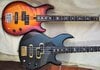
I’m curious to know if any of you have come across the passive Taiwanese Yamaha RBX models which appeared during the early to mid 1990s? They are still my basses of choice despite having played a variety of so-called upmarket/high end models of instrument. The photo below are the twins (RBX 250) and their blue sibling (RBX350) bought respectively in 1992, 1994, and 1997.
I find that their construction, sound, consistency, tone, and durability to be outstanding; I’ve rarely had to have any upkeep made on any of them beyond an occasional input Jack or pot rewriting c/- wear & tear. They also record very well; a very even tone over 22 frets regardless of flats, tapes, or round wound. I was initially told to not bother with them at the times of purchase because they were ‘beginner basses’ and that I should have more professional instruments….I found this ludicrous then and now because I’m hard pressed to think of a beginner bass beyond J.P. McCartney’s first Hofners as Gibson copies, and he seemed to play quite well with those instruments(!). Still does, come to think of it….
…..Anyway, it’s not often that I find too much info on these RBXs hence why I’m keen to see if any of your good selves play these or versions that are close. I’m also keen to hear about the other side of the coin as well should any of you not be too fussed about them.
Everything on my basses are stock; no upgrades whatsoever. They’ve become as rare as teeth on a chook in this part of the Pacific during recent years despite the occasional appearance on Reverb & eBay, et al. Cheers to you all.
DB2353CA-CF7A-4DEB-911D-152A8DAEA97A.jpeg
 
Ah, thanks for the reply. I enjoyed the clip that was sent through; is that Yamaha an active bass? It sounded as smooth as a politician's promise in support of the magic vocal melody. I know little about the TRBs but have heard lovely reviews; the BBs however I do know...I once owned a BBvi, a BBvii, and a BB300. All bonzer instruments indeed; you must be mightily happy with yours.
 
  • Like
Reactions: CaribooBass
I say play what you like. I grabbed an RBX250 (bought new) for my girlfriend when she wanted to learn to play bass.

I’ve used it plenty of times in a pinch as a backup, I have also used it many times on recordings, mostly because it just always worked, it was electronically quiet (no hum or hiss), solid electronics.

It cuts through most mixes really well. They are a bit of a sleeper, around here they go for about $100-$150. Here is mine, I installed two octave neck and of course relocated the bridge. Welcome!
AB06D825-BB91-4DBE-8B66-7523CC69B6E6.jpeg
 
Cheers ever so for that. The 24 fret neck is an interesting thought; do you have any neck dive with the new change. The asking price of where you live floors me as it’s such a pearler instrument….I’m seeing them listed when they appear at anywhere from $350 to $600 (in good condition). Hope that your girlfriend doesn’t mind sharing the bass with you!
 
  • Like
Reactions: C Stone
Haha not a problem (wife now 30 years)
She lost interest after about a month :D
I still call it ‘her bass’ but yea I took it over decades ago and actually I did ask her if she minded if I modded it, she got a kick outta it and thought it was funny.

No issue with neck dive it balances well.
It doesn’t get much play these days, I have a acquired quite a stable over time

Looks like they have gone up slightly since I last looked $199 with hardcase…
 

Attachments

  • E4992A7B-12B5-4DC0-992F-6E27CB82084D.jpeg
    E4992A7B-12B5-4DC0-992F-6E27CB82084D.jpeg
    48.6 KB · Views: 183
Last edited:
  • Like
Reactions: Riff Ranger
One day my Pastor said “ hey can you play bass on my Worship team?”

Never played one live before, did not even own one.
My good friend Rob when he found out about what I was offered let me borrow his bass for awhile.
After I had played live for about 3 months, Christmas showed up and Rob said “Merry Christmas, the bass is yours!” Very humbling moment.

This amazing gift is a RBX360 of the late 90’s.
Today at almost seven years and 4 more basses later, this simple Yamaha is my go to bass for working through tough lines.
. Sounds crazy but in its simplicity it makes working out tough passages very easy.
On a final note, a Luthier told me that if I wanted a really good fretless bass, the 360 is worth making it so.

Welcome to talk bass, thanks for this post and yes that is my Heeler, in my avatar, and you can not have him back

Take Care
Clayton
P.S Aussie dogs rule for my German Shepherd said so. Just thought I would let you know.
 
Last edited:
I'm enjoying the replies and shared experiences, everyone; ta for taking the time to write.
These Yamahas rarely seem to have any frowns sent their way; it looks as most people either enjoy them or miss having them once they've been let go. I too was wary about the headstock design when I saw them; I suppose that Yamaha was attempting to move away from an overt copy of a Fender design without being overtly pointy as some designs were during the '80s and '90s. I figure that I am the last one to see the headstock if I'm the one playing it so if it remains in tune, then all is well.
I have put Rotosound flats on the RBX 250s which sit nicely; I am thinking of keeping round wounds on the blue RBX350 for variance although I am leaning more and more towards flats overall these days. I was curious about the RBX360; are they the more advnaced version of the RBX170 models? I see these models occasionally; more so thatn the Taiwanese RBXs of the '90s. I particularly enjoyed this happy review of the RBX170:


Happy New Month to you all.
 
  • Like
Reactions: B-Mac and westrock
is that Yamaha an active bass? It sounded as smooth as a politician's promise in support of the magic vocal melody.

Yes, two band active EQ, and what a great sound.

I know little about the TRBs but have heard lovely reviews;

You should check them out. I have two six-string TRBs: A '92 TRB6P, and an '03 TRB6II, both magnificent basses. The TRB6P is about as high-quality as you could imagine in a bass guitar and sounds magnificent. The TRB6II is an ever so slightly lesser level of fit and finish (though still high quality) and also sounds superb. Both basses are very articulate, growly and punchy (I actually prefer the neck on the TRB6II). I use them on jazz gigs and they lack for nothing. Yamaha also make a more budget friendly line of TRB/RBX hybrids known as the TRBX series, and these range from entry-level to pro-gigging instruments in four and five string. They remind me of a cross between the RBX and the modern Made in Indonesia 1000 TRB series. They look really cool and sound very good. Check those out too :)

Ah, thanks for the reply. I enjoyed the clip that was sent through; is that Yamaha an active bass? It sounded as smooth as a politician's promise in support of the magic vocal melody. I know little about the TRBs but have heard lovely reviews; the BBs however I do know...I once owned a BBvi, a BBvii, and a BB300. All bonzer instruments indeed; you must be mightily happy with yours.

The BBs - especially the BB2000 - are probably the best constructed, best sounding, most playable four string basses I've ever had my hands on (though I've yet to play an alembic). I've owned/played lots of Fenders and IMO these old Yamaha BBs are superior in every way. My CS '59 P sounds as good as the BB3000 (with P pickup selected), but the level of fit 'n finish on the latter is better and it's a bit more versatile. (The P is untouchable with a pick though, the tone is stellar)

Here's some pics for you:

TRB6P (top) and TRB6II
TRB6P.jpg
TRB6 (3).jpg
BB3000 (top) and BB2000
BBs.JPG

...and the TRBX (I don't own this model... specs included for your reference)

TRBX - 500 Series - Electric Basses - Guitars & Basses - Musical Instruments - Products - Yamaha - India

P.S. I hope I haven't hijacked the threat, I just thought your questions warranted a comprehensive reply. Cheers mate. :)
 

Attachments

  • DSC04028 (2).JPG
    DSC04028 (2).JPG
    3.8 MB · Views: 120
All pearler at this end; many thanks for the variety of knowledge to everyone who has written -
I remain very much a luddite when details beyond a passive 4 string come into play (lousy pun). I have tried active basses but could not wrap my head around 5 or 6 string basses. Methinks that it is due simply to enjoying the instruments that I already have even though I am always keen to learn more. Thank-you very much for the photos as well as I can see how happy you are with those basses....some of them look to be worth more than my house.
 
Before I forget...
.....I find that the lower horn of the RBX bodies to be thoughtfully crafted because of the way it has been scalloped (correct verb?) for easier access for frets 19 to 22. It is rare that I need to play that high but the access at the highest end of the fretboard (especially for chords) makes accessing those notes very easy to achieve. The necks are very smooth and fast; I've found that the sound itself is more Precision-like while the necks are thinner like a Jazz (but not too thin). Happy Thursday to you all.
 
.....I find that the lower horn of the RBX bodies to be thoughtfully crafted because of the way it has been scalloped (correct verb?) for easier access for frets 19 to 22.
I agree it for sure is, that IS the main reasons I chose that body for 24 fret neck…Keen observation on your part!

‘Scalloped’ sounds right to me, I don’t normally play that high either but I have the option. The other reason is I chose the RBX body was the pickups ‘sweet spot’ it sounded better than a tradition P

I pulled it out tonight (thanks to your thread) and forgot how great it sounds. Ran through a bunch of tunes goodtimes
 
Ha; congrats….your better half of 30 years will be wanting her bass back if you continue serenading in such a style for all hours on end.
I agree with the pickup placement on the RBX250s in particular; I’ve always enjoyed that it seems just a smidge closer to the neck than a conventional Precision placement yet it doesn’t lose the bite of its tone when the treble is dialled up. The RBX350 is quite different; it’s slightly punchier than the RBX250 with the body pickup only but not quite as warm. I have to dial the tone noticeably down when I pan the bridge pickup into life as it growls beautifully.
Out of curiosity, are the RBX bodies made from alder? I was told when purchasing that they were basswood but I’m not convinced. Cheers.
 
The 250’s are said to be Alder bodies.
I believe the 170’s/350’s are Basswood.

Interesting. I was under the impression 30 years ago that the RBX350 was alder. I had a Yamaha catalog and drooled over the entire line of basses till I bought my 350.

These days, I have a BB5000A, which I also drooled over for years. Well, it's labeled "AF", but it appears to be factory fretted, albeit without any inlays on the fingerboard - just like the fretless. It's a fabulous bass, especially in the studio.
 
  • Like
Reactions: C Stone
Interesting. I was under the impression 30 years ago that the RBX350 was alder. I had a Yamaha catalog and drooled over the entire line of basses till I bought my 350.

These days, I have a BB5000A, which I also drooled over for years. Well, it's labeled "AF", but it appears to be factory fretted, albeit without any inlays on the fingerboard - just like the fretless. It's a fabulous bass, especially in the studio.
I have heard those are very nice basses! I do remember seeing a Yamaha catalog with the 250’s listed as alder but I have only seen spec sheets of the 170’s/350’s listed as basswood I do not know for a fact these are accurate but I assume the 20-30 year old Yamaha adds have the correct wood type stated. All 170’s/350’s I have seen for sale have been listed as basswood doesn’t mean it’s accurate…
I am not a Yamaha guy, just have one.
 
  • Like
Reactions: lowfreqgeek

Latest posts