
I'm not sure I'd call bone a "white plasticky" material. It's made of bone! They do make nuts from plastic and it's very different feeling, looking, and sounding than bone.

TalkBass has been independent since 1998. Add your voice.
Create a free account to reply to discussions, view embedded media, and browse with fewer display ads.
Join free Log in
Want zero display ads or expanded classifieds tools? Compare plans.
I couldn't give you the exact physics behind why playing off of a nut dramatically changes the sound, and it may not be THAT dramatic. As you mentioned, the timbre is different. Maybe it's the difference in material and the fact that the string is being terminated around part of it's diameter, and not just resting on a flat surface, I really don't know. Open strings do have a different flavour on different basses but it always seems to be a "live" spot.Mike Dimin said:The contact point of the string is a fret rather than the nut. It makes the witness point much more accurate, helping your bass to play in better tune. Additionally, open strings have the same timbre as the fretted note. I just dont see why changing the type of witness point dramatically changes the sound and gives more "b@lls" to the sound.
Mike

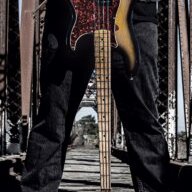
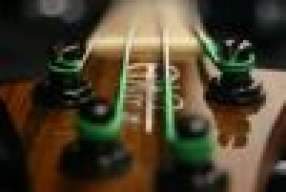
mat gregory said:hmm interesting thread , has anybody got a pic of a bass with a zero fret????


 . Listen to the clip. This is into an Aphex Punch factory and into my Mac and GarageBand. Both knobs full on, EQ flat on the bass. Nothing added in Garage Band. The slap sound is sick. This thing absolutely smokes a Sadowsky - no matter where it was made. Oh, this is the blue one by the way.
Philbiker said:crhoton, you need to post those pics in the Sonic Blue thread.
33degrees said:i always thought brands that used a zero fret were a bit crap, i think it really effects the tone. the electric bass is sometimes called a 'fender bass' and the fender classics never had a zero fret.


Fuzzbass said:Zero fret is cool with me. Not a big deal, overall... it would never make or break a purchase decision.
Philbiker said:isn't the zero fret a maintenance issue? A zero fret's going to wear faster than a nut, right?
From you're statement it's possible that "B@LLSY" could mean incomplete, inaccurate and lethargic.Suburban said:? sigh
Tone:
Distinction. That is what the zero fret gives. The tone is more accurate, has more fundamental and sustain. Simply because of the material, the exact string height and the proper location (if it's built properly, of course).
A double-acting nut (both sideways control and witness point) will add the following: missfit to the string, both sideways and at the bottom; differences between the string in string height; variation in material from other witness points; lenghtwise misplacement, which impairs intonation; et al. Not that all will be on every piece, but they will all come at one time or another, in unpredictable combinations. Even though the build process is state of the art.
Tone is more complete, more accurate, lively and sutained with a zero fret.
Seems that "B@LLSY" means wooly or something.
'Tradition', my friend, is an extremely heavy argument in guitar design - and even more in sales!lowphatbass said:if the traditional nut design left so much to be desired then I doubt so many top luthiers would bother using it.

zero fret on a fretless isn't impossible, it's like a wooden nut with no grooves. this approach will give you that mwah, that your used to hearing. Some builder do use this, like Odd Helge Listerud. He's Norwegian, I think I'm going to have him build a neck for a project fretless actually.ryco said:What about a zero fret on a fretless -- or is that just plain whack


