After reading the predominantly glowing reviews and post in 2 megathreads plus JimmyM's challenges, I knew I wanted one.
It's now partnering my Carl Martin para EQ (clean channel) as tube preamp channel, feeding directly into a poweramp.
I wanted to find out, what it does to a waveform to shape sound / to perform its magic.
The actual EQing capabilities are nothing special.... worth nting is that flat ist B=12 M=12 T=9 (o'clock)
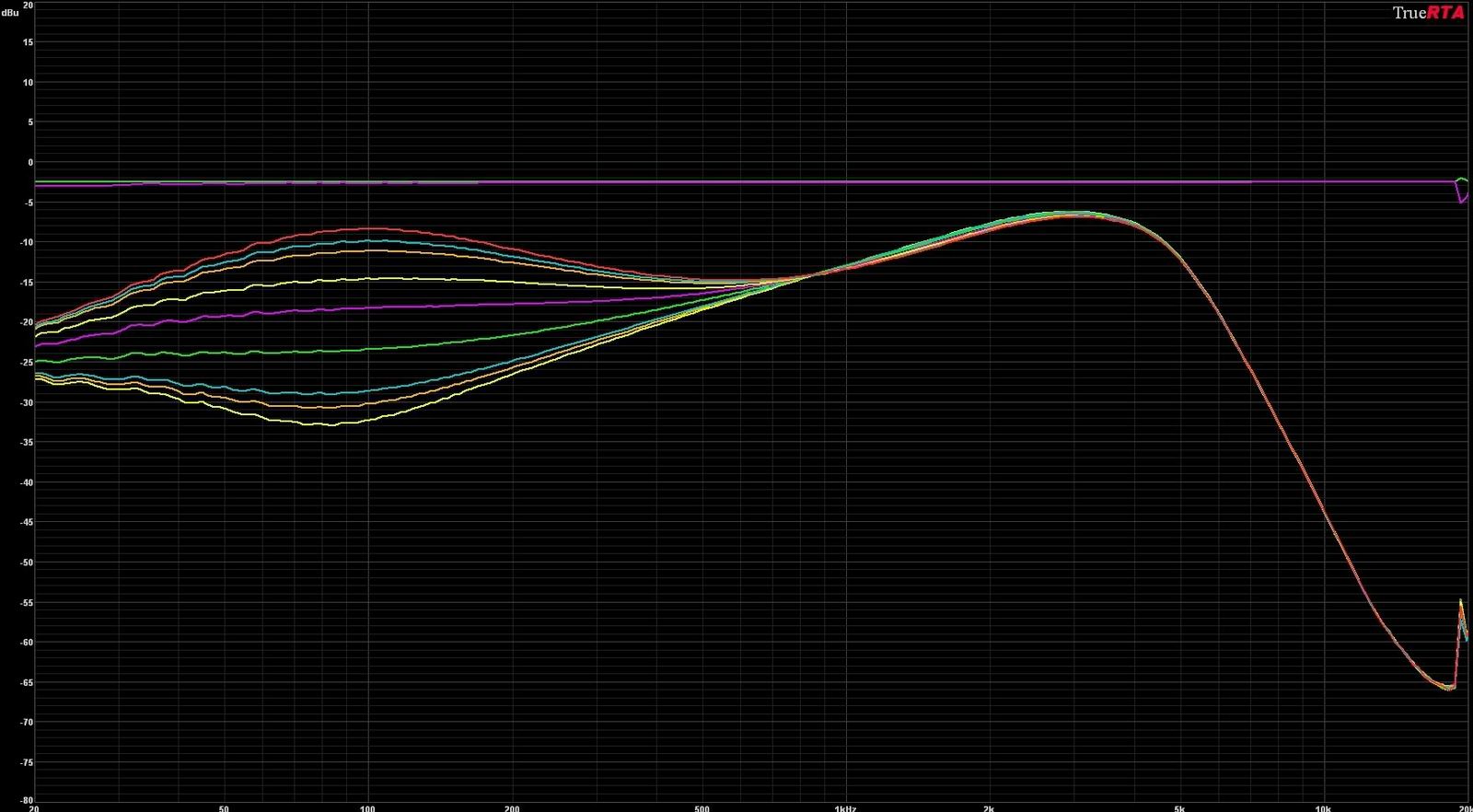
In these plots, the respective control is turned 7-9-10-11-12-13-14-15-17 o'clock, all others at 12, except for Drive set at 7 o'clock.
Bass sweep
Mid sweep
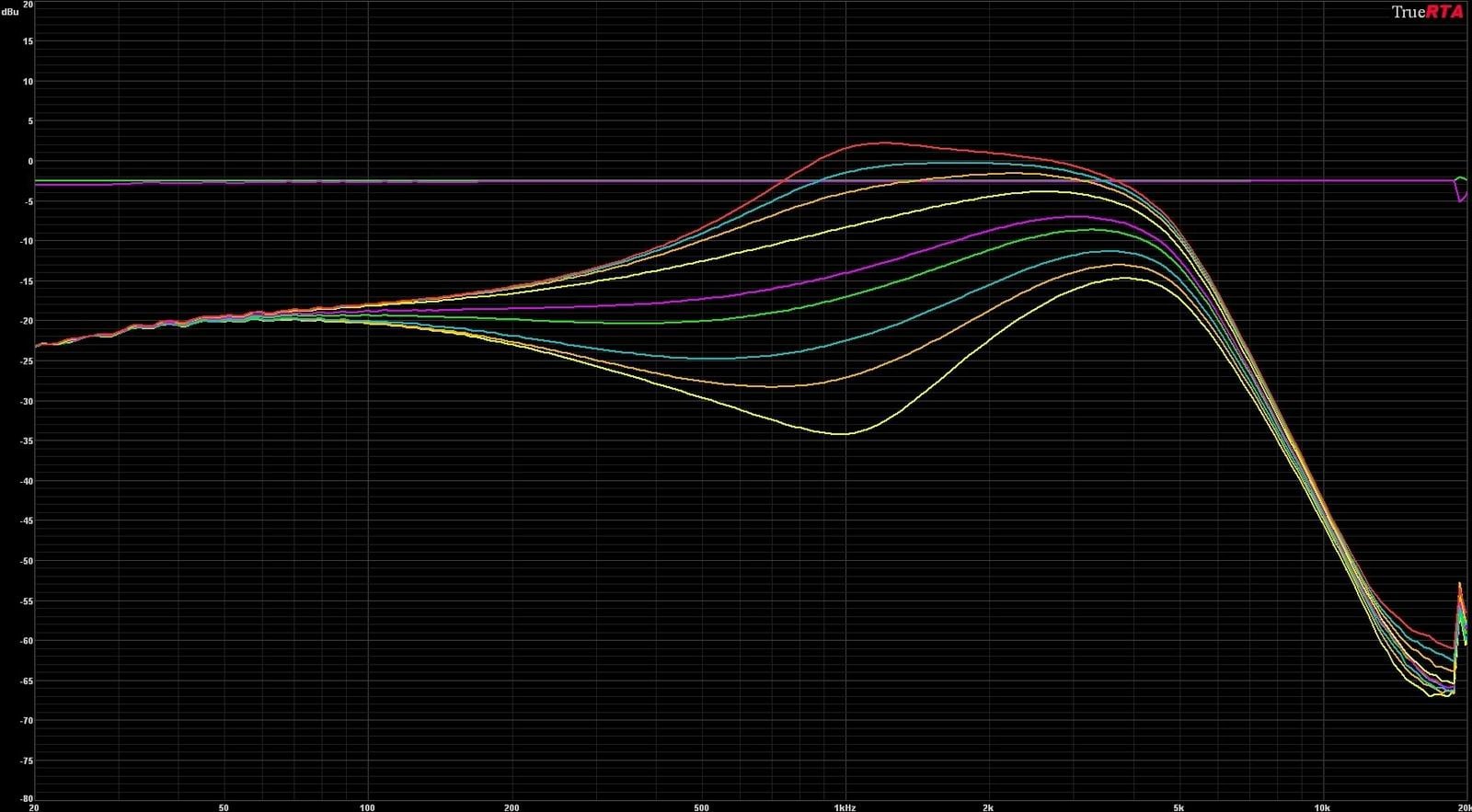
Treble sweep
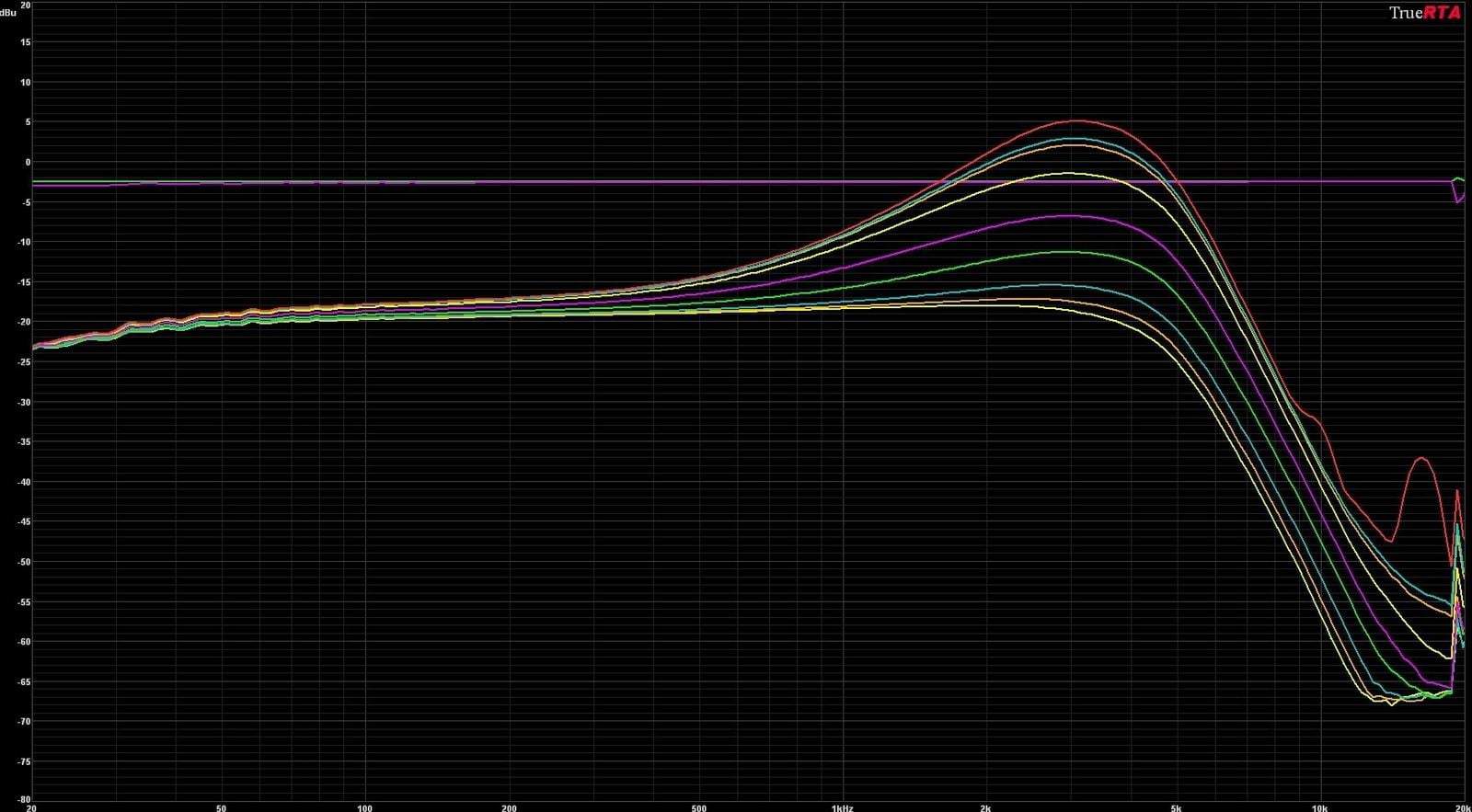
Character sweep - covers the same range as the mid control.
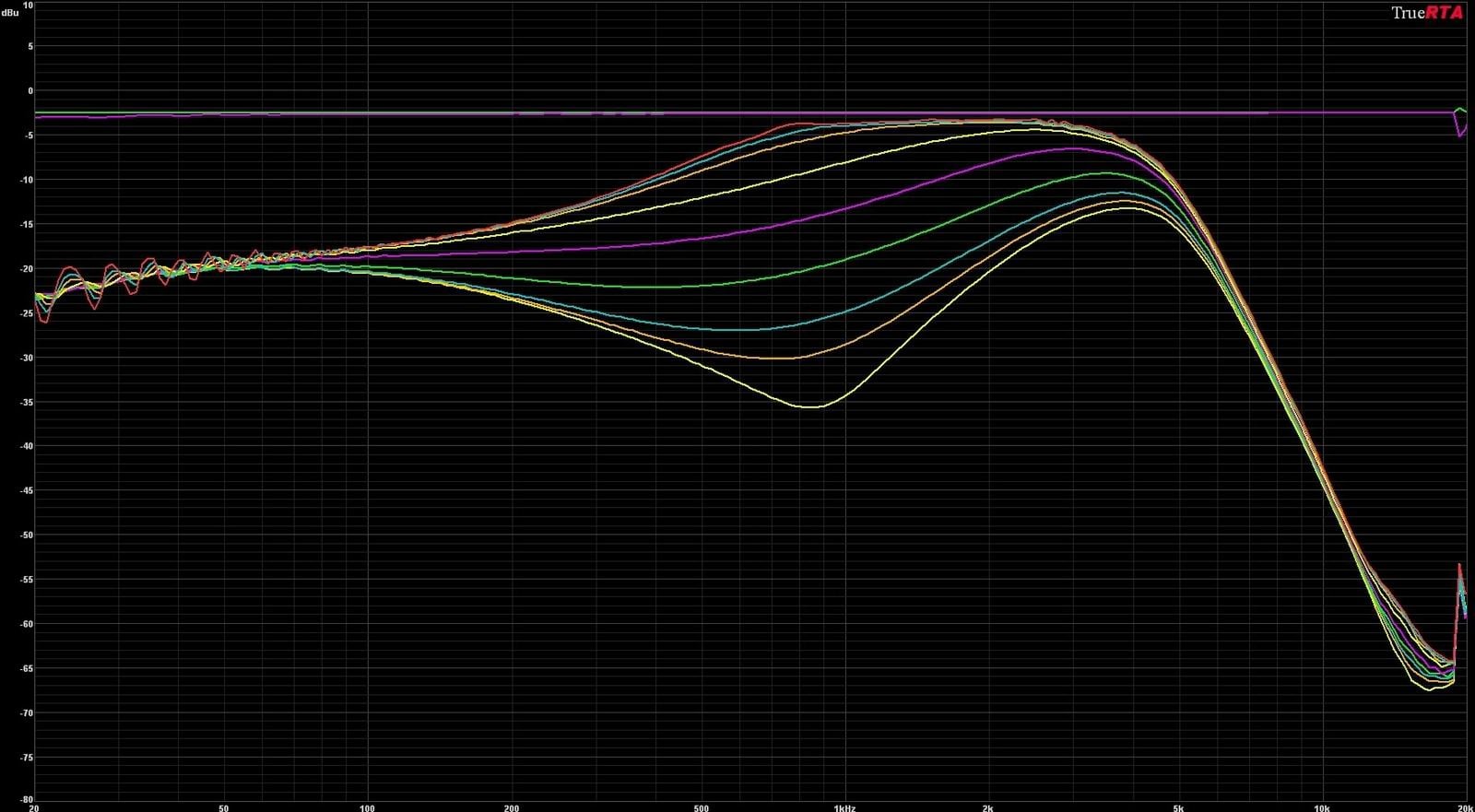
So no magic yet....
It's now partnering my Carl Martin para EQ (clean channel) as tube preamp channel, feeding directly into a poweramp.
I wanted to find out, what it does to a waveform to shape sound / to perform its magic.
The actual EQing capabilities are nothing special.... worth nting is that flat ist B=12 M=12 T=9 (o'clock)
In these plots, the respective control is turned 7-9-10-11-12-13-14-15-17 o'clock, all others at 12, except for Drive set at 7 o'clock.
Bass sweep
Mid sweep
Treble sweep
Character sweep - covers the same range as the mid control.
So no magic yet....