
MollyKay
Supporting Member
Thanks Jake for the offer. We are hooked up for now. We made a contact through the Les Paul forum and have what we need. But thanks again! 

TalkBass has been independent since 1998. Add your voice.
Create a free account to reply to discussions, view embedded media, and browse with fewer display ads.
Join free Log in
Want zero display ads or expanded classifieds tools? Compare plans.


I've also got a nice supply of vintage bronze paint powder, but it is incredibly simple to make your own. Just put a fresh belt on your stationary belt sander and grind away at a big chunk of scrapyard bronze. Gather up the pile of bronze "dust" at the bottom of the sander and mix it with some fresh lacquer. ( I'd suggest a single purpose spray gun, not one of your best fancy models used for clearcoats).
j.

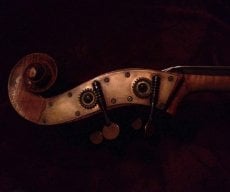
Molly, that's a regular mortise and tenon as used on European basses. Its a much better way of mounting double bass necks. With the French dovetail (Kay and American Standard) you have to leave a space in the neck block. This is one of the major reasons that Kay necks break through the heel so frequently. I have a '52 S-8 in the shop right now with a broken heel and I'm going to convert it to a mortise & tenon.
Gibson and other manufacturers were laminating mandolin and banjo necks with ebony and fibre shim stock before the first world war: its only natural that they'd extend the practice to their basses.
And while we're talking things technical, double basses have 'Gamba' corners (as in viola da gamba) or 'Violin' corners (as in, um, violin)!
Jake,
What do you mean about leaving a space in the neck block when resetting a neck on a Kay?
Thanks,
Jerry


