- Jun 30, 2010
- 49,592
- 221,982
- Disclosures
- musician/artist/owner - Gildaxe
Musing on spending more time with the '66 body - as you can observe it in the side-by-side pic of the 2 bodies, as much as they are both Fender Jazz basses they are very different. (in subtle ways) What it comes down to is that the '66 is still intimately related to the 1960 Jazz bass via tooling/machines and craftspeople. (only 6 years later) Over the years (51 to be exact) from '66, many things have changed at Fender. A Fender Jazz bass body today is an approximation of its 'ideal' 60's parent. Include it being made in different countries/factories, different workers/craftspeople, hand-worked to machine made, through different versions over the years, and now approximated as a "60's classic" J option. Just watching that late 50's home-movie George Fullerton shot of the Fender factory show the (amazing) hand-work of the skilled craftspeople of that time. With full automation - very little hand work is needed now even as it is incorporated. I mean, they used to cut out the bodies and slice the body bevel by hand using an industrial band-saw and sand the elbow bevel manually on a big disk sander. Everyone here at Luthiers Corner knows how personal this is - even when people imitate machines through repetition the result always has a human one-is-slightly-different-from-the-other 'signature'.
So the round-over (rout) is deeper/rounder than the '66, and gives it a softer/'puffier' look in comparison. Adding to this is the most obvious difference which is thickness of the bodies. The MIM is close to 1-3/4" and the '66 is a tad over 1.5". My '66 P is about 1-5/8". Why Fender thickened the body over time is curious - I've heard the "Road Worn" J's are 1.5" which now makes sense as they are emulating a worn '60's J. I have a 2000 MII Squier J and it's 1.5" also - so it's all across the board. More subtly, the shape is different - the '66 curves add up to what I've always been drawn to looking at pictures of vintage J's. It's an overall 'look' that is hard to pin down exactly. It has a more defined look is about the only way I can frame it. The elbow bevel transition is smoother than on current J bodies. Whether the drop-off edge was sanded smoother when it was first refinished or if it was always that way - it has a very seamless transition there. Other details vary on Fender J's as in the CNC guides like on the MIM (neck pocket and under the pg) and whether it has the solo control cavity or the routed channel (cc to N pu), or a back-access no cc-plate style.
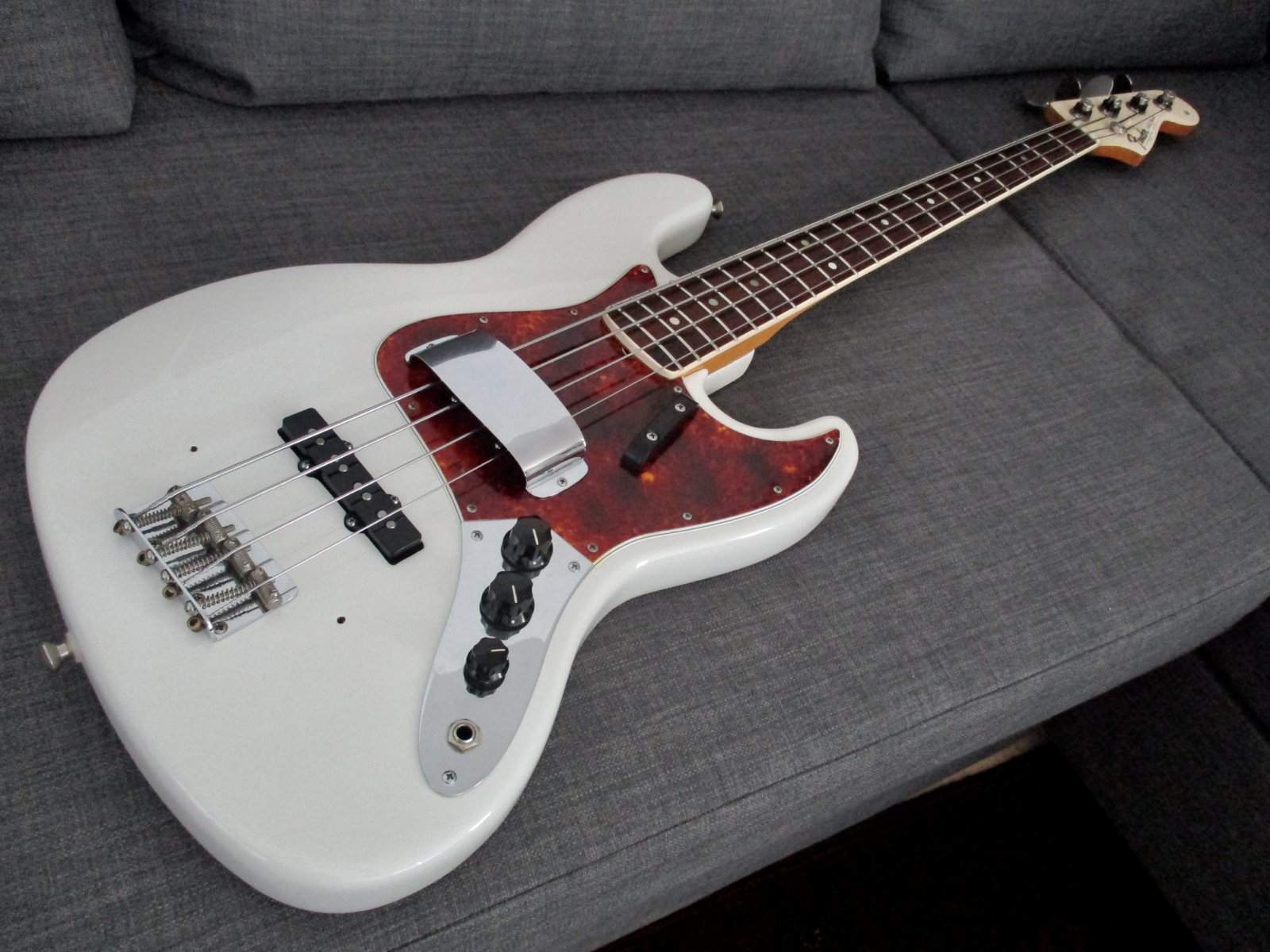
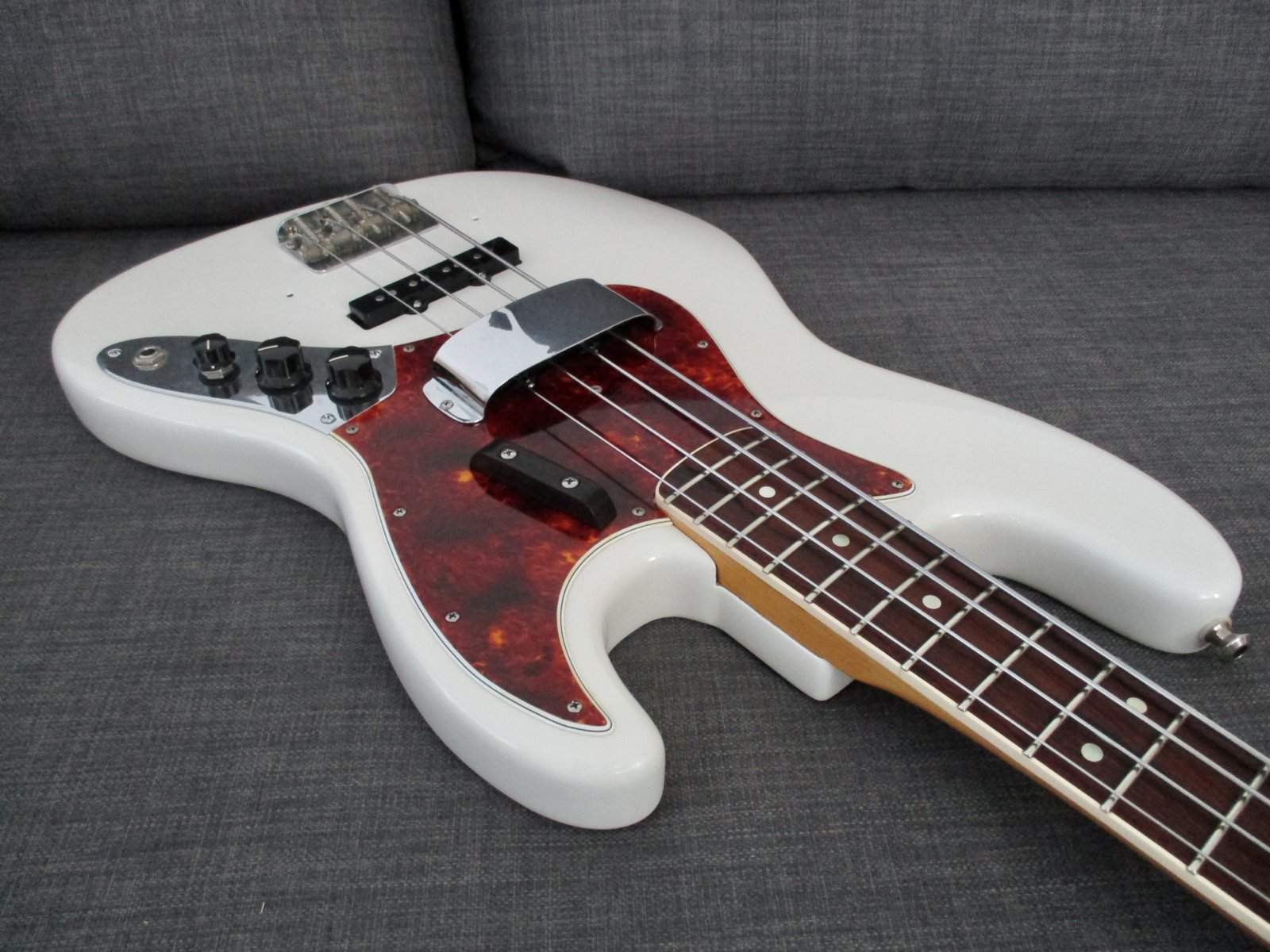
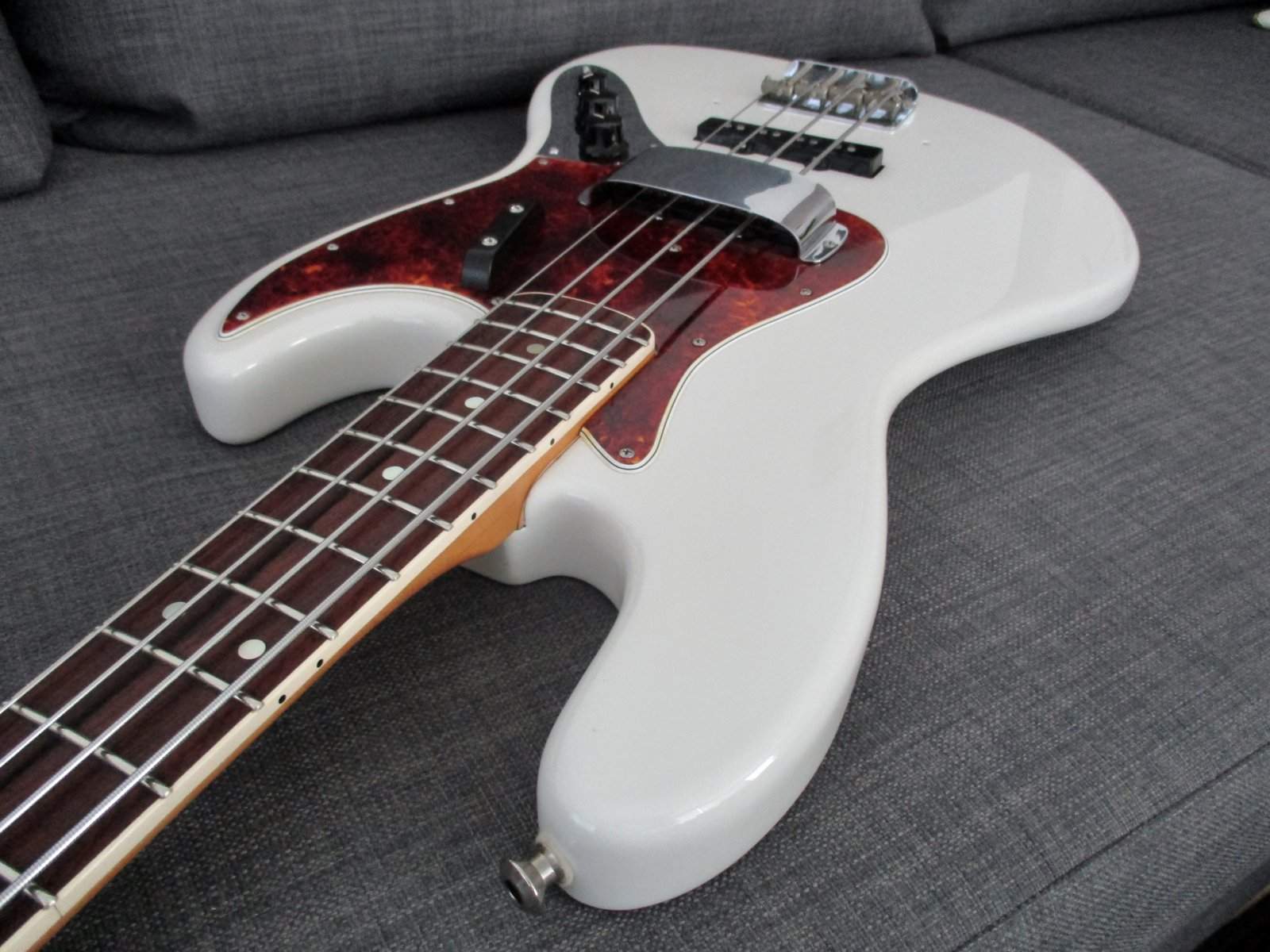
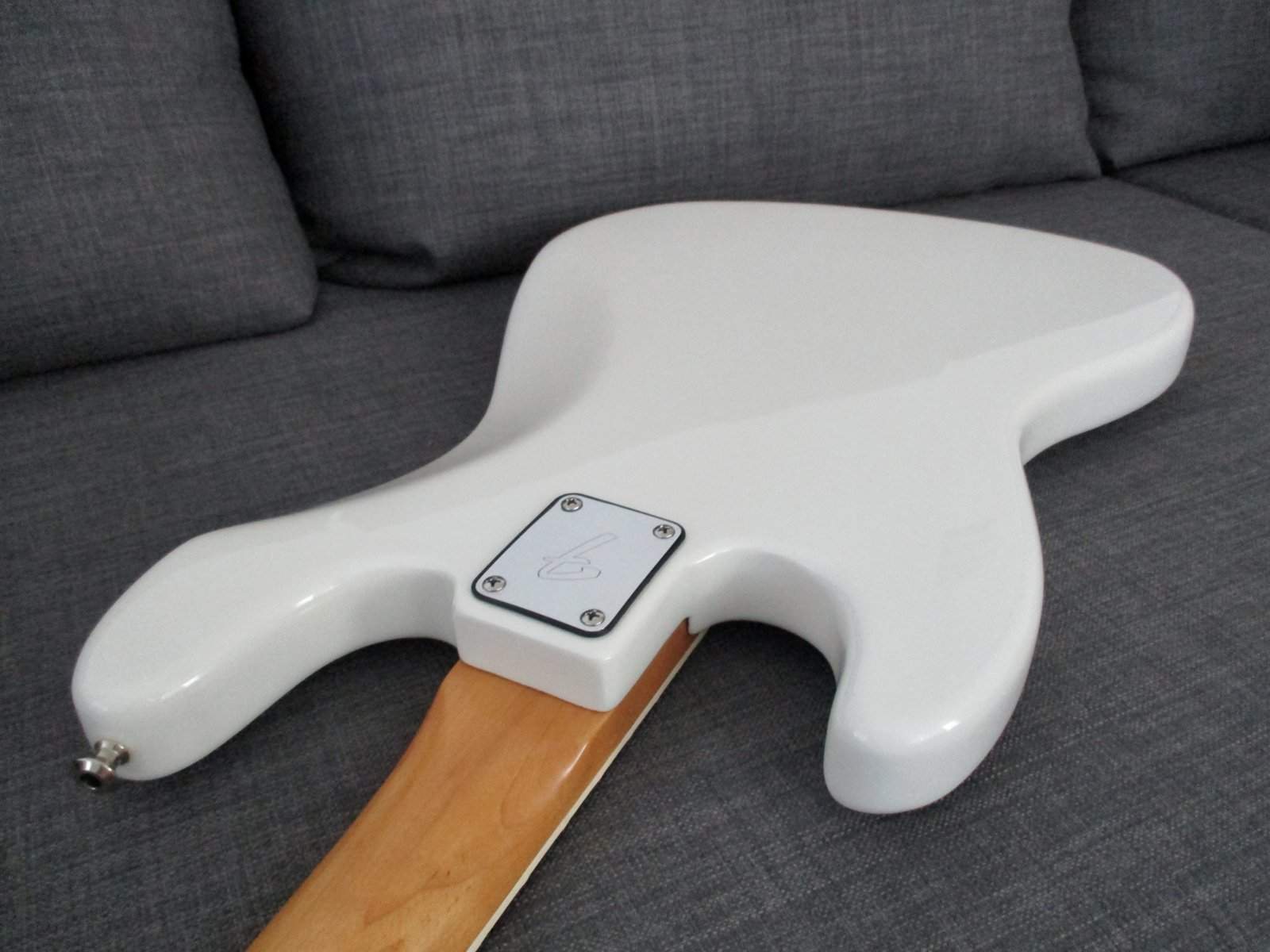
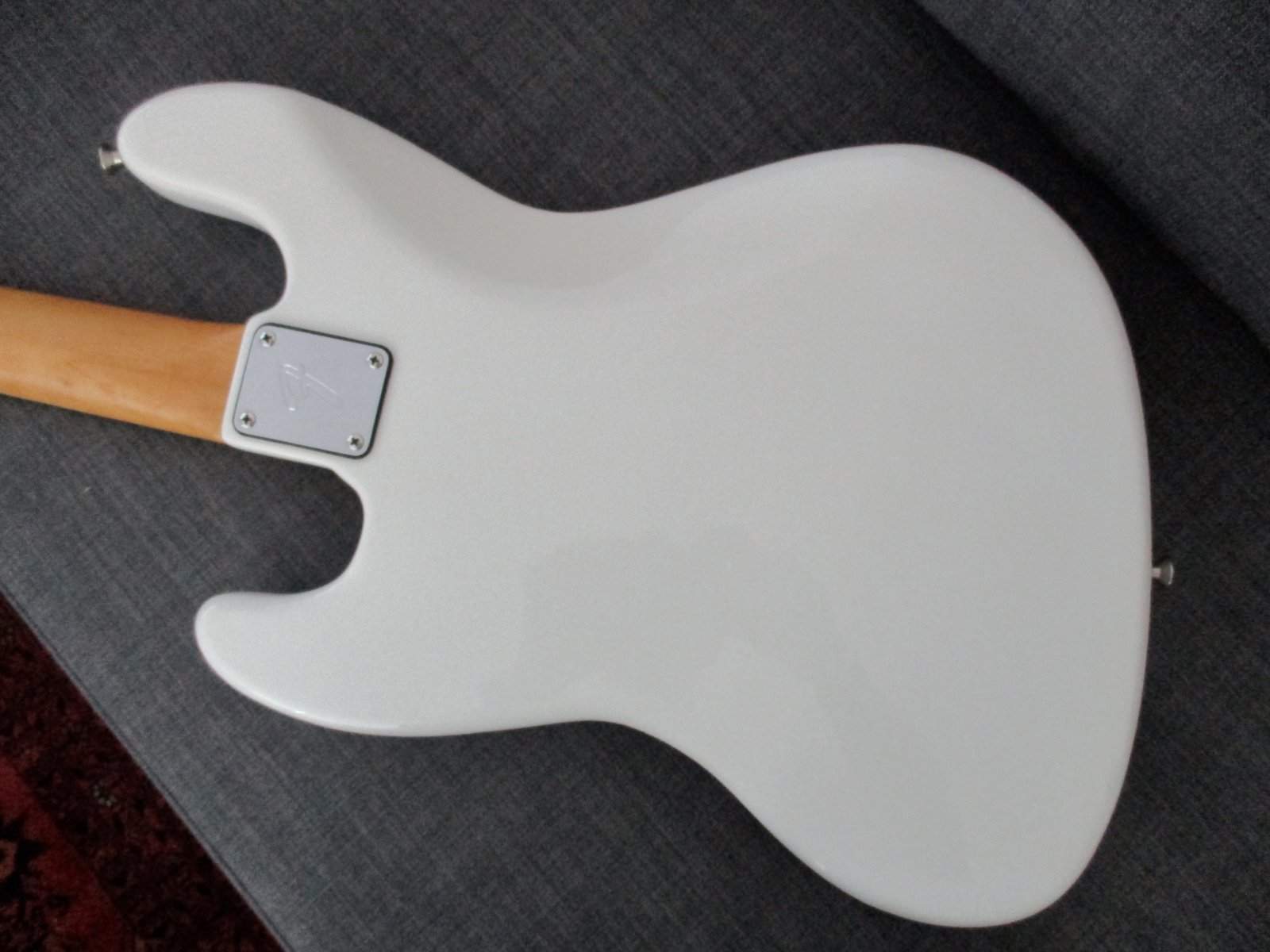
So the round-over (rout) is deeper/rounder than the '66, and gives it a softer/'puffier' look in comparison. Adding to this is the most obvious difference which is thickness of the bodies. The MIM is close to 1-3/4" and the '66 is a tad over 1.5". My '66 P is about 1-5/8". Why Fender thickened the body over time is curious - I've heard the "Road Worn" J's are 1.5" which now makes sense as they are emulating a worn '60's J. I have a 2000 MII Squier J and it's 1.5" also - so it's all across the board. More subtly, the shape is different - the '66 curves add up to what I've always been drawn to looking at pictures of vintage J's. It's an overall 'look' that is hard to pin down exactly. It has a more defined look is about the only way I can frame it. The elbow bevel transition is smoother than on current J bodies. Whether the drop-off edge was sanded smoother when it was first refinished or if it was always that way - it has a very seamless transition there. Other details vary on Fender J's as in the CNC guides like on the MIM (neck pocket and under the pg) and whether it has the solo control cavity or the routed channel (cc to N pu), or a back-access no cc-plate style.
Last edited:



 (no.., I wouldn't do that but I see greedy sellers attempting such...)
 - neck by Dan Ransom/SF, finished by Pat Wilkins/SoCal. The neck has not moved since having it built/plek'd 4 years ago - LaBella 'Deep talkin' flats are the only strings I've had on it - the same strings are still on it today and they sound great!