• TalkBass has been independent since 1998. Add your voice.
    Create a free account to reply to discussions, view embedded media, and browse with fewer display ads.
    Join freeLog in
    Want zero display ads or expanded classifieds tools? Compare plans.

A bass belt can save your shoulder!

lomo

passionate hack
Supporting Member
Apr 15, 2006
14,678
15,959
Montreal
After developing severe pain in my left shoulder from a bass strap causing impaired blood flow through my trapezius muscle and pressure on the superior portion of my rotator cuff and suprascapular nerve, I discovered this product on TB that saved my bass playing. I had gotten to the point where wearing even a light (8 lb) bass on strap for more than 15 minutes caused severe, localized burning pain, and had spent a small fortune in the lightest instruments I could find, but this belt solved all my issues in 1 fell swoop. It is unfortunately no longer sold, but can be made at home or commissioned; it's well worth the trouble IMHE.
Basically, it's a weight lifter's belt with a leather tongue hanging off the front, to which a Dunlop straplock is attached. Then a recessed Dunlop straplock receiver is inserted into the lower body edge of the bass. The bass clips into the belt, which transfers about 90% or more of the bass' weight to the hips. A traditional strap is worn to keep the bass in optimal position but there is almost no weight on the shoulder. I can now wear a 10lb bass all night, with 0 pain. My fingers give out before my shoulder or back. In addition, because I choose the exact point of insertion into the bass, I can meticulously select exactly at what angle I want the bass to hang; I can correct neck dive on ANY bass, if needed.

Below are pics of the belt open, closed on my waist, and with bass attached (excuse the crappy pics, but they do the job). This post is intended as a service to those looking for a solution to this common problem. For those who will inevitably feel the urge to post statements implying that shoulder pain from wearing a bass is related to fitness, strength or muscle bulk, kindly refrain from doing so. I have been diagnosing and treating shoulder pain for over 20 years as a radiologist, and in the overwhelming majority of cases of "guitar strap syndrome" (my term), lifting weights neither addresses the problem nor alleviates the symptoms, which are almost always due to rotator cuff tendinosis due to recurrent pressure on the muscle, causing ischemia an impaired venous drainage. Once this happens, the tissues become even more susceptible to pressure and a vicious cycle often occurs.

Playing without pain is the only way to play.
 

Attachments

  • photo 5.JPG
    photo 5.JPG
    141 KB · Views: 1,001
  • photo 4.JPG
    photo 4.JPG
    187.5 KB · Views: 909
  • photo 3.JPG
    photo 3.JPG
    71.9 KB · Views: 876
  • photo 2.JPG
    photo 2.JPG
    106.3 KB · Views: 909
  • photo 1.JPG
    photo 1.JPG
    148.2 KB · Views: 1,011
Playing without pain is the only way to play.
You won't get any argument from me there!

Most players - rock'n'rollers, especially - don't pay enough attention to the physical aspects of playing bass or, in fact, any instrument. I'm no exception there. It's good you found something that helps keep your back and shoulders happy.
 
The Slinger strap is meant to attach to the butt end of the instrument and the end of the lower horn. I didn't like the lower horn end position of the bass, so I installed the flush mount straplock socket exactly where lomo put his for the belt attachment.

Although the Slinger sits the bass slightly differently than I used to have it with a conventional strap, it was easy to get used to and I still have lots of positioning movement available. It took about half a gig to first get used to it. After that, it was a bit strange for the first minute I had it on. That went away too.

I have several instruments set up to use the strap. I have one bass I'm not quite ready to drill new holes in, but I don't gig with that one.
 
Too low for me.

Tom Araya from Slayer did a similar thing except the strap button was on the back of the bass, it wouldn't work for me though, it's too high & I move the bass around a lot when I play.


The length of the leather tongue that holds the strap button can be made to taste, so you can choose a position at your belt buckle level or below for the lower edge of your bass. Mine is adjusted with the strings near belly button level. There's no limit to how low you can hang it, but if you play it higher, around the nipples, or if you wanna sling it around on stage, the belt will not work. Keep in mind you can raise and lower your neck/headstock all day with this belt, but you cannot move the body of the bass freely from side to side.
 
Thanks for the info.
I have an atrophied Ulner nerve that's very painful.
Still searching for the right strap.
Lomo, I saw a version of yours years ago that was custom made leather
and the guy was using a Hofner Beatle bass.
Anyone tried the Duo strap that Damian Erskine is endorsing?
 
Anyone tried the Duo strap that Damian Erskine is endorsing?

I tried the duo....didn't work for me. It still puts all the bass weight on the shoulders, but distributes it across both sides....an improvement but not a complete solution for me. TBer hover sent me a cool pm suggesting that a simple leather loop (with a straplock attached to it) that slides over a regular might work equally well. That'd certainly be a lot simpler to make. However regular belts tend to be narrower and hang a tad lower, which might make it less comfy, depending on taste.
 
For those who will inevitably feel the urge to post statements implying that shoulder pain from wearing a bass is related to fitness, strength or muscle bulk, kindly refrain from doing so.
I've seen those posts before. There's a name for those people...it begins with a "douche" and ends with a "bag."
 
After developing severe pain in my left shoulder from a bass strap causing impaired blood flow through my trapezius muscle and pressure on the superior portion of my rotator cuff and suprascapular nerve, I discovered this product on TB that saved my bass playing. I had gotten to the point where wearing even a light (8 lb) bass on strap for more than 15 minutes caused severe, localized burning pain, and had spent a small fortune in the lightest instruments I could find, but this belt solved all my issues in 1 fell swoop. It is unfortunately no longer sold, but can be made at home or commissioned; it's well worth the trouble IMHE.
Basically, it's a weight lifter's belt with a leather tongue hanging off the front, to which a Dunlop straplock is attached. Then a recessed Dunlop straplock receiver is inserted into the lower body edge of the bass. The bass clips into the belt, which transfers about 90% or more of the bass' weight to the hips. A traditional strap is worn to keep the bass in optimal position but there is almost no weight on the shoulder. I can now wear a 10lb bass all night, with 0 pain. My fingers give out before my shoulder or back. In addition, because I choose the exact point of insertion into the bass, I can meticulously select exactly at what angle I want the bass to hang; I can correct neck dive on ANY bass, if needed.

Below are pics of the belt open, closed on my waist, and with bass attached (excuse the crappy pics, but they do the job). This post is intended as a service to those looking for a solution to this common problem. For those who will inevitably feel the urge to post statements implying that shoulder pain from wearing a bass is related to fitness, strength or muscle bulk, kindly refrain from doing so. I have been diagnosing and treating shoulder pain for over 20 years as a radiologist, and in the overwhelming majority of cases of "guitar strap syndrome" (my term), lifting weights neither addresses the problem nor alleviates the symptoms, which are almost always due to rotator cuff tendinosis due to recurrent pressure on the muscle, causing ischemia an impaired venous drainage. Once this happens, the tissues become even more susceptible to pressure and a vicious cycle often occurs.

Playing without pain is the only way to play.
What brilliant idea!:thumbsup: Thank you! I've a permanent left shoulder injury from work 4 years ago. It has me playing sitting down 98% of the time! though I'd rather be standing as I like to move around when I play. One part of my injury has caused a half dollar size knot at the top back of my left trap where my shoulder strap lays across, right on that muscle knot. VERY painful! So something like this will be great for me. Thank you!
After much shoulder pain, I tried a Slinger Waist Strap. I used a Fender waist strap after an injury in high school in the 60's and looked for a modern version of that long discontinued Fender strap. The Slinger turned out to be my solution. I've been using it for over a year and a half and am very pleased.
I've not heard of the Sling waist strap but I will be checking it out. Thank you!
I did this a couple of years ago too, though I cut off the leather tongue and mounted the strap lock in the belt itself to get the bass to sit at the right height for me. There are a couple of pictures in this post:

http://www.talkbass.com/threads/which-bass-for-med-probs.1066041/#post-15707288
This would serve me even better than the first strap as I like wearing my bass at just higher than waist level. Thank you very much! :thumbsup::bassist::hyper:
 
I have chronic pain as well from a degenerative bone disease, I don't play bass or guitar much at all but I still love it. I am more into making pedals and amps as I find that is very calming for me.
When I did a 7 week pain management course at a hospital I found out the pain is all in your head, it is not very physical at all but mainly made up in your head.
I know most people will say bull fertilizer at that but stop and think about it, if you are having a pleasing roll in the hay with your partner and end up with bad scratches down your back you hardly notice, if you were on a ghost tour in a haunted house and those same scratches appeared on your back they would hurt a heck of a lot.
Kids feel pain after they see the blood, or the vaccination needle etc. Once you see the problem the pain often gets worse.
There are many many similar things if you stop and really think about it.
In the lower back of the head / top of the spine there is an area that "collects" all the "pain signals" that comes from your body, when this area starts to get full it tells your brain that something is wrong and needs attention and the brain will send out a pain signal to make you aware that there are problems that need urgent attention.
The problem is that this area will collect many different sort of signals and mix them all together to fill the area up before it sends the message to the brain, it can be emotional as well as physical problems that makes the "pain bucket" overflow.

Make sure you are as emotionally well before playing bass.
Make sure you are not cold at all, cold toes or fingers will make the back pain arrive a lot faster.
Make sure you are not hungry or thirsty, etc etc.

It sounds really stupid to me as well but I have learnt that everything that is out of kilter, your mood, physical, mental, and everything else will affect your pain.
Give your partner a good hug and a kiss before heading out to play and anything else that can improve your mood, avoid anything that might make you stressed out, try to limit all the different signals that can fill your pain bucket and you might feel better.
Tell yourself that the kiss and hug you had before the gig was just a warming up for the main event when you get home after, positive pleasurable thought will help a bit to keep that bucket from overflowing.

There is a reason people don't feel the pain straight away when they are in a bad accident, their brain knows the motorcycle rider has to get up and get of the busy highway before he gets run over in heavy traffic, the brain allows us to get to safety before it hits you with severe pain for the broken leg / arm etc so it prioritizes mobility before sending the pain signals. Yep, pain is in your head, and the brain will put personal safety before it sends pain signals.

I still think it's all bull fertilizer myself but I also know its real, so make yourself as comfy as you can emotionally and physically before playing and you might cope better.

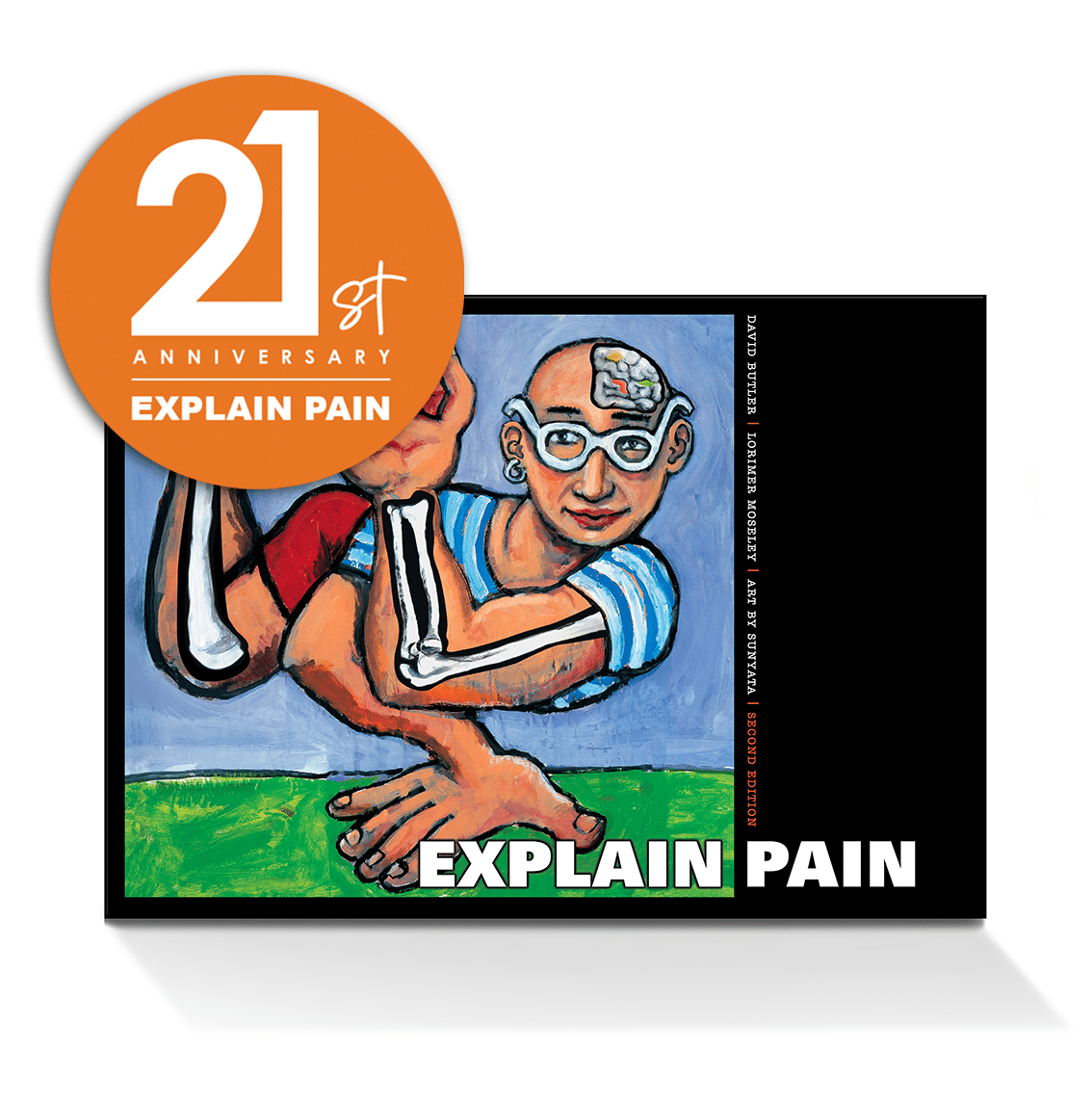
EDIT: I found this book to be a great read about pain, I even found a place I could download it for free, which is not something one should do.
I did find a copy at my local library which I have read 2 times, the first time I only absorbed about 1/4 of what it tells you.
Check you local library and see what they have.
 
Last edited:
  • Like
Reactions: lowplaces