• TalkBass has been independent since 1998. Add your voice.
    Create a free account to reply to discussions, view embedded media, and browse with fewer display ads.
    Join freeLog in
    Want zero display ads or expanded classifieds tools? Compare plans.

Double Bass Acoustic Image 310BA - Series 1

L7L

Dec 14, 2025
17
18
So I finally went for this old Series 1 AI amp on Reverb. I need a better amp for my double bass and fell in love with an AI amp someone else brought to a jam. This was cheap enough to be worth the risk.

Does anyone have one of these older models? Any info or manuals? I’ve read most of the other AI amp threads I could find here on TB.

I didn’t find anything on the AI website but Rick’s son Chris responded to my email pretty quickly. I’ll post any updates as I get them.
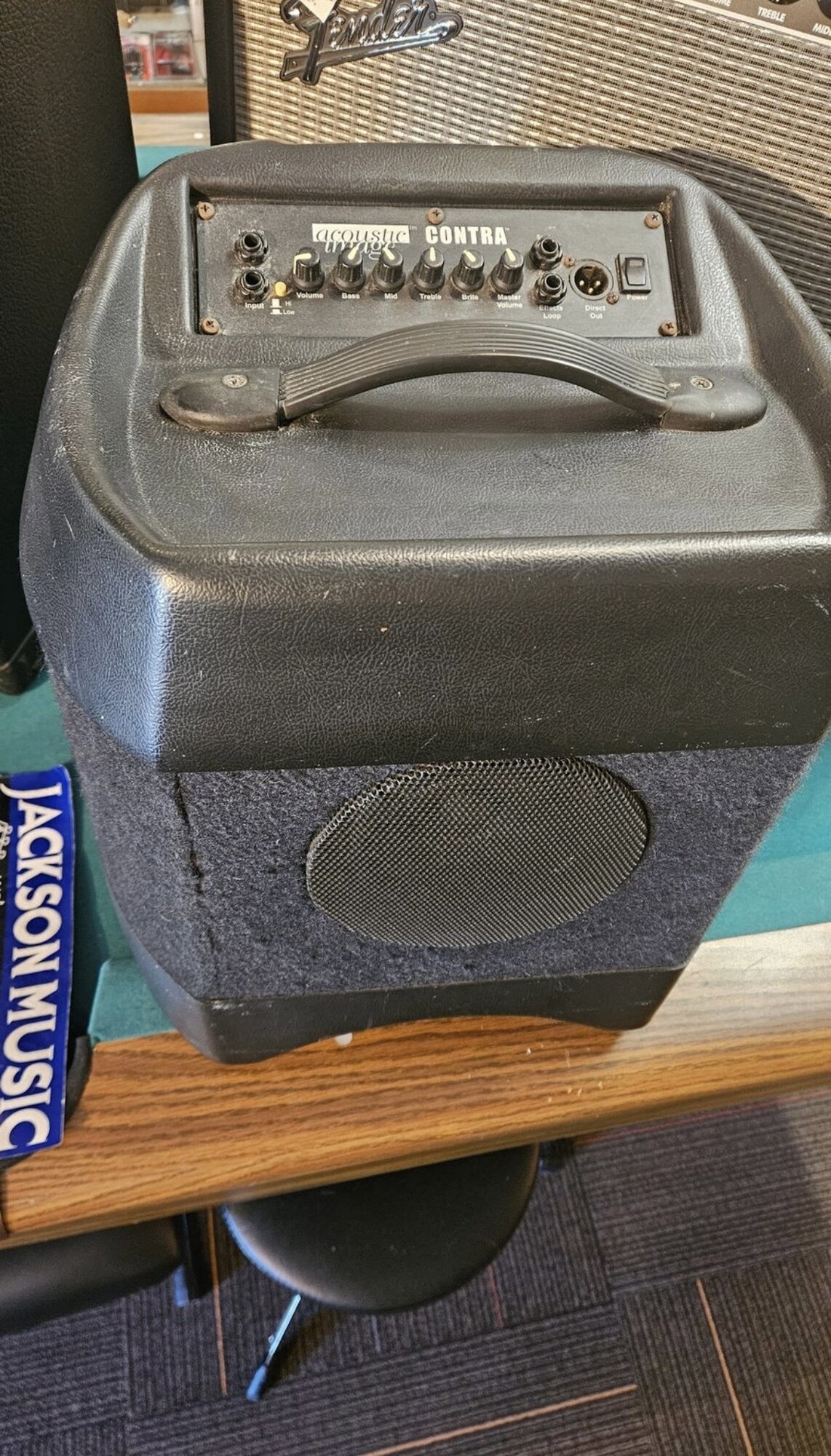
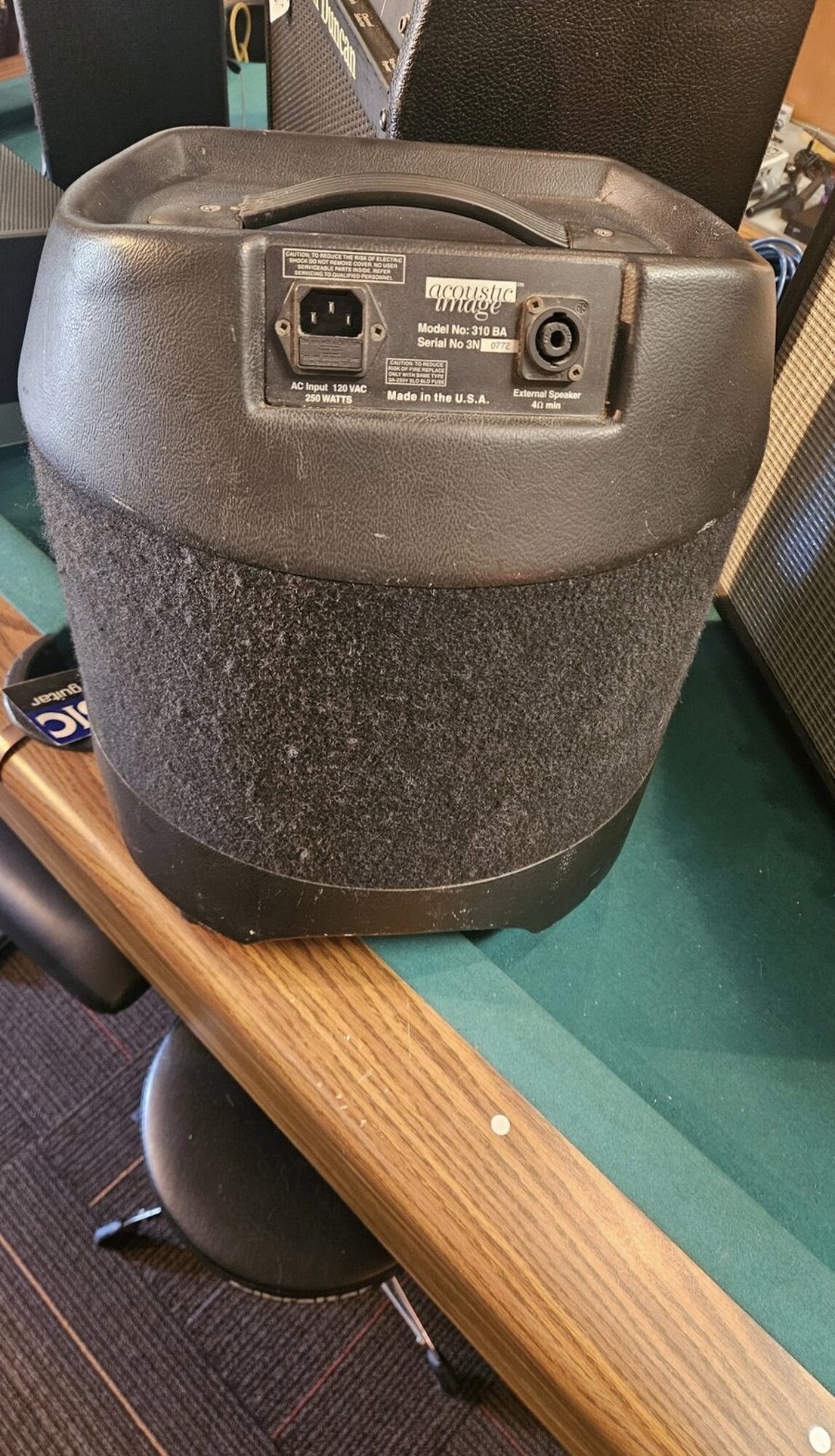
IMG_8554.jpeg
IMG_8555.jpeg
IMG_8556.jpeg
 
Everything is pretty straight forward. Most of the Contra content in this OM is relevant: https://www.acousticimg.com/assets/docs/manual-contra_coda_corus-plus.pdf

Here is what AI summarized from an old TalkBass thread:
Because Acoustic Image structured its documentation backward-compatibly, the original 100W/200W platform specs and features are officially grouped under the "+ Model Combos" literature category. The factory explicitly confirmed to owners that the layout and signal flow diagram in this documentation perfectly correspond to the early 310BA circuitry

I wouldn't say it's a hifi sounding amp, but I did like the way it sounded. IME it's good for jazz trio, but not loud enough for big band. My recollection is amps from the original production run were only 100W. I believe they were upgraded to 200W within a year. Google AI says S/N 0772 is a 100W version.

FYI the difference between 100W and 200W is 3dB...a noticeable but small change.

My organization bought the 100W version and the matching cab. In big band it would randomly go into protect mode, which meant a few seconds of silence. So it did not last long in that role. I enjoyed borrowing it immensely for jazz trio. A nice small & light grab-N-go type amp.

As you probably know, Acoustic Image is out of business and there is no support structure in place. Also, pretty sure the drivers are proprietary. So if you blow anything up, it's most likely trash.
 
Everything is pretty straight forward. Most of the Contra content in this OM is relevant: https://www.acousticimg.com/assets/docs/manual-contra_coda_corus-plus.pdf

Here is what AI summarized from an old TalkBass thread:
Because Acoustic Image structured its documentation backward-compatibly, the original 100W/200W platform specs and features are officially grouped under the "+ Model Combos" literature category. The factory explicitly confirmed to owners that the layout and signal flow diagram in this documentation perfectly correspond to the early 310BA circuitry

I wouldn't say it's a hifi sounding amp, but I did like the way it sounded. IME it's good for jazz trio, but not loud enough for big band. My recollection is amps from the original production run were only 100W. I believe they were upgraded to 200W within a year. Google AI says S/N 0772 is a 100W version.

FYI the difference between 100W and 200W is 3dB...a noticeable but small change.

My organization bought the 100W version and the matching cab. In big band it would randomly go into protect mode, which meant a few seconds of silence. So it did not last long in that role. I enjoyed borrowing it immensely for jazz trio. A nice small & light grab-N-go type amp.

As you probably know, Acoustic Image is out of business and there is no support structure in place. Also, pretty sure the drivers are proprietary. So if you blow anything up, it's most likely trash.
So helpful! Yes, I’m aware it’s probably bound for the trash if it breaks. I saw another TB thread about FUCHS amp company being willing to fix them potentially.

100W version is interesting. It does say 200W on the back.
 
So helpful! Yes, I’m aware it’s probably bound for the trash if it breaks. I saw another TB thread about FUCHS amp company being willing to fix them potentially.

100W version is interesting. It does say 200W on the back.
I think you missed a subsequent post where Fuchs won’t be repairing them anymore.
Or, was that Walter Woods? Maybe someone can chime in about that.
 
  • Like
Reactions: L7L
I've been using one of these for the past 10 years for both electric and upright, I really love how transparent it is.

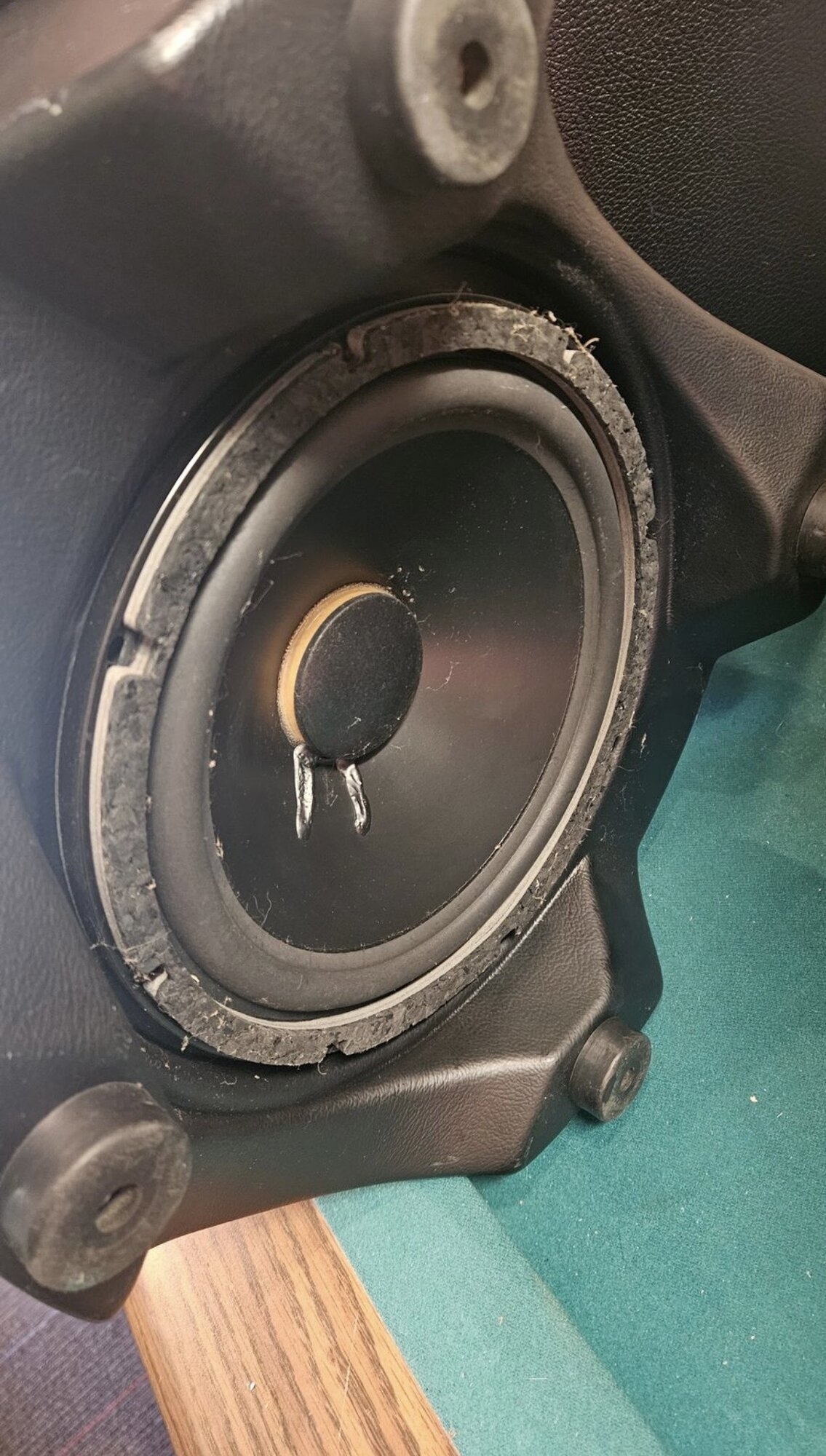
I did blow the cone a few years ago, but was able to get a replacement while AI was still in business.

I wonder about fixing the cone on the old driver and using it to build an external speaker box. Not my area of expertise, but it could be a fun project.
 
  • Like
Reactions: L7L
I think you missed a subsequent post where Fuchs won’t be repairing them anymore.
Or, was that Walter Woods? Maybe someone can chime in about that.
It’s both AI and WW that Fuchs won’t work on anymore. I’ve got two of each, so I should be good until they have to wheel me into gigs, which may not be that long considering the shape of my knees!
 
Unfortunately no one repairs them and the hardest part is the drivers are not available. I know one of these days my combo will croak or the heads will and the cabs will also be gone.

IMO the Clarus Series III Combo was the most fully featured except that the EQ was a little lacking. I like the combo of HPF and Notch filter and more effects. I use it quite a lot these days and it is holding up. When it dies I'll play the series 4+ head plus the DoubleShot cab. If I really have a bigger gig then I'll just use a regular amp and a DB specific preamp

No manuals for the Series I online, but they haven't change much with series II. Look at the New Yorker control and it is almost the same as your amp

1784058318979.png


Try emailing on ask Golihur
[email protected]
 
  • Like
Reactions: L7L and Wasnex
This was a cool thing I learned from reading through the manual:

“The two inputs are separately buffered. This enables the user to plug two instruments into the unit and play them separately or together. As long as one of the instruments has its own volume control, the relative volume of each instrument can be controlled. This feature is useful to players who have to “double” on two instruments.

For example, a bassist may be playing in a situation where both upright and electric bass are required. The player can plug the upright into the high gain input and the electric in to the low gain input. The volume control on the electric bass is used to control the relative volume of the two instruments. Now the player can play each instrument as needed without having to plug and unplug instruments.”

Additionally the settings should all be put at noon and only changed to compensate for boominess or for the room you’re playing in.