So, anyway, there are so many difference between the average passive and active bass that it's stupid to discuss the two without considering all the variables.
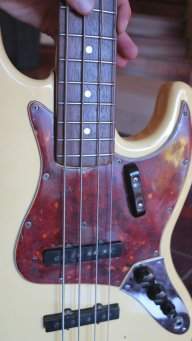
For instance, the average passive bass that people have experience with is probably a Fender or Fender-copy bolt-on with single coil or P pickups. Such basses have a bright sound that is considered "thin" by many standards but sits well in a rock mix with distorted guitars.
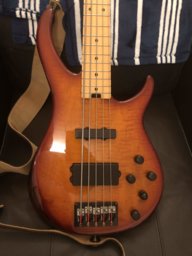
Meanwhile, I feel like when people say active bass, they're talking about a bass that's not a Fender. And to differentiate, they usually have minimal in common with Fenders. Most such basses have dual coil humbuckers and soapbars and such, and if they have split coils, they're Bartolinis or something that sounds almost nothing like a J or P pickup. The reason why these kinds of basses sound nothing like Fender isn't just because of the active circuit. When so many changes are present, suggesting that the changes have to do with active EQ is a bit premature, because even if your average Ibanez SR500 had its preamp completely bypassed, it'd sound thicker and heavier than a stock Fender J Bass because the pickups are completely different.
Even within Fender, their active models tend to have humbucking noiseless pickups instead of true single coils like their passive counterparts. So how can you truly differentiate active vs. passive?
The only way you can truly compare active vs. passive is to wire an active/passive bypass switch, which will let you know what kind of effect the active EQ has on your tone. But even that's not a truly fair comparison in most cases. I'm saying that because a passive bass will have, say, a 500k Volume and 500k Tone knob, and a lot of people won't set the tone knob at 10. Meanwhile, an active/passive bypass switch will likely go direct from 500k Volume to jack, so there usually won't be a tone knob anymore, because the switch is considered a panic switch more than an actual tonal option, a lot of the time. So this might result in a "thin" tone that you wouldn't normally like, but if you had a passive tone control, you'd have set it at 7 and that would have done everything you needed the tone to be, because as I've said before in another post, passive controls often have a weird effect where you just roll off highs a bit and that almost seems to have a weird effect of bringing out the midrange or bass or things like that, whereas active controls are a lot more pinpoint and isolated in terms of exactly what they do.
So you can only compare active/passive on a bass that has both passive and active tone controls, and that's such a small minority of active basses out there. But if you start to eliminate the confounding variables, I'm sure you can see that your average modern-day active EQ doesn't have that much of an effect on tone.