• TalkBass has been independent since 1998. Add your voice.
    Create a free account to reply to discussions, view embedded media, and browse with fewer display ads.
    Join freeLog in
    Want zero display ads or expanded classifieds tools? Compare plans.

Advice on roasted maple neck

pbass888

Up the Irons! Westham United FC--mile high irons
Supporting Member
Jul 8, 2009
2,298
2,153
Denver
Hi Everyone

I have my first self made warmoth bass, which was made during the pandemic. I have roasted maple neck with a rosewood fingerboard and was wondering how I should maintain the neck. I don’t have any finish on it from the warmoth factory and was wondering if Howards wax and feed or danish oil should be applied when I clean it. Also should I use a blue scotch brite pad for the back of the neck to get the gunk off?

Any advice for the roasted maple is appreciated!

thankyou in advance,
Pbass88

Pic of the bass below
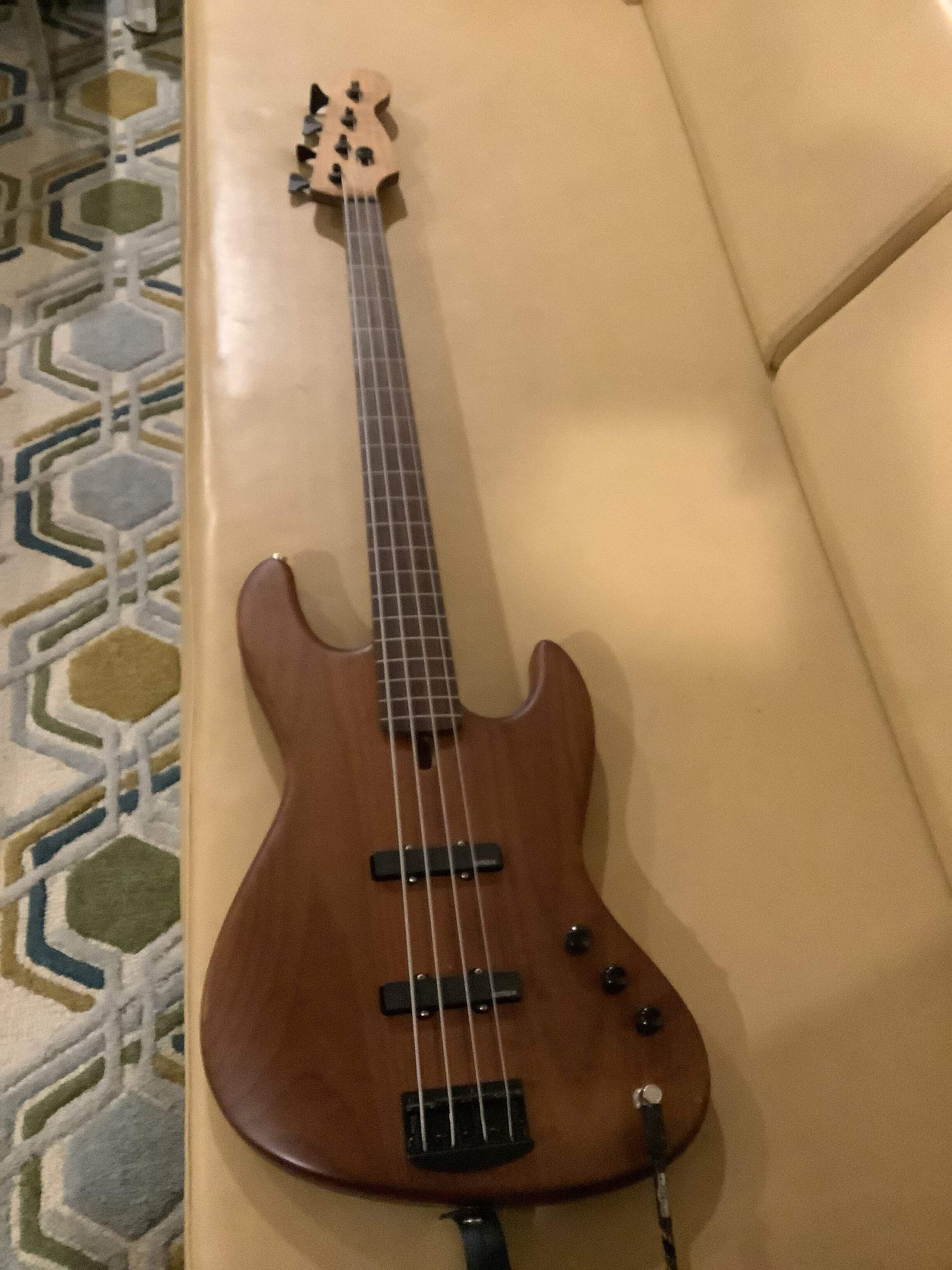
E42C869C-0381-4212-84A5-C784E7DFC851.jpeg
 
@JEDI BASS , Thankyou for your help on this! Greatly appreciated.
This is a fretless, so the neck was actually in Pretty good shape and needed only very minor work prior to “assembly”. I will go to the hardware store for the tru oil and wax. Thankyou again!
 
I do a thin Minwax spray finish - a few coats of gloss to build a hard protective finish, then a couple coats of satin on the top to make the thing non-sticky for playability. You can get away with less of a finish, but the finish I use will protect the thing for many years from stains and all that (yes, roasted wood does stain), and is just as comfy as bare wood.
 
  • Like
Reactions: pbass888
I would roll the fretboard edges, do a level, crown, polish on the frets, and work the fret ends over a lot. Warmoth makes great necks, but they are not ready to install out of the box.

I've built a couple dozen basses with Warmoth necks, and 2 of them required very minor fret leveling - even those were playable out of the box, but when I took them down to very low action, I decided a little fret work was in order. Oddly, both of those needed attention at the same fret (and were bought around the same time). I absolutely wouldn't start redoing frets unless and until you determine it's necessary, because most of the time, they're great out of the box. Yes, roll the fret edges as you'd like, but as to the other parts, save that unless needed.
 
  • Like
Reactions: JEDI BASS
I've built a couple dozen basses with Warmoth necks, and 2 of them required very minor fret leveling - even those were playable out of the box, but when I took them down to very low action, I decided a little fret work was in order. Oddly, both of those needed attention at the same fret (and were bought around the same time). I absolutely wouldn't start redoing frets unless and until you determine it's necessary, because most of the time, they're great out of the box. Yes, roll the fret edges as you'd like, but as to the other parts, save that unless needed.
I've wondered about this as I'm considering haveing a neck built for my p-bass pro V.
 
I've built a couple dozen basses with Warmoth necks, and 2 of them required very minor fret leveling - even those were playable out of the box, but when I took them down to very low action, I decided a little fret work was in order. Oddly, both of those needed attention at the same fret (and were bought around the same time). I absolutely wouldn't start redoing frets unless and until you determine it's necessary, because most of the time, they're great out of the box. Yes, roll the fret edges as you'd like, but as to the other parts, save that unless needed.
I’m a perfectionist. I hate sharp fret ends. So all mine have ends that look like polished balls. And, they can go extremely low when it comes to action.
 
  • Like
Reactions: MaxSpinrun
I've wondered about this as I'm considering haveing a neck built for my p-bass pro V.

In my experience Warmoth neck are playable out of the box but they also have some room for improvement. If you want low action and no buzzing you might need some light fret levelling + crowning. I also think Warmoths fret ends can benefit from a little bit of smoothing. They're not bad but they're not super-smooth either.

Also, be aware that any finished fretboards (like maple) will have finish on top of the frets. Warmoth apply the finish after the frets have been installed. The bass will still be playable but it won't look very nice unless you file/polish the frets. With unfinished fretboards (like rosewood) this will obviously not be an issue.

One very annoying thing about Warmoth bass necks is that they use an unusual size hex wrench for the truss rod. It would have been so much easier if they had used the same size as Fender or metric 4mm-5mm. Now I have to keep YET another size hex wrench available ONLY for Warmoth basses.

Also be aware that their "standard" 21 fret option (and also the 24 fret extension) will block access to the truss rod unless you completely remove the neck from the body. Pickguards with a cut-out won't help. Neither will loosening the neck screws and tilting the neck backwards for access. You will have to completely remove the neck every time you need to adjust the truss rod and it's a major PITA. Unless you REALLY need 21 (or 24) frets I will STRONGLY recommend the 20 fret option with Warmoth necks. Then you can at least either get a pickguard with a cut-out (I don't think Warmoth offer this option though) or loosen the screws slightly and tilt the neck when you need access to the truss rod.

Also be aware that their P/J neck profiles don't really feel like Fender necks (to me at least). Personally I think they feel more like Gibson necks. I'm not saying this is bad, just a bit different than I had expected from a company that seems to focus very strongly on Fender replacement necks/bodies.

Finally, whatever criteria they use for defining "swamp" ash are certainly not the same as mine. The "swamp" ash P-bass body I got from them was quite heavy and hard. Which isn't necessarily a bad thing. I love the tone I get from heavy/hard ash bodies but when I order swamp ash I expect to get lighter, softer ash. The one I got wasn't quite as heavy as a 70s Fender "boat anchor" but it was certainly heavier than anything I would personally regard as swamp ash.
 
In my experience Warmoth neck are playable out of the box but they also have some room for improvement. If you want low action and no buzzing you might need some light fret levelling + crowning. I also think Warmoths fret ends can benefit from a little bit of smoothing. They're not bad but they're not super-smooth either.

Also, be aware that any finished fretboards (like maple) will have finish on top of the frets. Warmoth apply the finish after the frets have been installed. The bass will still be playable but it won't look very nice unless you file/polish the frets. With unfinished fretboards (like rosewood) this will obviously not be an issue.

One very annoying thing about Warmoth bass necks is that they use an unusual size hex wrench for the truss rod. It would have been so much easier if they had used the same size as Fender or metric 4mm-5mm. Now I have to keep YET another size hex wrench available ONLY for Warmoth basses.

Also be aware that their "standard" 21 fret option (and also the 24 fret extension) will block access to the truss rod unless you completely remove the neck from the body. Pickguards with a cut-out won't help. Neither will loosening the neck screws and tilting the neck backwards for access. You will have to completely remove the neck every time you need to adjust the truss rod and it's a major PITA. Unless you REALLY need 21 (or 24) frets I will STRONGLY recommend the 20 fret option with Warmoth necks. Then you can at least either get a pickguard with a cut-out (I don't think Warmoth offer this option though) or loosen the screws slightly and tilt the neck when you need access to the truss rod.

Also be aware that their P/J neck profiles don't really feel like Fender necks (to me at least). Personally I think they feel more like Gibson necks. I'm not saying this is bad, just a bit different than I had expected from a company that seems to focus very strongly on Fender replacement necks/bodies.

Finally, whatever criteria they use for defining "swamp" ash are certainly not the same as mine. The "swamp" ash P-bass body I got from them was quite heavy and hard. Which isn't necessarily a bad thing. I love the tone I get from heavy/hard ash bodies but when I order swamp ash I expect to get lighter, softer ash. The one I got wasn't quite as heavy as a 70s Fender "boat anchor" but it was certainly heavier than anything I would personally regard as swamp ash.
Northern Ash is the heavy brother to the swamp ash. They must be sneaking in some northern pieces.
 
  • Like
Reactions: MaxSpinrun
Tru oil is great, but you can also use plain old oil based wipe on polyurethane. Poly will need fewer coats, it'll cure much faster, and it'll result in a more durable finish. But it'll keep the exact same look and feel of a tru oil finish if that's what you're after. Either one is easy to use and will get the job done.

One other thought to add to the thread. If the neck is already in use, be sure to do a very thorough cleaning job before finishing. Sweat and finger gunk will be living in the pores of the maple and it will interfere with the finish, or at least result in a really awful blotchy look. Wipe the neck down with naptha and a clean cloth until you're sure it's clean (which is hard with roasted maple, since the roast color will come up with the cloth to an extent.)
 
One very annoying thing about Warmoth bass necks is that they use an unusual size hex wrench for the truss rod.

Warmoth’s truss rods need either a 7/32 or 5/33 hex key. If you’re in a country with only metric tools available, yes that’s unusual. If you’re in the USA, those sizes come on every SAE hex key set. In my herd, the “annoying” one is my fretless (my only non - Warmoth neck), which requires a 4 mm hex key.
 
Hi Everyone

I have my first self made warmoth bass, which was made during the pandemic. I have roasted maple neck with a rosewood fingerboard and was wondering how I should maintain the neck. I don’t have any finish on it from the warmoth factory and was wondering if Howards wax and feed or danish oil should be applied when I clean it. Also should I use a blue scotch brite pad for the back of the neck to get the gunk off?

Any advice for the roasted maple is appreciated!

thankyou in advance,
Pbass88

Pic of the bass below

View attachment 4811409


For my Roasted P I use mineral oil. It's readily available at grocery stores and is relatively inexpensive.
 
  • Like
Reactions: pbass888
While all the advice about cleaning the neck with naphta before applying tru oil is good, I would actually go one step further and lightly sand the neck with fine sandpaper, for example 400 grit. That gets rid of all remaining gunk and gives you a good surface to apply tru oil to. Plus, it can get rid of any minor scratches from shipping, playing, assembly etc.
 
  • Like
Reactions: pbass888
02-pbass-neck-rear.jpeg


Getting close to 30 years since I Tru-Oiled this neck

It's never even needed a touchup.

MicroMesh after a month or so of curing will gloss it up if that's what's wanted.

That one's not roasted, but I did a Warmoth roasted one last year that should be as durable.

Roasted is more brittle than un.

Be careful with mounting screws & tuner screws, drill proper sized pilot holes...
 
Last edited:
  • Like
Reactions: pbass888
Tru oil is great, but you can also use plain old oil based wipe on polyurethane. Poly will need fewer coats, it'll cure much faster, and it'll result in a more durable finish. But it'll keep the exact same look and feel of a tru oil finish if that's what you're after. Either one is easy to use and will get the job done.

One other thought to add to the thread. If the neck is already in use, be sure to do a very thorough cleaning job before finishing. Sweat and finger gunk will be living in the pores of the maple and it will interfere with the finish, or at least result in a really awful blotchy look. Wipe the neck down with naptha and a clean cloth until you're sure it's clean (which is hard with roasted maple, since the roast color will come up with the cloth to an extent.)

Thankyou I did poly on the body with a satin finish . Surprised how easy it was and how good it came out for a first time ( did not look like an old outdoor fence).


Warmoth did a good job on the fretless neck and was pleasantly surprised.
 
  • Like
Reactions: dwizum
View attachment 4811982

Getting close to 30 years since I Tru-Oiled this neck

It's never even needed a touchup.

MicroMesh after a month or so of curing will gloss it up if that's what's wanted.

That one's not roasted, but I did a Warmoth roasted one last year that should be as durable.

Roasted is more brittle that un.

Be careful with mounting screws & tuner screws, drill proper sized pilot holes...

That is a great job and looks fantastic,and of course , well cared for!
 
  • Like
Reactions: claudel
I've built a couple dozen basses with Warmoth necks, and 2 of them required very minor fret leveling - even those were playable out of the box, but when I took them down to very low action, I decided a little fret work was in order. Oddly, both of those needed attention at the same fret (and were bought around the same time). I absolutely wouldn't start redoing frets unless and until you determine it's necessary, because most of the time, they're great out of the box. Yes, roll the fret edges as you'd like, but as to the other parts, save that unless needed.

I levelled the one I have. The main thing I had to do was take a spoke shave to it to make it thinner.
 
  • Like
Reactions: pbass888

Latest posts