
- Burst finishes of *any* kind
- Nitrocellulose
- "Relic" finishes
- Bound fretboards
- Finished fretboards (not for looks but for feel, I prefer "natural" wood)
- Pointy bodies

Enjoy the benefits of a premium membership!
Upgrade Account
-
TalkBass has been independent since 1998. Add your voice.
Create a free account to reply to discussions, view embedded media, and browse with fewer display ads.
Join free Log in
Want zero display ads or expanded classifieds tools? Compare plans.
You are using an out of date browser. It may not display this or other websites correctly.
You should upgrade or use an alternative browser.
You should upgrade or use an alternative browser.
Aesthetic Elements That Put You Off From Purchasing Gear
- Thread starter TNCreature
- Start date
More options
Who Replied?

Headstock. It can be the best bass in the world but, if I don't like the headstock, I'm not buying it.

How did 'I don't like tort PGs' become 'hate' in your mind?A surprising amount of hate for tort guards.
You like them? Fine.

basses with artist names all over it..like Sire bassses with a big ol' MARCUS MILLER on the headstock....
c'mom, reduce the font and throw it on the back of headstock....No offense to MM but sheesh!

Just when I thought Sire dodged a bullet from this thread….


GOOD POST!There's all kinds of nits to pick, but overall, I would love to see a good industrial designer who was also a musician approach electric basses.
It is a different proposition than guitars, what with the longer dimensions, and I think what has hampered basses is that they've generally been approached as 'big guitars'. In other instruments, piano guys don't design synths, and after it's all said and done, what makes a great guitar designer know much about bass guitars? Two different animals.
Two stick out to me: The classic NS2 Spector as designed by Ned Steinberger, and the TUNE Bass Maniac.
[Invalid or Expired Link Removed]
Anyone who's picked up a Spector for the first time is always struck by two things: There's virtually no hard edges or corners on the thing which imparts a very organic, natural feeling on the strap, and the curved, relieved backside furthers this feeling, even back when I was skinny.

The original TUNE Bass Maniac (surely the father of the Ibanez Soundgears; the first ones were BM clones) completely rethought how small a 34" bass could be if it was reduced the way a streetbike is made into a racebike. The overlapping string runs on the head, the tiny body, and yet it all works, is not neck heavy, and it along with the descendent Soundgears are THE answer for folks who find a full-szied bass too big but don't want a short-scale axe. Fender appropirated the same method for the brilliant, MIJ Precision Bass Lyte.
I can never understand why anyone would deliberately build basses that are just too thick, too heavy, or generally are neck-heavy. I understand wood varies, but these weights and all the other design details can be controlled, and alternative woods would help in this regard. I get tired of huge, open-gear tuners, especially while I'm having to lean on the strap to keep the neck up. There's no point in a 12-15lb instrument.
It just seems to me that a bass designed as a whole, not a woodshop project with random hardware bought strictly on a cost basis, would yield something far more friendlier to the human frame and psyche. And as often as I see forever complaints here about weight, neck heavy, fat necks, etc., it's obvious in a lot of cases, no one's really driving the bus from a design standpoint. To me, most all of them are 'parts' basses, endlessly screwed together as they have been since the 50's. Bo-ring . . . . .
Of course, this would well be a crapshoot against the endless tide of FSO's, but maybe if different and better were out there, it would sell.
that Stick looks insane! (in a good way) Fabuloso!Paint.
Pickguards.
Chrome.Unless it can't be replaced with gold then it's OK.(Example is my BTB)
View attachment 4693718

fortunately there is only one (unless it breeds.... ick)Mothman

I like maple necks/fingerboards, but I prefer a substantial amber tint. I can't get with the really pale looking ones.

This pedal sorta' makes me wanna' lose my lunch...
[Invalid or Expired Link Removed]
[Invalid or Expired Link Removed]
I would love to have someone draw what you just described! An Egg with a Cucumber and and OvalMusic Man basses, absolutely hideous to me. First you have some sort of big colored egg in the middle as a pickguard. Second a gaudily large control plate shaped like lets just say a curved “cucumber”. And last a big oval-ish bridge that looks like it came off of another bass.
To me, absolutely hideous design.


that is truly off-puttingThis pedal sorta' makes me wanna' lose my lunch...
[Invalid or Expired Link Removed]
Yes, yes, yes to all of that. I'm a Soundgear and Tune fan for that reason, and I really like the Spectors, but Ned finally muffed something by not making the upper horn reach F12. They feel unbalanced to me, but otherwise great.There's all kinds of nits to pick, but overall, I would love to see a good industrial designer who was also a musician approach electric basses.
It is a different proposition than guitars, what with the longer dimensions, and I think what has hampered basses is that they've generally been approached as 'big guitars'. In other instruments, piano guys don't design synths, and after it's all said and done, what makes a great guitar designer know much about bass guitars? Two different animals.
Two stick out to me: The classic NS2 Spector as designed by Ned Steinberger, and the TUNE Bass Maniac.
[Invalid or Expired Link Removed]
Anyone who's picked up a Spector for the first time is always struck by two things: There's virtually no hard edges or corners on the thing which imparts a very organic, natural feeling on the strap, and the curved, relieved backside furthers this feeling, even back when I was skinny.
The original TUNE Bass Maniac (surely the father of the Ibanez Soundgears; the first ones were BM clones) completely rethought how small a 34" bass could be if it was reduced the way a streetbike is made into a racebike. The overlapping string runs on the head, the tiny body, and yet it all works, is not neck heavy, and it along with the descendent Soundgears are THE answer for folks who find a full-szied bass too big but don't want a short-scale axe. Fender appropirated the same method for the brilliant, MIJ Precision Bass Lyte.
I can never understand why anyone would deliberately build basses that are just too thick, too heavy, or generally are neck-heavy. I understand wood varies, but these weights and all the other design details can be controlled, and alternative woods would help in this regard. I get tired of huge, open-gear tuners, especially while I'm having to lean on the strap to keep the neck up. There's no point in a 12-15lb instrument.
It just seems to me that a bass designed as a whole, not a woodshop project with random hardware bought strictly on a cost basis, would yield something far more friendlier to the human frame and psyche. And as often as I see forever complaints here about weight, neck heavy, fat necks, etc., it's obvious in a lot of cases, no one's really driving the bus from a design standpoint. To me, most all of them are 'parts' basses, endlessly screwed together as they have been since the 50's. Bo-ring . . . . .
Of course, this would well be a crapshoot against the endless tide of FSO's, but maybe if different and better were out there, it would sell.
As an engineer who's had to develop a lot of gear in my career, I always try to look at it from an operator's perspective. It's not always that I get my way because of other considerations, but I try. WRT to basses, most FSOs and almost all Rics are uncomfortable for the reasons mentioned above; the traditional designs are clunky and whilst good from a practical and cheap manufacturing perspective, aren't really from a player's.
Add some tea and it sounds like sandwiches at elevenses at the cricket. What ho chaps!An Egg with a Cucumber and and Oval
Last edited:

So many different things put me off from an instrument aesthetically. As far as bodies go, I find most tubby rounded traditional e-basses pretty hideous. They also tend to have awful finishes on them. As with guitars Fender is a main ofFender.
Speaking of finishes, gloss is one letter away from gross. It looks awful- you're not looking at the guitar finish, but the room around it- and it also just feels awful to touch. Bursts have huge boomer energy. Give me either a flat matte/satin coat of paint, or a natural wood finish with something that has a lot of character. Maybe a stain on that at most.
Speaking of finishes, gloss is one letter away from gross. It looks awful- you're not looking at the guitar finish, but the room around it- and it also just feels awful to touch. Bursts have huge boomer energy. Give me either a flat matte/satin coat of paint, or a natural wood finish with something that has a lot of character. Maybe a stain on that at most.

This is what started me down the modding rabbit hole. I got a nice dark blue MIM J and was annoyed by the big crooked gap so I decided I’d get a MOTS guard and hope it fit better. When it didn’t I tried reshaping the curve in the guard to better match the control plate, but quickly discovered the control plate was not oriented to properly line up with the guard. After a bit of study I realized it was goung to take a little light fitting of the two parts and repositioning the control olate to get the fit I wanted. Wound up having to take a little out of the control route to get the plate right, which also required filling and redrilling the plate mount holes. It was slight enough the original holes remained hidden after the adjustment so it all worked out. Most importantly it quieted my OCD inner voice.
- "Jazz Gap" between the control plate and pickguard on a J-style bass

i’ve wound up doing the same thing, and occasionally doing the same on guard screws that failed to run down correctly in their countersink, on every MIM J I’ve bought since then.
Much as there's plenty of misogyny on music forums, 'feminine pink' doesn't feel like the hill to die on. It just brings up a color archetype. It is pretty silly & self-limiting to not play something because you feel it'd be emasculating though.Damn… I guess that TB is cool with overt sexism?
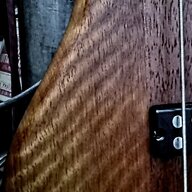
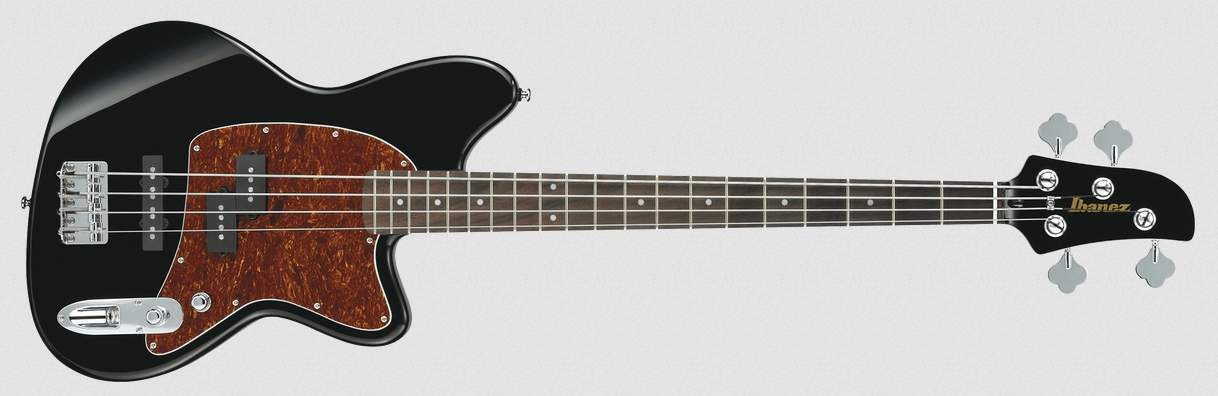
I'm an Ibanez fan,....The Talman bass.People rave about it.Great price,plays great,etc....Over all,I really like the looks of it,but ever since the thing came out all I see are those tuners.Two close together,the other two far apart....Maybe put the G closer the D?


That’s a very interesting question/topic.Which Aesthetic Elements will cause you to not purchase a bass or other piece of equipment?
You may love it, or even want it, but one thing puts you off.
Is it a design element? A brand name? Your need for a closer relationship with your father? Or are you purely practical and utilitarian in your decision making?
Different Strokes as we all know, so no harsh judgement. Sometimes I wish I could not care. I guess we do to this whenever we make choices in life (new car, house paint and design, significant other).
For me, it's usually:
- head-stock shape on a bass or guitar.
- I don't like natural wood finishes.
- I can't play pedals with stupid sexually juvenile names.
What is your example?
Head stock shape is very important… if the strings are all in sequence the head shape needs to be really rounded Fender style. Pointy stuff is a no go.
I prefer non dramatic off set cutaways, I can work around the potential neck dive.
Clover(?) tuner shapes
Only four strings please, too old to learn to count higher
No short scale
Precision pickups or sometimes the big single humbucker music man have
Dots on fretboard
Being left handed limits choices to me anyways, so I end up modding for better or worse.
Latest posts
-
-

-

-
 Adding an analog preamp/DI after a modeler (Anagram) — right tool for the job, or overkill?
- Latest: Gianni "Orlandez" Orlati
-
