
Enjoy the benefits of a premium membership!
Upgrade Account
-
TalkBass has been independent since 1998. Add your voice.
Create a free account to reply to discussions, view embedded media, and browse with fewer display ads.
Join free Log in
Want zero display ads or expanded classifieds tools? Compare plans.
You are using an out of date browser. It may not display this or other websites correctly.
You should upgrade or use an alternative browser.
You should upgrade or use an alternative browser.
Double Bass ALCOA?
- Thread starter niedermee
- Start date
More options
Who Replied?


On one hand: Sorry to see the orginal finish go, it was definitely one of the better ones I've seen.
On 'tother hand: LOVE the polished look.
On the other ... foot, the ghostly palor of the unpolished alloy is equally appealling!
Too bad it's going to Blighty, I've been looking for a '32.
On 'tother hand: LOVE the polished look.
On the other ... foot, the ghostly palor of the unpolished alloy is equally appealling!
Too bad it's going to Blighty, I've been looking for a '32.

This is exciting! That bass looks like it's in great shape! I love seeing such good pics of one of these disassembled. I didn't know about baking soda blasting, very cool. That thing is going to look amazing!
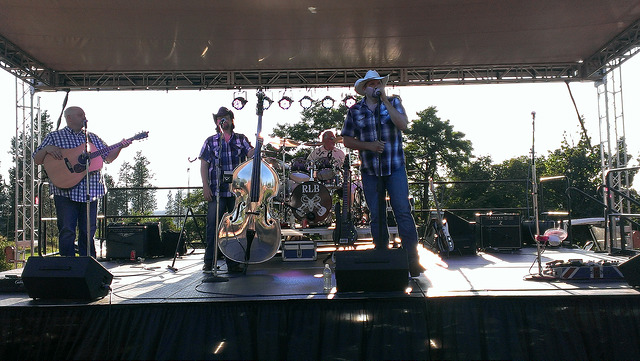
Here is Casey Abrams and me with my Alcoa
 backstagegroup2 by Invalid Link Removed, on Flickr
Here is Casey Abrams and me with my Alcoa
Here's a couple of before and after shots of mine. As you can see the weld line doesn't really interfere imo with the finished product.
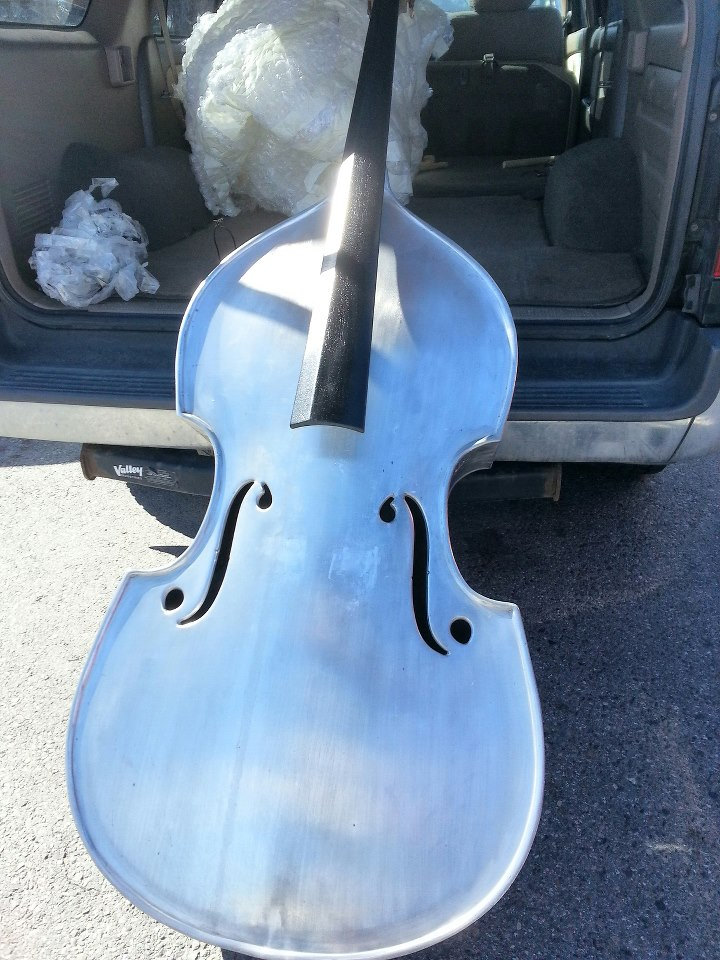 alcoa body by Invalid Link Removed, on Flickr
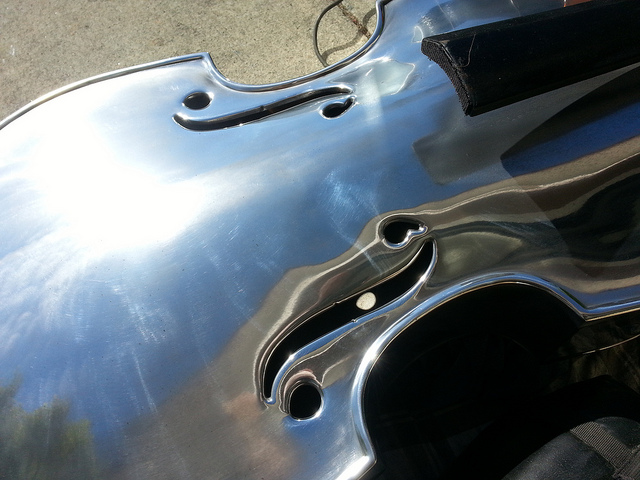 20130610_172444 by Invalid Link Removed, on Flickr
 IMAG1344 by Invalid Link Removed, on Flickr

Just picked up an old Alcoa too! It is missing everything but the body, frettboard and tuners. Now the big question. What to do with it? Buff it or not? The finish on the front looks pretty god but the back is very scratched. Can anyone tell me when serial number 393 might have been made?
Attachments



Jake deVilliers
Commercial User
- May 24, 2006
- 6,349
- 607
- Disclosures
- Owner of The Bass Spa, String Repairman at Long & McQuade Vancouver
I think its a shame to destroy that beautiful graining job myself. YMMVJust picked up an old Alcoa too! It is missing everything but the body, frettboard and tuners. Now the big question. What to do with it? Buff it or not? The finish on the front looks pretty god but the back is very scratched. Can anyone tell me when serial number 393 might have been made?

......... Can anyone tell me when serial number 393 might have been made?
1933
Go BIG- polish it, pinstripe it, chop it, lower it, do everything the bass police would have you incarcerated for with an old wooden bass and then walk on stage with confidence and OWN it while they sit at home fussing with the little sissy finish protector worried about scratches and sweating on the finish !!!!! The world already has a glut of old brown painted basses!!!!!!
I've got another custom Pfretzsch in the skunkworks right now getting pimped out and lowrider'd; 'just finished the veeeerrrrryyyyyy cool and uber modern Buck Rodgers removable neck this week!
j.
www.condino.com
www.kaybassrepair.com
Last edited:
James: Thanks for the encouragement. I need a winter project anyway. I play mostly in symphonic venues so a polished aluminum bass might be too flashy for that kind of work.
I do have a question for the experts: The fretboard looks newer than the bass. It is also about 1/16" narrower on each side than the aluminum neck. Is this the way the original basses were set up or did someone screw up a fretboard replacement sometime in the last 82 years?
Thanks for any help anyone can provide.
I do have a question for the experts: The fretboard looks newer than the bass. It is also about 1/16" narrower on each side than the aluminum neck. Is this the way the original basses were set up or did someone screw up a fretboard replacement sometime in the last 82 years?
Thanks for any help anyone can provide.
Mark, mine was the same and I'm pretty sure it was the original. Mine also had a little less sculpting on the back of the FB extension than Kay fingerboards do. The fingerboard is full thickness for about another 3 or 4 inches on the Alcoa Whereas the Kay's have their sculpting begin just an inch or two from where it attaches to the neck, but generally the same shape of sculpting is the same.James: Thanks for the encouragement. I need a winter project anyway. I play mostly in symphonic venues so a polished aluminum bass might be too flashy for that kind of work.
I do have a question for the experts: The fretboard looks newer than the bass. It is also about 1/16" narrower on each side than the aluminum neck. Is this the way the original basses were set up or did someone screw up a fretboard replacement sometime in the last 82 years?
Thanks for any help anyone can provide.
Last edited:



Well That's pretty interesting that these are seeing some renewed interest and activity.
I have a couple of them. And I as well as James Condino, did some research on these and learned some interesting information.
A lot of what I learned, I learned from James Condino. And I learned some additional info as well.
James mentioned Dr Joseph Maddy and Interlochen.
Dr Maddy Founded 'The National Music Camp at Interlochen MI' in the late 1920s. As part of a national trend, with radio being new, music schools were broadcasting symphonic music classes over the airwaves, thereby reaching a broader audience than just the students who could afford to attend the schools.
Dr Maddy started the National Music Camp at Interlochen to provide a Summer Camp experience coupled with symphony/orchestral music instruction.
Re Alcoa Aluminum Double Bass Neck / Fingerboard Failure, Design Flaw | TalkBass.com
With the camp located in Beautiful Northwest Lower Michigan, however, the wooden stringed instruments that were stored at the camp over the winter suffered. This was part of the inspiration for the design of the aluminum stringed instruments.
Dr Maddy was friends with Carl Greenleaf who owned Conn Instrument Co. Greenleaf helped Maddy start the camp and provided funding and business resources. His business acumen was the implementing force behind Maddy's idea for the aluminum instruments. Greenleaf obtained the patent and procured production via Alcoa. The instruments were also marketed by CG Conn, but they never really took off. So the production run was short and small in the early 1930s, as noted by James Condino.
C.G. Conn - Wikipedia, the free encyclopedia
As the paragraphs re Carl Greenleaf indicate, he had many subsidiaries, and some experimental projects. The aluminum foray being one. His focus remained on brass instruments, and the other ventures were dropped.
The aluminum instruments were used at the camp for many years, at least into the 70s. Dr Maddy's son Richard was a luthier and worked on the instruments to keep them going, as well as developing a line of traditional violins and bows. An aquaintance worked for him at his shop in the 90s.
My contact with the aluminum instruments began when I found an example at a fundraising yard sale at a small church here in Traverse City. Once I learned of the Interlochen connection, I contacted the institution for information re repairs. I learned of a few instruments still at the institution and was able to make arrangement to purchase a couple of the remaining ones left in storage. The first picks were allowed to staff that wanted them and I was able to purchase what was left. One of the staff at the now 'Interlochen Arts Academy', is a noted bass professor, and he got one to use as 'yard art'...
The ones I got from the school were well used and somewhat abused, except for one, which I was able to get into good working condition and sell.
The one I found at the church sale, is also in fairly good cond, and I have designs on having it polished like the others that have been shown here. It is #71 in ink in the body, and #24 stamped in the pegbox. James Condino used to have #72.
I have #112 and #117. And a violin. They all need work. One of the pictures on James' Kay Bass Repair site is of the instruments I have.
I also have some thoughts on the design of the instruments, which I started a thread about a couple years ago.
Re Alcoa Aluminum Double Bass Neck / Fingerboard Failure, Design Flaw | TalkBass.com
Through my research, I've found a couple of the ads that CG Conn published in magazines when marketing the instruments. They are politically incorrect in todays environment, to say the least.
The one bass that I got up and running, I found to be a decent player. However that from one who is not an upright player.
I play bass guitar, and some say that is open to interpretation as well.
I was on an aluminum kick for a while, and also found an aluminum bowled 'The Merrill' mandolin from the 1890s.
There was a guy in Chicago who would buy these Alcoas and have them polished up and sell them at high end artsy fartsy antique auctions. One of his basses and violins are pictured on James' website, from their listing photos in the Wright Auction House.
There is more, but I can't think of it all right now. Gray hair and all...
I have a couple of them. And I as well as James Condino, did some research on these and learned some interesting information.
A lot of what I learned, I learned from James Condino. And I learned some additional info as well.
James mentioned Dr Joseph Maddy and Interlochen.
Dr Maddy Founded 'The National Music Camp at Interlochen MI' in the late 1920s. As part of a national trend, with radio being new, music schools were broadcasting symphonic music classes over the airwaves, thereby reaching a broader audience than just the students who could afford to attend the schools.
Dr Maddy started the National Music Camp at Interlochen to provide a Summer Camp experience coupled with symphony/orchestral music instruction.
Re Alcoa Aluminum Double Bass Neck / Fingerboard Failure, Design Flaw | TalkBass.com
With the camp located in Beautiful Northwest Lower Michigan, however, the wooden stringed instruments that were stored at the camp over the winter suffered. This was part of the inspiration for the design of the aluminum stringed instruments.
Dr Maddy was friends with Carl Greenleaf who owned Conn Instrument Co. Greenleaf helped Maddy start the camp and provided funding and business resources. His business acumen was the implementing force behind Maddy's idea for the aluminum instruments. Greenleaf obtained the patent and procured production via Alcoa. The instruments were also marketed by CG Conn, but they never really took off. So the production run was short and small in the early 1930s, as noted by James Condino.
C.G. Conn - Wikipedia, the free encyclopedia
As the paragraphs re Carl Greenleaf indicate, he had many subsidiaries, and some experimental projects. The aluminum foray being one. His focus remained on brass instruments, and the other ventures were dropped.
The aluminum instruments were used at the camp for many years, at least into the 70s. Dr Maddy's son Richard was a luthier and worked on the instruments to keep them going, as well as developing a line of traditional violins and bows. An aquaintance worked for him at his shop in the 90s.
My contact with the aluminum instruments began when I found an example at a fundraising yard sale at a small church here in Traverse City. Once I learned of the Interlochen connection, I contacted the institution for information re repairs. I learned of a few instruments still at the institution and was able to make arrangement to purchase a couple of the remaining ones left in storage. The first picks were allowed to staff that wanted them and I was able to purchase what was left. One of the staff at the now 'Interlochen Arts Academy', is a noted bass professor, and he got one to use as 'yard art'...
The ones I got from the school were well used and somewhat abused, except for one, which I was able to get into good working condition and sell.
The one I found at the church sale, is also in fairly good cond, and I have designs on having it polished like the others that have been shown here. It is #71 in ink in the body, and #24 stamped in the pegbox. James Condino used to have #72.
I have #112 and #117. And a violin. They all need work. One of the pictures on James' Kay Bass Repair site is of the instruments I have.
I also have some thoughts on the design of the instruments, which I started a thread about a couple years ago.
Re Alcoa Aluminum Double Bass Neck / Fingerboard Failure, Design Flaw | TalkBass.com
Through my research, I've found a couple of the ads that CG Conn published in magazines when marketing the instruments. They are politically incorrect in todays environment, to say the least.
The one bass that I got up and running, I found to be a decent player. However that from one who is not an upright player.
I play bass guitar, and some say that is open to interpretation as well.
I was on an aluminum kick for a while, and also found an aluminum bowled 'The Merrill' mandolin from the 1890s.
There was a guy in Chicago who would buy these Alcoas and have them polished up and sell them at high end artsy fartsy antique auctions. One of his basses and violins are pictured on James' website, from their listing photos in the Wright Auction House.
There is more, but I can't think of it all right now. Gray hair and all...
Last edited:
Thanks for chiming in James. Upon further inspection I see that it has two serial numbers. One in the peg box and one in the bass written on the back. I've att ached two photos. James, do you have a table you could share of these numbers and their dates?
James,
I am thinking that these two numbers must be component production numbers. The body, and the neck.
The discrepancy between the numbers on the same instruments suggests that they were assembled somewhat randomly. Imagine finding a matching pegbox and body numbers instrument...
I also think it is Awesome that the OP has his eye on an apprenticeship or training program with you and that this instrument, with your help is helping him fund his education. (if I understand the situation correctly)
I don't have an actual production number table, but if you go with the accepted documentation I have that claims the first run of 50 in late 1928 / early 1929 and then completely ending in the fall of 1934 due to some business matters with a total production of just over 500 basses, you can extrapolate.
The necks were cast and the bodies stamped and then welded, so it is easy to get several numbers. I worked for a while in a guitar factory. There are always several sets of numbers in use. the first is usually the order number associated with the customer. That one follows alongside with the production number for the people working on the line. the inside of the body always had a blue machinist ink number from the weld and fab shop, the necks came from a different department, so they had their own running numbers and then the stamped number in the pegbox was added after everything was assembled into a complete instrument, just like many companies do and call it a serial number.My understanding is that after everything ceased it got a little more confusing because Conn picked up the leftover stock, put together a few more of the extra parts, and then sold them as Conn basses up until the 1950s....
Find me a collaborator with solid graphics and publishing skills and I've got plenty to make a killer book, but as a project on my own, it is wayyyyyyyyyyyyyyyyyyyyyy down the list of priorities.
KC: post a few photos next to one of your pimped out vintage cars!
The necks were cast and the bodies stamped and then welded, so it is easy to get several numbers. I worked for a while in a guitar factory. There are always several sets of numbers in use. the first is usually the order number associated with the customer. That one follows alongside with the production number for the people working on the line. the inside of the body always had a blue machinist ink number from the weld and fab shop, the necks came from a different department, so they had their own running numbers and then the stamped number in the pegbox was added after everything was assembled into a complete instrument, just like many companies do and call it a serial number.My understanding is that after everything ceased it got a little more confusing because Conn picked up the leftover stock, put together a few more of the extra parts, and then sold them as Conn basses up until the 1950s....
Find me a collaborator with solid graphics and publishing skills and I've got plenty to make a killer book, but as a project on my own, it is wayyyyyyyyyyyyyyyyyyyyyy down the list of priorities.
KC: post a few photos next to one of your pimped out vintage cars!
Last edited:
Finally. Here's a few shots I took before getting her home.
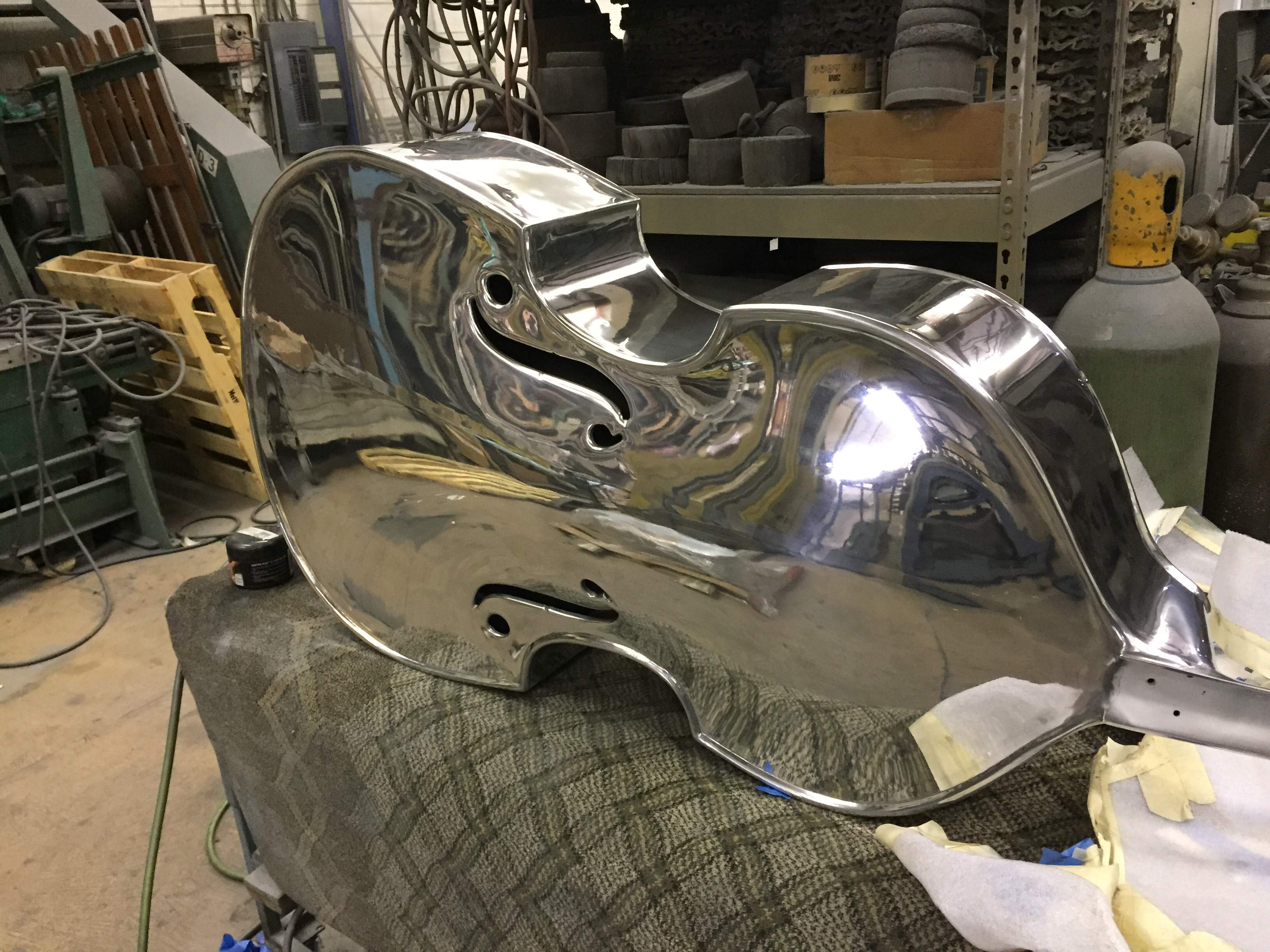
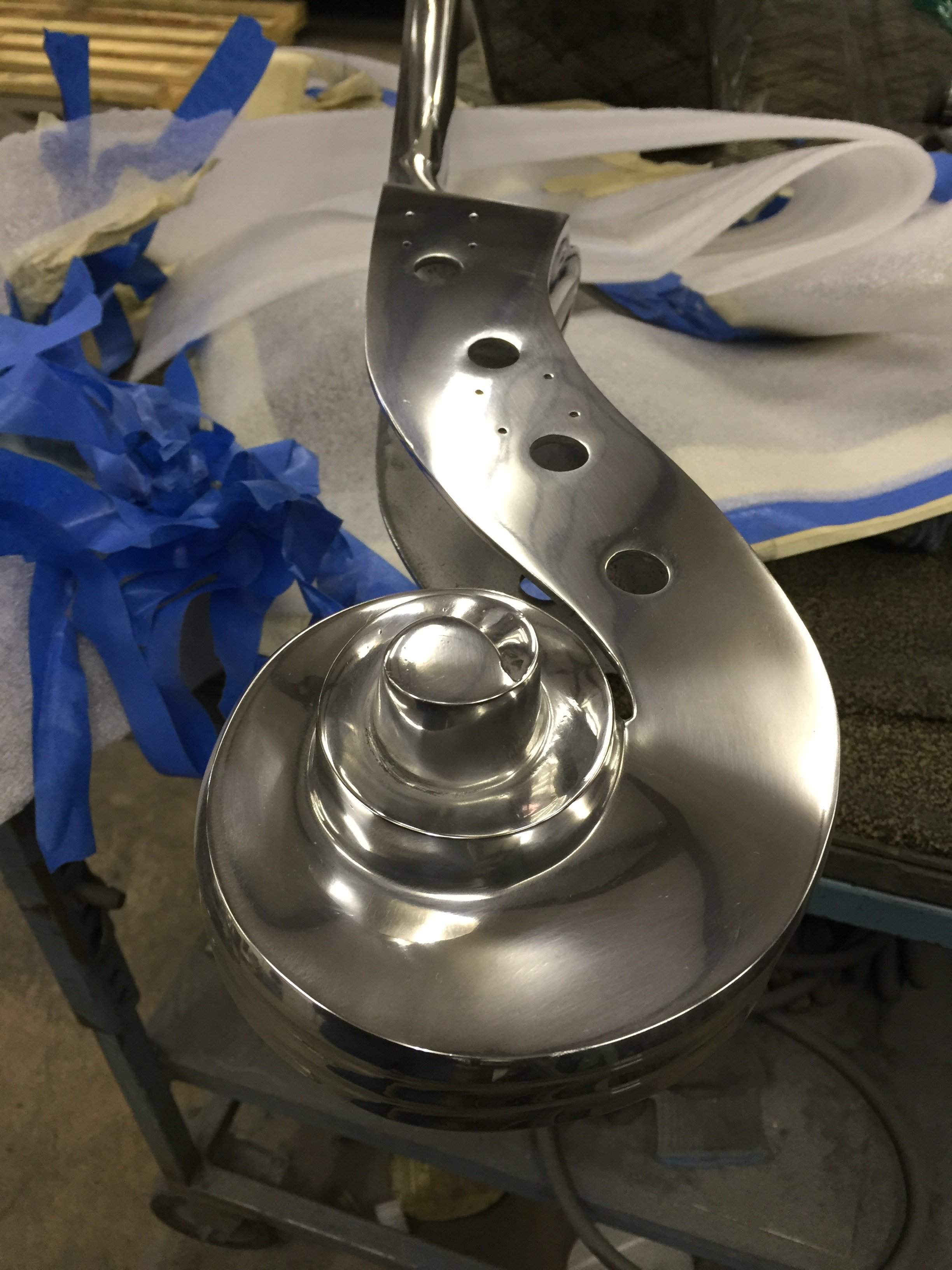
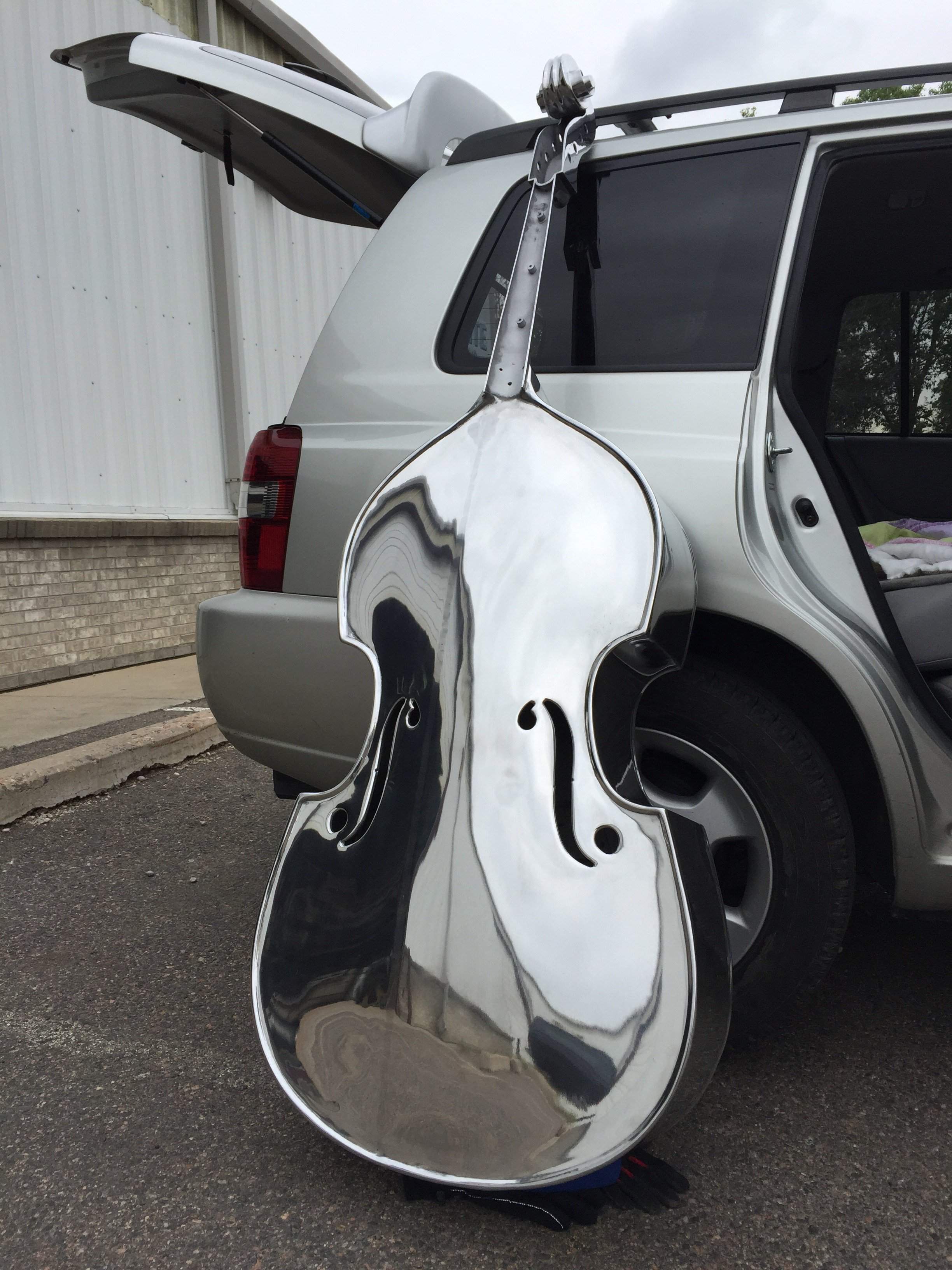
THAT is what I've been preaching about for the last two decades! You just raised the price on every old ALCOA in the country...
Last edited:


